Browsed by
Category: Animals/Nature

Stop and Smell the Roses
Stop and Smell the Roses

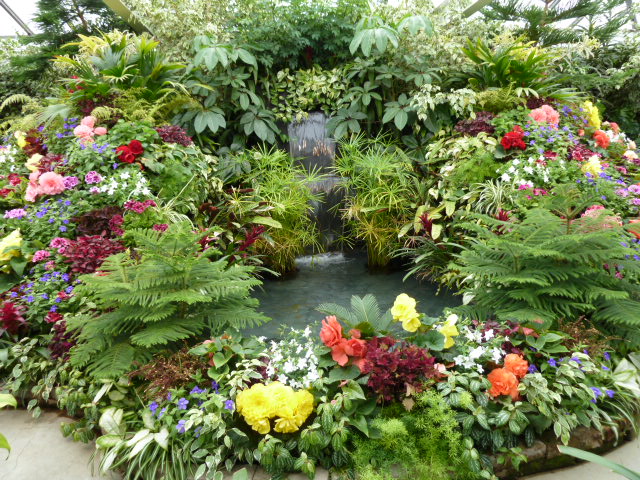
Stop and Smell the Roses--roses and other flowers around a pool of waterMy husband and I love to travel. For years, we planned our own trips and did our own driving. We hit the trail as often as possible. I usually scheduled far more than we had time to do. However, we learned to stop and smell the roses along the way.

Our schedule was not as important as fun on the trip. We began according to plan but made changes along the way. We went off the beaten path almost every trip and are so glad we did.

To stop and smell the roses means to take time to enjoy life.

We slow down and relax. That means we:

  • Get away from our busy schedules
  • Recognize the importance of mini moments of joy.

Without breaks, stress builds.

No one can go forever. If we fail to get away, our:

  • Health suffers
  • Work becomes less productive
  • Relationships weaken

We must stop and smell the roses if we desire a good life.

Leisure time is a necessity, not a luxury. When God created the world, he set aside one day a week to rest and worship. The value of that plan remains as important now as then.

“Ask the Lord for rain in the springtime; it is the Lord who sends the thunderstorms. He gives showers of rain to all people, and plants of the field to everyone” (Zechariah 10:1 NIV).

Thanks to Karen Hart for the suggestion.

Do you have an expression you want explained or a thought about this one? If so, please comment below.

Subscribe to receive my weekly posts by email and receive a free copy of “Words of Hope for Days that Hurt.”

If you enjoyed this post, please share it with your friends.
Bell the Cat

Bell the Cat

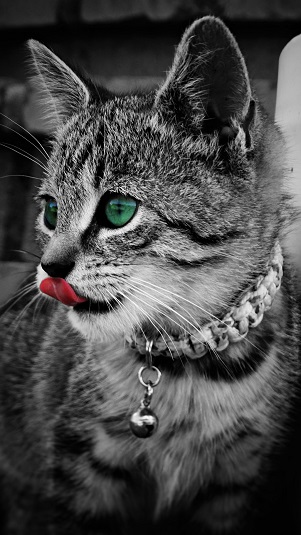
Bell the Cat: Cat with bell around neck“Somebody ought to do something.” We often say that about a hard job nobody wants to do. No one wants to bell the cat.

To bell the cat means to perform a difficult task.

We take responsibility and do what needs to be done. It may be risky or dangerous. At times, the job may seem or be impossible.

This expression comes from a fable.

Mice were scared of a cat and did not know what to do. They met to discuss the situation, as portrayed in this cartoon. One mouse suggested putting a bell around the cat’s neck, so they could hear the cat coming. They would be saved by the bell. However, when asked who would bell the cat, no one wanted to tackle such a dangerous job.

The fable teaches that a plan serves no purpose if it is impossible or no one does it. Many tasks are easier said than done.

We give thanks for people who bell the cat.

They see the risks but do their jobs anyway.

  • Firefighters who enter burning buildings
  • Police officers who run toward, instead of away from, danger
  • Doctors, nurses, and other medical staff who risk illness to keep us healthy
  • Utility workers who do their jobs in the worst weather to provide electricity, phones, and other services

What about us? Are we ready to do what needs to be done, including jobs no one else wants to do?

God calls each of us. Sometimes our work is easy and sometimes hard. Whatever the task, how will we respond?

“Then I heard the voice of the Lord saying, “Whom shall I send? And who will go for us?” And I said, “Here am I. Send me!” (Isaiah 6:8 NIV).

Thanks to Becky Nash Rowe for the suggestion. Photo courtesy of Pixabay.

Do you have an expression you want explained or a thought about this one? If so, please comment below.

Subscribe to receive my weekly posts by email and receive a free copy of “Words of Hope for Days that Hurt.”

If you enjoyed this post, please share it with your friends.
Water Down

Water Down

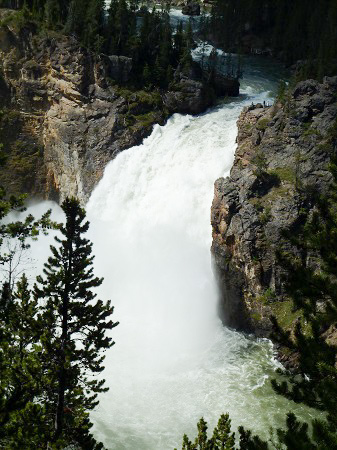
Water Down--waterfallWhatever lies below a waterfall gets watered down quickly. The water:

  • Covers it
  • Weakens it
  • Overwhelms it

If we hike to the bottom of the waterfall, its power grabs our attention. We rarely notice other sights and sounds.

To water down means to cover or weaken something.

Surfaces we may cover with water include:

  • Yards with new grass seed
  • Clothes ready to wash
  • Houses and buildings in danger from nearby fires

We add water to weaken or dilute:

  • Soups
  • Juices or other drinks
  • Sauces

We also water down or weaken:

  • Stock values
  • Agreements
  • Laws
  • Truth

All lose worth and become less effective when we omit important information.

If we water down the truth, everyone loses.

We may not want to share hard truth. However, we need to know reality, even if we don’t like it or it hurts. Plus, people no longer trust us if we tell less than the truth. Better to stay on the up and up.

If we have not told the truth, remember confession is good for the soul. It’s never too late to turn over a new leaf.

“An honest witness does not deceive, but a false witness pours out lies” Proverbs 14:5 NIV).

Thanks to Phyllis Patton for the suggestion.

Do you have an expression you want explained or a thought about this one? If so, please comment below.

Subscribe to receive my weekly posts by email and receive a free copy of “Words of Hope for Days that Hurt.”

If you enjoyed this post, please share it with your friends.
Right as Rain

Right as Rain

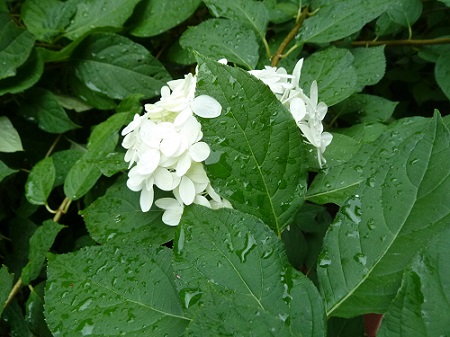
Right as Rain--raindrops on leaves and flowerLike a gentle rain on a hot, dry day, some things feel right as rain. Plants need refreshment, and so do people. After a long, dry spell of trouble, we love calm showers of peace.

Right as rain often means life is all right.

We enjoy:

  • Good or improved health
  • Everything working as it should

We feel well. Problems are solved. Work is complete.

Right as rain also means something is correct.

  • We give the right answers on a test.
  • Our work meets or exceeds requirements.

At times, right as rain means dependable.

People are as good as their word. We can take what they say to the bank. Regardless of their circumstances, rain or shine, they do what is right.

God offers a good, correct, and dependable life.

That does not mean everything always goes as we hope. It does mean everything will eventually work out.

Sooner or later, people fail. God never has and never will. We can trust God with our lives and our futures.

“Let my teaching fall like rain and my words descend like dew, like showers on new grass, like abundant rain on tender plants” (Deuteronomy 32:2 NIV).

Thanks to Regina Graham for the suggestion.

Do you have an expression you want explained or a thought about this one? If so, please comment below.

Subscribe to receive my weekly posts by email and receive a free copy of “Words of Hope for Days that Hurt.”

If you enjoyed this post, please share it with your friends.
Let Up

Let Up

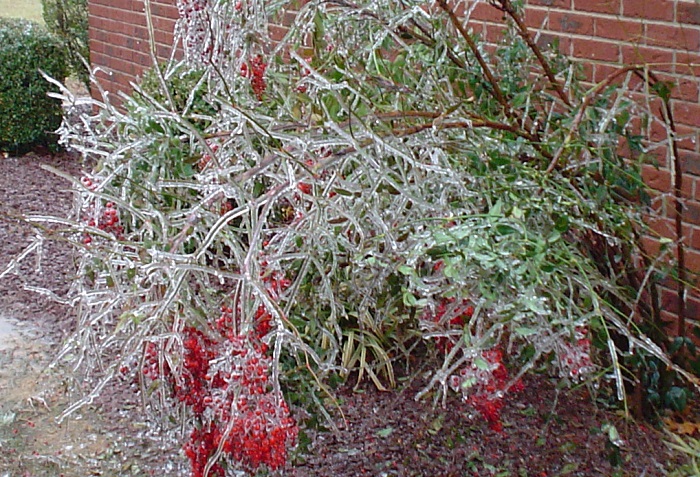
Let Up--Ice covered shrubA few years ago, everyone hoped an ice storm would soon let up. The heavy ice:

  • Covered and broke limbs on shrubs and trees
  • Downed power lines
  • Made travel impossible

Sometimes we feel like we cannot get a let up from life’s storms. When it rains, it pours. Problems overwhelm us. We reach the end of our rope.

Recent tornadoes:

  • Destroyed homes and property
  • Injured and killed people going about their daily lives
  • Damaged entire communities

To let up means to slow down or stop.

This can apply to:

  • Weather
  • Speed
  • Hard times
  • Physical, mental, or emotional pressure

This expression often applies to relationships.

  • Children want parents to let up on rules.
  • Employees want bosses to let up on work.
  • Many times, we need to let up on ourselves.

Whatever our pressures, God offers relief.

Problems do not always go away. However, God offers peace, hope, and comfort in every situation.

“We are pressured in every way but not crushed; we are perplexed but not in despair” (2 Corinthians 4:8 NIV).

Thanks to Sue Davis Potts for the suggestion.

Do you have an expression you want explained or a thought about this one? If so, please comment below.

Subscribe to receive my weekly posts by email and receive a free copy of “Words of Hope for Days that Hurt.”

If you enjoyed this post, please share it with your friends.
Swan Song

Swan Song

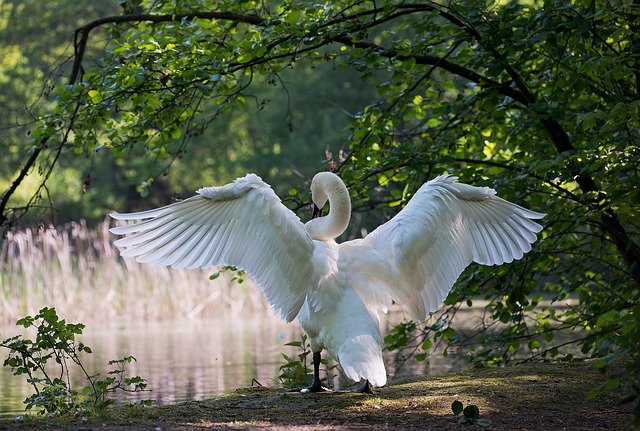
Swan Song--swan with wings spreadSwans capture our attention like few other birds. Their grace and beauty amaze us. The image of a swan song increases their attraction.

A swan song is a last performance or work.

We usually relate it to singers or other performers. Farewell tours have become common. However, swan song refers to any worker’s final effort before death or retirement.

This expression comes from an ancient legend that swans sing before they die.

The legend says swans remain mute until their final beautiful, mournful music. According to The Phrase Finder, the legend is false. All swans “have a variety of vocal sounds and they don’t sing before they die.”

Yet, the legend does tell a beautiful story. It appears in several well-known works, including:

  • Shakespeare’s The Merchant of Venice
  • The Orlando Gibbons madrigal, “The Silver Swan

May we never wait until our swan song to do our best.

God created us for a purpose. Whatever our gifts, let’s give life our best, from the beginning to the end of the road.

“I will sing to the Lord all my life; I will sing praise to my God as long as I live”
 (Psalm 104:33).

Thanks to Carole Fite for the suggestion. Image by miniformat65 from Pixabay.

Do you have an expression you want explained or a thought about this one? If so, please comment below.

Subscribe to receive my weekly posts by email and receive a free copy of “Words of Hope for Days that Hurt.”

If you enjoyed this post, please share it with your friends.
Butterflies in My Stomach

Butterflies in My Stomach

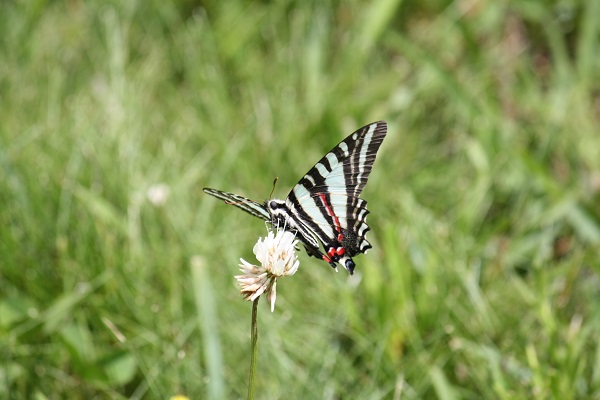
Butterflies in My Stomach--butterfly on flowerI love butterflies, don’t you? I watch for them in gardens, yards, and on walks. Their colors and the way they flutter through the air thrill me. A butterfly makes any day better. However, I don’t love butterflies in my stomach.
Butterflies in my stomach mean I feel nervous.

Finding butterflies brings joy. Feeling them in my stomach … not so much.

Common causes for butterflies in my stomach include:

  • Public speaking
  • Job interviews
  • Singing or acting in public
  • Tests

Feeling a little nervous can be a good thing.

It makes me:

  • Prepare better
  • Try harder
  • Do my best

Feeling too nervous hurts my health.

It causes me to tie myself in knots, I suffer physically, mentally, and emotionally.

When butterflies flutter too long or hard, I remind myself not to sweat it. If I shake off the stress and give God control, God leads me through every challenge.

Thanks to Darrin Jenkins for the suggestion and the picture.

What causes butterflies in your stomach? Please comment .

Subscribe to receive my weekly posts by email and receive a free copy of “Words of Hope for Days that Hurt.”

If you enjoyed this post, please share it with your friends.

Stuck Up

Stuck Up

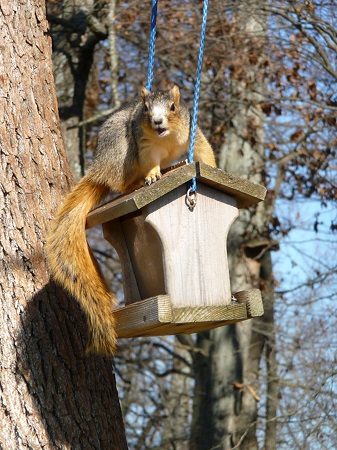
Stuck Up--Squirrel on top of bird feederI caught this little squirrel where he should not be, doing what he should not do. The feeder was for birds, not squirrels. Yet, there he sat, stuck up and daring me to do anything about it.

Squirrels apparently believe rules about bird feeders don’t apply to them. They ignore such restrictions. They focus on what they want and do whatever it takes to get it:

  • Climb poles
  • Hang from limbs
  • Turn upside down

If it benefits them, who cares about the birds?

Many people exhibit a similar attitude.

Stuck up people feel proud or superior.

They:

  • Have a big head
  • Look down on others
  • Feel overconfident
  • Act conceited

Stuck up people’s egos rule their actions.

 Because they believe they are better than anyone else, they:

  • Use people to get what they want
  • Mistreat people
  • Work only to benefit themselves

Hardly anyone likes such rude, highfalutin ways.

Stuck up people’s behavior often leads to trouble.

Many get caught where they should not be, doing what they should not do.

All people have worth.

No one is more or less important than anyone else. No one has any good reason to act arrogant –  too big for their britches.

God offers a better way.

  • Love one another.
  • Respect one another.
  • Care for one another, regardless of status.

“Don’t be stuck-up and think you’re better than everyone else” (Proverbs 30:13 MSG).

Thanks to Betty C. Johnson for the suggestion and to Jenny Kuo for the photo.

Do you have an expression you want explained or a thought about this one? If so, please comment below.

Subscribe to receive my weekly posts by email and receive a free copy of “Words of Hope for Days that Hurt.”

If you enjoyed this post, please share it with your friends.

Once in a Blue Moon

Once in a Blue Moon

Once in a Blue Moon: Full moon shining in a blue landscapeHousework must be done often. Otherwise, the house becomes a mess. However, many of us have chores we hate. We only do those chores once in a blue moon. We put them off as long as possible.
Once in a blue moon means rarely.

Something seldom occurs. It does happen, but not often. Examples include:

  • Family reunions
  • Pay raises
  • New houses

A blue moon is usually defined as the second full moon in a calendar month.

That happens about once every three years. The Phrase Finder offers an interesting explanation of the mistake behind that definition.

We can enjoy blue moons even though:

  • The definition may have begun as an error.
  • A blue moon is not blue.

Enjoy blue moons when they occur. Let them remind you to rise and shine. Make the most of every day, whether rare or routine.

[The Lord] made the moon to mark the seasons, and the sun knows when to go down (Psalm 104:19 NIV).

Thanks to Karen Atwood and Brad Leverett for the suggestion. Image by kien virak from Pixabay.

Do you have an expression you want explained or a thought about this one? If so, please comment below.

Subscribe to receive my weekly posts by email and receive a free copy of “Words of Hope for Days that Hurt.”

If you enjoyed this post, please share it with your friends.

Nest Egg

Nest Egg

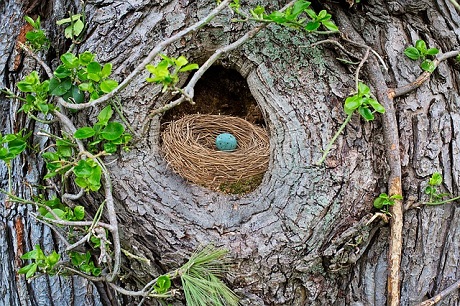
Nest Egg--robin's nest in a hole in a tree trunkDo you have a nest egg? Perhaps you hide it in a special place at your home. Maybe in a sock or a cookie jar? Or you might keep it in a bank or other financial institution.

Family members might be aware of your nest egg. Or maybe only you know about it.

A nest egg is money saved for a later time.

Planned uses include:

  • Buying a house
  • Retirement
  • Emergencies
  • Travel
  • A rainy day

Nest eggs may be large or small.

Small ones help with:

  • Christmas or birthday gifts
  • Toys
  • Clothes or shoes
  • A fancy meal

This expression comes from leaving an egg in a chicken’s nest.

A nest egg can be real or fake. Its purpose is to encourage the chicken to lay more eggs.

Most people think of nest eggs for personal use. However, the idea can be expanded to the needs of others. Since you can’t take it with you, what fun to save in order to give it away.

“Each of you should give what you have decided in your heart to give, not reluctantly or under compulsion, for God loves a cheerful giver” (2 Corinthians 9:7 NIV).

(I know the above picture is a robin’s egg rather than a chicken’s. Yet isn’t it lovely?)

Thanks to Regina Graham for the suggestion. Image by Jill Wellington from Pixabay.

Do you have an expression you want explained or a thought about this one? If so, please comment below.

Subscribe to receive my weekly posts by email and receive a free copy of “Words of Hope for Days that Hurt.”

If you enjoyed this post, please share it with your friends.