Browsed by
Category: Problems

Chew on

Chew on

Chew on--puppy chewing on a shoeBabies like to chew on whatever they find. Human babies keep teething rings wet with their efforts. Puppies often chew shoes and other non-food items. Their gnawing may last for hours.

To chew on something means to think about it.

We consider it from different viewpoints. Our thinking, like puppy gnawing, often lasts a long time.

We rarely like to chew on tough circumstances.

Although we enjoy chewing the fat with friends and family, we don’t want to think about problems.

Life’s struggles come from all directions.

  • Difficult relationships
  • Illness
  • Death
  • Work stress

We do enjoy chewing on positive situations or possibilities.

  • Special events with family and friends
  • Vacations
  • Births
  • Promotions

When we chew on all God has done, everything else fades in comparison.

We know our current concerns will not last forever. However, God will. His faithfulness offers hope for now and eternity.

“I will consider all your works and meditate on all your mighty deeds.” (Psalm 77:12 NIV).

Thanks to Sarah Burns Hampshire for the suggestion. Photo courtesy of Pixabay.

Do you have an expression you want explained or thoughts about this one? If so, please comment below.

Subscribe to receive my weekly posts by email and receive a free copy of “Words of Hope for Days that Hurt.”

If you enjoyed this post, please share it with your friends.

At Your Wits’ End

At Your Wits’ End

At Your Wits' End--railroad track with end missingHave you ever been at your wits’ end? Like a train conductor with no track, you wonder, What now?

At your wits’ end means you have no idea what to do.

You have tried everything you can think of, but nothing works. You feel:

At your wits’ end may result from your problem or someone else’s.

  • A difficult project or repair
  • An unruly child
  • Unexplained delays in services

You run out of patience, and frustration grows.

Your distress often affects other people. They see your negative reaction, or you hurt them with your words or deeds.

This idiom has a long history.

The Free Dictionary says it “appeared in Piers Ploughman (c. 1377).” We also find it in the Bible.

When at your wits’ end, seek guidance.

Someone else may be able to help you figure out an answer. With both major and minor problems, two heads are usually better than one. Turning to God for peace and direction is even better.

What joy when we finally understand what to do.

“They were at their wits’ end. Then they cried out to the Lord in their trouble, and he brought them out of their distress” (Psalm 107:27-28).

Thanks to Meghan Bowker, Editor, Missions Mosaic for the suggestion. Image by Niek Verlaan from Pixabay.

Do you have an expression you want explained or thoughts about this one? If so, please comment below.
Subscribe to receive my weekly posts by email and receive a free copy of “Words of Hope for Days that Hurt.”

If you enjoyed this post, please share it with your friends.

Whistle Past the Graveyard

Whistle Past the Graveyard

Whistle Past the Graveyard-graves at Arlington National CemeteryI grew up near a graveyard. Later, my husband and I built a house across the road from one. We laughed and said we would have quiet neighbors. However, some people fear living so close to graves. They feel the need to whistle past the graveyard.

When we whistle past the graveyard, we hide our fear by acting calm.

We may be afraid of our own shadow. However, we don’t want anyone to know.

Whistling past the graveyard happens often.

In addition to passing a cemetery, we fear:

  • Public speaking
  • Competition for a championship
  • Any embarrassing situation

To whistle past the graveyard may increase courage.

Acting with courage often makes us more courageous. We survive what we fear, so the next time becomes easier.

The Bible tells us we have no need to fear death.

Followers of Jesus know that death and the grave are not the end. When Jesus arose from the grave, He conquered sin and death. We can share that same victory and look forward to an eternal home in heaven.

“Do not be amazed at this, for a time is coming when all who are in their graves will hear his voice” (John 5:28 NIV).

Thanks to Bobbie Smith Bryant and Martha Orlando for the suggestion. Image by Carol Colman from Pixabay

Do you have an expression you want explained or thoughts about this one? If so, please comment below.

Subscribe to receive my weekly posts by email and receive a free copy of “Words of Hope for Days that Hurt.”

If you enjoyed this post, please share it with your friends.

Weather the Storm

Weather the Storm

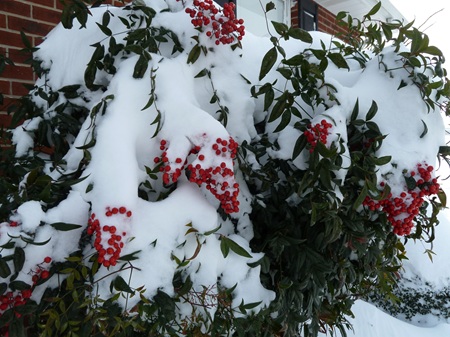
Weather the Storm--Snow covered shrub (nandina) with red berries

How did you weather the recent storm? Some of you may have escaped snow, ice, and frigid temperatures. However, we experienced all three. More than one person said our driveway was like a skating rink.

Literally, to weather the storm means to stay where we are until a storm passes.

We go nowhere. With few options, we hunker down and wait until the worst is over.

Figuratively, to weather the storm means to survive a hard time or situation.

We experience and live through it. Many close to us have recently faced such hardships.

  • Health crises
  • Death of family members
  • Job loss
  • Financial difficulties
  • Family problems

According to The Free Dictionary, this expression “has been used figuratively from about 1650.”

A similar expression is to ride out the storm.

We hang on for dear life through our difficulties.

Life is not always easy.

We experience ups and downs. Hard times come and go. Yet we can make it.

We never have to weather the storm alone.

God promises never to leave  those who follow Him. Because He remains near, we have no need to fear.

“The Lord is my helper; I will not be afraid” (Hebrews13:6 NIV).

Thanks to Beckham Wilson for the suggestion.

Do you have an expression you want explained or thoughts about this one? If so, please comment below.

Subscribe to receive my weekly posts by email and receive a free copy of “Words of Hope for Days that Hurt.”

If you enjoyed this post, please share it with your friends.

Do or Die

Do or Die

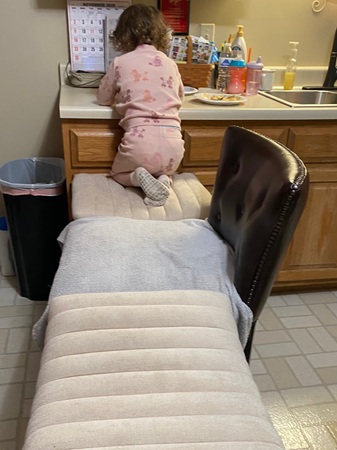
Do or Die-little girl using chairs and stools to reach cabinet topHave you watched people fight to succeed when failure seemed certain? Their final effort is do or die. This little one was determined to get to her uncle’s chewing gum. She succeeded with her extra effort.

Do or die means we give our best to succeed and avoid failure.

We keep on keeping on despite:

  • Difficulties
  • Danger
  • Death

We refuse to give up.

Do or die also means our last chance.

  • Ballgames hinge on the last play.
  • Companies depend on end-of-year sales to stay in business.
  • Relationships rely on a final effort to stay together.

Results rest on our willingness to do our best.

We cannot depend on:

  • Past success
  • Reputation
  • Other people

Like the little girl above, let’s refuse to give up.

We all face hard times. That’s life. Turn to Jesus who helps us through every challenge and every storm.

“My flesh and my heart may fail, but God is the strength of my heart and my portion forever” (Psalm 73:26 NIV).

Thanks to Chris J. Beam for the suggestion and to Debbie Tapscott for the photo.

Do you have an expression you want explained or thoughts about this one? If so, please comment below.

Subscribe to receive my weekly posts by email and receive a free copy of “Words of Hope for Days that Hurt.”

If you enjoyed this post, please share it with your friends.

On the Tip of Your Tongue

On the Tip of Your Tongue

On the Tip of Your Tongue -- dog with tongue outHave you ever had someone’s name on the tip of your tongue? You know the person well, but the name simply will not come to mind.

On the tip of your tongue means something you can almost remember.

The thought is nearly there but not quite. When you start to say it, it disappears. You could kick yourself, but that would do no good.

On the tip of your tongue refers to more than names.

People often forget:

  • Answers to questions
  • Thoughts
  • Quotes
  • Words

The inability to recall information affects everyone.

However, certain conditions make the situation worse.

  • Age
  • Stress
  • Multi-tasking
  • Distractions
  • Illness

Those and other circumstances often make the brain work at a snail’s pace.

Humor helps when anything remains on the tip of your tongue.

Like water off a duck’s back, let it go. Learn to laugh at yourself. You are not alone.

Aren’t you glad God never forgets?

Never has. Never will.

“Before a word is on my tongue you, Lord, know it completely” (Psalm 139:4 NIV).

Thanks to Lindy Pierce for the suggestion and to Chelsey Stone for the photo.

Do you have an expression you want explained or thoughts about this one? If so, please comment below.
Subscribe to receive my weekly posts by email and receive a free copy of “Words of Hope for Days that Hurt.”

If you enjoyed this post, please share it with your friends.

Mayday

Mayday

Mayday--helicopters at Ft. Campbell, KYOld movies often show someone in trouble who calls, “Mayday! Mayday! Mayday!”

Mayday is an internationally recognized radiotelephone signal for help.

The person, usually on a ship or in an airplane, is in crisis. Problems may include:

  • A fire
  • Engine trouble
  • A collision

If the person in the thick of it survives, it may be on a wing and a prayer.

According to The Free Dictionary, mayday originated with the French phrase, m’aider.

M’aider means “Help me.” Danger threatens.

Mayday now includes other difficulties or dangers.

Most of us have experienced the stress of major and minor disasters.

  • Storms destroy property.
  • Appliances stop working.
  • Cars break down.
  • Electronics die.

Mayday should not be confused with May Day, the May 1 springtime celebration.

May 1 is also Labor Day in some countries.  

 When emergencies arise, God directs us to help one another.

God comforts us. Yet, God also guides us to help the hurting. Shared love and support encourage us to get a grip and keep on keeping on.

“The Lord is good, a refuge in times of trouble. He cares for those who trust in him” (Nahum 1:7 NIV).

Thanks to Mike Bertoglio for the suggestion.

Do you have an expression you want explained or thoughts about this one? If so, please comment below.
Subscribe to receive my weekly posts by email and receive a free copy of “Words of Hope for Days that Hurt.”

If you enjoyed this post, please share it with your friends.

In a Pickle

In a Pickle

In a Pickle--two shelves of assorted picklesA friend recently said, “I don’t like to put you in a pickle.” She did not want her plans to cause me trouble.

In a pickle means in a difficult situation.

Similar expressions include in a jam or in hot water.

We often end up in a pickle or in a jam through no fault of our own.

  • Circumstances work against us.
  • People’s actions hurt us.
  • Weather destroys our property.
  • Sickness strikes our family.

We have no control over those situations.

Occasionally we get ourselves in a pickle or in hot water.

Our actions work against us when we:

  • Mistreat others
  • Break laws or rules
  • Refuse to work

Sometimes we add words to this expression.

Examples include:

  • In a pretty pickle.
  • In a right pickle.
  • In a real pickle.

However we say it, we get in a mess.

Simple steps may help us out of our messes.

  • Request help from friends, family, or coworkers.
  • Apologize for mistakes.
  • Pray for God’s guidance.

“I cling to your commands and follow them as closely as I can. Lord, don’t let me make a mess of things” (Psalm 119:31 TLB).

Thanks to Rita Smalley for the suggestion and to Gail Gosser for the photo.

Do you have an expression you want explained or thoughts about this one? If so, please comment below.

Subscribe to receive my weekly posts by email and receive a free copy of “Words of Hope for Days that Hurt.”

If you enjoyed this post, please share it with your friends.

Red Tape

Red Tape

Red Tape--desk piled with paperwork and a red ribbon around the top document. Hand raised above and behind it.I was a social worker for almost thirty years. The work was stressful and the hours horrible. I was on-call twenty-four hours a day seven days a week. Yet I loved it.

I did not love the red tape. We had to jump through hoops of:

  • Endless paperwork
  • Frequent bureaucratic changes
  • Fluctuating budgets that reversed progress

Red tape refers to complicated, time-wasting official procedures.

Such requirements are:

  • Strict
  • Difficult
  • Tiresome

They focus on details and rules rather than efficiency and outcomes. Correct forms overrule positive results.

Red tape results in service delays.

Forms and rules should lead to speedier outcomes rather than needless obstacles. Likewise, successful procedures should remain regardless of leadership changes.

According to The Free Dictionary, this expression refers to “the former British custom of tying up official documents with red ribbon.”

Red ribbons make a document look good. However, appearance matters little. Contents determine the difference, good or bad.

A certain amount of red tape must remain.

  • Rules offer guidelines.
  • Paperwork gathers needed information.

Yet, a fine line exists between:

  • Efficient or ineffective
  • Helpful or hurtful

“Every official is under orders from higher up, and the higher officials look up to their superiors. And so the matter is lost in red tape and bureaucracy” (Ecclesiastes 5:8 TLB).

Thanks to Regina Graham for the suggestion and to Karen Atwood for the photo.

Do you have an expression you want explained or thoughts about this one? If so, please comment below.

Subscribe to receive my weekly posts by email and receive a free copy of “Words of Hope for Days that Hurt.”

If you enjoyed this post, please share it with your friends.

Elephant in the Room    

Elephant in the Room    

Elephant in the Room--three small ceramic or jade elephantsFew of us desire an elephant in the room. Not the kind on four legs and not unpleasant subjects.

An elephant in the room means a problem no one discusses.

The situation is:

  • Serious
  • Important
  • Obvious

We need to address the topic.

Everyone knows about it. However, no one wants to discuss it because it makes us feel:

  • Uncomfortable
  • Embarrassed
  • Awkward

As a result, we ignore the issue rather than rock the boat.

  • Families don’t mention strained relationships.
  • Workers overlook wasteful systems.
  • Friends choose peace over responsibility.

Excuses for ignoring difficult situations include:

  • “It’s none of my business.”
  • “No one gets hurt.”
  • “I don’t have time to get involved.”

We want to remain on the right track. At times, that means we avoid unnecessary problems. Other times, it means we stand firm for truth and examine the elephant

An elephant in the room’s origin is unknown.

According to The Phrase Finder, it probably began in the United States.

 “It is shameful even to mention what the disobedient do in secret” (Ephesians 5:12 NIV).

Thanks to Ann Klotz and Darrin Jenkins for the suggestion.

The Early Bird Gets the Worm Matin Wiles book
Version 1.0.0

Do you have an expression you want explained or thoughts about this one? If so, please comment below.

Subscribe to receive my weekly posts by email and receive a free copy of “Words of Hope for Days that Hurt.” Congratulations to Larry Bowen whose name was randomly selected from my mailing list to receive a free copy of Martin Wiles’s book, Don’t Just Live…Really Live.”

If you enjoyed this post, please share it with your friends.