
Browsed by
Category: Problems

Carbon Copy

Carbon Copy

Carbon copy--bridge reflected in water behind broken, twisted treesYoung people probably have no experience making a carbon copy. During typewriter days, we placed carbon paper between two blank sheets of paper. We then rolled all three into the typewriter. What we typed on the top sheet copied to the bottom.

Carbon paper made great copies. However, it could also make great messes. If we were not careful, we would:

  • Get ink on us and anything else it touched
  • Smear our copies, which made them hard to read

A carbon copy is an exact duplicate.

Its details are precise. It:

  • Looks the same
  • Matches perfectly
  • Reflects every feature

Like the bridge behind the tangled trees above, it is a spitting image. It remains faithful to the original in every way. If we see the copy, we understand the original.

We decide what we reflect.

Who or what influences us? Who or what do we influence? As with most of life, we choose. We then face the music – we live with the consequences of our choices.

We don’t always reflect perfectly.

Carbon paper smears. Water moves. When that happens, reflections wave. Images change.

Life gets messy. Like tangled trees, things get in our way. Yet, we keep trying. We keep working to reflect the best. In so doing, we improve.

“We can be mirrors that brightly reflect the glory of the Lord” (2 Corinthians 3:18 TLB).

Thanks to Laurel Blevins and Karen Hart for the suggestion.

Do you have an expression you want explained or a thought about this one? If so, please comment below.

Subscribe to receive my weekly posts by email and receive a free copy of “Words of Hope for Days that Hurt.”

If you enjoyed this post, please share it with your friends.

Set Your Face Like Flint

Set Your Face Like Flint

Set Your Face Like Flint--water lapping against rocksDo you occasionally face tasks that seem impossible? Yet, you refuse to quit? Instead, you set your face like flint and finish the job before you?

Flint is a hard, dark rock.

It was often used in earlier times to make tools and start fires. Flint also makes strong stone walls.

To set your face like flint means to be determined.

When you face difficulties, you refuse to give up. Instead, you:

  • Focus on the task before you.
  • Dedicate yourself to its completion.

The prophet Isaiah described the Messiah, Jesus, as having “set my face like flint.”

Isaiah tells of Jesus’ determination to complete the role of a suffering servant. Jesus sacrificed His life on a cross to make eternal life possible for all who accept His gift.

You can follow Jesus’ example.

Life gets hard. Many tasks are tough. However, with God’s help, you can endure. You can keep on keeping on. You can also make a positive difference in an often negative world.

“Because the Sovereign Lord helps me, I will not be disgraced. Therefore have I set my face like flint, and I know I will not be put to shame” (Isaiah 50:7 NIV).

Thanks to Linda Russell for the suggestion. Image by Wesley Rocha from Pixabay

Do you have an expression you want explained or a thought about this one? If so, please comment below.

Subscribe to receive my weekly posts by email and receive a free copy of “Words of Hope for Days that Hurt.”

If you enjoyed this post, please share it with your friends.

Blow Your Top

Blow Your Top

Blow Your Top--an erupting volcano Recently, I told a relative about a fake friend request. She hates for people to misuse her pictures and information. As a result, she suggested a post on blow your top.

To blow your top means to become very angry.

Similar expressions include:

All mean you lose your temper.

When you blow your top, you lose control.

Your emotions erupt like an active volcano. During that explosion, anyone nearby risks danger. This often happens quickly and without warning.

Possible behavior includes:

  • Shouting
  • Destroying property
  • Hurting other people
  • Hurting yourself

Such behavior can become a way of life.

You have to be careful not to cut off your nose to spite your face. If anger takes control, everyone loses, including you.

When appropriate, anger can help right a wrong.

You want to manage anger wisely. Use it for good when necessary. If it becomes harmful, nip it in the bud before it gets out of control.

“Better a patient person than a warrior, one with self-control than one who takes a city” (Proverbs 16:32 NIV).

Thanks to Rebecca Stafford for the suggestion. Image by Enrique from Pixabay.

Do you have an expression you want explained or a thought about this one? If so, please comment below.

Subscribe to receive my weekly posts by email and receive a free copy of “Words of Hope for Days that Hurt.”

If you enjoyed this post, please share it with your friends.
Bought the Farm

Bought the Farm

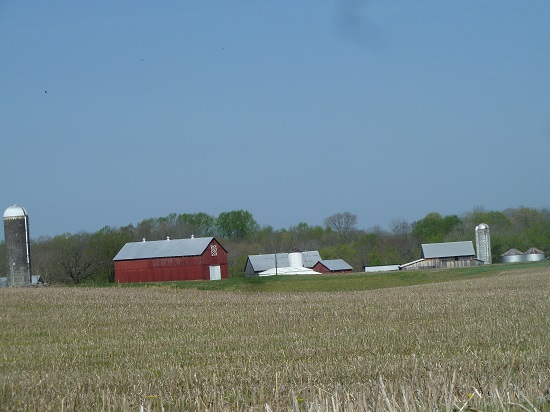
Bought the farm-a large farm with house, barns, and other buildingsThe Nature Conservancy bought the farm that belonged to the Hall family in South Central Kentucky. That purchase marked the end of family traditions but the beginning of public traditions.

The Homeplace on Green River has become an outdoor classroom. It hosts events throughout the year. According to its website, it offers:

  • Immersive educational programs
  • Community festivals
  • Event rentals
  • Hiking trails
  • Crop land leasing
  • Lab and conservation programs
  • And more

If we have bought the farm, we have died.

Family members and friends grieve the loss of life and past family traditions. Yet, life goes on, and new traditions begin.

We find possible origins for this expression at The Phrase Finder.

Numerous expressions describe death.

We find other expressions for death at Kick the Bucket.

When we have bought the farm, our life on earth ends.

However, our eternal home begins. If we accept Jesus as personal Savior and Lord, we have the promise of a home in heaven with Him.

“Very truly I tell you, whoever hears my word and believes him who sent me has eternal life and will not be judged but has crossed over from death to life” (John 5:24 NIV).

Thanks to Diana Flegal for the suggestion

Do you have an expression you want explained or a thought about this one? If so, please comment below.

Subscribe to receive my weekly posts by email and receive a free copy of “Words of Hope for Days that Hurt.”

If you enjoyed this post, please share it with your friends.
Many Hands Make Light Work

Many Hands Make Light Work

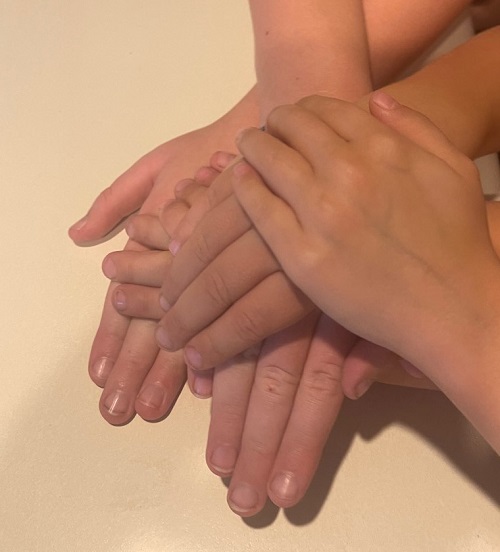
Many Hands Make Light Work-Children's hands stacked on top of one anotherDo you have little helpers who remind you that many hands make light work? Maybe your children or grandchildren? Perhaps a neighbor or friend?

Many of my favorite experiences involve children who helped me. Their help may have meant extra time or a bigger mess. Yet, what fun. They learned to work together and to help one another.

Many hands make light work means the more who work together, the easier and faster the work.

 Work may be on:

Many hands may not make the work easy as pie. It will make the work easier.

Many hands make light work applies to all areas of life.

  • Jobs
  • Family
  • Friends
  • Community
  • Church
  • Volunteer work

Take advantage of opportunities to lend a helping hand.

Supporting one another makes life better for everyone – the one who receives help plus the one who helps.

“May the favor of the Lord our God rest on us; establish the work of our hands for us—yes, establish the work of our hands” (Psalm 90:17 NIV).

Thanks to Tracy Crump for the suggestion and to Karen Atwood for the photo.

Do you have an expression you want explained or a thought about this one? If so, please comment below.

Subscribe to receive my weekly posts by email and receive a free copy of “Words of Hope for Days that Hurt.”

If you enjoyed this post, please share it with your friends.
On the Right Track

On the Right Track

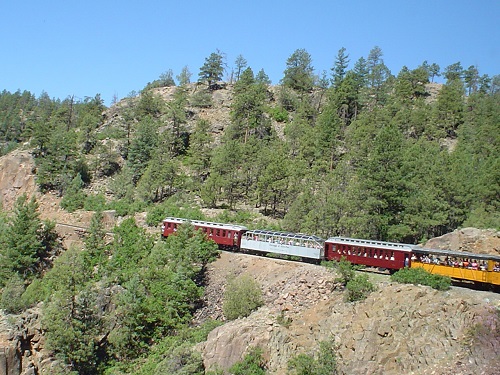
On the Right Track--Cog going up Pike's PeakWhen we ride a train, we want to get on the right track. We never get where we want to go if we go the wrong direction.

If I visit other countries with friends, we always stay close together when entering or exiting trains. We don’t want to arrive at the wrong destination alone.

On the right track means we will probably succeed.

This applies to travel. It also applies to life, when we head the right direction.

On the right track relates to both our thoughts and actions.

What we think usually guides our behavior. In order to find and follow the right direction, we want to choose the right:

  • Friends
  • Mentors
  • Teachers

We also want to research and think for ourselves. Any of us can be wrong at times, like a dog that barks up the wrong tree. Therefore, let’s obtain all the information we can rather than simply follow the crowd.

May we always make wise choices.

That way, we have no regrets when we reach the end of the road.

“You make known to me the path of life; you will fill me with joy in your presence, with eternal pleasures at your right hand” (Psalm 16:11 NIV).

Thanks to Ann Maniscalco for the suggestion.

Do you have an expression you want explained or a thought about this one? If so, please comment below.

Subscribe to receive my weekly posts by email and receive a free copy of “Words of Hope for Days that Hurt.”

If you enjoyed this post, please share it with your friends.
Make Groceries

Make Groceries

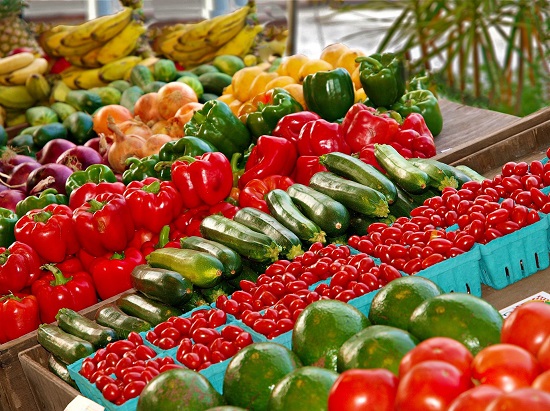
Make Groceries-vegetablesHave you ever made groceries? I have many times. However, I did not know it until recently.

To make groceries means to shop for groceries.

 I have been to the grocery store all my life. I would never have called that trip making groceries. Yet, the expression is common in New Orleans.

According to New Orleans.com, “Old-timers in New Orleans ‘make groceries’ at the store. This is another one that has French origins, as a rough translation from “faire son marché,” which means to do one’s grocery shopping. Since ‘faire’ means both ‘to do’ and ‘to make,’ making groceries came from a slight error in translation from French to English.”

Whatever we call it, we need food.

If we have never been hungry for long periods of time, we are richer than many. Millions have nothing or slim pickings. If we say we are starving, we usually mean only that we hunger. Yet, starvation remains a harsh reality for our world.

When we make meals after we make groceries, let’s give thanks.

  • Thank the farmers who grow the food.
  • Thank the stores that stock the food.
  • Thank the cooks who prepare the food.
  • Thank our Creator and Savior, the everlasting Bread of Life.

Then, let’s put feet to our prayers.

  • Share with others in need.
  • Donate food or money to local food pantries.
  • Give to reliable agencies that help feed the world.

A little food for thought.

“Then Jesus declared, ‘I am the bread of life. Whoever comes to me will never go hungry, and whoever believes in me will never be thirsty’” (John 6:35 NIV).

If you have been to New Orleans or have heard this expression, I would love to hear from you. Please comment.

Thanks to Laura Lee Leathers for the suggestion. Image by Gabe Raggio from Pixabay

Subscribe to receive my weekly posts by email and receive a free copy of “Words of Hope for Days that Hurt.”

If you enjoyed this post, please share it with your friends.
There Now

There Now

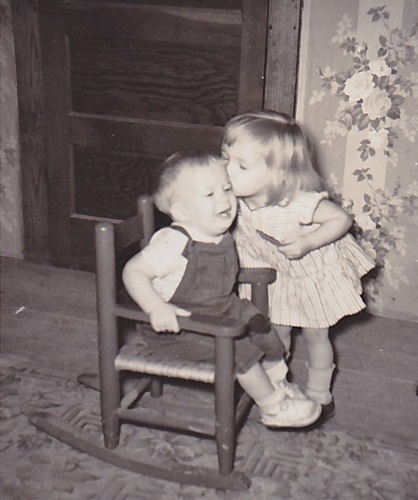
There Now--little girl kissing the head of a little boy in a rockerWhen I needed comfort as a child, I could go to several relatives. They often responded with, “There now. Don’t cry. Everything will be okay.” I felt better immediately. Everything usually was okay.

My troubles included such tragedies as:

  • Bee stings
  • Poison ivy
  • Falls
  • Childhood quarrels

For bigger problems, they doubled their comfort. “There, there now” gave an extra word for extra cheer.

A few problems lasted longer than usual. For those, they reminded me everything would come out in the wash.

I learned from their comfort how to comfort others.

There now soothes or reassures someone having a tough time.

It helps a hurting person:

The need for comfort does not stop as an adult.

Troubles may differ, but they remain as real.

  • Health crises
  • Relationship woes
  • Financial stresses
  • Work demands

Ways to cheer one another include:

  • Prayers
  • Notes
  • Calls
  • Visits
  • Texts
  • Hugs, if appropriate

Listening is more important than talking. Availability is more important than activity.

Shout for joy, you heavens; rejoice, you earth; burst into song, you mountains! For the Lord comforts his people and will have compassion on his afflicted ones (Isaiah 49:13 NIV).

Thanks to Rita Smalley for the suggestion.

Do you have an expression you want explained or a thought about this one? If so, please comment below.

Subscribe to receive my weekly posts by email and receive a free copy of “Words of Hope for Days that Hurt.”

If you enjoyed this post, please share it with your friends.
Fish or Cut Bait

Fish or Cut Bait

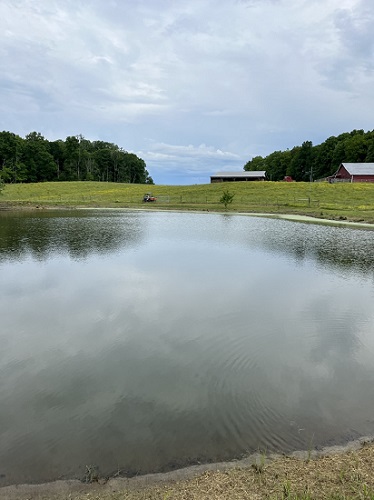
Fish or Cut Bait--farm pond with barns and trees in the backgroundI rarely fish. When I do, people with me probably wish I had stayed home.

They never say to fish or cut bait. I’m sure they think I should.

I hate to touch worms or fish. Therefore, someone else has to put on my worms and take off my fish.

However, I do have one tall tale about catching a huge catfish in my family’s pond.

Of course, I caught that whopper by accident.

Fish or cut bait means to get to work or get out of the way.

Do I plan to fish? If not, I need to move, so others can. If I choose not to fish, I can cut up their bait. Ick! I don’t want to do that either. I rather take pictures or go home.

Fish or cut bait applies to any type of work or activity.

 When I fail to do my job, I waste my time and the time of others. Therefore, I need to:

  • Decide if I plan to work or watch
  • Proceed with my job or leave it
  • Use or stop wasting resources

Jesus calls believers to fish for people.

Fishing for people is not only a job for preachers and teachers. It is a call for all Jesus’ followers. No ifs, ands, or buts. Jesus calls us to fish. If we love God and love others, we will share that love.

 “‘Come, follow me,’ Jesus said, ‘and I will send you out to fish for people’” Matthew 4:19 NIV).

Thanks to Emily Akin for the suggestion and to Robbie Childress for the photo.

Do you have an expression you want explained or a thought about this one? If so, please comment below.

Subscribe to receive my weekly posts by email and receive a free copy of “Words of Hope for Days that Hurt.”

If you enjoyed this post, please share it with your friends.

Take the Cake

Take the Cake

Take the Cake-wedding cakes with strawberries and baby's breathThis expression would probably take the cake in a contest of contradictions.

To take the cake can mean either the best or the worst.

We see examples of the best when a person:

  • Wins a contest and receives the prize
  • Excels in school or work
  • Stands out from everyone else

We might say, “She has created great art before, but this piece takes the cake.”

Examples of the worst include someone who:

  • Acts horrible
  • Mistreats others
  • Appears foolish

We might say, “He has done stupid things before, but that takes the cake.

Take the cake can also mean something unbelievable.

The hard to believe may be important or simply fun. For example, the horse that won the recent Kentucky Derby was the least expected to win.

It may also be horrible or wonderful. In several instances, family members of murdered missionaries continued to serve their loved ones’ killers.

If we want to take the cake, let’s do so in the best way. Make it unbelievably good.

“This is what the Lord says—your Redeemer, the Holy One of Israel: “I am the Lord your God, who teaches you what is best for you, who directs you in the way you should go. (Isaiah 48:17 NIV).

Thanks to Ann Maniscalco and Janna Babak for the suggestion and to Cakes by Camille for the photo.

Do you have an expression you want explained or a thought about this one? If so, please comment below.

Subscribe to receive my weekly posts by email and receive a free copy of “Words of Hope for Days that Hurt.”

If you enjoyed this post, please share it with your friends.