Browsed by
Category: Relationships

Gone But Not Forgotten

Gone But Not Forgotten

Gone But Not Forgotten--Liberty, KY Memorial Park wallLiberty, Kentucky’s Veterans Memorial Park includes three walls with names of local veterans. A Liberty Bell replica stands at the entrance and a fountain in the center. American flags line the back wall.

Some veterans with names on those walls still live. Others are gone but not forgotten.

Gone but not forgotten means we remember people or things no longer with us.

They may live somewhere else. Often, they have died.

Although gone but not forgotten usually refers to people, it also applies to:

  • Animals
  • Events
  • Possessions

Anything gone but not forgotten often reminds us of the good old days.

We recall:

  • Times shared with special people
  • Favorite activities
  • A different way of life

This Veterans Day, take time to thank veterans still living.

Many went far beyond the call of duty. Remember and honor those now gone.

“I thank my God every time I remember you” (Philippians 1:3 NIV).

Do you have an expression you want explained or a thought about this one? If so, please comment below.

Subscribe to receive my weekly posts by email and receive a free copy of “Words of Hope for Days that Hurt.”

If you enjoyed this post, please share it with your friends.

Under Your Wing

Under Your Wing

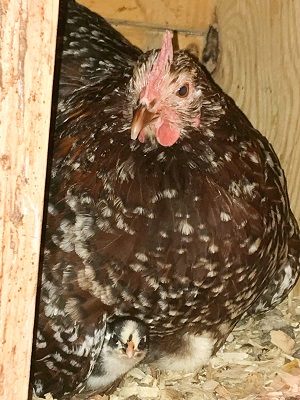
Under Your Wing, hen with chicks under wingsWhen a storm approaches, a mother hen gathers her baby chicks under her wing. She wants to keep them safe.
If you take people under your wing, you care for them.

You batten down the hatches during life’s storms by:

  • Protecting them
  • Loving them
  • Meeting their needs

Taking someone under your wing may require little or much time.

  • Older students tutor younger students.
  • Bosses guide new workers.
  • Friends take care of a sick friend.
  • Neighbors offer a place to stay when another neighbor loses her home.
  • Relatives rear a child when its parents die.

Look for opportunities to care for a hurting world.

  • Show love in all you do.
  • Help the hopeless see light at the end of the tunnel.
  • Give financial help to people going through hard times.
  • Show respect to everyone, whether you agree with them or not.
  • Treat people the way you want to be treated.
  • Don’t get mad as a wet hen when you don’t get your way.
  • Ask God to guide you in all you do and say.

“[God] will cover you with His feathers;
you will take refuge under His wings.
His faithfulness will be a protective shield” (Psalm 91:4 HCSB).

Thanks to Carole Fite for the suggestion and to Pam Barnes Harlow for the photo.

Do you have an expression you want explained? If so, please comment below.

Subscribe to receive my weekly posts by email and receive a free copy of “Words of Hope for Days that Hurt.”

If you enjoyed this post, please share it with your friends.

What Goes Down in the Well Comes Up in the Bucket

What Goes Down in the Well Comes Up in the Bucket

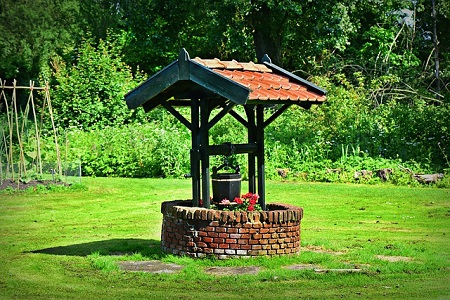
What Goes Down in the Well Comes Up in the Bucket --well with bucketAs a little girl, I loved to visit relatives who had a well with a bucket. The bucket was tied to the end of a rope. To get water, we had to:

  • Lower the bucket into the well
  • Listen for the bucket to go under the water
  • Turn the crank on the side of the well to bring up the bucket of water

I learned what goes down in the well comes up in the bucket.

  • Throw toys in the well; toys come up.
  • Dump garbage in the well; garbage comes up.
  • Spill food in the well; food comes up.

The same holds true for our lives.

What we pour into our lives comes out in how we live.

  • Feed our minds and hearts good thoughts; good behavior follows.
  • Dump trash into our brains; we treat ourselves and others like trash.
  • Fill our lives with truth; we live that truth.

Our actions show what we believe.

  • If we believe in respect, we show respect.
  • When we love others, we show love.
  • If we have faith in God, we demonstrate that faith.

Let’s get our lives right before we kick the bucket. Let’s make our good deeds more than a drop in the bucket.

“Jesus answered, ‘Everyone who drinks this water will be thirsty again, but whoever drinks the water I give them will never thirst. Indeed, the water I give them will become in them a spring of water welling up to eternal life’” (John 4:13-14 NIV).

Thanks to Dr. Dwayne Norman, pastor of Campbellsville Baptist Church, for the suggestion. Photo courtesy of Pixabay.

Do you have an expression you want explained or a thought about this one? If so, please comment below.

Subscribe to receive my weekly posts by email and receive a free copy of “Words of Hope for Days that Hurt.”

If you enjoyed this post, please share it with your friends.

Out of the Woods

Out of the Woods

Out of the Woods--path through treesA few years ago, my husband was in the hospital, not expected to live. The next day a doctor said he was much better but not out of the woods yet. He meant my husband still had to fight for his life.

Out of the woods means safe and secure.

A person no longer faces immediate danger.

  • The worst trouble has passed.
  • Known and unknown threats are over.
  • The greatest danger is gone.
  • Circumstances are no longer critical,

Like exiting a dangerous forest, a person out of the woods feels relief.

The escape frees the person to:

  • Relax
  • Enjoy better circumstances
  • Give thanks for improvement

In addition to health issues, out of the woods applies to:

  • Finances
  • Relationships
  • Work

Whether in the woods or out, everyone chooses how to react.

Life gets hard. People get hurt. When that happens, they decide whether to:

Why not make the best of a bad situation? This life will soon pass. Let go and let God make the most of it.

My husband did make it out of the woods and left the hospital a few days later.

“Even the trees of the woods—the fir trees and cedars of Lebanon—sing out this joyous song: ‘Your power is broken; no one will bother us now; at last we have peace’” (Isaiah 14:8 TLB).

Thanks to Ann Knowles for the suggestion.

Do you have an expression you want explained? If so, please comment below.

Subscribe to receive my weekly posts by email and receive a free copy of “Words of Hope for Days that Hurt.”

If you enjoyed this post, please share it with your friends.

I Swan

I Swan

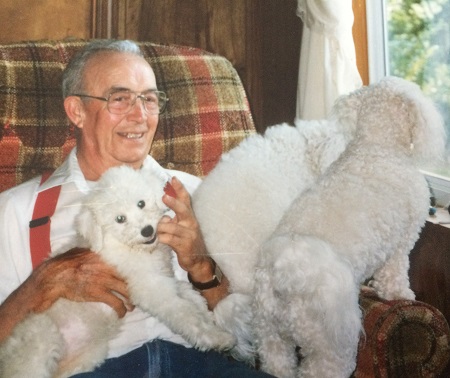
I Swan--Uncle Lowell and three dogs

My Uncle Lowell, like many in our family, loved to use idioms and slang. He often expressed surprise with, “I swan.” He occasionally changed that to:

  • “I’ll swan.”
  • “I swanny.”
  • “Well, I swan.”
  • “I declare.”

All meant the same.

Uncle Lowell’s “I swan” meant something happened he did not expect.

He may or may not have known it also meant the same as “I swear.”

Like most of us, Uncle Lowell preferred pleasant surprises:

  • News of a new grandchild
  • Gifts out of the blue
  • Contact from an old friend

Unfortunately, he also received unpleasant surprises:

  • Deaths of friends or family members
  • Bad accidents
  • Weather related crop losses

However, Uncle Lowell was a tough cookie.

He often laughed through his troubles by:

  • Telling tall tales
  • Playing jokes on anyone around him
  • Giving children funny nicknames

Singing also helped him through hard times. I can still hear his deep bass remind us to have a little talk with Jesus.

If Uncle Lowell knew about this post, I have a feeling he would respond, “Well, I swan. Who ever heard of such a thing?”

“Even when I am old and gray, do not forsake me, my God, till I declare your power to the next generation, your mighty acts to all who are to come” (Psalm 71:18 NIV).

Did you have family members like my Uncle Lowell? Please comment below.

Thanks to Stacey Marcum and Gail Gosser for the suggestion. Special thanks to Stacey for the photo.

Subscribe to receive my weekly posts by email and receive a free copy of “Words of Hope for Days that Hurt.”

If you enjoyed this post, please share it with your friends.

The Proof Is in the Pudding

The Proof Is in the Pudding

The proof is in the pudding--bowl of vanilla pudding with raspberriesPudding, or any other food, may look good. It may smell good. Other people may say it tastes good. However, the proof of the pudding is in the eating.

The proof is in the pudding comes from the above longer and older expression, according to The Phrase Finder.

We know anything is good when it works as it should.

Does it fulfill its purpose? To find out, we:

  • Taste food
  • Turn on a computer
  • Drive a car

We test it. If it works, we use it. If it does not work, we get something else.

The proof is in the pudding applies to our work as well.

We don’t know if we have succeeded until we check the final results. Then we know if what we did worked as it should.

We may think we have failed when time will show we succeeded.

  • Our pudding may not be beautiful, but it tastes great.
  • We may think children never listen until they thank us years later.
  • What seemed a failure may lead to a better plan.

We will never know the final results of all our efforts in this life.

Therefore, we should never give up.

When we get discouraged, we:

  • Keep working.
  • Do what God called us to do.
  • Let our light shine.
  • Leave the results in God’s hands.
  • Pray that our work will make a difference long after we are gone.

“His master replied, ‘Well done, good and faithful servant! You have been faithful with a few things; I will put you in charge of many things. Come and share your master’s happiness!’” (Matthew 25:21 NIV).

Thanks to Allen T. Booth, Jr. for the suggestion. Photo courtesy of Pixabay.

Do you have an expression you want explained? If so, please comment below.

Subscribe to receive my weekly posts by email and receive a free copy of “Words of Hope for Days that Hurt.”

If you enjoyed this post, please share it with your friends.

Can of Worms

Can of Worms

Can of Worms--a box of baitWhen we open a can of worms, we find a tangled mess.

Worms wrap around one another. They look and feel gross.

Many in my family enjoy fishing. They use worms as their bait. However, before they can fish, they must untangle the worms.

A can of worms means a problem.

We begin a difficult process. Often complicated, it may cause:

  • Hard times for the people involved
  • Unexpected or bad results
  • Trouble we cannot correct

It can become a real mess.

Often, we prefer to ignore the situation than to deal with it. We want to turn a blind eye.

Some situations are better left alone.

To talk about them or act on them may:

  • Hurt people for no good reason
  • Cause worse problems than before

Other situations need to be solved.

We want to nip them in the bud. However, making a wrong situation right is often hard. We may:

  • Feel uncomfortable with a new way of life
  • Lose power we enjoy
  • Have to change hurtful or abusive behavior
  • Deal with other related problems

At times, we may feel in over our heads. Yet, the sooner we tackle a problem, the sooner we solve it.

Will we do what needs to be done, even if it makes life hard?

“I cling to your commands and follow them as closely as I can. Lord, don’t let me make a mess of things” (Psalm 119: 31 TLB).

Thanks to Janna Babak for the suggestion.

Do you have an expression you want explained? If so, please comment below.

Subscribe to receive my weekly posts by email and receive a free copy of “Words of Hope for Days that Hurt.”

If you enjoyed this post, please share it with your friends.

Food for Thought

Food for Thought

Food for Though-fruit trayFood for thought means something to consider.

What we consider may come from:

  • Our own minds
  • Something we see or read
  • An event
  • Another person (They offer information, or we pick their brain.)

All make us think about an idea.

Much like we digest food in our stomachs, we digest food for thought in our minds.

The digestion process may be easy or hard. We enjoy easy thoughts. However, we probably gain more from the hard ones.

Food we eat may give us food for thought.

Most of us enjoy food. It fills our stomachs and takes away our hunger. In addition, food offers:

  • Fellowship
  • Comfort
  • Fun
  • Learning opportunities

Some people have slim pickings in food. Others of us enjoy more food than we need. Rather than keeping it all for ourselves, perhaps we should consider giving more away. What better way to show an attitude of gratitude?

By sharing with others, our thoughts become action.

Please comment below with your ideas for putting thoughts into actions.

“Whatever is true, whatever is noble, whatever is right, whatever is pure, whatever is lovely, whatever is admirable—if anything is excellent or praiseworthy—think about such things” (Philippians 4:8 NIV).

Thanks to Carole Fite for the suggestion.

Subscribe to receive my weekly posts by email and receive a free copy of “Words of Hope for Days that Hurt.”

If you enjoyed this post, please share it with your friends.

Cool as a Cucumber

Cool as a Cucumber

Cool as a Cucumber--sliced cucumberSome people stay cool as a cucumber.

Whether good times or bad, they remain calm.

Cucumbers are mostly water, which keeps them cool. A slice of cucumber in a glass of water provides cool refreshment on a hot summer day.

However, cool as a cucumber does not refer to a cool temperature. It means people who rarely get upset.

  • Plans don’t go their way. They make other plans.
  • People mistreat them. They still treat those people well.
  • Losses occur. They give thanks for what they had.

They live an easy-does-it life and look for the light at the end of the tunnel.

Few things get them down.

When they do get down, they soon rise again and keep going. They know that nothing in this life lasts forever. Therefore, they make the most of the moments they have.

Cool as a cucumber people spread peace.

By staying calm and peaceful, they help people around them stay calm and peaceful.

Peace that never fails can be found when anyone lets go and lets God.

“[God’s] peace will keep your thoughts and your hearts quiet and at rest as you trust in Christ Jesus” (Philippians 4:7 TLB).

Thanks to Janna Babak for the suggestion.

Do you have an expression you want explained? If so, please comment below.

Subscribe to receive my weekly posts by email and receive a free copy of “Words of Hope for Days that Hurt.”

If you enjoyed this post, please share it with your friends.

Consider the Source

Consider the Source

Consider the Source--Bonneville Salt Flats
Bonneville Salt Flats

Before we trust anyone or anything, we consider the source.

 We do not want to:

  • Eat food from a garbage can
  • Buy a car from a junk store
  • Drink water from a lake filled with salt

We usually trust what was good, safe, and trustworthy in the past.

However, if anything has not been good, safe, or trustworthy, we do not trust them now.

The same applies to people.

Have they:

  • Made many mistakes? If so, we will not ask their help.
  • Proved themselves trustworthy? If so, we usually trust them.
  • Hurt others? If so, we fear they may hurt us.

Consider the source is often a warning.

It tells us to be careful.

If we want others to trust us, we must prove worthy of their trust.

We build a reputation by every:

  • Choice we make
  • Action we take
  • Word we say
  • Attitude we show

May others always know us as a source worthy of their trust – as good as our word.

“What a wonderful God we have—he is the Father of our Lord Jesus Christ, the source of every mercy, and the one who so wonderfully comforts and strengthens us in our hardships and trials. And why does he do this? So that when others are troubled, needing our sympathy and encouragement, we can pass on to them this same help and comfort God has given us” (2 Corinthians 1:3-4 TLB).

Thanks to Becky Nash Rowe for the suggestion

Do you have an expression you want explained? If so, please comment below.

Subscribe to receive my weekly posts by email and receive a free copy of “Words of Hope for Days that Hurt.”

If you enjoyed this post, please share it with your friends.