Browsed by
Category: Self-Improvement

Red Herring

Red Herring

Red Herring-school of fishFew of us like to discuss difficult issues. Instead, we turn attention from the facts with a red herring.

This expression refers to a distraction from crucial matters.

A red herring is a dried smoked fish. Smoking to preserve the herring creates its red color.

The Free Dictionary says the expression may have come from using the fish’s strong smell to distract hunting dogs from a trail.

It may also have come from a writer “who used the scent-laying image as a metaphor.” Mystery writers still give misleading clues about “who-done-it.”

Children frequently use a red herring.

They don’t want to:

  • Complete chores.
  • Work on school assignments.
  • Admit when they disobey.

Instead, they:

  • Complain about unfair rules.
  • Ask irrelevant questions.
  • Talk about another child’s behavior.

A red herring from adults causes much greater harm.

Like children, we distract attention from:

  • Responsibilities we want to avoid
  • Main issues
  • Poor choices

We focus away from our involvement in:

  • Abuse, neglect, or other criminal activity
  • Political misdeeds
  • Business errors

Rather than do what we should, we:

  • Blame innocent people.
  • Focus on unrelated issues.
  • Make self-centered decisions.

A red herring often misleads as well as distracts.

We don’t just chase rabbits. We deliberately point people in the wrong direction.

Enjoy novels with red herrings. Avoid red herrings in real life.

“Jesus answered: ‘Watch out that no one deceives you’” (Matthew 24:4 NIV).

Thanks to Kay Emerick for the suggestion. Image by Hans from Pixabay.

Do you have an expression you want explained or thoughts about this one? If so, please comment below.

Subscribe to receive my weekly posts by email and receive a free copy of “Words of Hope for Days that Hurt.”

If you enjoyed this post, please share it with your friends.

Close but No Cigar

Close but No Cigar

Close but No Cigar--booths with Farris wheel in backgroundEvery summer of my childhood, I looked forward to a county fair. Several booths offered games with prizes. When I failed to win, the booth operator occasionally said, “Close but no cigar.”

Close but no cigar means almost, but not quite, successful.

That happens when we:

  • Barely miss the bull’s eye on a target
  • Almost win a contest
  • Make a close but incorrect answer

Years ago, cigars were a frequent prize.

The Free Dictionary says, “This expression comes from the old US custom of giving a cigar as a prize in fairground games of skill.”

Close but no cigar can encourage or discourage.

Some of us try again and try harder. Others give up in defeat.

Keep working toward worthwhile goals.

Don’t worry about what matters little. Trinkets from fairs rarely last. Focus on goals with eternal value.

Everyone falls short of perfection.

We miss the mark in life. For that reason, Jesus, the only perfect one, came to pay the price for our imperfections. Jesus offers life’s greatest prize, forgiveness for our sins and eternal life with Him.

“All have sinned and fall short of the glory of God. The wages of sin is death, but the gift of God is eternal life in Christ Jesus our Lord.” (Romans 3:23; 6:23 NIV).

Thanks to Ann Klotz, Lindy Pierce, and Becky Nash Rowe for the suggestion. Image by Jill Wellington from Pixabay.

Do you have an expression you want explained or thoughts about this one? If so, please comment below.

Subscribe to receive my weekly posts by email and receive a free copy of “Words of Hope for Days that Hurt.”

If you enjoyed this post, please share it with your friends.

Onward and Upward

Onward and Upward

Onward and Upward--Old Faithful geyserOur family loves to visit Yellowstone National Park. We always watch the Old Faithful geyser erupt. Several times a day, Old Faithful moves onward and upward.

This wonder of nature reminds us of the importance of our own faithfulness.

Onward and upward means to keep moving forward.

We work toward:

  • Improvement
  • Progress
  • Success

Onward and upward often means steady rather than sudden growth.

Old Faithful begins with a sputter but then grows higher and higher. We don’t have to start fast either. However, we do want to keep going and growing.

Onward and upward encourages us not to give up.

We all face difficulties and disappointments. Yet, we advance one step at a time. Failure teaches us what does not work. To reach our goals, we keep on keeping on.

This challenge applies to every age and circumstance.

  • Youth graduating from school
  • Adults seeking the right job
  • Retirees beginning a new stage in life

As long as we live, we have meaning and purpose. May we always seek to find and fulfill them to the best of our abilities.

Our greatest advancement occurs when we step from this life into the next.

If we follow Jesus’ plan for our lives, we find the best now and through eternity. Let’s keep moving onward and upward.

“In keeping with his promise we are looking forward to a new heaven and a new earth, where righteousness dwells” (2 Peter 3:13 NIV).

Thanks to Joy S. Taylor for the suggestion.

Look Like a Million Bucks

Look Like a Million Bucks

Look Like a Million Bucks--two older womenMom and Aunt Ersie always wanted to look like a million bucks. On their worst days, they still liked to look good. At Aunt Ersie’s eightieth birthday celebration, they certainly achieved their goal.

If we look like a million bucks, we look great.

A million bucks means a million dollars. That’s looking good! An attractive appearance, like we just stepped out of a band box, usually makes us feel better. Try it.

If we feel like a million bucks, we feel great.

Other steps for a happy and healthy life include:

  • Exercise
  • A balanced diet
  • Plenty of water
  • A regular sleep schedule

Positive thoughts help us look and feel better.

Likewise, negative thoughts lead to negative appearances and emotions. For the best life, avoid stinking thinking.

We never want to look like a million bucks but treat others poorly.

Remember, pretty is as pretty does.

God gives us worth and beauty.

We are all different, but God loves every one of us. That’s worth more than a million bucks!

“Your beauty should not come from outward adornment, such as elaborate hairstyles and the wearing of gold jewelry or fine clothes.  Rather, it should be that of your inner self, the unfading beauty of a gentle and quiet spirit, which is of great worth in God’s sight” (1 Peter 3:3-4 NIV).

Thanks to Margaret Jane Cleasby for the suggestion.

Do you have an expression you want explained or thoughts about this one? If so, please comment below.

Subscribe to receive my weekly posts by email and receive a free copy of “Words of Hope for Days that Hurt.”

If you enjoyed this post, please share it with your friends.

Practice What You Preach

Practice What You Preach

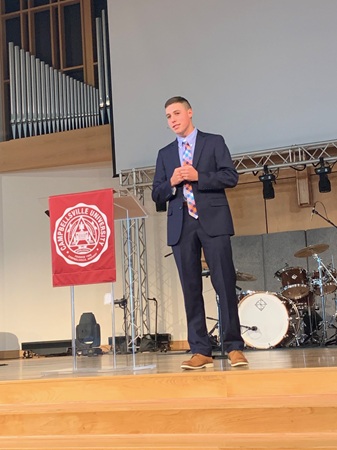
Practice What You Preach-young ministerial student on stageWhen I was in college, we lived next door to a ministerial student. Every week, we heard him practice what he planned to preach. Our walls were paper thin.

If you practice what you preach, you do what you tell other people to do.

This proverb warns against hypocrisy. It wasn’t enough for the preaching student to practice saying his words. He also needed to practice doing them.

Example has a greater impact than advice.

  • Children pay more attention to parents’ behavior than words.
  • Students listen better if teachers’ actions match their assignments.
  • Employees watch their employers for acceptable business practices.

You are the real McCoy if you practice what you preach.

No pretending. No falsehood. You live what you say.

The world is filled with pretense and falsehood, but you have a better choice.

Jesus set the example. When we follow Jesus, we live and tell His truth to a world that needs to see and hear it.

“Do not do what they do, for they do not practice what they preach” (Matthew 23:3 NIV).

Thanks to Meghan Bowker, Editor, Missions Mosaic, for the idea and to Hayden Dabney, children’s minister at Campbellsville Baptist Church, for the photo.

Do you have an expression you want explained or thoughts about this one? If so, please comment below.

Subscribe to receive my weekly posts by email and receive a free copy of “Words of Hope for Days that Hurt.”

If you enjoyed this post, please share it with your friends.
The Bee’s Knees

The Bee’s Knees

The Bee's Knees-bee on flower with blue bloomsThe bee’s knees makes me think of the 1920s. Several unusual expressions became popular then.

The bee’s knees means excellent.

Although the expression may be outdated, desire for the best continues.

We want to:

  • Live great lives.
  • Maintain strong relationships.
  • Buy high-quality items.

We see that in advertisements for:

  • Fancy cars
  • Elaborate homes
  • High-class clothes
  • Outstanding entertainment

The origin of the expression remains uncertain.

According to The Free Dictionary, “Some people believe [it] refers to the way … bees transfer pollen … from their bodies to pollen sacs on their back legs.” It also says the expression first referred to “something small and insignificant.” However, “it quickly developed into its current … opposite meaning.”

The Phrase Finder lists other possibilities. It says the expression “was originally an 18th century fanciful phrase.” The bees knees “referred to something that didn’t exist … like a left-handed hammer. This meaning is no longer used.”

Both sites mention the expression’s addition to the “nonsense language” of the Roaring Twenties.

Like the bee’s knees, let’s be the best we can be.

The expression’s language may be nonsense. Its meaning is not. Let’s make the world better for everyone.

“Don’t think only of yourself. Try to think of the other fellow, too, and what is best for him” (1 Corinthians 10:24 TLB).

Thanks to Jane Ashley Pace for the suggestion and to Debbie Tapscott for the photo.

Do you have an expression you want explained or thoughts about this one? If so, please comment below.

Subscribe to receive my weekly posts by email and receive a free copy of “Words of Hope for Days that Hurt.”

If you enjoyed this post, please share it with your friends.

Down Pat

Down Pat

Down Pat--open books with pen and pencil holders beside themDo you know people who appear to have life down pat? Everything they do, they do well.

  • They excel at athletics.
  • Music flows from them.
  • Academic awards cover their walls.
  • They smile through every hardship.

Down pat means you have learned something well.

The Free Dictionary defines it as “Learned, mastered, or understood perfectly, to the point of requiring little or no focus to do, recall, or accomplish.” You hit the bull’s eye.

To get anything down pat usually requires extra effort.

Before you make it look easy, you must:

  • Work hard
  • Study
  • Practice
  • Memorize

You need to develop your natural abilities.

Talent alone rarely gets you where you want to go. Experts were once students. When you study hard, your skills grow.

God gives the talent. People add the elbow grease.

“I applied my heart to what I observed and learned a lesson from what I saw” (Proverbs 24:32).

Thanks to Katherine Pasour for the suggestion.

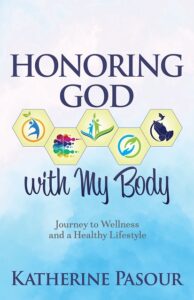
Honoring God with My Body book coverDo you have an expression you want explained or thoughts about this one? If so, please comment below.

Subscribe to receive my weekly posts by email and receive a free copy of “Words of Hope for Days that Hurt.” On 8-23-25, I will randomly select one name from my mailing list to also receive a free copy of Katherine Pasour’s book, Honoring God with My Body: Journey to Wellness and a Healthy Lifestyle. If your name is already on the mailing list, you are automatically entered. Please encourage your friends to subscribe.

If you enjoyed this post, please share it with your friends. (The Facebook share button did not work recently, but that has been corrected.)

Off the Top of My Head

Off the Top of My Head

Off the Top of My Head--two facing head outlines filled with booksHave you ever felt swamped with work, and someone asked you a question? Perhaps you began your response with, “Off the top of my head …”

Off the top of my head means you reply with little thought.

Your answer requires minimal brain power. However, if you fail to check your memory, your guess might not be right.

Off the top of my head works best if you know your subject well.

The most reliable information comes from experts in the field.

  • Plumbers know how to fix leaky faucets.
  • Doctors understand health issues.
  • Chefs prepare tasty food.

Experts often consult with one another since two heads are better than one.

Verifying usually works best.

Therefore:

  • Reliable plumbers check leaks.
  • Trustworthy doctors perform tests.
  • Top chefs try recipes before they share them.

They investigate before they act—a valuable lesson for everyone.

“Do not be quick with your mouth, do not be hasty in your heart to utter anything before God. (Ecclesiastes 5:2 NIV).

Thanks to Melissa Bright for the suggestion. Image by Gerd Altmann from Pixabay.

Do you have an expression you want explained or thoughts about this one? If so, please comment below.

Subscribe to receive my weekly posts by email and receive a free copy of “Words of Hope for Days that Hurt.”

If you enjoyed this post, please share it with your friends.

Milktoast

Milktoast

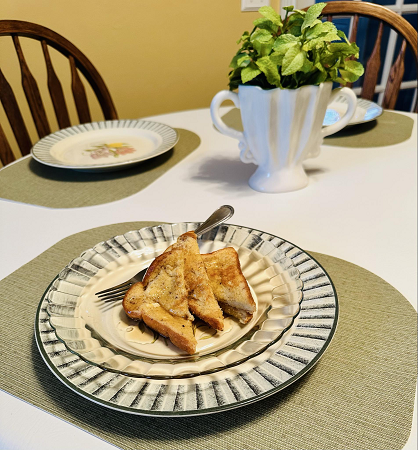
Milktoast--milktoast on a plate on a table with flowers in the middleI don’t want milktoast for breakfast or any other meal. Although I like milk and toast, I prefer them separate. I also want more flavor. Even with sugar, cinnamon, or other spices added, it remains a bland dish. Give me eggs or cereal with fruit and nuts.

Neither do I want to be a milktoast person or give milktoast responses. However, I have been guilty of both.

Milktoast means weak or ineffective.

It can be a noun or an adjective. The person or response is:

Milquetoast mean the same.

According to The Free Dictionary, the character description refers to H. T. Webster’s comic strip character, Caspar Milquetoast. Like edible milktoast (or milk toast), Caspar had a bland personality.

Milktoast is easy to digest.

With so little flavor, it does not upset the body’s system. Neither do weak people upset their social systems of:

  • Business
  • Government
  • Religion
  • Families

They value the status quo above truth or progress.

God seeks boldness in service.

Certainly, quietness and meekness are often appropriate. Yet, God expects and provides courage when the time comes to speak up and stand tall.

“Now, Lord, consider their threats and enable your servants to speak your word with great boldness” (Acts 4:29 NIV).

Thanks to Gail Johnson for the suggestion and to Jeri Gumm Stone for the photo.

The Early Bird Gets the Worm Matin Wiles book
Version 1.0.0

Do you have an expression you want explained or thoughts about this one? If so, please comment below.

Subscribe to receive my weekly posts by email and receive a free copy of “Words of Hope for Days that Hurt.” On 3-29-25, one name will be randomly selected from my mailing list to also receive a free copy of Martin Wiles’s book, Don’t Just Live…Really Live.” If your name is already on the mailing list, you are automatically entered. Please encourage your friends to subscribe.

If you enjoyed this post, please share it with your friends.

Stinking Thinking

Stinking Thinking

Stinking Thinking-skunk behind a logJust as we avoid a skunk’s stinking spray, we want to avoid stinking thinking. We accomplish nothing when we focus on messages like:

  • Woe is me.
  • I’m awful.
  • You’re awful.
  • The whole world is awful.
  • Life is awful.
  • Nothing will ever get better.

Do you see a pattern here?

Stinking thinking means negative thinking.

We see only the wrong, never the right. Everything and everyone ruffle our feathers.

Rather than happy-go-lucky we remain:

Focused on problems, our outlook grows progressively worse.

*Stinking thinking can lead to emotional problems.

After long stretches of negative self-talk, we have a tough time changing. Our thinking, feelings, and actions grow worse. As our stress level increases, tolerance decreases.

God offers a better life.

The one and only God who created the world created us. God also:

  • Loves us
  • Has a special plan for us
  • Forgives us when we repent of our wrongs
  • Gives eternal life and a home in heaven to all who follow Jesus

That should give us a positive outlook on life. Don’t you agree?

“Their thinking became futile and their foolish hearts were darkened” (Romans 1:21 NIV).

Thanks to Becky Nash Rowe for the suggestion. Photo by Jack Bulmer on Pexels.

Do you have other examples of stinking thinking or an expression you want explained? If so, please comment below.

Subscribe to receive my weekly posts by email and receive a free copy of “Words of Hope for Days that Hurt.”

If you enjoyed this post, please share it with your friends.
*Seek professional help if needed to overcome extreme negative thought patterns.