
Browsed by
Category: Self-Improvement

Under Wraps

Under Wraps

Under Wraps--gifts under a Christmas treeDuring Christmas, we keep a lot of things under wraps. We hide gifts in closets and under beds. When no one is looking, we wrap our gifts with paper and bows. Once under the tree, everyone wants to know what those packages contain.

If we keep anything under wraps, we keep it a secret.

We don’t want others to know our information. Our secret usually lasts a short time. Examples, other than Christmas presents, include:

  • News reports
  • An engagement
  • Whether a baby will be a boy or girl

We don’t want others to know what is under wraps until the right time.

If people spill the beans, they ruin our plans. Therefore, we tell them to bite their tongues – to stay quiet.

Not everything we wrap is under wraps.

We want to share most good news.

The greatest gift came wrapped in strips of cloth.

When Jesus was born, angels announced His birth to shepherds. The shepherds found Jesus lying in a manger. Afterwards, they told others what they had heard and seen.

Let’s not keep the good news of Jesus under wraps.

Instead, let’s share with the world what the angels proclaimed.

“A Savior has been born to you; he is the Messiah, the Lord. This will be a sign to you: You will find a baby wrapped in cloths and lying in a manger” (Luke 2:11-12 NIV).

Thanks to Joy S. Taylor for the suggestion.

Do you have an expression you want explained or a thought about this one? If so, please comment below.

Subscribe to receive my weekly posts by email and receive a free copy of “Words of Hope for Days that Hurt.”

If you enjoyed this post, please share it with your friends.

Swan Song

Swan Song

Swan Song--swan with wings spreadSwans capture our attention like few other birds. Their grace and beauty amaze us. The image of a swan song increases their attraction.

A swan song is a last performance or work.

We usually relate it to singers or other performers. Farewell tours have become common. However, swan song refers to any worker’s final effort before death or retirement.

This expression comes from an ancient legend that swans sing before they die.

The legend says swans remain mute until their final beautiful, mournful music. According to The Phrase Finder, the legend is false. All swans “have a variety of vocal sounds and they don’t sing before they die.”

Yet, the legend does tell a beautiful story. It appears in several well-known works, including:

  • Shakespeare’s The Merchant of Venice
  • The Orlando Gibbons madrigal, “The Silver Swan

May we never wait until our swan song to do our best.

God created us for a purpose. Whatever our gifts, let’s give life our best, from the beginning to the end of the road.

“I will sing to the Lord all my life; I will sing praise to my God as long as I live”
 (Psalm 104:33).

Thanks to Carole Fite for the suggestion. Image by miniformat65 from Pixabay.

Do you have an expression you want explained or a thought about this one? If so, please comment below.

Subscribe to receive my weekly posts by email and receive a free copy of “Words of Hope for Days that Hurt.”

If you enjoyed this post, please share it with your friends.
Hands Are Tied

Hands Are Tied

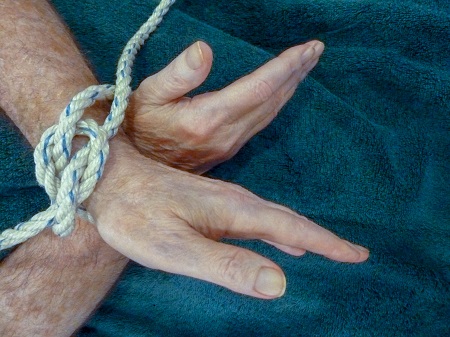
Hands Are Tied--rope tied around wristsMost of us experience times we want to do something but can’t. Our hands are tied. Reasons include:

  • We are too busy.
  • Our boss does not allow it.
  • We lack necessary resources.
  • The law or other rules prevent it.

If our hands are tied, we are not free to act.

Like a prisoner, circumstances limit us. Although we want to make a change or help someone, we can’t.

Occasionally we say our hands are tied as an excuse.

We don’t want to do something. Yet, we say, “I can’t” rather than “I don’t want to.” Most people recognize such dishonesty immediately, or they learn about it later. Better to stay as good as our word and speak only the truth.

Many times, we give up too soon.

We try on our own and fall flat. If we pray, God may open new possibilities. The impossible becomes possible with God.

Make a difference when we can. Seek help when we can’t.

 Everyone can make a positive difference. Rarely are our hands tied.

With God’s help and the help of other people, we can make our world a better place.

“Let us then approach God’s throne of grace with confidence, so that we may receive mercy and find grace to help us in our time of need” Hebrews 4:16 NIV).

Thanks to Patty Cooper Emerson for the suggestion.

Do you have an expression you want explained or a thought about this one? If so, please comment below.

Subscribe to receive my weekly posts by email and receive a free copy of “Words of Hope for Days that Hurt.”

If you enjoyed this post, please share it with your friends.
Butter Up

Butter Up

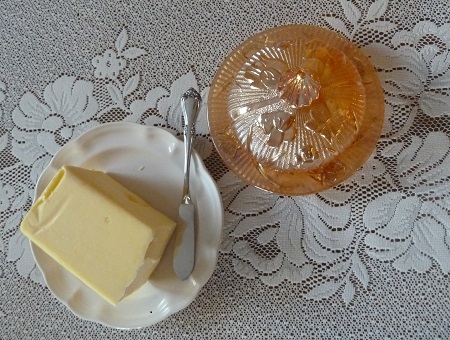
Butter Up-butter with knife and a butter moldWhen we prepare special meals or snacks, we often butter up our food to make it taste better. What would holiday meals be like without butter for the turkey, rolls, and desserts? Who wants to eat popcorn without butter during a movie? Most people find butter a pleasing addition.

Not my husband. When he was three years old, his grandmother used a mold to create a beautiful dish of butter. When he saw it on the kitchen table, he thought it was ice cream. Like most little boys would do, he found a spoon and took a bite. He still hates butter.

To butter up means to flatter or be extra nice to someone.

We usually do this before we:

  • Ask for a favor
  • Give bad news

This expression applies to most relationships.

Children butter up their parents before they ask for:

  • Money
  • A special toy or gift
  • Use of the car

Or, children may have to tell parents of :

  • Trouble they caused
  • Bad grades
  • Chores they failed to do

Students also butter up their teachers, hoping for a better grade. Employees butter up their bosses before requesting a raise.

If we do our best, we don’t have to butter up anyone.

Instead of being nice in order to get what we want, why not be nice all the time? Rather than put off bad news, why not be honest from the start? We never need to butter up if we stay on the up and up and do what we need to do.

 “You know we never used flattery, nor did we put on a mask to cover up greed—God is our witness” (1 Thessalonians 2:5 NIV).

Thanks to Regina Graham for the suggestion.

Do you have an expression you want explained or a thought about this one? If so, please comment below.

Subscribe to receive my weekly posts by email and receive a free copy of “Words of Hope for Days that Hurt.”

If you enjoyed this post, please share it with your friends.

A Day Late and a Dollar Short

A Day Late and a Dollar Short

A Day Late and a Dollar Short--several dollar bills spread outAs a child, I often heard people say they were a day late and a dollar short. They usually meant they did not have enough money to buy something or pay a bill.

However, I learned the expression has a greater meaning.

A day late and a dollar short means to be unprepared and too late.

That can be money for purchases or bills, as I thought. It can also mean not enough effort in:

  • Relationships
  • Work
  • Personal goals

In each one, people fail to get the ball rolling. They dillydally when they need to get to work.

Lack of effort and failure to be on time benefit no one.

Everyone loses.

  • Family members who ignore one another threaten their relationships
  • Lazy workers hurt their employers and risk losing their jobs.
  • Anyone who invests little time or effort fails to achieve their best.

Prepare. Work well. Use time wisely.

A good plan for now and eternity, don’t you agree?

“Jesus replied, ‘My light will shine out for you just a little while longer. Walk in it while you can, and go where you want to go before the darkness falls, for then it will be too late for you to find your way’” (John 12:35 TLB).

Thanks to Emily Akin for the suggestion.

Do you have an expression you want explained or a thought about this one? If so, please comment below.

Subscribe to receive my weekly posts by email and receive a free copy of “Words of Hope for Days that Hurt.”

If you enjoyed this post, please share it with your friends.
Congratulations to Betty Johnson whose name was randomly drawn from my mailing list for a free copy of Tracy Crump’s book, Health, Healing, and Wholeness: Devotions of Hope in the Midst of Illness.

Take the Cotton Out of Your Ears and Put It in Your Mouth

Take the Cotton Out of Your Ears and Put It in Your Mouth

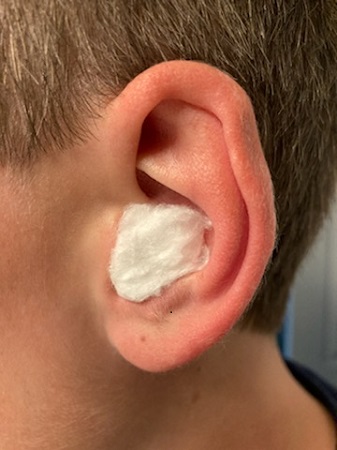
Take the Cotton Out of Your Ears and Put It in Your Mouth--cotton balls in an earA friend’s mother-in-law used to tell family members, “Take the cotton out of your ears and put it in your mouth.” Many of us have probably heard the same or similar expressions.

Take the cotton out of your ears and put it in your mouth means to stop talking and start listening.

When we talk all the time, we fail to hear what others say. Their words go in one ear and out the other.

God gave us two ears and one mouth. That tells us something important, don’t you think? If we listen more than talk, we have fewer conflicts and greater cooperation.

We learn more when we listen.            

If we listen closely, all ears, we hear – not just noise or words, but also what the other person means.

We regret less when we listen.

If we wait to talk until we hear the other person’s point of view, we have fewer problems. We avoid putting our foot in our mouth.

The next time we want to talk too much rather than listen, let’s remember how God created us– one mouth, two ears.

“You have seen many things, but you pay no attention; your ears are open, but you do not listen” (Isaiah 42:20 NIV).

Thanks to Brad Palmer for the suggestion and to Travis Gosser for the photo.

Do you have an expression you want explained or a thought about this one? If so, please comment below.

Subscribe to receive my weekly posts by email and receive a free copy of “Words of Hope for Days that Hurt.”

If you enjoyed this post, please share it with your friends.
Butterflies in My Stomach

Butterflies in My Stomach

Butterflies in My Stomach--butterfly on flowerI love butterflies, don’t you? I watch for them in gardens, yards, and on walks. Their colors and the way they flutter through the air thrill me. A butterfly makes any day better. However, I don’t love butterflies in my stomach.

Butterflies in my stomach mean I feel nervous.

Finding butterflies brings joy. Feeling them in my stomach … not so much.

Common causes for butterflies in my stomach include:

  • Public speaking
  • Job interviews
  • Singing or acting in public
  • Tests

Feeling a little nervous can be a good thing.

It makes me:

  • Prepare better
  • Try harder
  • Do my best

Feeling too nervous hurts my health.

It causes me to tie myself in knots, I suffer physically, mentally, and emotionally.

When butterflies flutter too long or hard, I remind myself not to sweat it. If I shake off the stress and give God control, God leads me through every challenge.

Thanks to Darrin Jenkins for the suggestion and the picture.

What causes butterflies in your stomach? Please comment .

Subscribe to receive my weekly posts by email and receive a free copy of “Words of Hope for Days that Hurt.”

If you enjoyed this post, please share it with your friends.

Stuck Up

Stuck Up

Stuck Up--Squirrel on top of bird feederI caught this little squirrel where he should not be, doing what he should not do. The feeder was for birds, not squirrels. Yet, there he sat, stuck up and daring me to do anything about it.
Squirrels apparently believe rules about bird feeders don’t apply to them. They ignore such restrictions. They focus on what they want and do whatever it takes to get it:

  • Climb poles
  • Hang from limbs
  • Turn upside down

If it benefits them, who cares about the birds?

Many people exhibit a similar attitude.

Stuck up people feel proud or superior.

They:

  • Have a big head
  • Look down on others
  • Feel overconfident
  • Act conceited

Stuck up people’s egos rule their actions.

 Because they believe they are better than anyone else, they:

  • Use people to get what they want
  • Mistreat people
  • Work only to benefit themselves

Hardly anyone likes such rude, highfalutin ways.

Stuck up people’s behavior often leads to trouble.

Many get caught where they should not be, doing what they should not do.

All people have worth.

No one is more or less important than anyone else. No one has any good reason to act arrogant –  too big for their britches.

God offers a better way.

  • Love one another.
  • Respect one another.
  • Care for one another, regardless of status.

“Don’t be stuck-up and think you’re better than everyone else” (Proverbs 30:13 MSG).

Thanks to Betty C. Johnson for the suggestion and to Jenny Kuo for the photo.

Do you have an expression you want explained or a thought about this one? If so, please comment below.

Subscribe to receive my weekly posts by email and receive a free copy of “Words of Hope for Days that Hurt.”

If you enjoyed this post, please share it with your friends.

Like a Broken Record

Like a Broken Record

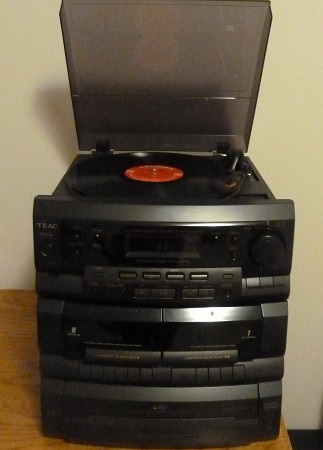
Like a broken record--an open record playerFor young people unfamiliar with vintage audio, saying someone sounds like a broken record fails to compute. Many can’t relate to a record player needle landing on a scratched vinyl record—a sound definitely not music to our ears.

  • The needle gets stuck in a record groove.
  • The same line plays over and over again.
  • We must manually correct our broken record before the music proceeds.

How like those records we sound when we constantly beg for something. We may rephrase our requests, but the sound comes out the same — nag, nag, nag. I want it. I want it. I want it. Did you hear me? I want it!

We may receive our request, just so we will shut up and go away. Granted, the squeaky wheel gets the oil. Yet we also know that most people try to avoid that squeaky wheel.

Many of us could benefit from a little assertiveness training. We don’t want to sit back, never sharing our needs.  At the same time, we don’t want to annoy people until we drive them away.

Speak well. Speak clearly. Know when to stop repeating.

“Much dreaming and many words are meaningless. Therefore fear God” (Ecclesiastes 5:7 NIV).

Thanks to Karen Hart for the suggestion.

Do you have an expression you want explained or a thought about this one? If so, please comment below.

Subscribe to receive my weekly posts by email and receive a free copy of “Words of Hope for Days that Hurt.”

If you enjoyed this post, please share it with your friends.

Katy Bar the Door

Katy Bar the Door

Katy Bar the Door: old double doors with bar across themGet ready. Beware. Katy bar the door.

My dad often used this expression if he expected trouble, such as:

  • Bad weather
  • Economic problems
  • Political unrest
  • Broken relationships

Katy (or Katie) bar the door warns of danger ahead.

A common southern expression, it tells people to be careful. They need to watch their step and prepare for hard times ahead.

If people expect someone to try to break in their house, they lock (or bar) their door. They take necessary precautions.

The origin of Katy bar the door is uncertain.

 According to The Phrase Finder, possibilities include:

  • A Scottish folk song, “Get Up and Bar the Door”
  • The attempt of Catherine Douglas to save the Scottish King James I

Whatever the origin, use caution when facing danger. 

Better safe than sorry. Take the right steps to protect against possible threats.

“The clever see danger and hide; but the simple go on, and suffer for it” (Proverbs 27:12 NRSV).

Thanks to Brad Leverett for the suggestion. Image by József Kincse from Pixabay.

Do you have an expression you want explained or a thought about this one? If so, please comment below.

Subscribe to receive my weekly posts by email and receive a free copy of “Words of Hope for Days that Hurt.”

If you enjoyed this post, please share it with your friends.