Browsed by
Category: Self-Improvement

Worth One’s Salt

Worth One’s Salt

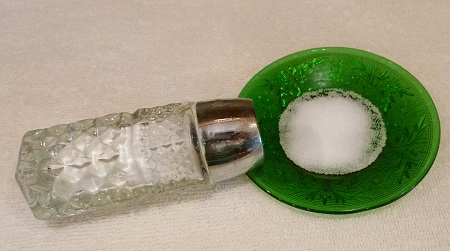
Worth One's Salt--saltshaker over a dish of saltMy friend Martha said her father described a few of her boyfriends as not worth the salt that went in their bread. He meant they were not worth much.

To be worth one’s salt means a person does a job well.

According to The Phrase Finder, “To be ‘worth one’s salt’ is to be worth one’s pay. Our word salary derives from the Latin salarium, (sal is the Latin word for salt).”

A person worth one’s salt earns respect because of good work. He or she gives a good day’s work for a good day’s pay rather than give a lick and a promise.

Salt adds flavor to food.

If not overdone, salt makes many foods taste better.

Salt also preserves food.

It helps prevent spoiling.

Like salt, people can add flavor to and help preserve the world.

Anyone makes the world a better place to live when he or she.

  • Does the best work possible
  • Takes care of God’s creation
  • Helps and respects others
  • Shares God’s love

“Salt is good, but if it loses its saltiness, how can you make it salty again? Have salt among yourselves, and be at peace with each other” (Mark 9:50 NIV).

Thanks to Martha Patton for the suggestion.

Do you have an expression you want explained? If so, please comment below.

Subscribe to receive my weekly posts by email and receive a free copy of “Words of Hope for Days that Hurt.”

If you enjoyed this post, please share it with your friends.

The Whole Nine Yards

The Whole Nine Yards

The Whole Nine Yards--shelves of fabricMy friend Karen collects fabric. She sews it into clothing, curtains, cushions, and quilts. You name it, Karen sews it. She does the whole nine yards. She also makes it look as easy as pie.
We don’t know the origin of the whole nine yards. A few ideas have been suggested, but none can be proved. Possible ideas relate to:

  • Fabric
  • Cement
  • Distance

We measure all those in yards.

The whole nine yards means all of something.

  • The total amount
  • A full measure
  • The entire distance
  • Everything

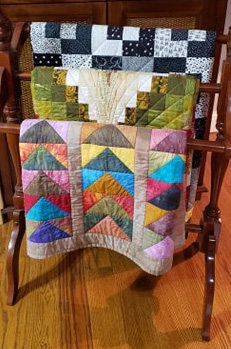
The Whole Nine Yards--three quilts on rackKaren sews about anything, and all her work is amazing. Other people run long distances, work years on projects, or never miss their favorite activities. Most of us spend time and money on our greatest interests.
Anything worth doing is worth doing well.

Whatever we do, let’s do our best. Let’s go the whole nine yards in:

  • Caring for family, friends, or anyone in need
  • Sharing our faith
  • Working hard
  • Giving of ourselves to others

“Our people must learn to devote themselves to doing what is good, in order to provide for urgent needs and not live unproductive lives” (Titus 3:14).

Thanks to Brad Leverett and Carole Fite for the suggestion. Thanks to Karen Bryant Hall and Quilts by Karen for the photos.

Do you have an expression you want explained? If so, please comment below.

Subscribe to receive my weekly posts by email and receive a free copy of “Words of Hope for Days that Hurt.”

If you enjoyed this post, please share it with your friends.

Good to Go

Good to Go

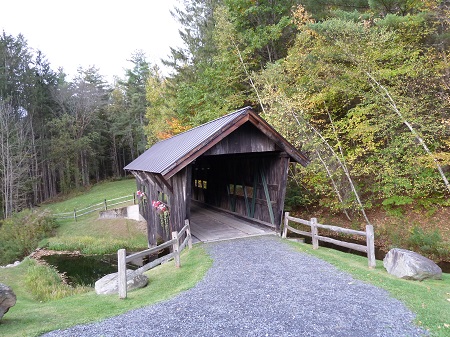
Good to Go--road leading to covered bridge“Are you ready?”

“Yes, we are good to go.”

When planning a trip, we like to hear that news.

Good to go means we are ready.

Excited to hit the trail, we have:

  • Prepared
  • Packed (but no excess baggage)
  • Repaired, if necessary
  • Checked and double-checked

Good to go includes more than travel.

It may refer to our:

  • Health (a return to good health)
  • Possessions (all work well)
  • Activities (ready to start or restart)
  • Work (complete and correct)

Sometimes good to go means ready to stay.

At times, we must stay home because of health issues. When that happens, people call, text, or message to check on us. Questions usually include:

  • Are you okay?
  • Do you need anything?

Once I said, “We are good to go, or – in that case – stay.” What I meant was:

  • We were okay.
  • We did not need anything or to go anywhere.

In this life, let’s stay good to go, whether we stay or go. For the next life, let’s definitely get ready to go.

“So you also must be ready, because the Son of Man will come at an hour when you do not expect him” (Matthew 24:44 NIV).

Do you have an expression you want explained? If so, please comment below.

Subscribe to receive my weekly posts by email and receive a free copy of “Words of Hope for Days that Hurt.”

If you enjoyed this post, please share it with your friends.

The End of Your Rope

The End of Your Rope

The End of Your Rope--climber hanging from a rope“When you reach the end of your rope, tie a knot in it and hang on.” –Franklin D. Roosevelt.

Many can identify with the former president. Hard times hit, and you hurt. You wonder:

  • How will I survive?
  • Who can help?
  • Why did this happen?

When you reach the end of your rope, you feel out of options.

Like a person hanging from a cliff with no more rope, you feel desperate. You have no:

  • Strength
  • Hope
  • Patience
  • Desire to continue

You are ready to give up. You want to throw in the towel.

Problems may be as simple as no time to do all you need to do. However, problems may also be life threatening.

Whatever the problem, hold on.

Tie a knot and hang on for dear life. Help may be on the way. Many people want to help, if you let them know your need. Once you receive what you need, pay it forward by helping someone else.

When you get to the end of your rope, remember two words: “But God.”

You may not know the answer, but God does.

  • Troubles may not stop, but God walks with you through them.
  • Uncertainty may remain, but God gives you peace in the midst of it.
  • Life may look hopeless, but God offers hope for this life and the life to come.

When trials around you cause stress within you, look up.

“But you, God, see the trouble of the afflicted; you consider their grief and take it in hand” (Psalm 10:14 NIV).

Thanks to Ann Knowles for the suggestion. Photo courtesy of Pixabay.

Do you have an expression you want explained? If so, please comment below.

Subscribe to receive my weekly posts by email and receive a free copy of “Words of Hope for Days that Hurt.”

If you enjoyed this post, please share it with your friends.

In the Nick of Time

In the Nick of Time

In the Nick of Time--planes flying toward a setting sunOn a trip to Minneapolis years ago, I caught a plane just in the nick of time. My first plane had engine trouble, so I had to change flights. That made me late for my second flight. As a result, I had to run through the airport about 1:00 a.m. to board my plane on time.

In the nick of time means at the last moment.

  • Doctors perform surgery just in time to save a life.
  • Basketball players make winning shots in the last seconds of games.
  • Parents grab children before they run into traffic.

Any delay beyond the nick of time is too late.

  • I would have missed my flight. (I did miss the boat later on that same trip.)
  • Doctors’ patients would die.
  • Basketball teams would lose.
  • Cars would hit children

Each situation goes down to the wire but is saved by the bell.

A good plan helps avoid the nick of time.

  • Prepare for the unexpected.
  • Stay organized.
  • Focus on the most important.
  • Never put off what needs to be done today.

“As God’s co-workers we urge you not to receive God’s grace in vain. For he says, ‘In the time of my favor I heard you, and in the day of salvation I helped you.’ I tell you, now is the time of God’s favor, now is the day of salvation” (2 Corinthians 6:1-2).

Thanks to Jane Ashley Pace for the suggestion.

Do you have an expression you want explained? If so, please comment below.

Subscribe to receive my weekly posts by email and receive a free copy of “Words of Hope for Days that Hurt.”

If you enjoyed this post, please share it with your friends.

The Early Bird Gets the Worm

The Early Bird Gets the Worm

The Early Bird Gets the Worm--Martin Wiles head shotPlease welcome my friend Martin Wiles as today’s guest writer. Martin is the Managing Editor for Christian Devotions and the Administrator/Editor for VineWords. He is an author, English teacher, minister, freelance editor, and the founder of Love Lines from God. His most recent book is Don’t Just Live…Really Live. He and his wife are parents of two and grandparents of six. 
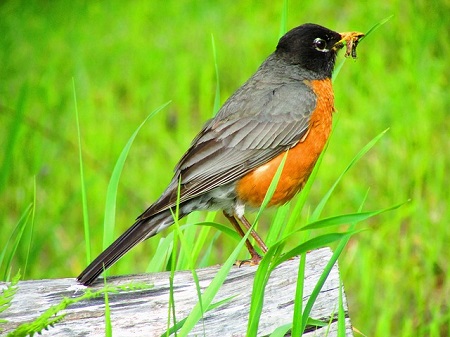
The Early Bird Gets the Worm--robin with worm“The early bird gets the worm.”

The expression first appeared in 1605 in a book of proverbs written by William Camden. The obvious meaning is simple: birds that rise early have the best chance of getting a worm. Late risers get poorer selections. The larger meaning is that arriving early provides a better chance of success.

I’m not sure which relative I first heard use the expression because so many of them did. I come from a family of Type A personalities—competitive, organized, time conscious. Dad arrived early everywhere he went—never right on time. I copied the pattern. If I can’t arrive at my destination at least thirty minutes early, I feel as if I’m late.

Evidently, Jesus found merit in rising early to pray.  Very early in the morning, while it was still dark, Jesus got up, left the house and went off to a solitary place, where he prayed (Mark 1:35 NIV).

I love early mornings. My mind is fresh, cleansed by a good night of sleep. And somehow, I feel as if I can hear God better then than at any other time. Why not give getting somewhere early a try?

Have you had an early bird gets the worm experience? If so, please comment below.

Subscribe to receive Diana’s weekly posts by email and receive a free copy of “Words of Hope for Days that Hurt.”

If you enjoyed this post, please share it with your friends.

Bird photo courtesy of Pixabay.

Cute as a Button

Cute as a Button

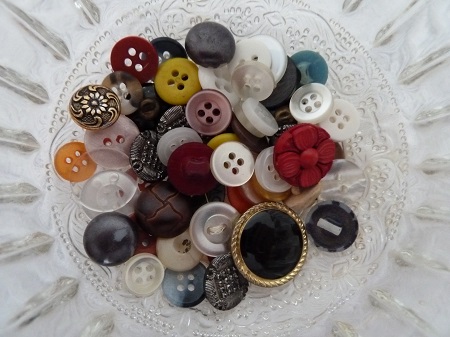
Cute as a Button--bowl of buttons“Isn’t she the cutest thing? Why, she’s as cute as a button.”

I have heard that expression since I was knee high to a grasshopper. People said it to describe:

  • Babies
  • Children and youth of all ages
  • Puppies, kittens, or other animals

Cute as a button usually refers to a small person, animal, or object.

Of course, not all buttons are cute. Neither are all buttons small. However, most are both.

Cute as a Button 2--Granny with dogAs a child, I spent hours playing with my Granny Childress’s buttons. Since she sewed for others, she always had boxes of buttons.

  • Cute buttons
  • Shiny buttons
  • Tiny buttons
  • Huge buttons
  • Buttons of every size and shape

Cute as a button refers either to how we act or how we look.

Granny enjoyed my playing with her buttons. They kept me still and quiet while she sewed. For Granny, still and quiet made me cute as a button. When I wore one of her dresses, she said I looked cute as a button.

Actions and appearance don’t always match.

I did not always act cute when I wore one of those cute dresses. When that happened, Granny told me, “Pretty is as pretty does.” She reminded me that how I act is much more important than how I look.

“Even small children are known by their actions” (Proverbs 20:11 NIV).

Thanks to Janna Babak for the suggestion.

Do you have an expression you want explained? If so, please comment below.

Subscribe to receive my weekly posts by email and receive a free copy of “Words of Hope for Days that Hurt.”

If you enjoyed this post, please share it with your friends.

Make a Splash

Make a Splash

Make a Splash--Niagara FallsThe water from Niagara Falls makes quite a splash. Since a right smart of water runs over the falls, we get wet when we get close.

If we make a splash, we get a lot of attention.

People notice us. Niagara Falls makes a physical splash. Those falls receive much more attention than back-yard pools.

To make a splash usually means we achieve success.

  • Actors or athletes receive awards.
  • Businesses set new sales records.
  • Artists display their work around the world.

We don’t have to make a splash to be successful.

Most of us will never receive great awards, set sales records, or receive world-wide attention. We may think we amount to nothing more than a drop in the bucket. However, if we do what God created us to do, we have achieved success.

Success for us may mean:

  • Doing our job well
  • Helping children stay healthy and safe
  • Encouraging people around us
  • Helping those in need

Each of us can make the world a better place, one small act at a time.

We may never make a splash. However, we all make a difference. Let’s make that difference the best one possible:

  • Whoever we are
  • Whatever we do
  • Wherever we serve
  • For as long as we are needed

“Each of you should use whatever gift you have received to serve others, as faithful stewards of God’s grace in its various forms” (1 Peter 4:10 NIV).

Thanks to Ann Knowles for the suggestion.

Do you have an expression you want explained? If so, please comment below.

Subscribe to receive my weekly posts by email and receive a free copy of “Words of Hope for Days that Hurt.”

If you enjoyed this post, please share it with your friends.

Heebie-Jeebies

Heebie-Jeebies

Heebie-jeebies--two small frogsFrogs give me the heebie-jeebies. Big ugly frogs. Cute little frogs. All frogs. They jump too fast. Plus, a friend once had a frog get tangled in her hair.
I am working on my frog fear. Since these little ones were behind glass, I was brave.

Having the heebie-jeebies is no fun. They make us feel:

  • Fear
  • Anxiety
  • Uncertainty
  • Dread
  • Worry

We differ on what gives us the heebie-jeebies.

Frequent fears include:

  • Death, so we use words like kick the bucket.
  • Frogs or other animals, so we try to stay away from them.
  • Public speaking, so we let other people speak for us.
  • The dark, so we keep lights on all night.

A few of us fear or worry about everything.

We are afraid of our own shadow and stay tied in knots.

A certain amount of fear can be helpful.

Fear may cause us to:

  • Take care of our health
  • Stay away from dangerous animals
  • Avoid dangerous people
  • Watch our step in dangerous situations

 Faith leads us away from fear and worry.

Faith does not remove all our problems. However, if we trust Jesus, He will be with us through life’s troubles. Faith in Jesus also leads us to a home in heaven.

So do not fear, for I am with you; do not be dismayed, for I am your God. I will strengthen you and help you; I will uphold you with my righteous right hand” (Isaiah 41:10).

Thanks to Margaret Bertram for the suggestion.

Do you have an expression you want explained? If so, please comment below.

Subscribe to receive my weekly posts by email and receive a free copy of “Words of Hope for Days that Hurt.”

If you enjoyed this post, please share it with your friends.

Come Out in the Wash

Come Out in the Wash

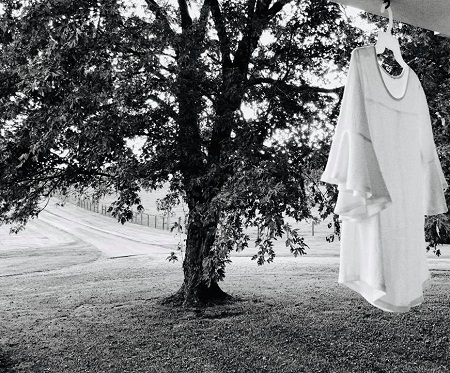
Come Out in the Wash-blouse hanging on a porch with tree in the background“Don’t worry about it. It will come out in the wash.” Those words have probably helped many of us deal with problems or disappointments.

To come out in the wash tells us everything will be okay.

We hate to get stains on our clothing. However, most stains wash out. In the same way, we hate to have problems in life. Yet, most problems work out.

We try to cover up when we do wrong. That also comes out in the wash. We cannot hide bad behavior forever.

With time:

  • Wrongs will be made right.
  • Truth will expose lies.
  • Hard times will pass.
  • Good will win over evil.

Some troubles come out in the wash faster than others.

Not all stains come out quickly. We have to wash our clothes several times to get rid of them. Likewise, not all troubles disappear as soon as we like.

We often worry when all we need to do is wait.

When we wring our hands in worry, we make ourselves feel worse. Most problems cause little harm. If harm comes, it usually does not last long. However, if we do suffer a long time, we can look for lessons from our experiences.

Life gets dirty, but God offers to wash us clean.

If we accept Jesus as personal Savior, life’s troubles will one day end. The best is yet to come. Jesus paid the price for our wrongs and invites us to come clean. He will give us a fresh start.

“Wash me, and I will be whiter than snow” (Psalm 51:7 NIV).

Thanks to Linda Dean-Peavey for the suggestion and to Jeri Stone for the photo.

Do you have an expression you want explained? If so, please comment below.

Subscribe to receive my weekly posts by email and receive a free copy of “Words of Hope for Days that Hurt.”

If you enjoyed this post, please share it with your friends.