Browsed by
Category: Self-Improvement

Turn the Tables

Turn the Tables

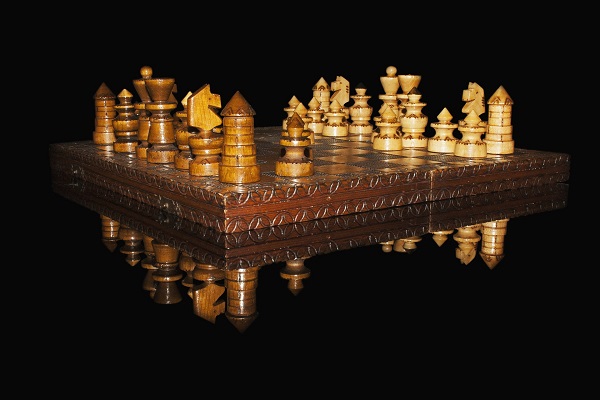
Turn the Tables: chess board reflected underneath itI never played much chess. However, I played checkers with my dad and sister for years. When I was losing, I hoped to turn the tables. I wanted to win.

I never physically turned the tables to play from the opposite side. However, I tried to change the outcome of the game.

When we turn the tables, we reverse a situation.

It becomes the opposite of what it was. We see such major changes in:

  • Board games, like chess or checkers
  • Sports events
  • Job positions
  • Any competition

This expression also applies to major changes in plans.

Usually, the change helps the person who had an earlier disadvantage. Roles reverse. The shoe is on the other foot.

How did this expression begin?

According to The Free Dictionary, “Until the mid-18th century, tables was the usual name for the board game backgammon. Early instances of the use of this phrase, dating from the mid-17th century, made it clear that it comes from the practice of turning the board so that a player had to play what had previously been their opponent’s position.”

We find examples of turned tables throughout history.

 The Bible tells the story of Joseph and his brothers. Joseph’s brothers were jealous of him and sold him into slavery. Eventually, Joseph achieved an important leadership position. When famine struck, Joseph’s brothers went to him for grain. They did not recognize him. After Joseph identified himself, his brothers feared for their lives.

Yet, Joseph did not act high and mighty when their roles changed. Instead, he forgave his brothers and provided for them.

Like Joseph, we have an opportunity to help others when the tables turn our way.

“‘But Joseph said to them, ‘Don’t be afraid. Am I in the place of God? You intended to harm me, but God intended it for good to accomplish what is now being done, the saving of many lives. So then, don’t be afraid. I will provide for you and your children.’ And he reassured them and spoke kindly to them” (Genesis 50:20-21 NIV).

Thanks to Debbie Tapscott and Beckham Wilson for the suggestion. Image by Waldemar Bajda from Pixabay.

Do you have an expression you want explained or a thought about this one? If so, please comment below.

Subscribe to receive my weekly posts by email and receive a free copy of “Words of Hope for Days that Hurt.”

If you enjoyed this post, please share it with your friends.
On a Dime

On a Dime

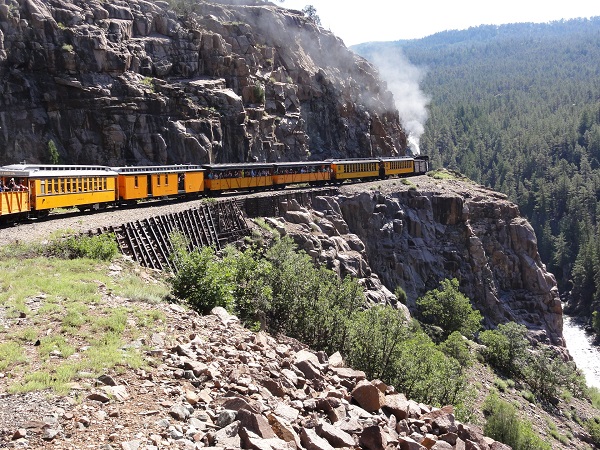
On a Dime-Durango and Silverton trainOur family loves the Durango and Silverton train ride through Colorado’s San Juan Mountains. However, that train will not stop on a dime. It requires time to slow down.

On a dime has two main meanings.

Both refer to precise movement.

 On a dime often means quickly.

The Durango and Silverton train cannot stop quickly. Other vehicles can. Since a dime is the smallest coin in the United States, that implies little time to stop.

This expression also means a small space to move.

Some drivers claim their cars will turn on a dime. Of course, cars need good drivers to turn that well.

People also turn on a dime.

That can be good or bad.

We desire the ability to move quickly:

  • In emergencies.
  • When playing sports

We prefer not to:

  • Suddenly lose our tempers
  • Change jobs without warning

Sometimes, easy does it works better.

If we move too fast, particularly in tight situations, our haste makes waste. We end up in trouble.

Whether we act slowly or quickly, let’s always move under God’s leadership.

“Teach me to do your will, for you are my God; may your good Spirit lead me on level ground” (Psalm 143:10 NIV).

Thanks to Marita Smeathers Mantooth for the suggestion. Image by DavidMcConnell from Pixabay.

Do you have an expression you want explained or a thought about this one? If so, please comment below.

Subscribe to receive my weekly posts by email and receive a free copy of “Words of Hope for Days that Hurt.”

If you enjoyed this post, please share it with your friends.

How the Sausage Is Made

How the Sausage Is Made

How the Sausage Is Made Harriet Michael headshotPlease welcome my friend Harriet Michael as today’s guest writer. Harriet and I met at Kentucky Christian Writers ConferenceShe is an award-winning author and freelance writer. Harriet currently has ten books on Amazon with another coming out next year. She also has hundreds of articles, devotions, and stories published in numerous magazines and books. Follow her on her website, blog, or Amazon author page

How the sausage is made refers to the way something is created behind the scenes.

The process contains components a person might consider unpleasant. Usually the end product is pleasant, but the process involved in making it may have unpleasant steps.

How the Sausage Is Made--sausage grinder, knife, and meatHow the Sausage Is Made

 When delicious sausage is made, the process includes

  • Cutting up animal meats
  • Grinding them
  • Adding spices

Cutting up and grinding animal meats may be unpleasant even to those who love sausage

The Expression’s Use

I recently used this expression when I shared how an article goes from an idea in my head to being in print. The finished product — the article beautifully laid out and printed in a magazine — is pleasant. However, the work can be unpleasant:

  • Writing
  • Rewriting
  • Submitting to magazines
  • The possibility of rejections before finding a magazine that accepts it

Letting people peer into that process is like letting them see how sausage is made.

In our lives we sometimes go through unpleasant experiences.

Like the process in making sausage, though unpleasant at times, those experiences end in something good. All who follow Jesus have a promise that the challenges we go through will ultimately end in good. Romans 8:28 (KJV) tells us, “All things work together for good to them that love God, to them who are the called according to his purpose.”

Image by ivabalk from Pixabay.

Do you have an expression you want explained or a thought about this one? If so, please comment below.

How the Sausage Is Made-Harriet Michael book, Glimpses of the SaviorOn Saturday, October 22, I will randomly select the name of one person on my mailing list to receive a free copy of Harriet and Shirley Crowder’s devotional book, Glimpses of the Savior: 50 Meditations for Thanksgiving, Christmas, and the New Year. If you are not already on my mailing list, you can sign up here.

If you enjoyed this post, please share it with your friends.

Play Possum

Play Possum

Play Possum--possum with 3 babies on her back on a tree limb

Many of us tried to play possum when we were children. We wanted to stay in bed when our parents said to get up. We kept our eyes closed and remained as still as possible.

We often display similar behaviors as adults. Some days we simply don’t want to rise and shine.

When opossums (or possums) feel threatened, they pretend to be dead.

They try to avoid attack by lying still. Their goal is for the other animals to leave them alone. Apparently, that defense works well.

When faced with danger:

  • They don’t fight.
  • They don’t run.
  • They play dead.

To play possum means to pretend to be dead or asleep.

It may also mean to pretend not to know. We want to avoid a person or situation. We don’t want to:

  • Wake up
  • Get up
  • Work
  • Accept responsibility

Like the possum, we hope the threat to our rest loses interest and goes away.

The time comes to stop playing possum and get to work.

 We need and enjoy rest and play. Yet, for the best life, we also put our hand to the plow and meet our responsibilities.

“How long will you lie there, you sluggard? When will you get up from your sleep?” (Proverbs 6:9 NIV).

Thanks to Carole Fite for the suggestion.

Image by daynaw3990 from Pixabay

Do you have an expression you want explained or a thought about this one? If so, please comment below.

Subscribe to receive my weekly posts by email and receive a free copy of “Words of Hope for Days that Hurt.”

If you enjoyed this post, please share it with your friends.

Carbon Copy

Carbon Copy

Carbon copy--bridge reflected in water behind broken, twisted treesYoung people probably have no experience making a carbon copy. During typewriter days, we placed carbon paper between two blank sheets of paper. We then rolled all three into the typewriter. What we typed on the top sheet copied to the bottom.

Carbon paper made great copies. However, it could also make great messes. If we were not careful, we would:

  • Get ink on us and anything else it touched
  • Smear our copies, which made them hard to read

A carbon copy is an exact duplicate.

Its details are precise. It:

  • Looks the same
  • Matches perfectly
  • Reflects every feature

Like the bridge behind the tangled trees above, it is a spitting image. It remains faithful to the original in every way. If we see the copy, we understand the original.

We decide what we reflect.

Who or what influences us? Who or what do we influence? As with most of life, we choose. We then face the music – we live with the consequences of our choices.

We don’t always reflect perfectly.

Carbon paper smears. Water moves. When that happens, reflections wave. Images change.

Life gets messy. Like tangled trees, things get in our way. Yet, we keep trying. We keep working to reflect the best. In so doing, we improve.

“We can be mirrors that brightly reflect the glory of the Lord” (2 Corinthians 3:18 TLB).

Thanks to Laurel Blevins and Karen Hart for the suggestion.

Do you have an expression you want explained or a thought about this one? If so, please comment below.

Subscribe to receive my weekly posts by email and receive a free copy of “Words of Hope for Days that Hurt.”

If you enjoyed this post, please share it with your friends.

Set Your Face Like Flint

Set Your Face Like Flint

Set Your Face Like Flint--water lapping against rocksDo you occasionally face tasks that seem impossible? Yet, you refuse to quit? Instead, you set your face like flint and finish the job before you?

Flint is a hard, dark rock.

It was often used in earlier times to make tools and start fires. Flint also makes strong stone walls.

To set your face like flint means to be determined.

When you face difficulties, you refuse to give up. Instead, you:

  • Focus on the task before you.
  • Dedicate yourself to its completion.

The prophet Isaiah described the Messiah, Jesus, as having “set my face like flint.”

Isaiah tells of Jesus’ determination to complete the role of a suffering servant. Jesus sacrificed His life on a cross to make eternal life possible for all who accept His gift.

You can follow Jesus’ example.

Life gets hard. Many tasks are tough. However, with God’s help, you can endure. You can keep on keeping on. You can also make a positive difference in an often negative world.

“Because the Sovereign Lord helps me, I will not be disgraced. Therefore have I set my face like flint, and I know I will not be put to shame” (Isaiah 50:7 NIV).

Thanks to Linda Russell for the suggestion. Image by Wesley Rocha from Pixabay

Do you have an expression you want explained or a thought about this one? If so, please comment below.

Subscribe to receive my weekly posts by email and receive a free copy of “Words of Hope for Days that Hurt.”

If you enjoyed this post, please share it with your friends.

High Horse

High Horse

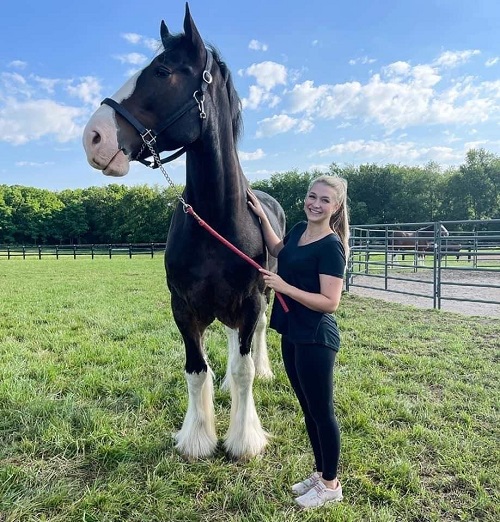
High Horse--young woman beside large horseNone of us has any reason to get on a high horse. However, when life goes well, we face the temptation to act high and mighty.

To get on a high horse means to act superior.

Years ago, people of high rank rode tall horses. That custom became a symbol of superiority.

If we are on a high horse, we believe or act like we are better than others. That may mean higher:

  • Morals
  • Power
  • Finances
  • Position

However, the higher the horse, the farther the fall.

When we look down on other people, we lower ourselves. Our highfalutin ways end up hurting rather than helping. They also make other people respect us less, not more.

If we fail or fall from a high rank, the loss hurts worse.

We want confidence but not arrogance.

To be more effective, we need to get off our high horse and work with one another.

As we learn and grow together, we become better people. Rather than look down on others, we want to lift them up.

We travel this journey of life together. Why not unite and achieve more?

That makes good horse sense. Don’t you agree?

“Pride brings a person low, but the lowly in spirit gain honor” (Proverbs 29:23 NIV).

Thanks to Pat Childress Conner Stapp for the suggestion and to Chelsey Stone for the photo.

Do you have an expression you want explained or a thought about this one? If so, please comment below.

Subscribe to receive my weekly posts by email and receive a free copy of “Words of Hope for Days that Hurt.”

If you enjoyed this post, please share it with your friends.

Blow Your Top

Blow Your Top

Blow Your Top--an erupting volcano Recently, I told a relative about a fake friend request. She hates for people to misuse her pictures and information. As a result, she suggested a post on blow your top.

To blow your top means to become very angry.

Similar expressions include:

All mean you lose your temper.

When you blow your top, you lose control.

Your emotions erupt like an active volcano. During that explosion, anyone nearby risks danger. This often happens quickly and without warning.

Possible behavior includes:

  • Shouting
  • Destroying property
  • Hurting other people
  • Hurting yourself

Such behavior can become a way of life.

You have to be careful not to cut off your nose to spite your face. If anger takes control, everyone loses, including you.

When appropriate, anger can help right a wrong.

You want to manage anger wisely. Use it for good when necessary. If it becomes harmful, nip it in the bud before it gets out of control.

“Better a patient person than a warrior, one with self-control than one who takes a city” (Proverbs 16:32 NIV).

Thanks to Rebecca Stafford for the suggestion. Image by Enrique from Pixabay.

Do you have an expression you want explained or a thought about this one? If so, please comment below.

Subscribe to receive my weekly posts by email and receive a free copy of “Words of Hope for Days that Hurt.”

If you enjoyed this post, please share it with your friends.

High Cotton

High Cotton

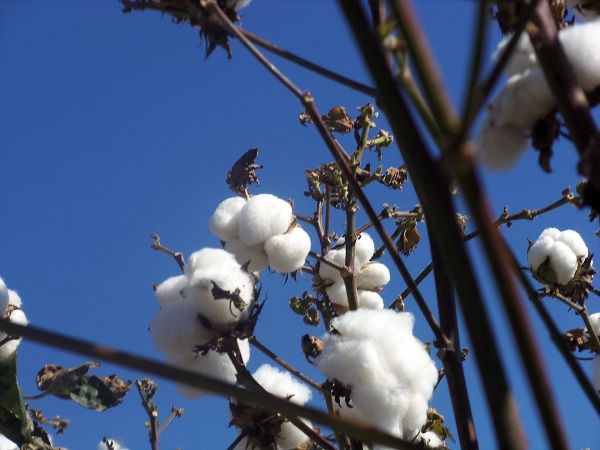
High Cotton-cotton plant beneath blue skyWhether we know it or not, we probably wish we were in high cotton.

During the height of cotton’s growing season, fluffy fields of white appear throughout the southern United States. Growers hope for a successful crop.

When we achieve success, we are in high cotton.

  • Businesses earn a high profit.
  • Students make good grades.
  • Families enjoy the perfect home.
  • Children receive their favorite toys.

High cotton does not give us the right to act high and mighty.

Success does not make us any better or worse than anyone else. With an attitude of gratitude, we use our success to help other people succeed. Rather than a big head, we develop a big heart.

We want to bear fruit that makes a lasting impact.

We have only a few years on this earth. What we do with them makes an eternal difference.

Wealth and honor come from you; you are the ruler of all things. In your hands are strength and power to exalt and give strength to all (1 Chronicles 29:12 NIV).

Thanks to James E. Hodges for the suggestion. Image by Clayton Decker from Pixabay.

Do you have an expression you want explained or a thought about this one? If so, please comment below.

Subscribe to receive my weekly posts by email and receive a free copy of “Words of Hope for Days that Hurt.”

If you enjoyed this post, please share it with your friends.
Many Hands Make Light Work

Many Hands Make Light Work

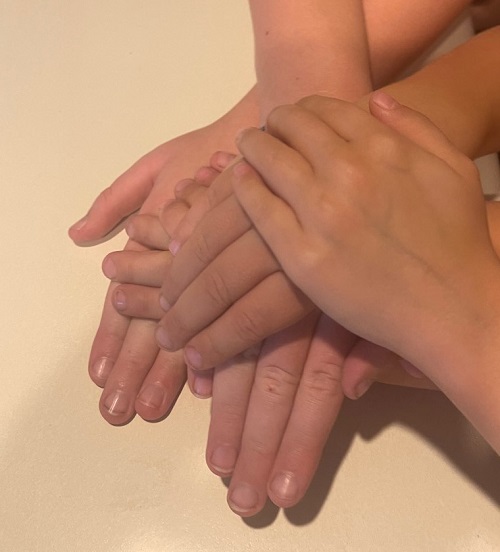
Many Hands Make Light Work-Children's hands stacked on top of one anotherDo you have little helpers who remind you that many hands make light work? Maybe your children or grandchildren? Perhaps a neighbor or friend?

Many of my favorite experiences involve children who helped me. Their help may have meant extra time or a bigger mess. Yet, what fun. They learned to work together and to help one another.

Many hands make light work means the more who work together, the easier and faster the work.

 Work may be on:

Many hands may not make the work easy as pie. It will make the work easier.

Many hands make light work applies to all areas of life.

  • Jobs
  • Family
  • Friends
  • Community
  • Church
  • Volunteer work

Take advantage of opportunities to lend a helping hand.

Supporting one another makes life better for everyone – the one who receives help plus the one who helps.

“May the favor of the Lord our God rest on us; establish the work of our hands for us—yes, establish the work of our hands” (Psalm 90:17 NIV).

Thanks to Tracy Crump for the suggestion and to Karen Atwood for the photo.

Do you have an expression you want explained or a thought about this one? If so, please comment below.

Subscribe to receive my weekly posts by email and receive a free copy of “Words of Hope for Days that Hurt.”

If you enjoyed this post, please share it with your friends.