
Browsed by
Category: Wisdom

Too Many Cooks Spoil the Broth

Too Many Cooks Spoil the Broth

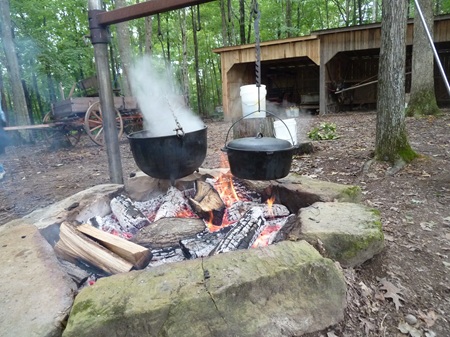
Too Many Cooks Spoil the Broth--two large cast iron pots hanging over an outdoor fire My husband and I lived in a college campus apartment for two years. It was so small we had to push our table against the wall to open the back door. Just as too many cooks crowded our kitchen, too many cooks spoil the broth.

When too many cooks add too many ingredients, broth tastes terrible.

The same applies to too many:

  • Managers
  • Coaches
  • Music conductors
  • Agencies

 Too many cooks spoil the broth offers a word to the wise.  

It cautions against several people trying to:

  • Do the same task.
  • Gain control.
  • Influence an outcome.

When that happens, the work:

  • Results in confusion.
  • May be ruined.
  • Has little chance of success.

The Phrase Finder lists a similar proverb in 1575 by English historian John Hooker.

In The Life and Times of Sir Peter Carew, Hooker wrote, “There is the proverb, the more cooks the worse potage.”

Several similar proverbs exist.

  • Too many cooks in the kitchen
  • (A shortened phrase) Too many cooks
  • Too many cooks spoil the soup (or stew).

Extra workers usually help. Extra managers often hurt.

Completing the work is more important than taking credit for it.

Whether we manage or not, let’s faithfully do what God calls us to do.

“His master replied, ‘Well done, good and faithful servant! You have been faithful with a few things; I will put you in charge of many things. Come and share your master’s happiness!’” (Matthew 25:23 NIV)

Thanks to Joyce McCullough for the suggestion.

Do you have an expression you want explained or thoughts about this one? If so, please comment below.

Subscribe to receive my weekly posts by email and receive a free copy of “Words of Hope for Days that Hurt.”

If you enjoyed this post, please share it with your friends.

Bigger Fish to Fry

Bigger Fish to Fry

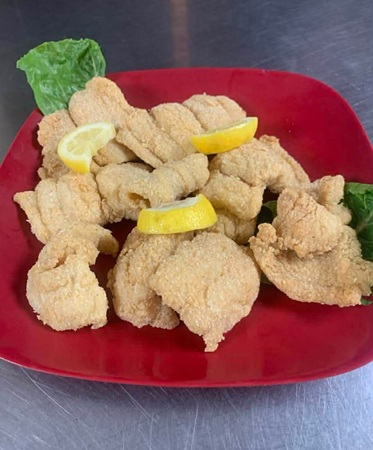
Bigger Fish to Fry-red plate filled with fried fish and lemon slicesDo you prefer small fish piping hot from the grill or oven? Or do you enjoy bigger fish to fry?

For non-food decisions, go for bigger fish to fry.

Bigger fish to fry means more important matters to manage.

You deal with:

  • Major activities rather than minor
  • Emergencies rather than routine
  • Long lasting rather than brief

Bigger fish to fry does not mean never having fun.

Meaningful moments include:

  • Relaxing
  • Resting
  • Focusing on relationships

Personal accomplishments do not equal success.

  • Quality time with family is more important than awards.
  • Helping people in need matters more than promotions.
  • Investing in lives outlasts investing in stocks.

How you spend your time and money reveals what you value most.

  • Will it make a difference?
  • Does it have eternal worth?

Be sure bigger fish to fry are worth the effort.

Focusing only on self often leads to fishy situations. Focusing on God’s will and helping others keeps you on the right track. Jesus said to follow Him and become fishers of people. All people. Everywhere.

“Don’t be afraid; from now on you will fish for people” (Luke 5:10 NIV).

Thanks to Lindy Pierce for the suggestion and to Terry Pennington, owner of Creekside Restaurant, for the photo.

Do you have an expression you want explained or thoughts about this one? If so, please comment below.

Subscribe to receive my weekly posts by email and receive a free copy of “Words of Hope for Days that Hurt.”

If you enjoyed this post, please share it with your friends.

No Rhyme or Reason

No Rhyme or Reason

No Rhyme or Reason--globe puzzleDo you have trouble understanding our world today? Much that we see and hear has no rhyme or reason.

No rhyme or reason means decisions or actions make no sense.

We find no logical explanation for:

  • Documents filled with nothing but red tape
  • Decisions that hurt rather than help
  • Concern only for self

They puzzle us. Most make us out of sorts.

Similar expressions include:

  • Without rhyme or reason
  • No rhyme nor reason
  • Neither rhyme nor reason

The Free Dictionary says this expression “originated in French about 1475.”

English use began about one hundred years later.

We find no rhyme or reason for certain events beyond our control.

  • Unexplained medical problems
  • Unexpected severe weather

God can use every circumstance, including those that puzzle us.

We often see that in the Bible. For example, Joseph’s brothers sold him into slavery. Yet God used their evil plans for good.

“You intended to harm me, but God intended it for good to accomplish what is now being done, the saving of many lives” (Genesis 50:20 NIV).

Thanks to Ann Klotz for the suggestion. Image courtesy of Pixabay.

Don’t Take Any Wooden Nickels

Don’t Take Any Wooden Nickels

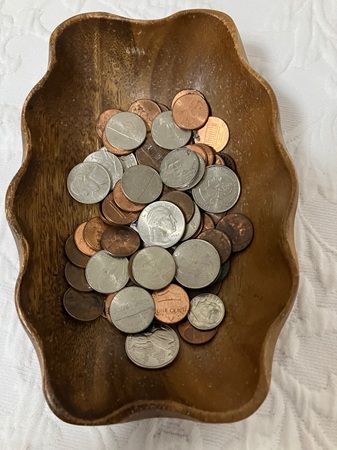
Don't Take Any Wooden Nickels--wood bowl filled with loose change

I remember my dad saying, “Don’t take any wooden nickels.” At the time, I had no idea what he meant. I knew wooden nickels were not real money. So, why would he make such a strange statement?

Don’t take any wooden nickels warns us not to be conned or swindled.

A wooden nickel is:

  • Fake
  • Worthless
  • Suspicious

Don’t be fooled.

Take precautions. Never accept anything unless you know it is the real thing.

Don’t take any wooden nickels offers a word to the wise.

Before trying anything new, check with people who:

We often hear this primarily American phrase when people say goodbye.

The speaker means:

  • Be careful.
  • Take care of yourself.

According to The Free Dictionary, it probably originated in the early 20th century. “Country residents visiting the city were considered easily duped.” Therefore, they needed to protect themselves from being deceived.

Banks used wooden nickels for promotions during and after the Great Depression.

They redeemed the fake coins for prizes.

 Don’t cheat and don’t get cheated.

We never want to hornswoggle or be hornswoggled. Instead, let’s stay so honest that people can take it to the bank.

“If you have not been trustworthy in handling worldly wealth, who will trust you with true riches?” (Luke 16:11 NIV).

Thanks to Sharon Berry, Laurel Blevins, Karen Hart, Judy Glen Corbin, Beckham Wilson, and Rebecca Stafford for the suggestion.

Do you have an expression you want explained or thoughts about this one? If so, please comment below.

Subscribe to receive my weekly posts by email and receive a free copy of “Words of Hope for Days that Hurt.”

If you enjoyed this post, please share it with your friends.

Feeling Their Oats

Feeling Their Oats

Feeling Their Oats--horse raised on back hooves in front of lake and a cloudy sunsetHave you watched children on school playgrounds? They are feeling their oats! Free from classrooms, they run, jump, and play. Excitement fills the air.

Feeling their oats means being active and full of energy.

This expression applies to more than children. Adults also want to move after long periods of inactivity.

Feeling their oats suggests the behavior of horses after they are fed.

Oats or other grains increase their energy and liveliness. According to The Free Dictionary, this early nineteenth century expression is American in origin.

Feeling their oats also refers to feelings of self-importance.

Those feelings show up when:

Full of energy works well. Full of self-importance does not.

Increase the first. Avoid the second.

“Pride goes before destruction, a haughty spirit before a fall.” (Proverbs 16:18 NIV).

Thanks to Judy Fagan for the suggestion. Image by Patou Ricard from Pixabay.

Do you have an expression you want explained or thoughts about this one? If so, please comment below.

Subscribe to receive my weekly posts by email and receive a free copy of “Words of Hope for Days that Hurt.”

If you enjoyed this post, please share it with your friends.

Knock on Wood

Knock on Wood

Knock on Wood--knuckles rapping on woodHow often have you heard people say, “Knock on wood”? When they do, they rap their knuckles on something made of wood.

Knock on wood is based on a superstition.

People want something good to happen or continue. If they mention it, they fear they jinx it.

Therefore, they knock on wood for good luck. Ancient superstition taught that knocking on or touching wood wards off evil spirits.

Touch wood is a similar expression.

According to Phrase Finder, that version is more common in the UK. People sometimes jokingly tap their heads rather than wood. The British version is older than the American one.

Knock on wood expresses hope that good luck continues and bad luck stays away.

  • Good versus bad health
  • Calm versus stormy weather
  • Positive versus negative relationships
  • Success versus failure

People frequently use this expression for laughs.

They don’t believe the superstition. However, they have fun with the saying.

Enjoy fun expressions but put your faith in God.

Superstitions mislead you. God will never take you the wrong way.

“Dear children, do not let anyone lead you astray” (1 John 3:7 NIV).

Thanks to Janna Babak and Jennifer Annette Graham for the suggestion and to Allie Kowle for the photo.

Do you have an expression you want explained or thoughts about this one? If so, please comment below.

Subscribe to receive my weekly posts by email and receive a free copy of “Words of Hope for Days that Hurt.”

If you enjoyed this post, please share it with your friends.

Throw Your Hat into the Ring

Throw Your Hat into the Ring

Throw Your Hat into the Ring--two people throwing their hats into the air with the sun setting behind themDo you often throw your hat into the ring? Maybe for a group activity, fun event, or political office? You decide to give it a whirl.

If you throw your hat into the ring, you announce your decision to join or compete.

You may:

  • Enter a contest.
  • Make or accept a challenge.
  • Participate in a special event.
  • Start a new step in life.

Throw your hat into the ring began with boxing.

According to The Phrase Finder, “The expression dates from at least the early 19th century.” Boxing rings were “circular spaces in a crowd of onlookers.” No “square roped ‘rings’” like today. If someone wanted to compete, he threw his hat into the ring. That was easier than shouting above the noisy crowd.

Be careful before you throw your hat into the ring.

Many activities prove worthwhile. Others you want to avoid at all costs.

When Jesus calls, always follow.

The cost may be great, but the reward will be greater. Many believers endure persecution such as:

  • Ridicule
  • Job loss
  • Rejection from friends and family
  • Imprisonment
  • Death

Nevertheless, they throw their hat into the ring with Jesus. They prefer to suffer rather than deny their Savior.

“Join with me in suffering, like a good soldier of Christ Jesus.” (2 Timothy 2:3 NIV).

 Thanks to Lam DeBrot for the suggestion. Photo by Nabil Naidu with Pexels.

Do you have an expression you want explained or thoughts about this one? If so, please comment below.

Subscribe to receive my weekly posts by email and receive a free copy of “Words of Hope for Days that Hurt.”

If you enjoyed this post, please share it with your friends.

Neither Here nor There

Neither Here nor There

Neither Here nor There--sign post with signs "This Way" and "That Way"Many things that steal our attention are neither here nor there. They take our time but matter little or not at all.

Neither here nor there means unimportant.

The information or action:

  • Does not relate to the circumstances
  • Will not change anything

Therefore, who cares?

Think of daily activities that are neither here nor there.

  • Time on social media
  • Scrolling through television channels
  • Trying to be more important than one another

Frequent decisions are neither here nor there.

Either choice is okay, six of one and half a dozen of another. Examples include:

  • Where or what to eat
  • Which outfit to wear
  • What games to play

According to The Free Dictionary, “this term dates from the sixteenth century.”

Although not the first to use it, Shakespeare included it in The Merry Wives of Windsor and Othello.

When choices do matter, choose wisely.

  • Invest in what lasts.
  • Show respect for everyone.
  • Follow God’s direction.
  • Share God’s love.

“As for those who were held in high esteem—whatever they were makes no difference to me; God does not show favoritism—they added nothing to my message.” (Galatians 2:6 NIV).

Thanks to Rita Smalley for the suggestion. Image by Gerd Altmann from Pixabay.

Do you have an expression you want explained or thoughts about this one? If so, please comment below.

Subscribe to receive my weekly posts by email and receive a free copy of “Words of Hope for Days that Hurt.”

If you enjoyed this post, please share it with your friends.

Flash in the Pan

Flash in the Pan

Flash in the Pan--musket pistol and other antiquesI thought flash in the pan originated with gold mining.

If a miner saw glitter in his pan, he became excited. Rather than gold, what he often saw was only a flash in the pan.

I was wrong.

According to The Phrase Finder, flash in the pan originated with flintlock muskets that had small pans for gunpowder. When gunpowder flared but no bullet fired, it was called a flash in the pan.

The expression, “hang fire,” has a similar origin.

Flash in the pan refers to a promise of success that fails.

  • Authors write only one bestseller.
  • Musicians record one hit but no others.
  • Actors star in only one major movie or play.
  • Athletes lose their positions after a brief career.
  • Businesses boom and then go bankrupt.

They make a splash, but their success does not last.

Doing our best beats trying to impress.

Let’s use our abilities, great or small, to make the world a better place. Now, that’s success!

“May the God of peace …  equip you with everything good for doing his will” (Hebrews 13:20-21 NIV).

Thanks to Frank Cheatham for the flash in the pan suggestion and to Brad Leverett for hang fire. Image by Alexander Lesnitsky from Pixabay.

Flash in the Pan--flintlock rifleDo you have an expression you want explained or thoughts about this one? If so, please comment below.

Subscribe to receive my weekly posts by email and receive a free copy of “Words of Hope for Days that Hurt.”

If you enjoyed this post, please share it with your friends.

UPDATE: Thanks to Warren Johnson who noticed that the pistol in my photo is a percussion pistol, not a flintlock. See his comments below for more interesting details about his flintlock rifle pictured here.

Give Up the Ghost

Give Up the Ghost

Give Up the Ghost--Sunset rays over a field and under dark cloudsFor years, I knew only one meaning for give up the ghost. However, according to The Free Dictionary, the expression has at least three. All three mean an end.

To give up the ghost means to die.

This was the definition I knew. Other death idioms include:

The Free Dictionary further explains, “The ghost here is the soul … separated from the body upon death.”

To give up the ghost also means something stops working.

No physical possession lasts forever. All eventually wear out. Therefore, we must keep buying:

  • Appliances
  • Cars
  • Phones

To give up the ghost also means to quit trying.

We cancel plans we think will fail. This may include:

  • Work
  • Trips
  • Special events

Although our bodies die, our souls can soar!

We choose our destination for this life and life after we give up the ghost. If we accept Jesus as Savior and Lord, we have the promise of an everlasting home in heaven.

Man dieth, and wasteth away: yea, man giveth up the ghost, and where is he?” (Job 14:10 KJV).

Thanks to Bobbie Smith Bryant for the suggestion.

Do you have an expression you want explained or thoughts about this one? If so, please comment below.

Subscribe to receive my weekly posts by email and receive a free copy of “Words of Hope for Days that Hurt.”

If you enjoyed this post, please share it with your friends.