Browsed by
Tag: choices

Bigger Fish to Fry

Bigger Fish to Fry

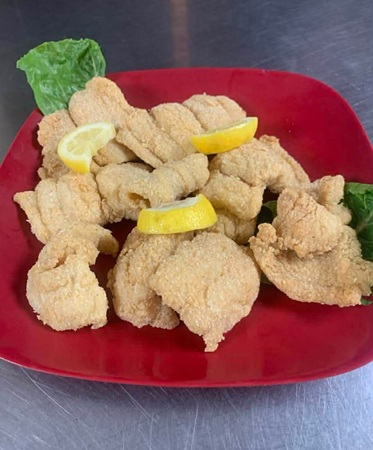
Bigger Fish to Fry-red plate filled with fried fish and lemon slicesDo you prefer small fish piping hot from the grill or oven? Or do you enjoy bigger fish to fry?

For non-food decisions, go for bigger fish to fry.

Bigger fish to fry means more important matters to manage.

You deal with:

  • Major activities rather than minor
  • Emergencies rather than routine
  • Long lasting rather than brief

Bigger fish to fry does not mean never having fun.

Meaningful moments include:

  • Relaxing
  • Resting
  • Focusing on relationships

Personal accomplishments do not equal success.

  • Quality time with family is more important than awards.
  • Helping people in need matters more than promotions.
  • Investing in lives outlasts investing in stocks.

How you spend your time and money reveals what you value most.

  • Will it make a difference?
  • Does it have eternal worth?

Be sure bigger fish to fry are worth the effort.

Focusing only on self often leads to fishy situations. Focusing on God’s will and helping others keeps you on the right track. Jesus said to follow Him and become fishers of people. All people. Everywhere.

“Don’t be afraid; from now on you will fish for people” (Luke 5:10 NIV).

Thanks to Lindy Pierce for the suggestion and to Terry Pennington, owner of Creekside Restaurant, for the photo.

Do you have an expression you want explained or thoughts about this one? If so, please comment below.

Subscribe to receive my weekly posts by email and receive a free copy of “Words of Hope for Days that Hurt.”

If you enjoyed this post, please share it with your friends.
Lie Like a Rug

Lie Like a Rug

Lie Like a Rug--Jumbled multicolored arrows with truth or lie on themMy dad loved to play with words. He would deliberately use the wrong word to give a sentence a totally new meaning. I’m sure some people thought he did not know better. However, he knew exactly what he was doing. Lie like a rug was one of his favorite expressions.

Lie like a rug is a pun, a usually funny play on words.

Puns use words that are alike or nearly alike but have different meanings. “Lie” can mean either to tell an untruth or to rest in a flat position. Lie like a rug combines those two meanings since a rug lies flat on a floor.

If we lie like a rug, we lie boldly and shamelessly.

Our untruth is no mistake. We deliberately lie. Sometimes we know that no one will believe us but lie anyway.

If we repeat an untruth often enough, we may persuade some people to believe.

We sound ridiculous. Yet repetition eventually convinces those unwilling to look at the evidence. If not convinced, they may choose not to confront us or face the truth.

Always weigh the evidence.

Take what sounds like a lie with a grain of salt. Search for truth and follow it.

“Whoever lives by the truth comes into the light, so that it may be seen plainly that what they have done has been done in the sight of God” (John 3:21 NIV).

Thanks to Melissa Henderson for the suggestion. Image by Gerd Altmann from Pixabay.

Do you have an expression you want explained or thoughts about this one? If so, please comment below.

Subscribe to receive my weekly posts by email and receive a free copy of “Words of Hope for Days that Hurt.”

If you enjoyed this post, please share it with your friends.

Cold Shoulder

Cold Shoulder

Cold Shoulder--back of a young woman with off-the-shoulder blouse in a field of yellow flowersHas anyone given you the cold shoulder? It’s no fun, is it?

To receive a cold shoulder means people ignore or reject you.

They:

  • Snub you.
  • Pay no attention to you.
  • Turn away from you.

Rejection is depressing.

A cold shoulder is not accidental. Those who snub you have no interest in contact with you.

The origin of cold shoulder probably differs from widespread belief.

According to The Phrase Finder and The Free Dictionary, many people believe this expression began with a nineteenth century custom.

  • Hosts served a meal of roasted meat to welcomed guests.
  • They served a cold shoulder of meat to guests who outstayed their welcome.

The Phrase Finder says, “There’s no evidence to support this view.” It adds, “The first reference to the phrase in print is in Sir Walter Scott’s ‘The Antiquary,’ 1816.”

Rather than an unfriendly cold shoulder, show love and concern for others.

“If you see some brother or sister in need and have the means to do something about it but turn a cold shoulder and do nothing, what happens to God’s love? It disappears. And you made it disappear” (1 John 3:17 MSG).

Thanks to Kay Emerick for the suggestion. Image by Eszter Miller from Pixabay.

Do you have an expression you want explained or thoughts about this one? If so, please comment below.

Subscribe to receive my weekly posts by email and receive a free copy of “Words of Hope for Days that Hurt.”

If you enjoyed this post, please share it with your friends.
Neither Here nor There

Neither Here nor There

Neither Here nor There--sign post with signs "This Way" and "That Way"Many things that steal our attention are neither here nor there. They take our time but matter little or not at all.

Neither here nor there means unimportant.

The information or action:

  • Does not relate to the circumstances
  • Will not change anything

Therefore, who cares?

Think of daily activities that are neither here nor there.

  • Time on social media
  • Scrolling through television channels
  • Trying to be more important than one another

Frequent decisions are neither here nor there.

Either choice is okay, six of one and half a dozen of another. Examples include:

  • Where or what to eat
  • Which outfit to wear
  • What games to play

According to The Free Dictionary, “this term dates from the sixteenth century.”

Although not the first to use it, Shakespeare included it in The Merry Wives of Windsor and Othello.

When choices do matter, choose wisely.

  • Invest in what lasts.
  • Show respect for everyone.
  • Follow God’s direction.
  • Share God’s love.

“As for those who were held in high esteem—whatever they were makes no difference to me; God does not show favoritism—they added nothing to my message.” (Galatians 2:6 NIV).

Thanks to Rita Smalley for the suggestion. Image by Gerd Altmann from Pixabay.

Do you have an expression you want explained or thoughts about this one? If so, please comment below.

Subscribe to receive my weekly posts by email and receive a free copy of “Words of Hope for Days that Hurt.”

If you enjoyed this post, please share it with your friends.
Give Up the Ghost

Give Up the Ghost

Give Up the Ghost--Sunset rays over a field and under dark cloudsFor years, I knew only one meaning for give up the ghost. However, according to The Free Dictionary, the expression has at least three. All three mean an end.

To give up the ghost means to die.

This was the definition I knew. Other death idioms include:

The Free Dictionary further explains, “The ghost here is the soul … separated from the body upon death.”

To give up the ghost also means something stops working.

No physical possession lasts forever. All eventually wear out. Therefore, we must keep buying:

  • Appliances
  • Cars
  • Phones

To give up the ghost also means to quit trying.

We cancel plans we think will fail. This may include:

  • Work
  • Trips
  • Special events

Although our bodies die, our souls can soar!

We choose our destination for this life and life after we give up the ghost. If we accept Jesus as Savior and Lord, we have the promise of an everlasting home in heaven.

Man dieth, and wasteth away: yea, man giveth up the ghost, and where is he?” (Job 14:10 KJV).

Thanks to Bobbie Smith Bryant for the suggestion.

Do you have an expression you want explained or thoughts about this one? If so, please comment below.

Subscribe to receive my weekly posts by email and receive a free copy of “Words of Hope for Days that Hurt.”

If you enjoyed this post, please share it with your friends.

Rough around the Edges

Rough around the Edges

Rough around the Edges--Bryce CanyonWe all know people who are a little rough around the edges. Although wonderful, they have flaws.

Rough around the edges means not perfect but good.

The description relates to:

  • Places
  • Possessions
  • Feelings
  • People

Many tourist destinations are rough around the edges.

We see that at:

  • Bryce and other canyons with unusual rock formations
  • Beaches in out-of-the-way places
  • Mountains altered by avalanches

Their rugged nature increases their appeal.

Favorite possessions are often rough around the edges.

  • Antiques with scratches and other imperfections
  • Children’s security blankets
  • Well-worn shoes and clothes

They may not look the best, but they function well.

We often feel rough around the edges.

That happens if we:

Such days make us appreciate the easier ones.

Some of the best people I know have flaws.

Those include:

  • Poor social skills
  • Pasts filled with unwise choices
  • Limited education

Yet, they make up for what they lack with caring attitudes and actions.

Before we pass judgement on other people, we might want to look in the mirror.

We all have rough edges. We make mistakes and must live with their consequences.

The world becomes a better place when we love and support one another. Jesus taught those characteristics with words and example. I pray we follow.

“We all stumble in many ways” (James 3:2 NIV).

Thanks to Beckham Wilson for the suggestion.

Do you have an expression you want explained or thoughts about this one? If so, please comment below.

Subscribe to receive my weekly posts by email and receive a free copy of “Words of Hope for Days that Hurt.”

If you enjoyed this post, please share it with your friends.

Stick Your Neck Out

Stick Your Neck Out

Stick Your Neck Out--one giraffe, head high, standing in front of several zebras

It’s risky to stick your neck out. Joining the crowd — looking and acting like everyone else — is safer and easier.

If you stick your neck out, you risk getting in trouble.

You attract attention. Even if other people agree with you, they fear joining you. They don’t want to face:

  • Danger
  • Criticism
  • Anger
  • Job loss
  • Rejection

This expression’s origin remains unknown.

Possibilities include:

  • Horse racing
  • Turtles sticking their heads out of their shells
  • Barnyard animals with their necks on a chopping block
  • People on a guillotine
  • Boxers protecting their necks and heads by holding them in

In all these examples, extending the neck makes it vulnerable.

You can stick your neck out personally or professionally.

You take chances when you:

If you stick your neck out, don’t take unnecessary risks.

God commands people to stand tall and stand firm for what is right. Yet, boldness is not always wise or necessary.

  • Weigh the evidence.
  • Pray for guidance.
  • Choose carefully.

“If anyone speaks, they should do so as one who speaks the very words of God. If anyone serves, they should do so with the strength God provides, so that in all things God may be praised through Jesus Christ. To him be the glory and the power for ever and ever. Amen” (1 Peter 4:11 NIV).

Thanks to Terri Wilson for the suggestion. Image by Danièle Konsbruck from Pixabay.

Do you have an expression you want explained or thoughts about this one? If so, please comment below.

Subscribe to receive my weekly posts by email and receive a free copy of “Words of Hope for Days that Hurt.”

If you enjoyed this post, please share it with your friends.

Elephant in the Room    

Elephant in the Room    

Elephant in the Room--three small ceramic or jade elephantsFew of us desire an elephant in the room. Not the kind on four legs and not unpleasant subjects.

An elephant in the room means a problem no one discusses.

The situation is:

  • Serious
  • Important
  • Obvious

We need to address the topic.

Everyone knows about it. However, no one wants to discuss it because it makes us feel:

  • Uncomfortable
  • Embarrassed
  • Awkward

As a result, we ignore the issue rather than rock the boat.

  • Families don’t mention strained relationships.
  • Workers overlook wasteful systems.
  • Friends choose peace over responsibility.

Excuses for ignoring difficult situations include:

  • “It’s none of my business.”
  • “No one gets hurt.”
  • “I don’t have time to get involved.”

We want to remain on the right track. At times, that means we avoid unnecessary problems. Other times, it means we stand firm for truth and examine the elephant

An elephant in the room’s origin is unknown.

According to The Phrase Finder, it probably began in the United States.

 “It is shameful even to mention what the disobedient do in secret” (Ephesians 5:12 NIV).

Thanks to Ann Klotz and Darrin Jenkins for the suggestion.

The Early Bird Gets the Worm Matin Wiles book
Version 1.0.0

Do you have an expression you want explained or thoughts about this one? If so, please comment below.

Subscribe to receive my weekly posts by email and receive a free copy of “Words of Hope for Days that Hurt.” Congratulations to Larry Bowen whose name was randomly selected from my mailing list to receive a free copy of Martin Wiles’s book, Don’t Just Live…Really Live.”

If you enjoyed this post, please share it with your friends.

So Tight They Squeak When They Walk

So Tight They Squeak When They Walk

So Tight They Squeak When They Walk--Man's feet walking down stepsOne of my high school teachers could never sneak up on our class. We could hear his squeaky shoes from the far end of the hall. He was not like some people who are so tight they squeak when they walk. He simply had squeaky shoes.

So tight they squeak when they walk means extremely stingy.

Similar expressions include:

Turning loose of money or possessions hurts such people worse than a toothache. They refuse to give to others. Often, they fail to buy what they need themselves. They suffer rather than let go of what they own.

People so tight they squeak when they walk go far beyond thrifty.

Thrifty people save for a rainy day. They remain ready for emergencies. However, they also spend as needed now. Those so tight they squeak when they walk don’t want to spend even when emergencies arise.

They can’t take it with them, so why hang on so tightly now?

How sad to never experience the joy of sharing. Both they and a world of others lose when they ignore opportunities for good.

The owner becomes the owned.

“Command those who are rich in this present world not to be arrogant nor to put their hope in wealth, which is so uncertain, but to put their hope in God, who richly provides us with everything for our enjoyment” (1 Timothy 6:17 NIV).

Thanks to J.D. Wininger for the suggestion and to Laura Mitchell Wilds and Billy Joe Douglas with Mitchell’s for the photo.

Do you have an expression you want explained or thoughts about this one? If so, please comment below.

Subscribe to receive my weekly posts by email and receive a free copy of “Words of Hope for Days that Hurt.”

If you enjoyed this post, please share it with your friends.

Cruising for a Bruising

Cruising for a Bruising

Cruising for a Bruising--wrecked car against a treeIf we drive a car too fast, we are cruising for a bruising. Possible results include:

  • A speeding ticket
  • A wreck
  • Injury or death

Cruising for a bruising means headed for trouble.

Our behavior works against us.

  • Parents, teachers, or others in authority punish us.
  • People we insult or bully injure us.
  • Natural or logical consequences cause temporary or permanent pain.

Cruising for a bruising hurts in several ways.

  • Physical: Actual bruises or other injuries to our bodies
  • Emotional: Conflicts or losses
  • Spiritual: Lack of or a poor relationship with God
  • Financial: Reduction or total loss of economic resources
  • Mental: Decreased abilities

Many people shorten this expression to cruisin for a bruisin.

However we say it, the meaning remains the same. We suffer the costs of the trouble we pursue. If we don’t straighten up and fly right, we must face the music.

God forgives when we repent of our misbehavior.

We receive a new beginning, a fresh start. However, we must choose. Do we want to keep cruising for a bruising or turn to Jesus for healing and eternal life?

“Repent, then, and turn to God, so that your sins may be wiped out, that times of refreshing may come from the Lord” (Acts 3:19 NIV).

Thanks to Laura Leathers and the ladies in her Women on Mission group for the suggestion. Image by Rico Löb from Pixabay

Do you have an expression you want explained or a thought about this one? If so, please comment below.

Subscribe to receive my weekly posts by email and receive a free copy of “Words of Hope for Days that Hurt.”

If you enjoyed this post, please share it with your friends.