Browsed by
Tag: Diana Derringer

Back to Square One

Back to Square One

Back to Square One--colored hopscotch squares on pavementDid you ever play hopscotch? We enjoy hopping through all those squares. However, we don’t enjoy having to go back to square one.

Back to square one means we must start over.

We made a mistake and have to begin again. Not fun in games. Not fun in relationships or work. Yet, no one is perfect. We all fail.

Back to the drawing board is a similar expression.

Back to square one can be a positive.

If we learn from our mistakes, we try not to repeat them. Instead, we take advantage of the opportunity to improve. Works well in games. Works well in relationships or jobs. We rise from the ashes of our mistakes.

A common saying encourages us. “If at first you don’t succeed, try, try again.”

Jesus offers second chances.

Sometimes our failures are our fault and sometimes not. Either way, Jesus loves us and wants to give us a fresh start. Even when we feel like we can’t win for losing.

Jesus will always lead us in the right way to go. He will “guide our feet into the path of peace” (Luke 1:79 NIV).

Thanks to Janna Babak for the suggestion. Image by Abby Haukongo from Pixabay.

Do you have an expression you want explained or thoughts about this one? If so, please comment below.


Subscribe to receive my weekly posts by email and receive a free copy of “Words of Hope for Days that Hurt.”

If you enjoyed this post, please share it with your friends.

Cut from a Different Cloth

Cut from a Different Cloth

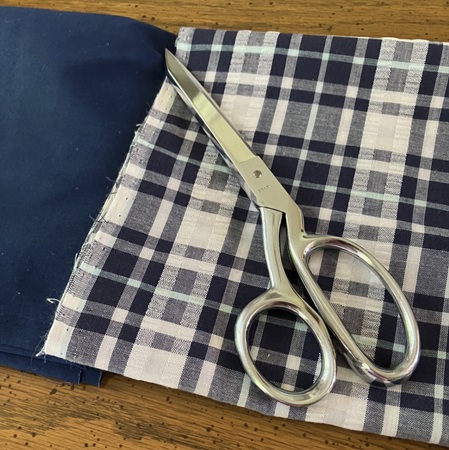
Cut from a Different Cloth--Scissors on solid blue and blue checked fabricsMy grandmother taught me to sew. We made most garments from one cloth. However, we cut some from a different cloth.

Literally, cut from a different cloth means garments made from different fabrics.

I made the top of one dress from velvet. The bottom was satin. Although unlike one another, the two cloths worked well together.

Figuratively, cut from a different cloth means people or objects differ.

We may vary in:

  • Personality
  • Culture
  • Interests
  • Backgrounds

Being cut from a different cloth can cause problems.

If we refuse to accept anyone unlike us, life becomes difficult.

Everyone suffers from:

  • Inability to get along
  • Lack of understanding
  • Poor support

Often, our differences matter little.

We may compromise or change our minds on:

  • Decorations
  • Menus
  • Entertainment

Other times, we must stand firm in our convictions.

We never want to waver on:

  • Eternal matters
  • Harmful behavior
  • Honesty

Whether cut from the same or a different cloth, let’s learn to get along.

  • Disagree in agreeable ways.
  • Respect one another.
  • Listen and learn.

“Show proper respect to everyone” (1 Peter 2:17 NIV).

Thanks to Darrin Jenkins for the suggestion.

Do you have an expression you want explained or thoughts about this one? If so, please comment below.
Subscribe to receive my weekly posts by email and receive a free copy of “Words of Hope for Days that Hurt.”

If you enjoyed this post, please share it with your friends.

Hold Your Taters

Hold Your Taters

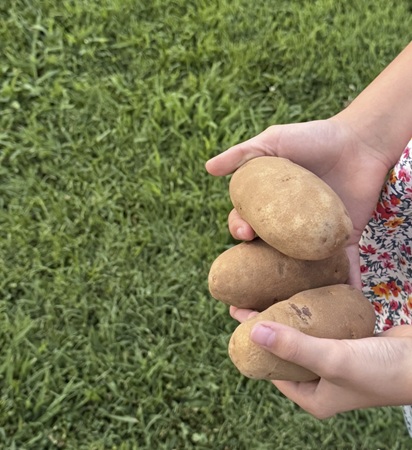
Hold Your Taters--two small hands holding three potatoesWhen my brother was little, I often said, “Patience, Robbie, patience.” He once responded, “I hate that word!”

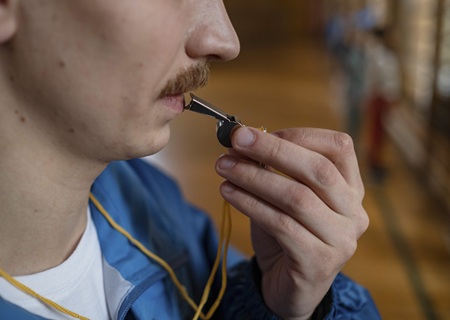
He might have preferred my saying, “Hold your taters.” Tater is slang for potato.

To hold your taters means to wait or be patient.

  • Don’t rush.
  • Take your time.

This expression is similar to:

All remind you to practice caution.

 If you move too quickly, you often end up in trouble.

To stay out of hot water, you need to:

  • Slow down.
  • Think before you act.

Hold your taters in all of life.

  • In work or play
  • Alone or with others

Hurrying or skipping one thing so you can begin another rarely works.

Instead:

  • Take a deep breath.
  • Complete step one before you take step two.

“It is dangerous and sinful to rush into the unknown” (Proverbs 19:2 TLB).

Thanks to Debbie Tapscott for the suggestion and to Karen Atwood for the photo.

Do you have an expression you want explained or thoughts about this one? If so, please comment below.
Subscribe to receive my weekly posts by email and receive a free copy of “Words of Hope for Days that Hurt.”

If you enjoyed this post, please share it with your friends.

Don’t Know If We’re Afoot or on Horseback

Don’t Know If We’re Afoot or on Horseback

Don’t Know if We’re Afoot or on Horseback-horses in field with stone fence in forefrontOften caregivers don’t know if we’re afoot or on horseback. We are spread so thin, we meet ourselves coming or going. However, we are not alone. That happens to many people.

When we don’t know if we’re afoot or on horseback, we don’t know what we’re doing.

We are so confused we can’t remember:

  • What we have done
  • What we are doing now
  • What we need to do next

We lose our sense of direction and awareness of our actions.

Not knowing if we are afoot or on horseback often results from feeling overwhelmed.

Causes include:

Too much to do and too little time leave us bumfuzzled.

A day away does our bodies and minds good.

Whether we sit, walk, or ride, we need to rest and relax. A trip through the countryside refreshes and restores me. What helps you?

“Come to me, all you who are weary and burdened, and I will give you rest” (Matthew 11:28 NIV).

Thanks to Lori Carol Maloy for the suggestion.

Do you have an expression you want explained or thoughts about this one? If so, please comment below.
Subscribe to receive my weekly posts by email and receive a free copy of “Words of Hope for Days that Hurt.”

If you enjoyed this post, please share it with your friends.

Cooking with Gas

Cooking with Gas

Cooking with Gas--Bernice ChildressOne of my husband’s caregivers and I were dealing with a difficult situation. When we finally had everything working well, she said, “Now we’re cooking with gas!” That was a new expression for me.

This saying originated when gas stoves began replacing wood burning stoves.

My caregiver friend explained that gas stoves were considered a wonderful invention. Although wood burning stoves made delicious meals, they required hours of work.

  • Chopping wood
  • Starting a fire
  • Deciding when to start cooking
  • Wiping sweat during hot summer months
  • Cleaning ashes from the stove after cooking

Plus, cooking temperatures were hard to control.

Gas stoves were easier to use and resulted in fewer mistakes.

Cooks were more likely to achieve the results they desired. My mom loved her gas stove.

Cooking with gas means we achieve success.

Like a cook who prepares a gourmet meal or bakes a perfect cake, we get something right.

We successfully:

  • Solve a problem.
  • Correct an error.
  • Receive a promotion.

We do our work well.

If we are cooking with gas, people may think we work wonders.

Whether we create perfect meals or the perfect ball team, those who share our success love it.

Whatever we do, let’s encourage one another to do our best.

If we want to take the cake, we can’t use half-baked ideas. Neither can we do half-baked work.

“We have different gifts, according to the grace given to each of us. If your gift is prophesying, then prophesy in accordance with your faith; if it is serving, then serve; if it is teaching, then teach; if it is to encourage, then give encouragement; if it is giving, then give generously; if it is to lead, do it diligently; if it is to show mercy, do it cheerfully” (Romans 12:6-8 NIV).

Thanks to J.D. Wininger and Rita Smalley for the suggestion.

Do you have an expression you want explained or thoughts about this one? If so, please comment below.

Subscribe to receive my weekly posts by email and receive a free copy of “Words of Hope for Days that Hurt.”

If you enjoyed this post, please share it with your friends.

In All My Born Days

In All My Born Days

In all my born days--Niagara Falls“Never in all my born days have I seen such a thing.” In our neck of the woods, we used to hear people make such statements.

I don’t remember ever saying it. However, I thought something similar the first time I saw Niagara Falls. A right smart of water rolls over those falls.

In all my born days means in all my life.

It refers to what we:

  • See
  • Hear
  • Feel
  • Experience

What happened is totally new.

An event never experienced in all my born days often results in surprise or shock.

I have not heard or read this expression for years. Yet I love the unique way it conveys people’s reactions.

It reminds me of conversations on the old Beverly Hillbillies television show.

Have you ever heard anyone use this expression?

If so, do you remember who said it or where? I am curious about its use in other areas. Thank you in advance for taking the time to comment.

“Let the rivers clap their hands, let the mountains sing together for joy” (Psalm 98:8 NIV).

Thanks to Kristy Horine for the suggestion.

Do you have an expression you want explained or thoughts about this one? If so, please comment below.

Subscribe to receive my weekly posts by email and receive a free copy of “Words of Hope for Days that Hurt.”

If you enjoyed this post, please share it with your friends.

Don’t Steal My Joy

Don’t Steal My Joy

Don't Steal My Joy--daisies with child holding one between his toesI love to make people happy, don’t you? Occasionally someone says an action or gift is too much. My frequent response: “Don’t steal my joy.”

Don’t steal my joy tells people to allow us to do something special for them.

If they love our gifts, it fills us with joy. We delight in helping them or offering acts of kindness.

We don’t want them to say it is too much. Or that we should not do it. We want them to accept it and enjoy it as much as we enjoy sharing.

Neither should we steal anyone else’s joy.

I almost did that recently. A friend brought thoughtful gifts for my husband. They would make his life and mine much easier. When I wanted to pay for them, she responded with a smile, “Don’t steal my joy.” She had heard me say that and enjoyed the opportunity to say it back to me.

No one can steal the joy we find in Jesus.

Jesus offers us the gift of forgiveness, a future home in heaven, and joy whatever our present circumstances.

People may mistreat us. Troubles may surround us. Life may throw us for a loop, and our emotions may tumble. Nevertheless, Jesus fills us to the brim with everlasting joy. Nothing and no one can take that away.

“Rejoice in that day and leap for joy, because great is your reward in heaven” (Luke 6:23 NIV).

Thanks to Carol Edwards for the suggestion. Image by Christiane from Pixabay.

Do you have an expression you want explained or thoughts about this one? If so, please comment below.
Subscribe to receive my weekly posts by email and receive a free copy of “Words of Hope for Days that Hurt.”

If you enjoyed this post, please share it with your friends.

Look What the Cat Dragged in

Look What the Cat Dragged in

Look What the Cat Dragged in-Two cats in a yard, one with a mouse dangling from its mouthLook what the cat dragged in may refer to what a cat catches. It often refers to a person.

Look what the cat dragged in expresses surprise at someone’s appearance.

The surprise may result from the person being there. We have not seen them in a long time and don’t expect them. Or the person is part of a group but has been inactive. We often use the expression to welcome them.

Other times, the expression refers to the way a person looks. Like a mouse that receives rough treatment from a cat, the person may appear:

  • Wild
  • Dirty
  • Uncombed
  • Wrinkled

Look what the cat dragged in often includes humor.

The humor may or may not be shared by the person described.

This expression includes several variations.

  • Look what the cat’s dragged in.
  • Look what the cat’s drug in.
  • Look what the cat drug in.
  • Look what the cats drug in.

Jesus calls us to welcome one another whatever our circumstances or appearance.

Whether someone looks like a million bucks or poor as a church mouse, our call remains the same. Welcome them in Jesus’ name. Who knows when roles may reverse with the shoe on the other foot.

 “Stop judging by mere appearances.” (John 7:24 NIV).

Thanks to D J Turner for the suggestion. Image by rihaij from Pixabay.

Do you have an expression you want explained or thoughts about this one? If so, please comment below.
Subscribe to receive my weekly posts by email and receive a free copy of “Words of Hope for Days that Hurt.”

If you enjoyed this post, please share it with your friends.

Diddly-squat

Diddly-squat

Diddly-squat-open blank pages with a penSometimes, I stare at a blank page or a blank screen and write diddly-squat. Nothing. Nada. Zero. Zilch.

Diddly-squat means nothing.

Much that we value in life amounts to diddly-squat. It holds no lasting worth.

We desire and acquire:

  • Expensive homes
  • The latest styles
  • Social status

However, none of those mean anything when we get to the end of the road.

We may know diddly squat about certain information or skills.

For example, I know little or nothing about:

  • Engineering
  • Trigonometry
  • Air traffic control

Financially, we may have diddly-squat.

  • Empty bank accounts
  • Unpaid bills
  • No income

Our pockets are empty and our resources have gone down the drain.

Agreements occasionally amount to nothing.

That happens with:

  • Broken promises
  • Ignored business contracts
  • Failed relationships

Jesus offers a better way.

  • Treat others with honesty and respect.
  • Give our best.
  • Invest in the eternal.

“If one of you says to them, ‘Go in peace; keep warm and well fed,’ but does nothing about their physical needs, what good is it?” (James 2:16 NIV).

Thanks to Laura Lee Leathers for the suggestion.

Do you have an expression you want explained or thoughts about this one? If so, please comment below.

Subscribe to receive my weekly posts by email and receive a free copy of “Words of Hope for Days that Hurt.”

If you enjoyed this post, please share it with your friends.

Copycat

Copycat

Copycat-Cat reflected in a mirrorChildren and youth are great copycats. They see something they like and mimic it.

Copycat can be a noun, verb, or adjective. 

  1. A copycat is someone who imitates another person (noun).

They see how someone looks or acts and want to be just like them. I saw the perfect example when I served as a juvenile counselor. A young runaway returned from a northern city to his rural southern home. He walked into my office with

  • A new swagger
  • Hat cocked to the side of his head
  • The most exaggerated accent I had ever heard
  1. To copycat is the act of imitating (verb).

The young juvenile was funny but did no harm when he changed his dress and speech. He did hurt others when he followed in the footsteps of relatives who broke the law.

  1. Copycat also describes something or someone (adjective).

That young man displayed obvious copycat behavior. It was not his own but belonged to someone he admired.

We need to choose our role models carefully.

Imitating the right people typically keeps us on the straight and narrow. Following negative examples keeps us in hot water.

We are made in the image of God. May our lives reflect our Maker.

“Dear friend, do not imitate what is evil but what is good” (1 John 1:11 NIV)

Thanks to Cindy Shoemaker for the suggestion. Image by Gundula Vogel from Pixabay.

Do you have an expression you want explained or thoughts about this one? If so, please comment below.

Subscribe to receive my weekly posts by email and receive a free copy of “Words of Hope for Days that Hurt.”

If you enjoyed this post, please share it with your friends.