Browsed by
Tag: Diana Derringer

Rough around the Edges

Rough around the Edges

Rough around the Edges--Bryce CanyonWe all know people who are a little rough around the edges. Although wonderful, they have flaws.

Rough around the edges means not perfect but good.

The description relates to:

  • Places
  • Possessions
  • Feelings
  • People

Many tourist destinations are rough around the edges.

We see that at:

  • Bryce and other canyons with unusual rock formations
  • Beaches in out-of-the-way places
  • Mountains altered by avalanches

Their rugged nature increases their appeal.

Favorite possessions are often rough around the edges.

  • Antiques with scratches and other imperfections
  • Children’s security blankets
  • Well-worn shoes and clothes

They may not look the best, but they function well.

We often feel rough around the edges.

That happens if we:

Such days make us appreciate the easier ones.

Some of the best people I know have flaws.

Those include:

  • Poor social skills
  • Pasts filled with unwise choices
  • Limited education

Yet, they make up for what they lack with caring attitudes and actions.

Before we pass judgement on other people, we might want to look in the mirror.

We all have rough edges. We make mistakes and must live with their consequences.

The world becomes a better place when we love and support one another. Jesus taught those characteristics with words and example. I pray we follow.

“We all stumble in many ways” (James 3:2 NIV).

Thanks to Beckham Wilson for the suggestion.

Do you have an expression you want explained or thoughts about this one? If so, please comment below.

Subscribe to receive my weekly posts by email and receive a free copy of “Words of Hope for Days that Hurt.”

If you enjoyed this post, please share it with your friends.
Upper Hand

Upper Hand

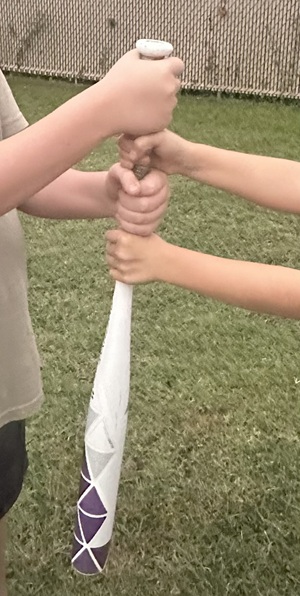
Upper Hand-two boys with alternating hands on the top of a batBefore we played ball during recess in elementary school, one player tossed the bat to another. Those two players alternated hands on the bat until they reached the top. The person with the upper hand had first choice for team players.

Upper hand means a higher or better position.  

We hold an advantage over another person or situation.

The position includes more:

  • Power
  • Control
  • Benefits

We find people with an upper hand in most of life.

  • Sports
  • Business
  • Games
  • Education
  • Families

Those people may be obvious right off the bat. Other times, we remain in the dark about who holds the most power.

An upper hand does not equal a superior person.

We are not:

  • What we do
  • Where we work
  • Who we know

To be the best we can be, we:

  • Love God.
  • Love one another.
  • Live as God created us to live.
  • Look for ways to serve rather than be served.

 “The greatest among you will be your servant. For those who exalt themselves will be humbled, and those who humble themselves will be exalted” (Matthew 23:11-12 NIV).

Thanks to J.D. Wininger for the suggestion and to Karen Atwood for the photo.

Do you have an expression you want explained or thoughts about this one? If so, please comment below.

Subscribe to receive my weekly posts by email and receive a free copy of “Words of Hope for Days that Hurt.”

If you enjoyed this post, please share it with your friends.

Stick Your Neck Out

Stick Your Neck Out

Stick Your Neck Out--one giraffe, head high, standing in front of several zebras

It’s risky to stick your neck out. Joining the crowd — looking and acting like everyone else — is safer and easier.

If you stick your neck out, you risk getting in trouble.

You attract attention. Even if other people agree with you, they fear joining you. They don’t want to face:

  • Danger
  • Criticism
  • Anger
  • Job loss
  • Rejection

This expression’s origin remains unknown.

Possibilities include:

  • Horse racing
  • Turtles sticking their heads out of their shells
  • Barnyard animals with their necks on a chopping block
  • People on a guillotine
  • Boxers protecting their necks and heads by holding them in

In all these examples, extending the neck makes it vulnerable.

You can stick your neck out personally or professionally.

You take chances when you:

If you stick your neck out, don’t take unnecessary risks.

God commands people to stand tall and stand firm for what is right. Yet, boldness is not always wise or necessary.

  • Weigh the evidence.
  • Pray for guidance.
  • Choose carefully.

“If anyone speaks, they should do so as one who speaks the very words of God. If anyone serves, they should do so with the strength God provides, so that in all things God may be praised through Jesus Christ. To him be the glory and the power for ever and ever. Amen” (1 Peter 4:11 NIV).

Thanks to Terri Wilson for the suggestion. Image by Danièle Konsbruck from Pixabay.

Do you have an expression you want explained or thoughts about this one? If so, please comment below.

Subscribe to receive my weekly posts by email and receive a free copy of “Words of Hope for Days that Hurt.”

If you enjoyed this post, please share it with your friends.
Not for Love nor Money

Not for Love nor Money

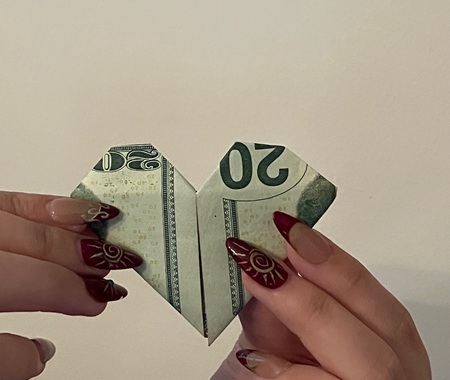
Not for Love nor Money--$20 bill shaped like a heart held by girls with long red fingernailsMany things in life we would never do – not for love nor money. Few of us would:

  • Walk a tightrope over Niagara Falls
  • Swim with sharks
  • Run with the bulls in Spain

Not for love nor money means never.

  • Under no circumstances
  • Regardless of what happens
  • Impossible

Similar expressions include:

  • Not for love or money
  • Not fer love ner money (country slang)

Sometimes we must do hard things even if we rather not.

They are so important, we take the risk. Forget hemming and hawing. No ifs, ands, or buts. We simply hunker down and do it.

Not-for-love-nor-money decisions may be outside our control.

Whether we want to do something or not, we may be unable to do it. However, nothing lies beyond the control of the one and only God who is:

  • All-powerful
  • All-knowing
  • Everywhere present

What we cannot do, God can.

“Jesus looked at them and said, ‘With man this is impossible, but with God all things are possible’” (Matthew 19:26 NIV).

Thanks to Becky Nash Rowe for the suggestion and to Piper Atwood for assistance with the photo.

Do you have an expression you want explained or thoughts about this one? If so, please comment below.

Subscribe to receive my weekly posts by email and receive a free copy of “Words of Hope for Days that Hurt.”

If you enjoyed this post, please share it with your friends.
Eat the Frog First

Eat the Frog First

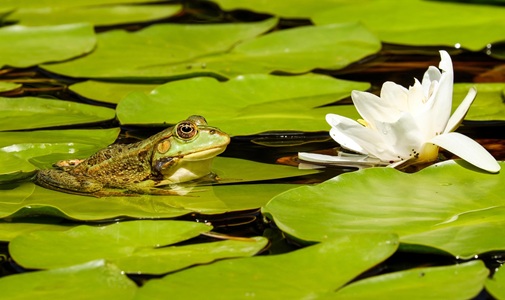
Eat the Frog First--Frog on a lily pad facing a flowerEat the frog first sounds disgusting. Although frog legs taste good, the image of a live frog gives me the heebie-jeebies.

Eat the frog first means to tackle our toughest job first.

That job is often:

  • Most important
  • Easiest to put off
  • Most satisfying when finished

Eat the frog first tells us not to procrastinate.

Get the worst work done. Then relax and move on to:

  • Other tasks
  • A well-deserved break

When we finish a job, we no longer dread it.

Mark Twain frequently receives credit for this expression’s origin.

Several sources quote him with, “Eat a live frog every morning, and nothing worse will happen to you the rest of the day.”

However, according to Quote Investigator, the expression probably began much earlier.

The full article lists those possibilities.

Whatever the origin, eat the frog first makes good sense.

However, it still sounds gross! I cannot imagine the plague of frogs mentioned in the Bible.

“The Nile will teem with frogs. They will come up into your palace and your bedroom and onto your bed, into the houses of your officials and on your people, and into your ovens and kneading troughs” (Exodus 8:3 NIV).

Thanks to Tillie Cowherd for the suggestion. Image by Couleur from Pixabay.

Do you have an expression you want explained or thoughts about this one? If so, please comment below.

Subscribe to receive my weekly posts by email and receive a free copy of “Words of Hope for Days that Hurt.”

If you enjoyed this post, please share it with your friends.

Cut to the Chase

Cut to the Chase

Cut to the Chase--Nine children running in a field with trees behind themChildren know how to cut to the chase. They abandon boring activities and hightail it to their next adventure.

Cut to the chase means to get to the point.

We don’t bother with:

  • Trivial details
  • Information overload
  • Unnecessary actions

We address only what matters most. Forget the minor. Focus on the major.

We often wish people would cut to the chase.

Those brave among us tell them to quit dillydallying, to stop wasting our time. The not-so-brave endure their rabbit chasing until the end finally comes.

This expression has a motion picture history.

When a scene ends and another begins, they “cut” from one scene to the next. This may occur in filming or editing. To cut to the chase means to get to the exciting part of the film. They move from a slow scene and focus on an action shot. Think in terms of:

  • Car chases
  • Police raids
  • Helicopter fights

Movie producers want to keep their audiences interested.

Let’s cut to the chase with our lives.

We do well if we:

  • Focus on the most important.
  • Use every word, action, and attitude to live for and point others to our loving God.

“What I received I passed on to you as of first importance: that Christ died for our sins according to the Scriptures” (1 Corinthians 15:3 NIV).

Thanks to Alma Haste for the suggestion and to Kelsi Wilson and Lorie Richerson for the photo.

Do you have an expression you want explained or thoughts about this one? If so, please comment below.

Subscribe to receive my weekly posts by email and receive a free copy of “Words of Hope for Days that Hurt.”

If you enjoyed this post, please share it with your friends.

I Don’t Care to

I Don’t Care to

I Don't Care to--back of man in a suit with a ? over his head

I began my blog in 2013 to help international friends understand English idioms. I don’t care to is an idiom that also confuses people who speak English as their primary language.

I don’t care to has two opposite meanings.

In other parts of the world, it means I don’t want to do something. However, in my neck of the woods, it means I don’t mind, or I will be glad to do it.

Same phrase. Opposite meanings. Are you confused yet? I usually try to avoid this expression but still say it occasionally.

I don’t care to can be changed to a question.

Asking, “Do you care to?” risks all the same confusion.

Usually, I don’t care (without the “to”) means I have no feelings either way.

It doesn’t matter. I have no preference.

However, it often means the opposite when a person becomes upset. Then, it means I care a great deal but refuse to admit it. I am angry or hurt but don’t want to say so.

I delayed tackling this expression for a long time.

How could I explain it without confusing everyone?

I apologize if you must read this post again to understand it. However, I hope it helps when you encounter people who mean the opposite of what you think.

“Listen carefully to what I say; let my words ring in your ears” (Job 13:17 NIV).

Thanks to Denise Wilder for the suggestion. Photo courtesy of Pixabay.

Honoring God with My Body book coverDo you have an expression you want explained or thoughts about this one? If so, please comment below.

Subscribe to receive my weekly posts by email and receive a free copy of “Words of Hope for Days that Hurt.” Congratulations to Lynn Zimbelman whose name was randomly selected from my mailing list to receive a free copy of Katherine Pasour’s book, Honoring God with My Body: Journey to Wellness and a Healthy Lifestyle.

If you enjoyed this post, please share it with your friends.
The More the Merrier

The More the Merrier

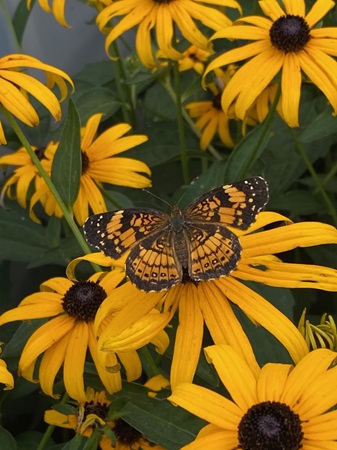
The More the Merrier, yellow blooms and yellow butterflyWith flowers and butterflies, the more the merrier. They brighten our world and our attitudes. When I was a little girl, our house and yard overflowed with my grandmother’s:

  • Potted plants
  • Flower beds
  • Shrubs and trees

All those blooms resulted in:

  • Butterflies
  • Bees
  • An abundance of beauty

People came from here to yonder to admire and receive plant starts.

The more the merrier usually refers to people.

Often, the more people at a place or event, the more fun everyone has.

During my childhood summers, our house overflowed with relatives as well as flowers. They came from everywhere. Many stayed two weeks or longer. People ate and slept wherever they found a bare spot. We had a whale of a time.

The more the merrier describes a variety of situations.

Not everyone agrees that the more the merrier.

Fewer people may be preferred by:

  • Overworked teachers
  • Tired cooks
  • Exhausted parents

We all need time alone and time together.

The Bible tells us that “Jesus often withdrew to lonely places and prayed” (Luke 5:16 NIV). However, the Bible also reminds us that we need to gather and support one another.

“Let us consider how we may spur one another on toward love and good deeds, not giving up meeting together … but encouraging one another” (Hebrews 10:24-25 NIV).

Thanks to Tracy Crump for the idea and to Debbie Tapscott for the photo.

Honoring God with My Body book coverDo you have an expression you want explained or thoughts about this one? If so, please comment below.

Subscribe to receive my weekly posts by email and receive a free copy of “Words of Hope for Days that Hurt.” On 8-23-25, I will randomly select one name from my mailing list to also receive a free copy of Katherine Pasour’s book, Honoring God with My Body: Journey to Wellness and a Healthy Lifestyle. If your name is already on the mailing list, you are automatically entered. Please encourage your friends to subscribe.

If you enjoyed this post, please share it with your friends.
Down Pat

Down Pat

Down Pat--open books with pen and pencil holders beside themDo you know people who appear to have life down pat? Everything they do, they do well.

  • They excel at athletics.
  • Music flows from them.
  • Academic awards cover their walls.
  • They smile through every hardship.

Down pat means you have learned something well.

The Free Dictionary defines it as “Learned, mastered, or understood perfectly, to the point of requiring little or no focus to do, recall, or accomplish.” You hit the bull’s eye.

To get anything down pat usually requires extra effort.

Before you make it look easy, you must:

  • Work hard
  • Study
  • Practice
  • Memorize

You need to develop your natural abilities.

Talent alone rarely gets you where you want to go. Experts were once students. When you study hard, your skills grow.

God gives the talent. People add the elbow grease.

“I applied my heart to what I observed and learned a lesson from what I saw” (Proverbs 24:32).

Thanks to Katherine Pasour for the suggestion.

Honoring God with My Body book coverDo you have an expression you want explained or thoughts about this one? If so, please comment below.

Subscribe to receive my weekly posts by email and receive a free copy of “Words of Hope for Days that Hurt.” On 8-23-25, I will randomly select one name from my mailing list to also receive a free copy of Katherine Pasour’s book, Honoring God with My Body: Journey to Wellness and a Healthy Lifestyle. If your name is already on the mailing list, you are automatically entered. Please encourage your friends to subscribe.

If you enjoyed this post, please share it with your friends. (The Facebook share button did not work recently, but that has been corrected.)

Close-knit

Close-knit

Close-knit--family photoDo you have a close-knit family or group of friends? Few things in life replace those special relationships. Your roots may have run deep for a long time. Or you may have known one another only briefly. Either way, you can depend on one another.

Close-knit means a close relationship.

Your ties to one another may result from shared:

  • Family
  • Friends
  • Culture
  • Interests

Whatever holds you together stays strong.

Time or distance don’t reduce your close-knit commitment.

You remain ready to move heaven and earth for one another at a moment’s notice. Just call, and help is on the way.

That’s the kind of relationship everyone needs.

You never have to wonder. You never have to worry. If you need them, they will be there.

God offers a never-failing close-knit relationship to everyone.

People have limits. God has none. If you want the best of the best, turn to God. God will never leave you alone.

“No one has ever seen God, but the one and only Son, who is himself God and is in closest relationship with the Father, has made him known” (John 1:18 NIV).

 Thanks to Beckham Wilson for the suggestion.

Do you have an expression you want explained or thoughts about this one? If so, please comment below.

Subscribe to receive my weekly posts by email and receive a free copy of “Words of Hope for Days that Hurt.”

If you enjoyed this post, please share it with your friends.