Browsed by
Tag: encouragement

Cold Shoulder

Cold Shoulder

Cold Shoulder--back of a young woman with off-the-shoulder blouse in a field of yellow flowersHas anyone given you the cold shoulder? It’s no fun, is it?

To receive a cold shoulder means people ignore or reject you.

They:

  • Snub you.
  • Pay no attention to you.
  • Turn away from you.

Rejection is depressing.

A cold shoulder is not accidental. Those who snub you have no interest in contact with you.

The origin of cold shoulder probably differs from widespread belief.

According to The Phrase Finder and The Free Dictionary, many people believe this expression began with a nineteenth century custom.

  • Hosts served a meal of roasted meat to welcomed guests.
  • They served a cold shoulder of meat to guests who outstayed their welcome.

The Phrase Finder says, “There’s no evidence to support this view.” It adds, “The first reference to the phrase in print is in Sir Walter Scott’s ‘The Antiquary,’ 1816.”

Rather than an unfriendly cold shoulder, show love and concern for others.

“If you see some brother or sister in need and have the means to do something about it but turn a cold shoulder and do nothing, what happens to God’s love? It disappears. And you made it disappear” (1 John 3:17 MSG).

Thanks to Kay Emerick for the suggestion. Image by Eszter Miller from Pixabay.

Do you have an expression you want explained or thoughts about this one? If so, please comment below.

Subscribe to receive my weekly posts by email and receive a free copy of “Words of Hope for Days that Hurt.”

If you enjoyed this post, please share it with your friends.
Weather the Storm

Weather the Storm

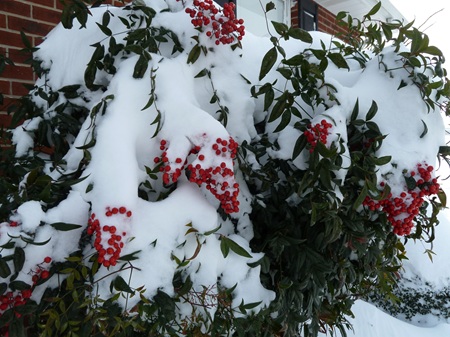
Weather the Storm--Snow covered shrub (nandina) with red berries

How did you weather the recent storm? Some of you may have escaped snow, ice, and frigid temperatures. However, we experienced all three. More than one person said our driveway was like a skating rink.

Literally, to weather the storm means to stay where we are until a storm passes.

We go nowhere. With few options, we hunker down and wait until the worst is over.

Figuratively, to weather the storm means to survive a hard time or situation.

We experience and live through it. Many close to us have recently faced such hardships.

  • Health crises
  • Death of family members
  • Job loss
  • Financial difficulties
  • Family problems

According to The Free Dictionary, this expression “has been used figuratively from about 1650.”

A similar expression is to ride out the storm.

We hang on for dear life through our difficulties.

Life is not always easy.

We experience ups and downs. Hard times come and go. Yet we can make it.

We never have to weather the storm alone.

God promises never to leave  those who follow Him. Because He remains near, we have no need to fear.

“The Lord is my helper; I will not be afraid” (Hebrews13:6 NIV).

Thanks to Beckham Wilson for the suggestion.

Do you have an expression you want explained or thoughts about this one? If so, please comment below.

Subscribe to receive my weekly posts by email and receive a free copy of “Words of Hope for Days that Hurt.”

If you enjoyed this post, please share it with your friends.

Get on the Stick

Get on the Stick

Get on the Stick--ladybug on a tree branchDid anyone ever tell you to get on the stick? You rested too long. Or were busy with something else. Or simply felt lazy. The person talking may have been a:

  • Parent
  • Boss
  • Co-worker
  • Friend

Whoever it was, they wanted you to do the job they had in mind.

To get on the stick means to get busy.

Fixing to do something is not enough. You must get up and do it.

Get on the stick also applies to non-work activities.

Those include:

  • School
  • Sports
  • Anything you should do but keep avoiding

Put your best foot forward. You will be glad you did.

“We do not want you to become lazy, but to imitate those who through faith and patience inherit what has been promised.” (Hebrews 6:12 NIV).

Thanks to Darrin Jenkins for the suggestion and to Debbie Tapscott for the photo.

Do you have an expression you want explained or thoughts about this one? If so, please comment below.

Subscribe to receive my weekly posts by email and receive a free copy of “Words of Hope for Days that Hurt.”

If you enjoyed this post, please share it with your friends.

Throw Your Hat into the Ring

Throw Your Hat into the Ring

Throw Your Hat into the Ring--two people throwing their hats into the air with the sun setting behind themDo you often throw your hat into the ring? Maybe for a group activity, fun event, or political office? You decide to give it a whirl.

If you throw your hat into the ring, you announce your decision to join or compete.

You may:

  • Enter a contest.
  • Make or accept a challenge.
  • Participate in a special event.
  • Start a new step in life.

Throw your hat into the ring began with boxing.

According to The Phrase Finder, “The expression dates from at least the early 19th century.” Boxing rings were “circular spaces in a crowd of onlookers.” No “square roped ‘rings’” like today. If someone wanted to compete, he threw his hat into the ring. That was easier than shouting above the noisy crowd.

Be careful before you throw your hat into the ring.

Many activities prove worthwhile. Others you want to avoid at all costs.

When Jesus calls, always follow.

The cost may be great, but the reward will be greater. Many believers endure persecution such as:

  • Ridicule
  • Job loss
  • Rejection from friends and family
  • Imprisonment
  • Death

Nevertheless, they throw their hat into the ring with Jesus. They prefer to suffer rather than deny their Savior.

“Join with me in suffering, like a good soldier of Christ Jesus.” (2 Timothy 2:3 NIV).

 Thanks to Lam DeBrot for the suggestion. Photo by Nabil Naidu with Pexels.

Do you have an expression you want explained or thoughts about this one? If so, please comment below.

Subscribe to receive my weekly posts by email and receive a free copy of “Words of Hope for Days that Hurt.”

If you enjoyed this post, please share it with your friends.
Satisfy Like Honey on a Warm Biscuit

Satisfy Like Honey on a Warm Biscuit

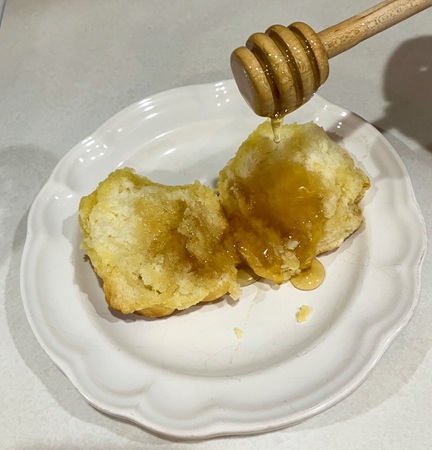
Satisfy Like Honey on a warm biscuit--honey drizzled on a split biscuitCold winter days call for comfort food. Nothing satisfies like honey on a warm biscuit. It fills our stomachs and sticks to our ribs.

To satisfy like honey on a warm biscuit means to comfort or indulge.

As sweet as honey on a warm biscuit is a related simile. SimiliesGuru.com says the expression is used “for cozy, satisfying happiness.”

Our sources of satisfaction differ.

Some of us enjoy a good book. Others prefer a long walk. Many find satisfaction in both.

We may also enjoy:

  • Time with friends and family
  • Travel
  • Naps

Choices vary according to our personalities and interests.

Reading the Bible satisfies better than honey on a warm biscuit.

God’s Word offers:

  • Lessons for daily life
  • The way to eternal life
  • Direction for life decisions

It also reminds us that our words and actions matter. Luke 6:31 tells us to treat others like we want them to treat us. Be as sweet to them as we want them to be sweet to us. Remember, we catch more flies with honey than vinegar.

Seek satisfaction that lasts.

Follow God’s guidance for joy that never fails.

“But you would be fed with the finest of wheat; with honey from the rock I would satisfy you” (Psalm 81:16 NIV).

Thanks to Sharon Berry for the suggestion.

Do you have an expression you want explained or thoughts about this one? If so, please comment below.

Subscribe to receive my weekly posts by email and receive a free copy of “Words of Hope for Days that Hurt.”

If you enjoyed this post, please share it with your friends.

Neither Here nor There

Neither Here nor There

Neither Here nor There--sign post with signs "This Way" and "That Way"Many things that steal our attention are neither here nor there. They take our time but matter little or not at all.

Neither here nor there means unimportant.

The information or action:

  • Does not relate to the circumstances
  • Will not change anything

Therefore, who cares?

Think of daily activities that are neither here nor there.

  • Time on social media
  • Scrolling through television channels
  • Trying to be more important than one another

Frequent decisions are neither here nor there.

Either choice is okay, six of one and half a dozen of another. Examples include:

  • Where or what to eat
  • Which outfit to wear
  • What games to play

According to The Free Dictionary, “this term dates from the sixteenth century.”

Although not the first to use it, Shakespeare included it in The Merry Wives of Windsor and Othello.

When choices do matter, choose wisely.

  • Invest in what lasts.
  • Show respect for everyone.
  • Follow God’s direction.
  • Share God’s love.

“As for those who were held in high esteem—whatever they were makes no difference to me; God does not show favoritism—they added nothing to my message.” (Galatians 2:6 NIV).

Thanks to Rita Smalley for the suggestion. Image by Gerd Altmann from Pixabay.

Do you have an expression you want explained or thoughts about this one? If so, please comment below.

Subscribe to receive my weekly posts by email and receive a free copy of “Words of Hope for Days that Hurt.”

If you enjoyed this post, please share it with your friends.

Onward and Upward

Onward and Upward

Onward and Upward--Old Faithful geyserOur family loves to visit Yellowstone National Park. We always watch the Old Faithful geyser erupt. Several times a day, Old Faithful moves onward and upward.

This wonder of nature reminds us of the importance of our own faithfulness.

Onward and upward means to keep moving forward.

We work toward:

  • Improvement
  • Progress
  • Success

Onward and upward often means steady rather than sudden growth.

Old Faithful begins with a sputter but then grows higher and higher. We don’t have to start fast either. However, we do want to keep going and growing.

Onward and upward encourages us not to give up.

We all face difficulties and disappointments. Yet, we advance one step at a time. Failure teaches us what does not work. To reach our goals, we keep on keeping on.

This challenge applies to every age and circumstance.

  • Youth graduating from school
  • Adults seeking the right job
  • Retirees beginning a new stage in life

As long as we live, we have meaning and purpose. May we always seek to find and fulfill them to the best of our abilities.

Our greatest advancement occurs when we step from this life into the next.

If we follow Jesus’ plan for our lives, we find the best now and through eternity. Let’s keep moving onward and upward.

“In keeping with his promise we are looking forward to a new heaven and a new earth, where righteousness dwells” (2 Peter 3:13 NIV).

Thanks to Joy S. Taylor for the suggestion.

Flash in the Pan

Flash in the Pan

Flash in the Pan--musket pistol and other antiquesI thought flash in the pan originated with gold mining.

If a miner saw glitter in his pan, he became excited. Rather than gold, what he often saw was only a flash in the pan.

I was wrong.

According to The Phrase Finder, flash in the pan originated with flintlock muskets that had small pans for gunpowder. When gunpowder flared but no bullet fired, it was called a flash in the pan.

The expression, “hang fire,” has a similar origin.

Flash in the pan refers to a promise of success that fails.

  • Authors write only one bestseller.
  • Musicians record one hit but no others.
  • Actors star in only one major movie or play.
  • Athletes lose their positions after a brief career.
  • Businesses boom and then go bankrupt.

They make a splash, but their success does not last.

Doing our best beats trying to impress.

Let’s use our abilities, great or small, to make the world a better place. Now, that’s success!

“May the God of peace …  equip you with everything good for doing his will” (Hebrews 13:20-21 NIV).

Thanks to Frank Cheatham for the flash in the pan suggestion and to Brad Leverett for hang fire. Image by Alexander Lesnitsky from Pixabay.

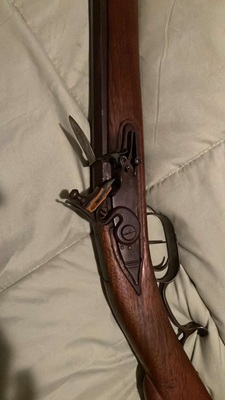
Flash in the Pan--flintlock rifleDo you have an expression you want explained or thoughts about this one? If so, please comment below.

Subscribe to receive my weekly posts by email and receive a free copy of “Words of Hope for Days that Hurt.”

If you enjoyed this post, please share it with your friends.
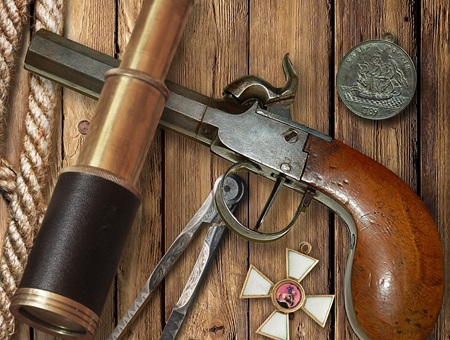
UPDATE: Thanks to Warren Johnson who noticed that the pistol in my photo is a percussion pistol, not a flintlock. See his comments below for more interesting details about his flintlock rifle pictured here.

Heart of the Matter

Heart of the Matter

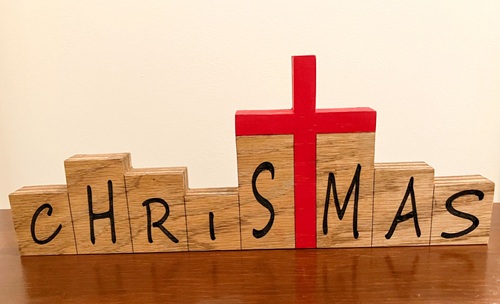
Heart of the Matter--Wood Christmas carving with a red T to represent a crossMost of the time, we want people to get to the heart of the matter. Quit beating around the bush. Stop wasting our time. Cut to the chase.

The heart of the matter refers to what is most important.

It is the:

  • Main point
  • Central issue
  • Primary problem

We require our physical hearts to live and function. Likewise, we focus on the heart of the matter to be most effective.

To deal with a situation, we must address it.

Dillydallying does no good. If a problem exists, work on it. If people do a good job, tell them. Concentrate on what matters most.

The cross is the heart of the matter in Christmas.

We love to celebrate Jesus’ birth. Yet, our music, gifts, and decorations mean nothing if we forget why Jesus came. We must look beyond the manger to the cross.

The Savior of the world came into our world to save us from our sins.

The Christmas message finds fulfillment at Easter. Jesus:

  • Lived a sinless life
  • Gave his life for our sins
  • Rose from the grave in victory over sin and death

Will you give your life to the one who loves you that much?

“I bring you good news of great joy that will be for all the people. For unto you is born this day in the city of David a Savior, who is Christ the Lord” (Luke 2:10-11 ESV).

Thanks to Beckham Wilson for the suggestion.

Do you have an expression you want explained or thoughts about this one? If so, please comment below.

Subscribe to receive my weekly posts by email and receive a free copy of “Words of Hope for Days that Hurt.”

If you enjoyed this post, please share it with your friends.
Filled to the Brim

Filled to the Brim

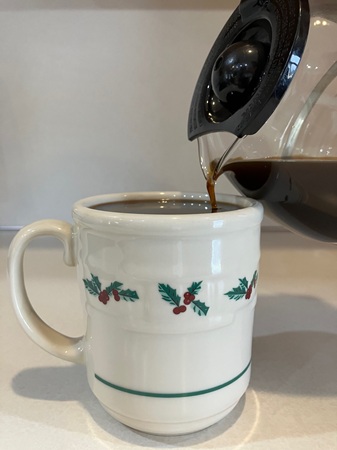
Filled to the Brim-Coffee pot filling a Christmas coffee mug to the topThis time of year, our lives become filled to the brim. That can be both good and bad.

Filled to the brim means completely full.

We have no room left for anything else. Our cups run over.

Christmas often results in:

  • Activities that crowd every minute
  • More food than we can possibly eat
  • Music, lights, and decorations that leave us in awe

All that overflow results in emotional highs and lows.

  • We love time with friends and family. Yet, we need quiet moments too.
  • The food tastes wonderful. But overeating leaves us sluggish and makes our tummies hurt.
  • Sights and sounds lift our spirits. However, they eventually leave us exhausted.

Filled to the brim also means totally satisfied.

We frequently search for satisfaction in things and activities. Yet, they always fall short.

True satisfaction comes only through a relationship with Jesus.  

Jesus:

  • Came to earth as a baby
  • Lived a perfect life
  • Gave His life as a sacrifice for our sins
  • Rose from the grave in victory over sin and death
  • Offers forgiveness and eternal life to all who accept Him as Savior and Lord

That, my friend, is a filled-to-the-brim life.

And that is what Christmas is all about.

“Jesus said to the servants, ‘Fill the jars with water’; so they filled them to the brim” (John 2:7 NIV).

Thanks to Tracy Crump for the suggestion.

Do you have an expression you want explained or thoughts about this one? If so, please comment below.

Subscribe to receive my weekly posts by email and receive a free copy of “Words of Hope for Days that Hurt.”

If you enjoyed this post, please share it with your friends.