Browsed by
Tag: encouragement

Look Like a Million Bucks
Look Like a Million Bucks

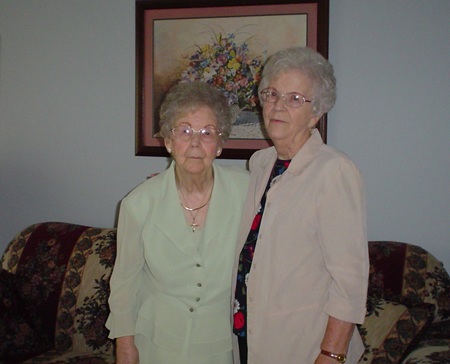
Look Like a Million Bucks--two older womenMom and Aunt Ersie always wanted to look like a million bucks. On their worst days, they still liked to look good. At Aunt Ersie’s eightieth birthday celebration, they certainly achieved their goal.

If we look like a million bucks, we look great.

A million bucks means a million dollars. That’s looking good! An attractive appearance, like we just stepped out of a band box, usually makes us feel better. Try it.

If we feel like a million bucks, we feel great.

Other steps for a happy and healthy life include:

  • Exercise
  • A balanced diet
  • Plenty of water
  • A regular sleep schedule

Positive thoughts help us look and feel better.

Likewise, negative thoughts lead to negative appearances and emotions. For the best life, avoid stinking thinking.

We never want to look like a million bucks but treat others poorly.

Remember, pretty is as pretty does.

God gives us worth and beauty.

We are all different, but God loves every one of us. That’s worth more than a million bucks!

“Your beauty should not come from outward adornment, such as elaborate hairstyles and the wearing of gold jewelry or fine clothes.  Rather, it should be that of your inner self, the unfading beauty of a gentle and quiet spirit, which is of great worth in God’s sight” (1 Peter 3:3-4 NIV).

Thanks to Margaret Jane Cleasby for the suggestion.

Do you have an expression you want explained or thoughts about this one? If so, please comment below.

Subscribe to receive my weekly posts by email and receive a free copy of “Words of Hope for Days that Hurt.”

If you enjoyed this post, please share it with your friends.

On Pins and Needles

On Pins and Needles

On Pins and Needles--pin cushion with pens, needles, and threadHave you ever been on pins and needles?

Physically, our hands or feet may become numb. When we move them, a feeling like pins and needles runs through them. That tingle results from the blood returning.

On pins and needles emotionally means nervous or anxious.

We get tense.

That often occurs when we wait for results such as:

  • School exams
  • Medical tests
  • Job applications

We wonder what will happen.

Few of us like uncertainty, so we tie ourselves in knots while we wait for the next shoe to drop. An unknown often makes us more nervous than a known problem.

Anniversaries of difficult times also make us anxious.

  • The death of a loved one
  • A family tragedy
  • Accidents

This expression occasionally appears as sitting on pins and needles.

The meaning remains the same.

God offers the best cure for uncertainty.

Rather than pins and needles, God provides peace and rest.

“In the morning, Lord, you hear my voice; in the morning I lay my requests before you and wait expectantly” (Psalm 5:3 NIV).

Thanks to Laura Lee Leathers for the suggestion.

Do you have an expression you want explained or thoughts about this one? If so, please comment below.

Subscribe to receive my weekly posts by email and receive a free copy of “Words of Hope for Days that Hurt.”

If you enjoyed this post, please share it with your friends.
Do or Die

Do or Die

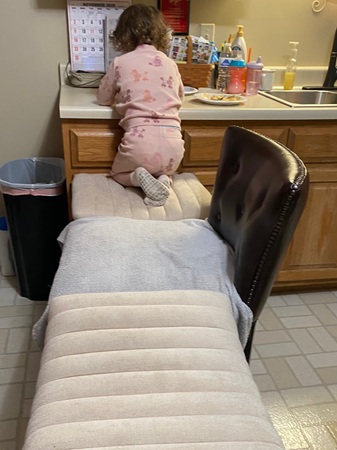
Do or Die-little girl using chairs and stools to reach cabinet topHave you watched people fight to succeed when failure seemed certain? Their final effort is do or die. This little one was determined to get to her uncle’s chewing gum. She succeeded with her extra effort.

Do or die means we give our best to succeed and avoid failure.

We keep on keeping on despite:

  • Difficulties
  • Danger
  • Death

We refuse to give up.

Do or die also means our last chance.

  • Ballgames hinge on the last play.
  • Companies depend on end-of-year sales to stay in business.
  • Relationships rely on a final effort to stay together.

Results rest on our willingness to do our best.

We cannot depend on:

  • Past success
  • Reputation
  • Other people

Like the little girl above, let’s refuse to give up.

We all face hard times. That’s life. Turn to Jesus who helps us through every challenge and every storm.

“My flesh and my heart may fail, but God is the strength of my heart and my portion forever” (Psalm 73:26 NIV).

Thanks to Chris J. Beam for the suggestion and to Debbie Tapscott for the photo.

Do you have an expression you want explained or thoughts about this one? If so, please comment below.

Subscribe to receive my weekly posts by email and receive a free copy of “Words of Hope for Days that Hurt.”

If you enjoyed this post, please share it with your friends.

Chasing Squirrels

Chasing Squirrels

Squirrel in fall leaves around a tree rootWe love watching squirrels in our neck of the woods. However, chasing those squirrels never works. Smaller and faster, they disappear before we can get out the door.

Yet we often succeed at chasing squirrels in other ways.

Chasing squirrels means we lose focus.

We get distracted and as a result, waste time. Rather than concentrate on our work, we notice everything else around us. For example,

  • “Oh, look! I saw a squirrel.”
  • Or butterfly
  • Or cute baby
  • Or airplane
  • Or anything except what we should see.

Chasing squirrels differs from chasing rabbits.

Chasing squirrels means we get distracted. Chasing rabbits means we get off subject. Both can be fun. Both can also cause problems if we fail to refocus or get back on subject.

After our squirrel moments, we want to hightail our minds back where they should be.

Always look in the right direction.

That includes to:

  • The work before us
  • The needs around us
  • God’s plan for us

“We fix our eyes not on what is seen, but on what is unseen, since what is seen is temporary, but what is unseen is eternal” (2 Corinthians 4:18 NIV).

Thanks to Melissa Henderson for the suggestion.

Do you have an expression you want explained or thoughts about this one? If so, please comment below.

Subscribe to receive my weekly posts by email and receive a free copy of “Words of Hope for Days that Hurt.”

If you enjoyed this post, please share it with your friends.

Scapegoat

Scapegoat

Scapegoat--goat lying in field, face to cameraHave you ever been a scapegoat? Something bad happened. It was not your fault, but you received the blame. Or have you ever scapegoated someone else?

A scapegoat receives all the blame or punishment for the wrongs of others.

The person may be innocent or only partially at fault. However, they receive total blame.

  • Family members accuse a relative for all their problems.
  • Company leaders condemn an employee for the company’s losses.
  • Team members blame one player for their team’s defeat.

We don’t like to be accused when innocent.

Neither do other people.

We find the background for a scapegoat in the Bible.

God gave Moses directions for the Day of Atonement. Aaron, Israel’s first high priest, took two male goats for a sin offering. One goat was sacrificed. The other (the scapegoat) had the sins of the people symbolically placed on it. It was then driven into the wilderness.

Rather than condemn others unfairly, let’s:

  • Take responsibility for our own actions.
  • Encourage one another to make wise choices.
  • Forgive the mistakes of others and ask forgiveness for ours.

Let’s not hang one another out to dry. Instead, let’s treat others like we want to be treated.

“He is to lay both hands on the head of the live goat and confess over it all the wickedness and rebellion of the Israelites—all their sins—and put them on the goat’s head. He shall send the goat away into the wilderness in the care of someone appointed for the task.  (Leviticus 16:21 NIV).

Thanks to Karen Atwood for the suggestion and to Lori Carmicle for the photo.

Do you have an expression you want explained or thoughts about this one? If so, please comment below.

Subscribe to receive my weekly posts by email and receive a free copy of “Words of Hope for Days that Hurt.”

If you enjoyed this post, please share it with your friends.

Give Up the Ghost

Give Up the Ghost

Give Up the Ghost--Sunset rays over a field and under dark cloudsFor years, I knew only one meaning for give up the ghost. However, according to The Free Dictionary, the expression has at least three. All three mean an end.

To give up the ghost means to die.

This was the definition I knew. Other death idioms include:

The Free Dictionary further explains, “The ghost here is the soul … separated from the body upon death.”

To give up the ghost also means something stops working.

No physical possession lasts forever. All eventually wear out. Therefore, we must keep buying:

  • Appliances
  • Cars
  • Phones

To give up the ghost also means to quit trying.

We cancel plans we think will fail. This may include:

  • Work
  • Trips
  • Special events

Although our bodies die, our souls can soar!

We choose our destination for this life and life after we give up the ghost. If we accept Jesus as Savior and Lord, we have the promise of an everlasting home in heaven.

Man dieth, and wasteth away: yea, man giveth up the ghost, and where is he?” (Job 14:10 KJV).

Thanks to Bobbie Smith Bryant for the suggestion.

Do you have an expression you want explained or thoughts about this one? If so, please comment below.

Subscribe to receive my weekly posts by email and receive a free copy of “Words of Hope for Days that Hurt.”

If you enjoyed this post, please share it with your friends.
Practice What You Preach

Practice What You Preach

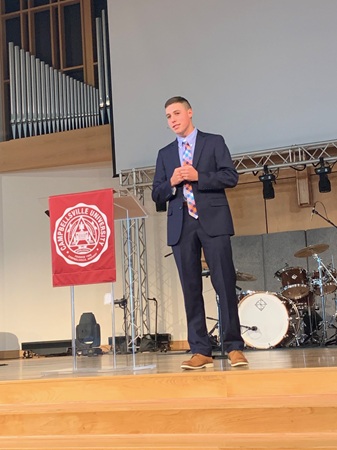
Practice What You Preach-young ministerial student on stageWhen I was in college, we lived next door to a ministerial student. Every week, we heard him practice what he planned to preach. Our walls were paper thin.

If you practice what you preach, you do what you tell other people to do.

This proverb warns against hypocrisy. It wasn’t enough for the preaching student to practice saying his words. He also needed to practice doing them.

Example has a greater impact than advice.

  • Children pay more attention to parents’ behavior than words.
  • Students listen better if teachers’ actions match their assignments.
  • Employees watch their employers for acceptable business practices.

You are the real McCoy if you practice what you preach.

No pretending. No falsehood. You live what you say.

The world is filled with pretense and falsehood, but you have a better choice.

Jesus set the example. When we follow Jesus, we live and tell His truth to a world that needs to see and hear it.

“Do not do what they do, for they do not practice what they preach” (Matthew 23:3 NIV).

Thanks to Meghan Bowker, Editor, Missions Mosaic, for the idea and to Hayden Dabney, children’s minister at Campbellsville Baptist Church, for the photo.

Do you have an expression you want explained or thoughts about this one? If so, please comment below.

Subscribe to receive my weekly posts by email and receive a free copy of “Words of Hope for Days that Hurt.”

If you enjoyed this post, please share it with your friends.

The Bee’s Knees

The Bee’s Knees

The Bee's Knees-bee on flower with blue bloomsThe bee’s knees makes me think of the 1920s. Several unusual expressions became popular then.

The bee’s knees means excellent.

Although the expression may be outdated, desire for the best continues.

We want to:

  • Live great lives.
  • Maintain strong relationships.
  • Buy high-quality items.

We see that in advertisements for:

  • Fancy cars
  • Elaborate homes
  • High-class clothes
  • Outstanding entertainment

The origin of the expression remains uncertain.

According to The Free Dictionary, “Some people believe [it] refers to the way … bees transfer pollen … from their bodies to pollen sacs on their back legs.” It also says the expression first referred to “something small and insignificant.” However, “it quickly developed into its current … opposite meaning.”

The Phrase Finder lists other possibilities. It says the expression “was originally an 18th century fanciful phrase.” The bees knees “referred to something that didn’t exist … like a left-handed hammer. This meaning is no longer used.”

Both sites mention the expression’s addition to the “nonsense language” of the Roaring Twenties.

Like the bee’s knees, let’s be the best we can be.

The expression’s language may be nonsense. Its meaning is not. Let’s make the world better for everyone.

“Don’t think only of yourself. Try to think of the other fellow, too, and what is best for him” (1 Corinthians 10:24 TLB).

Thanks to Jane Ashley Pace for the suggestion and to Debbie Tapscott for the photo.

Do you have an expression you want explained or thoughts about this one? If so, please comment below.

Subscribe to receive my weekly posts by email and receive a free copy of “Words of Hope for Days that Hurt.”

If you enjoyed this post, please share it with your friends.

Rough around the Edges

Rough around the Edges

Rough around the Edges--Bryce CanyonWe all know people who are a little rough around the edges. Although wonderful, they have flaws.

Rough around the edges means not perfect but good.

The description relates to:

  • Places
  • Possessions
  • Feelings
  • People

Many tourist destinations are rough around the edges.

We see that at:

  • Bryce and other canyons with unusual rock formations
  • Beaches in out-of-the-way places
  • Mountains altered by avalanches

Their rugged nature increases their appeal.

Favorite possessions are often rough around the edges.

  • Antiques with scratches and other imperfections
  • Children’s security blankets
  • Well-worn shoes and clothes

They may not look the best, but they function well.

We often feel rough around the edges.

That happens if we:

Such days make us appreciate the easier ones.

Some of the best people I know have flaws.

Those include:

  • Poor social skills
  • Pasts filled with unwise choices
  • Limited education

Yet, they make up for what they lack with caring attitudes and actions.

Before we pass judgement on other people, we might want to look in the mirror.

We all have rough edges. We make mistakes and must live with their consequences.

The world becomes a better place when we love and support one another. Jesus taught those characteristics with words and example. I pray we follow.

“We all stumble in many ways” (James 3:2 NIV).

Thanks to Beckham Wilson for the suggestion.

Do you have an expression you want explained or thoughts about this one? If so, please comment below.

Subscribe to receive my weekly posts by email and receive a free copy of “Words of Hope for Days that Hurt.”

If you enjoyed this post, please share it with your friends.
Upper Hand

Upper Hand

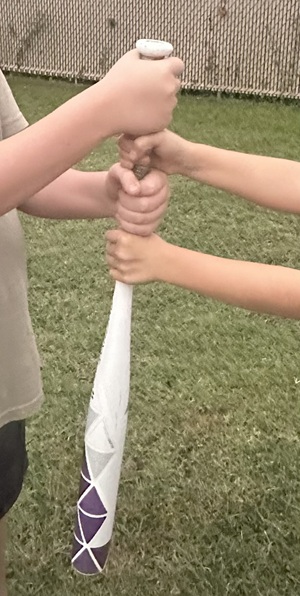
Upper Hand-two boys with alternating hands on the top of a batBefore we played ball during recess in elementary school, one player tossed the bat to another. Those two players alternated hands on the bat until they reached the top. The person with the upper hand had first choice for team players.

Upper hand means a higher or better position.  

We hold an advantage over another person or situation.

The position includes more:

  • Power
  • Control
  • Benefits

We find people with an upper hand in most of life.

  • Sports
  • Business
  • Games
  • Education
  • Families

Those people may be obvious right off the bat. Other times, we remain in the dark about who holds the most power.

An upper hand does not equal a superior person.

We are not:

  • What we do
  • Where we work
  • Who we know

To be the best we can be, we:

  • Love God.
  • Love one another.
  • Live as God created us to live.
  • Look for ways to serve rather than be served.

 “The greatest among you will be your servant. For those who exalt themselves will be humbled, and those who humble themselves will be exalted” (Matthew 23:11-12 NIV).

Thanks to J.D. Wininger for the suggestion and to Karen Atwood for the photo.

Do you have an expression you want explained or thoughts about this one? If so, please comment below.

Subscribe to receive my weekly posts by email and receive a free copy of “Words of Hope for Days that Hurt.”

If you enjoyed this post, please share it with your friends.