Browsed by
Tag: God

Talk the Bark Off a Tree

Talk the Bark Off a Tree

Talk the Bark Off a Tree--Large tree surrounded by smaller trees and plantsI have friends who can talk the bark off a tree. They know how to discuss anything with anyone. A former co-worker could also recall details I never noticed. She made a great storyteller in both fact and fiction.

To talk the bark off a tree means to talk constantly.

I occasionally check to see how long before my friends take a break. They do allow time to:

  • Breathe
  • Eat
  • Swallow

Most enjoy laughter as much as words.

To talk the bark off a tree requires energy.

I tried stripping bark from a tree a few times. Not an easy task! Therefore, I decided to let someone else do it.

Likewise, I would be totally tuckered out if I had to talk nonstop.

My verbal friends are not as tight as bark on a tree with conversation.

They offer their words freely, particularly if they want to:

  • Share exciting news.
  • Recall an enjoyable experience.
  • Encourage others.

I give thanks for all my friends, wordy and quiet. Both make life more interesting and the world a better place.

May all I say and avoid saying honor God and uplift the people around me.

May the same be true for all I write and avoid writing.

Will you join me in that prayer?

“Do not let any unwholesome talk come out of your mouths, but only what is helpful for building others up according to their needs, that it may benefit those who listen” (Ephesians 4:29 NIV).

Thanks to Carol Edwards for the suggestion.

Do you have an expression you want explained or a thought about this one? If so, please comment below.

Subscribe to receive my weekly posts by email and receive a free copy of “Words of Hope for Days that Hurt.”

If you enjoyed this post, please share it with your friends.

Saddle Up

Saddle Up

Saddle Up--rider mounting a saddled horseBefore we ride a horse, we usually saddle up. We put the saddle on the horse. Sometimes for competition. Other times for a leisurely ride.

A few people ride bareback, but most of us prefer the comfort and control a saddle gives.

Saddle up means to get ready.

Before we begin any activity, we plan what we need to do and the best way to do it. Then we are good to go.

Even with the best of plans, we all make mistakes. However, when that happens, we get back on the horse and keep going.

Failure to saddle up hurts everyone.

Proper planning results in greater opportunities for success. Lack of preparation leads to disappointment and defeat.

Prepare for life’s greatest ride.

If we join a trail ride, a leader often calls out, “Saddle up. Let’s ride.” Everyone gets ready. No one wants to be left behind.

God extends opportunities for this life plus life in heaven. Let’s get ready for both.

Saddle up. Let’s ride!

“Abraham … saddled his donkey… and went to the place of which God had told him” (Genesis 22:3 ESV).

Thanks to Sharon Berry for the suggestion and to Chelsey Stone for the photo.

Do you have an expression you want explained or a thought about this one? If so, please comment below.

Subscribe to receive my weekly posts by email and receive a free copy of “Words of Hope for Days that Hurt.”

If you enjoyed this post, please share it with your friends.

Cruising for a Bruising

Cruising for a Bruising

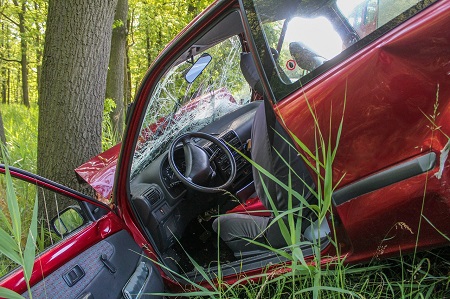
Cruising for a Bruising--wrecked car against a treeIf we drive a car too fast, we are cruising for a bruising. Possible results include:

  • A speeding ticket
  • A wreck
  • Injury or death

Cruising for a bruising means headed for trouble.

Our behavior works against us.

  • Parents, teachers, or others in authority punish us.
  • People we insult or bully injure us.
  • Natural or logical consequences cause temporary or permanent pain.

Cruising for a bruising hurts in several ways.

  • Physical: Actual bruises or other injuries to our bodies
  • Emotional: Conflicts or losses
  • Spiritual: Lack of or a poor relationship with God
  • Financial: Reduction or total loss of economic resources
  • Mental: Decreased abilities

Many people shorten this expression to cruisin for a bruisin.

However we say it, the meaning remains the same. We suffer the costs of the trouble we pursue. If we don’t straighten up and fly right, we must face the music.

God forgives when we repent of our misbehavior.

We receive a new beginning, a fresh start. However, we must choose. Do we want to keep cruising for a bruising or turn to Jesus for healing and eternal life?

“Repent, then, and turn to God, so that your sins may be wiped out, that times of refreshing may come from the Lord” (Acts 3:19 NIV).

Thanks to Laura Leathers and the ladies in her Women on Mission group for the suggestion. Image by Rico Löb from Pixabay

Do you have an expression you want explained or a thought about this one? If so, please comment below.

Subscribe to receive my weekly posts by email and receive a free copy of “Words of Hope for Days that Hurt.”

If you enjoyed this post, please share it with your friends.

Fruit of Your Labor

Fruit of Your Labor

Fruit of Your Labor--flower and vegetable garden with orchard in backgroundMy dad’s garden and orchard fed our family plus dozens of others. He spent years growing food and flowers as a labor of love. Dad also understood what it means to enjoy the fruit of your labor.

The fruit of your labor means the reward for your work.

Your efforts pay off. Because you refuse to give up, you bear fruit.

Long hours and hard work make you appreciate the fruit of your labor.

  • Farmers harvest their crops.
  • Gardeners enjoy vegetables, fruit, and flowers.
  • Students celebrate graduation.
  • Business owners enjoy profits.

You benefit from your investment of:

  • Time
  • Money
  • Muscle (mental or physical)

The harder the work the more enjoyable the fruit of your labor.

Life may give you long rows to hoe. However, you usually reap what you sow. Greater efforts result in greater rewards.

Make relationships your most important investment.

According to the Bible, the greatest commandments are to love God and love one another. The best fruit does not result from a focus on self. Rather, it grows from love and service.

“Blessed are all who fear the Lord, who walk in obedience to him. You will eat the fruit of your labor; blessings and prosperity will be yours” (Psalm 128:1-2 NIV).

Thanks to Beckham Wilson for the suggestion.

Do you have an expression you want explained or a thought about this one? If so, please comment below.

Subscribe to receive my weekly posts by email and receive a free copy of “Words of Hope for Days that Hurt.”

If you enjoyed this post, please share it with your friends.

Flip the Script

Flip the Script

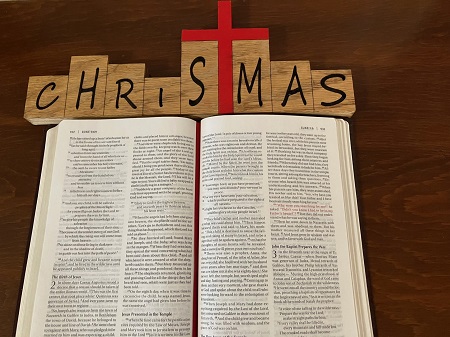
Flip the Script--Bible opened to Luke 2 with a wooden Christmas plague--the "t" a red crossGod flipped the script with Jesus’ birth. Rather than an expected warrior king, the Messiah arrived as a helpless baby.

To flip the script means a drastic change.

The tables turn. Circumstances or positions reverse.

  • Little-known sports teams win tournaments.
  • Political unknowns win elections.
  • Weak students outperform strong scholars.

Flip the script sometimes means to lie.

People change their stories to fit their circumstances. They tell one person one story but another person something else. What they say depends on:

  • What benefits them
  • What they think the other person wants to hear

When God flips the script, His word proves true.

The written Word, the Bible, prophesies of the Living Word, Jesus. Although God in flesh did not meet human expectations, Jesus fulfilled God’s perfect plan.

God offers an everlasting life change to all people.

Jesus, the Christ of Christmas, came to replace:

  • Despair with hope
  • Unrest with peace
  • Sorrow with joy
  • Hate with love

Will you allow God to flip the script for you?

“This will be a sign to you: You will find a baby wrapped in cloths and lying in a manger” (Luke 2:12 NIV).

Thanks to Bobbie Smith Bryant for the suggestion.

Do you have an expression you want explained or a thought about this one? If so, please comment below.

Subscribe to receive my weekly posts by email and receive a free copy of “Words of Hope for Days that Hurt.”

If you enjoyed this post, please share it with your friends.

On the Mend

On the Mend

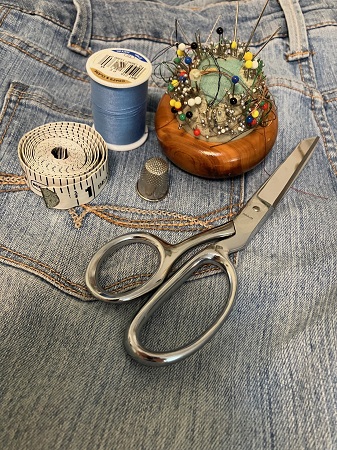
On the Mend--jeans pocket with scissors, thread, thimble, pin cushion, and measuring tapeSeveral family members recently suffered significant health problems. Most are now on the mend.

On the mend refers to healing.

  • Surgeries are over.
  • Health has improved.
  • They feel better.

Some continue treatments or therapy. Although still in recovery, they look forward to further healing.

Improved health does not equal perfect health.

However, they can enjoy:

  • Mended bones
  • Cured diseases
  • Restored strength and energy

They are alive and kicking (only not too high), and they keep on keeping on.

On the mend describes more than physical healing.

It also means repairs to:

  • Torn clothing
  • Ruined relationships
  • Damaged roads
  • Faulty morals
  • Shattered emotions

Although broken, all can mend.

Jesus offers to mend broken lives.

Just as He called fishermen mending their nets to follow Him, Jesus also calls people today. A positive answer results in:

  • Forgiveness for sins
  • A personal relationship with God
  • Peace, hope, joy, and love regardless of life’s circumstances
  • A perfect, eternal home in heaven

“Going on from there, He saw two other brothers, James the son of Zebedee, and John his brother, in the boat with Zebedee their father, mending their nets. He called them, and immediately they left the boat and their father, and followed Him (Matthew 4:21-22 NKJV).

Thanks to Melissa Bright for the suggestion.

Do you have an expression you want explained or a thought about this one? If so, please comment below.

Subscribe to receive my weekly posts by email and receive a free copy of “Words of Hope for Days that Hurt.”

If you enjoyed this post, please share it with your friends.

Burn Boats

Burn Boats

Burn Boats--a burning ship at nightBurn boats is another expression more common among the British. In America, we usually refer to burning bridges or burning our bridges behind us. The two expressions have the same meaning.

Burn boats (or burn the ships) means to destroy all means of retreat.

 We leave no way to return to our previous situation. According to U.S. Dictionary, this idiom comes from “the story of Hernán Cortés, who, upon arriving in Mexico in 1519, ordered his men to burn their boats, making it clear that there was no turning back.”

When we burn boats in our lives, our commitment forces us to go forward.

We can only move toward the goal or battle before us. As with Cortez and his men, our decision is both brave and risky.

  • It is difficult or impossible to reverse.
  • Yet, we strive harder to achieve our purpose.

The song, “Burn the Ships,” by for King and Country is based on this expression. Learn the reason for their song choice here.

Sometimes we must turn away from our past in order to follow the right road ahead.

Rather than look back, we pursue the good God offers before us.

 “Forgetting what is behind and straining toward what is ahead, I press on toward the goal to win the prize for which God has called me heavenward in Christ Jesus” (Philippians 3:13-14 NIV).

Thanks to Jonna J. LeVan for the suggestion. Photo by Klub Boks on Pexels.

Do you have an expression you want explained or a thought about this one? If so, please comment below.

Subscribe to receive my weekly posts by email and receive a free copy of “Words of Hope for Days that Hurt.”

If you enjoyed this post, please share it with your friends.

Hunker Down

Hunker Down

Hunker Down--Ocean storm with high wavesDuring recent storms, many of us had to hunker down in more than one way. We protected ourselves from the storms’ initial danger. Afterwards, we worked hard to recover from any damage.

The Free Dictionary gives four meanings for hunker down.

  1. “Literally to squat.” We bend our knees to lower ourselves.
  2. “To seek refuge.” We find shelter when dangers arise.
  3. “To work or begin to work … in a determined manner.” We clean up after a disaster or we study hard.
  4. “To stubbornly maintain some belief.” We refuse to compromise, change our mind, or admit when we make a mistake.

Although I have heard this expression used all four ways, I usually think of the second one. Similar to a ship’s crew that battens down the hatches, we prepare for a storm.

Storms occur in all areas of life.

  • Physical—Bad weather, health problems, or accidents
  • Mental—Illness, educational challenges, or overload
  • Emotional—Relationship issues, stress, or uncertainty
  • Spiritual—Persecution, false information, or poor choices

Whatever storm we face, we never have to hunker down alone.

If we turn to God, God remains with us. One of my favorite old gospel songs promises, “No, Never Alone.”

“The Lord himself goes before you and will be with you; he will never leave you nor forsake you. Do not be afraid; do not be discouraged” (Deuteronomy 31:8 NIV).

Which meaning of hunker down have you heard or used?

Thanks to Judy Glen Corbin for the suggestion. Image by Didier from Pixabay.

Do you have an expression you want explained or a thought about this one? If so, please comment below.

Subscribe to receive my weekly posts by email and receive a free copy of “Words of Hope for Days that Hurt.”

If you enjoyed this post, please share it with your friends.

At Sixes and Sevens

At Sixes and Sevens

At Sixes and Sevens--white dice on a black backgroundAfter I posted “At Loggerheads,” I received the following comment. “It’s all sixes and sevens now… That’s a ridley sea turtle, not a loggerhead.” Since I am not a turtle expert, I should have double checked my source. However, I did not.

At sixes and sevens means confused or disorganized.

In addition to turtles, I get confused about:

  • Numbers (Math is not my strength.)
  • Physics (I received a good grade but have little understanding.)
  • Meteorology (Weather forecasts keep me informed.)

At sixes and sevens also means frazzled.

Life gets overwhelming. Daily difficulties leave me bumfuzzled. Bewildered and spread too thin, I find myself going in circles unsure what to do next.

Rest makes a world of difference.

With a clearer mind and restored energy:

  • Life feels less confusing.
  • Organization looks more doable.
  • Tasks fall into place

The Free Dictionary offers two possible origins for this expression.

  1. “A dice game in which rolling a six or a seven was unfavorable.”
  2. “A dispute that arose between two of the guilds or craft organizations in medieval London.” It involved sixth and seventh place in the city’s annual procession.

When confused, turn to the right resource.

Seek God as the ultimate answer for life’s most important questions.

“I call on the Lord in my distress, and he answers me” (Psalm 120:1 NIV).

Thanks to Jeff Buck for the suggestion. Image by Willi Heidelbach from Pixabay

Do you have an expression you want explained or a thought about this one? If so, please comment below.

Subscribe to receive my weekly posts by email and receive a free copy of “Words of Hope for Days that Hurt.”

If you enjoyed this post, please share it with your friends.

Down the Road

Down the Road

Down the Road--road leading into a greenery-covered tunnelWhen I was a child, several relatives lived down the road from us. My sister and I often walked to their houses to play with our cousins.

We also spent time wondering what God had down the road for our futures. Where would we live? What would we do?

Down the road has two meanings.

  1. On the same road or nearby
  2. In the future

This post will focus on the second meaning.

It pays to plan for what lies down the road.

“Failing to plan is planning to fail.” That quote or similar ones have been credited to Benjamin Franklin, Reverend H. K. Williams, and others. Yet, the source remains uncertain. Regardless of who first said it, the truth endures.

We face an uncertain future.

Although we want to plan, life offers no guarantees. Therefore, we prepare for our goals. Yet, we also prepare for life’s unknowns.

God remains with us both now and down the road.

In spite of life’s uncertainties, we can always count on God’s peace and presence. Whether our plans work out or go down the drain, God promises never to leave us alone. All we have to do is follow Him in faith.

 As we travel down life’s road, may we never stray from the straight and narrow.

“Mixed motives twist life into tangles; pure motives take you straight down the road” (Proverbs 21:8 MSG).

Thanks to Beckham Wilson for the suggestion and the photo.

Do you have an expression you want explained or a thought about this one? If so, please comment below.

Subscribe to receive my weekly posts by email and receive a free copy of “Words of Hope for Days that Hurt.”

If you enjoyed this post, please share it with your friends.