Browsed by
Tag: idiom

For the Birds

For the Birds

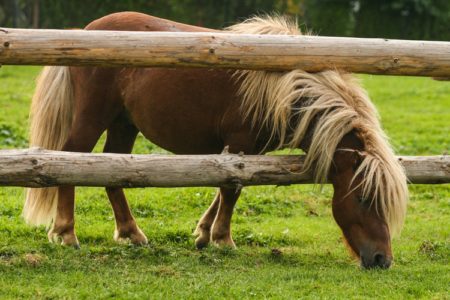
For the Birds--ducks and geeseMy list of things for the birds includes:

  • Football
  • High heels
  • Gravy

I see little good in any of them. Neither do I understand why anyone likes them. Yet, you may enjoy all three.

Anything for the birds has little or no value.

We consider it:

  • Undesirable
  • Nonsense
  • A waste of time

For the birds can also mean something is:

  • Stupid
  • Boring
  • Frustrating
  • Annoying

This phrase may refer to birds picking seeds out of horse manure.

Probably none of us want to do that. I love the country and long walks in the middle of nowhere.  Yet, I prefer to stay away from manure.

Although I don’t like to be near manure, it does have value. Manure provides a natural fertilizer for the soil. Some people buy it, so it is not just for the birds after all.

Perhaps we need to be careful what we consider for the birds.

What we think worthless may be a blessing in disguise.

However, I still don’t like football, high heels, or gravy.

“Turn my eyes away from worthless things; preserve my life according to your word” (Psalm 119:37 NIV).

Thanks to Melissa Graham for the suggestion.

Do you have a favorite expression or one you want explained? If so, please comment.

Subscribe to receive my weekly posts by email and receive a free copy of “Words of Hope for Days that Hurt.”

If you enjoyed this post, please share it with your friends.

Make a Mountain Out of a Molehill

Make a Mountain Out of a Molehill

Make a Mountain out of a molehill--mountain reflected in waterWe often let the smallest problem bother us most.

We make a mountain out of a molehill. We make:

  • Something easy seem hard
  • A small problem seem big
  • Something unimportant seem important

Moles are small animals. So are the hills they make. Yet, we don’t like them.

  • They make a mess in yards and fields.
  • We may fall if we step on them.

However, if we watch our step, we can walk around or over molehills. We must climb for days to the top of some mountains.

Molehills destroy a yard’s beauty. A mountain’s volcano can destroy everything for miles.

We often forget how small our problems are.

Think about:

  • Colds compared to cancer
  • Flat tires compared to car wrecks
  • A bad meal compared to no food
  • A rained-out ballgame compared to an island destroyed by a storm

We may not feel on top of the world all the time. However, most days can be hunky dory.

Make a Mountain out of a MolehillLet’s not allow small problems to ruin our lives.

Rather than make a mountain out of a molehill, remember what matters most. Also remember, whether our problems are big or small, we never have to walk alone.

“We can rejoice, too, when we run into problems and trials, for we know that they are good for us—they help us learn to be patient” (Romans 5:3 TLB).

Do you have an expression you want explained or a thought about this one? If so, please comment below.

Subscribe to receive my weekly posts by email and receive a free copy of “Words of Hope for Days that Hurt.”

If you enjoyed this post, please share it with your friends.

Hole Up

Hole Up

Hole Up--hole in a treeIf we hole up somewhere, we find a place to hide.

Sometimes people who break the law hole up. They try to hide where the police cannot find them.

Hole up-squirrel in a treeMany animals hole up in trees for the winter. They gather nuts or other food before the cold, snowy days.

I always thought the old tree at top would be a great place for squirrels or an owl. I have never seen any in it. That does not mean they are not there.

 However, Jenny Kuo found this squirrel holed up in a tree behind our house.

My home is my favorite place to hole up.

I prepare for cold, snowy days with:

  • A warm house
  • Favorite foods
  • A comfortable chair
  • Plenty of books

With all of those, I can enjoy hours of peace and quiet. I may be snowed under, but I am ready. I find comfort in my little garden spot of the world.

 “Do you really think anyone can hide himself where I cannot see him?” the Lord asks. “Do you not know that I am everywhere?” the Lord asks” (Jeremiah 23:24 NET).

What about you?

Do you have a favorite place to hole up? Please comment below.

Subscribe to receive my weekly posts by email and receive a free copy of “Words of Hope for Days that Hurt.”

If you enjoyed this post, please share it with your friends.

In Over My Head

In Over My Head

In Over My Head--Acadia National Park CoastlineI love to travel the coastline of Acadia National Park. However, if I enter the water, I get in over my head.

Sometimes I feel like I am in over my head with life.

I have more on my to-do list than I have time to do. I drown in work.

Also, when I try new tasks, I feel in over my head because I:

  • Don’t understand how to do them.
  • Have to spend hours or days to learn them.
  • Think I will never learn.

I feel like I am spinning my wheels.  I want to give up.

When in over my head, I often tell myself:

  • I can’t do this.
  • I don’t know what I am doing.

When that happens, I need to get away from it all.

I need a break. My thinking must change to:

  • I can’t do everything, but I can do some things.
  • I can’t learn everything, but I can learn more than I know now.

When I focus on my problems, I feel in over my head. When I let go and let God take control, I find peace.

“God, save me! I’m in over my head” (Psalm 69:1 MSG).

How about you? What do you do when you feel you are in over your head? Please comment below.

Subscribe to receive my weekly posts by email and receive a free copy of “Words of Hope for Days that Hurt.”

If you enjoyed this post, please share it with your friends.

Straight and Narrow

Straight and Narrow

Straight and Narrow--alleyTo get from one place to another, we must often follow the straight and narrow:

  • Alleys
  • Streets
  • Paths
  • Seas or rivers

Occasionally we see this expression written strait and narrow.

Some narrow sea passages are called straits.

The Strait of Gibraltar leads from the Atlantic Ocean into the Mediterranean Sea. At one place it is only eight miles wide.

You can find more information about the Strait of Gibraltar here.

When we follow the straight and narrow, we do what we should.

That is true for our lives as well as travel.

We follow the straight and narrow when we:

  • Go the right direction
  • Follow rules or laws
  • Act right
  • Speak the truth

 We may get in trouble if we leave the straight and narrow.

Many times we:

  • Get lost
  • Lead other people the wrong way
  • Get hurt or hurt others

Life can be fun off the beaten path.  However, we want to be sure that path does not take us the wrong way.

Let’s enjoy where we go and what we do when we hit the trail. However, let’s also watch our step and go only where we should go.

“Enter through the narrow gate. For the gate is wide and the road is broad that leads to destruction, and there are many who go through it. How narrow is the gate and difficult the road that leads to life, and few find it” (Matthew 7:13-14 HCSB).

Do you have an expression you want explained or a thought about this one? If so, please comment below.

Subscribe to receive my weekly posts by email and receive a free copy of “Words of Hope for Days that Hurt.”

If you enjoyed this post, please share it with your friends.

On Your Toes

On Your Toes

On Your Toes--ballerinaWhen you are on your toes, you are ready to act.

  • Like a dancer ready for a ballet performance
  • Or a runner who toes the mark before a race

 Other people may keep you on your toes.

  • Your boss trains you and reviews your work.
  • A child asks you hard questions.
  • Teachers prepare you for a test.
  • Friends and family offer advice about big decisions.

You may also keep yourself on your toes.

You stay alert to what interests you most.

  • If you enjoy cooking, you check the latest recipes.
  • If you like to read, you find books by your favorite authors.
  • If you want to stay in good physical condition, you exercise.

You plan and prepare for the future.

If you fail to stay on your toes, you may fall flat.

However, you don’t have to stay down when you fall. Instead, pull yourself up by your bootstraps and keep going. Who knows what the future holds?

“Make sure you stay alert. Keep close watch over yourselves” (Deuteronomy 4:9 MSG).

Do you have an expression you want explained or a thought about this one? If so, please comment below.

Subscribe to receive my weekly posts by email and receive a free copy of “Words of Hope for Days that Hurt.”

If you enjoyed this post, please share it with your friends.

Play with Fire

Play with Fire

Play with Fire--child in fireman's outfitMatthew knows he should never play with fire. He does not want to get hurt. Neither does he want to hurt others.

Instead, Matthew may become a fireman when he grows up. Rather than play with fire, he hopes to prevent and put out fires.

No one should play with fire.

It is both dangerous and foolish. Most of us would never play with a physical fire. Yet, many of us play with fire in other ways. We take risks when we:

  • Choose bad relationships
  • Cheat
  • Disobey the law
  • Practice bad health habits

When we play with fire, we get burned.

 We may:

  • Hurt or lose those we love
  • Gain a bad reputation
  • Go to jail
  • Suffer poor health

Instead, let’s prevent or put out fires when we can.

Let’s watch our steps, make good choices, and help others do the same.

“Can a man scoop fire into his lap without his clothes being burned?” (Proverbs 6:27 NIV)

Do you have an expression you want explained or a thought about this one? If so, please comment below.

Subscribe to receive my weekly posts by email and receive a free copy of “Words of Hope for Days that Hurt.”

If you enjoyed this post, please share it with your friends.

Photo courtesy of Tammy Seyfried.

Little Pitchers Have Big Ears

Little Pitchers Have Big Ears

Little Pitchers Have Big Ears--a small pitcherThe curved handle on some pitchers looks like a person’s ear. When we say little pitchers have big ears, we warn adults to be careful what they say. Children don’t need to hear it.

We may also protect children by:

  • Spelling words we don’t want them to hear (This works until they can spell.)
  • Moving where they cannot hear us

Children like to listen to adults.

When adults speak, children often become all ears. Yet, they should not hear:

  • Information they are too young to understand
  • Talk that might upset or confuse them
  • Words no one should ever say
  • Gossip

Many times children repeat what they hear.

  • We always want to protect children.
  • We don’t always want them repeating what we say.

If we choose our words wisely, we don’t have to worry who hears them.

Helpful guidelines include:

  • Think before we speak.
  • Say nothing unkind or untrue.
  • Don’t say it if we don’t want it repeated.

As adults, we need to remember little pitchers have big ears. Like children, we also need to mind our Ps and Qs.

“Jesus called the crowd to him and said, ‘Listen and understand. What goes into someone’s mouth does not defile them, but what comes out of their mouth, that is what defiles them’” (Matthew 15:10-11 NIV).

Do you have an expression you want explained or a thought about this one? If so, please comment below.

Subscribe to receive my weekly posts by email and receive a free copy of “Words of Hope for Days that Hurt.”

If you enjoyed this post, please share it with your friends.

Cry Over Spilled Milk

Cry Over Spilled Milk

Cry Over Spilled Milk--a glass of spilled milk“Dry your tears. There is no need to cry over spilled milk.”

As a child, I often heard those words. Sometimes I had spilled milk. Usually I was unhappy about something I could not change.

We cry over spilled milk when upset about what we cannot control. Often what upset us occurred in the past.

We cannot undo the past.

We cannot unspill milk. Neither can we undo anything that has already happened. The past is water under the bridge.

We can do something about the present and future.

  • If something bad happened in the past, we can learn from the experience.
  • If something good happened, we can remember and smile.
  • If we hurt someone, we can ask forgiveness.
  • If someone hurt us, we can forgive.

Instead of crying over spilled milk, we can let bygones be bygones. We can choose to grow from all that happens, good or bad.

“One thing I do: Forgetting what is behind and straining toward what is ahead” (Philippians 3:13 NIV).

Do you have an expression you want explained or a thought about this one? If so, please comment below.

Subscribe to receive my weekly posts by email and receive a free copy of “Words of Hope for Days that Hurt.”

If you enjoyed this post, please share it with your friends.

Batten Down the Hatches

Batten Down the Hatches

Batten Down the Hatches--sail boatStorms occur at sea and in our lives.

When we batten down the hatches, we prepare for those storms. We see trouble coming and hard times ahead, so we get ready.

A hatch or hatchway is an opening in a ship’s deck. The ship’s crew covers the hatch when they expect bad weather. Storms at sea can destroy ships and the people on them. Sealing the hatch provides extra protection.

When we expect life problems, we also want to do what we can to protect against them.

Some storms do little damage.

  • Families may say, “Batten down the hatches. Aunt Mina’s kids are coming.” (I don’t have an Aunt Mina.)
  • Businesses may say, “Batten down the hatches. We expect poor sales next month.”
  • Governments may say, “Batten down the hatches. This decision will make some people mad.”

Some storms destroy.

  • Families may say, “Batten down the hatches. Dad’s drinking and threatening Mom.” (My dad did not drink and never threatened my mom.)
  • Businesses may say, “Batten down the hatches. We may have to close if sales get any worse.”
  • Governments may say, “Batten down the hatches. This decision may lead to war.”

Some storms we can prevent. Some we cannot.

We don’t always know when storms are coming. Therefore, we need to stay prepared as much as we can all the time. It’s better to be safe than sorry.

If we cannot prevent storms, we try to survive them. We hang on for dear life to what matters most.

“I would hurry to my place of shelter, far from the tempest and storm” (Psalm 55:8 NIV).

Thanks to Carole Fite for the suggestion.

Do you have an expression you want explained or a thought about this one? If so, please comment below.

Subscribe to receive my weekly posts by email and receive a free copy of “Words of Hope for Days that Hurt.”

If you enjoyed this post, please share it with your friends.

Photo courtesy of Pixabay.