Browsed by
Tag: idioms

Something Is Afoot

Something Is Afoot

Something Is Afoot--Tim and Diana Derringer at Shell Canyon in Big Horn MountainsMy husband and I loved walks in national, state, and local parks for years. My sister and her husband also enjoyed this area in the Big Horn Mountains. Something is afoot may simply mean someone or something is walking. We travel on foot. However, the expression usually means more.

According to Merriam-Webster dictionary, afoot also means “in the process of development.”

It is underway but not complete. Sometimes we know the plans but not always. Occasionally, it means people have something up their sleeve, a secret plan.

Unknown activity makes us curious.

We try to figure out what is happening. When no one knows, we guess. Anticipation grows.

  • Parents give hints but no details of a planned vacation.
  • Teachers promise a fun activity but leave students in the dark until it begins.
  • Friends take friends on a wild goose chase before a special celebration.

Much is afoot in our world today.

  • Plans have been made.
  • Work is in progress.
  • People look forward to or dread the future.

However, all that can change in an instant.

Unexpected events turn the tables.

  • Storms
  • Wars
  • Illness
  • Death

We want to prepare ourselves for whatever the future holds.

Our lives and our world frequently change. God remains the same.

When we give our lives to God, everything else eventually works out regardless of what is afoot.

“Many are the plans in the mind of a man, but it is the purpose of the Lord that will stand” (Proverbs 19:31 ESV).

Thanks to Cathy Chinn for the suggestion.

Do you have an expression you want explained or thoughts about this one? If so, please comment below.

Subscribe to receive my weekly posts by email and receive a free copy of “Words of Hope for Days that Hurt.”

If you enjoyed this post, please share it with your friends.

Where Bees Are, There Is Honey

Where Bees Are, There Is Honey

Where There Are Bees, There Is Honey--two people in protective suits capturing a swarm of honeybees

My dad loved taking care of bee hives. A cousin continues Dad’s tradition. He knows that where bees are, there is honey.

Where bees are, there is honey has a clear literal meaning.

Honeybees produce honey.

We sometimes hear a less grammatically correct version of this expression: Where there’s bees, there’s honey.

Bees work hard, and their hard work pays off.

In addition to providing a natural sweetener, they pollinate plants.

  • Flowers
  • Vegetables
  • Fruits

Without bees, we suffer.

Where bees are, there is honey also applies to people.

Where we find people busy as a bee, we find results.

Success and better pay usually follow hard work. Hard work also makes our world a better place.

Bees teach us to work together.

Large numbers in bee swarms make their efforts faster and more effective. Likewise for people, many hands make light work.

May we learn from bees and from all God’s creation.

“The fear of the Lord is pure, enduring forever. The decrees of the Lord are firm, and all of them are righteous. They are more precious than gold, than much pure gold; they are sweeter than honey, than honey from the honeycomb” (Psalm 19:9-10 NIV).

Thanks to Kristy Horine for the suggestion and to Jewell Withers Wade for the photo.

Do you have an expression you want explained or thoughts about this one? If so, please comment below.

Subscribe to receive my weekly posts by email and receive a free copy of “Words of Hope for Days that Hurt.”

If you enjoyed this post, please share it with your friends.
Green as a Gourd

Green as a Gourd

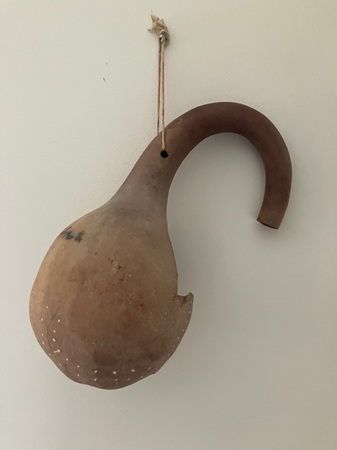
Green as a Gourd--old gourd hanging on a wallMy grandmother grew gourds. I did not understand why. What good were they? I thought they tasted awful. Plus, my grandmother often referred to people as green as a gourd. That expression was not a compliment.

As green as a gourd means not ripe.

Gourds need time to ripen before they become useful. People also need time to mature before we tackle certain tasks. Youth has its advantages, but so does maturity with its time and experience.

Similar expressions include:

  • Green behind the ears
  • Greenhorn

As green as a gourd also refers to the gourd’s color.

When we have stomach trouble, we turn green as a gourd from nausea. We feel and look horrible. Not a condition we desire.

Dried or cured gourds once served a variety of roles.

After time to mature, they became:

  • Dippers
  • Containers
  • Birdhouses
  • Musical instruments
  • Arts and crafts

They continue to serve some of those purposes.

The gourd in this picture belonged to my great-great-grandmother. She used it as a salt container. It has served and lasted well. May we also be worth our salt, serving long and well.

“Then we will no longer be infants, tossed back and forth by the waves, and blown here and there by every wind of teaching and by the cunning and craftiness of people in their deceitful scheming” (Ephesians 4:14 NIV).

Thanks to Darrin Jenkins for the suggestion.

Do you have an expression you want explained or thoughts about this one? If so, please comment below.

Subscribe to receive my weekly posts by email and receive a free copy of “Words of Hope for Days that Hurt.”

If you enjoyed this post, please share it with your friends.

The Hand That Rocks the Cradle

The Hand That Rocks the Cradle

The Hand That Rocks the Cradle--vintage doll in cradleIn 1865, William Ross Wallace wrote a poem, “What Rules the World.” According to The Free Dictionary, it later became known as “The Hand that Rules the World.” The poem’s refrain, “The hand that rocks the cradle is the hand that rules the world” has become an often-repeated proverb.

The hand that rocks the cradle refers to the influence mothers have on children.

Mothers guide their children’s overall growth.

  • Social
  • Emotional
  • Physical
  • Mental
  • Spiritual

Think about the power in that position.

The hand that rocks the cradle applies to more than biological mothers.

Some of the most influential include:

  • Foster mothers
  • Adoptive mothers
  • Mothers-in-law
  • Stepmothers
  • Grandmothers
  • Other relatives
  • Friends
  • Neighbors
  • Teachers
  • Anyone who assumes a mother’s role, formal or informal

This Mother’s Day, thank the mothers in your life.

I am so grateful for the positive influence of my mother plus several others in informal mother roles. Many now live in heaven, but their impact remains.

“Her children arise and call her blessed” (Proverbs 31:28 NIV).

What mothers would you add to the list I made. Please comment.

Thanks to Debbie Tapscott for the suggestion and to Virginia Graves for the photo taken at Taylor County Museum – The Heistand House in Campbellsville, KY.

Subscribe to receive my weekly posts by email and receive a free copy of “Words of Hope for Days that Hurt.”

If you enjoyed this post, please share it with your friends.

Spin a Yarn

Spin a Yarn

Spin a Yarn--sailor knotWhen our extended family gets together, a few relatives always spin a yarn. They keep us entertained with their tall tales. Some stories are true or based on truth. Others stretch beyond belief. Most are a hoot.

To spin a yarn means to tell a story.

Often that story is:

  • Long
  • Made-up
  • Full of twists and turns

Sometimes we spin a yarn to stay out of trouble.

We know we did something wrong. To avoid the consequences, we lie or tell a partial truth. However, two wrongs don’t make a right. Not when other people hurt us. Not when we mess up.

This idiom originated with ropes made of long fibers called yarns.

According to The Free Dictionary, “Sailors used to spin yarns … to make ropes. They were also famous for telling unlikely stories of their adventures.”  The nautical term dates from around 1800. We now enjoy the double meaning of “spun fiber” and “a tale.”

Everyone has a story.

From our experiences, we can share lessons of:

  • Hope
  • Joy
  • Peace
  • Love

The Bible holds the greatest story ever told.

  • Life changing
  • All truth
  • Available to everyone

“Give thanks to the Lord, for he is good; his love endures forever. Let the redeemed of the Lord tell their story.” (Psalm 107:1-2 NIV).

Thanks to Beckham Wilson for the suggestion. Image courtesy of Pixabay.

Do you have an expression you want explained or thoughts about this one? If so, please comment below.

Subscribe to receive my weekly posts by email and receive a free copy of “Words of Hope for Days that Hurt.”

If you enjoyed this post, please share it with your friends.

Red Tape

Red Tape

Red Tape--desk piled with paperwork and a red ribbon around the top document. Hand raised above and behind it.I was a social worker for almost thirty years. The work was stressful and the hours horrible. I was on-call twenty-four hours a day seven days a week. Yet I loved it.

I did not love the red tape. We had to jump through hoops of:

  • Endless paperwork
  • Frequent bureaucratic changes
  • Fluctuating budgets that reversed progress

Red tape refers to complicated, time-wasting official procedures.

Such requirements are:

  • Strict
  • Difficult
  • Tiresome

They focus on details and rules rather than efficiency and outcomes. Correct forms overrule positive results.

Red tape results in service delays.

Forms and rules should lead to speedier outcomes rather than needless obstacles. Likewise, successful procedures should remain regardless of leadership changes.

According to The Free Dictionary, this expression refers to “the former British custom of tying up official documents with red ribbon.”

Red ribbons make a document look good. However, appearance matters little. Contents determine the difference, good or bad.

A certain amount of red tape must remain.

  • Rules offer guidelines.
  • Paperwork gathers needed information.

Yet, a fine line exists between:

  • Efficient or ineffective
  • Helpful or hurtful

“Every official is under orders from higher up, and the higher officials look up to their superiors. And so the matter is lost in red tape and bureaucracy” (Ecclesiastes 5:8 TLB).

Thanks to Regina Graham for the suggestion and to Karen Atwood for the photo.

Do you have an expression you want explained or thoughts about this one? If so, please comment below.

Subscribe to receive my weekly posts by email and receive a free copy of “Words of Hope for Days that Hurt.”

If you enjoyed this post, please share it with your friends.
Kick the Tires

Kick the Tires

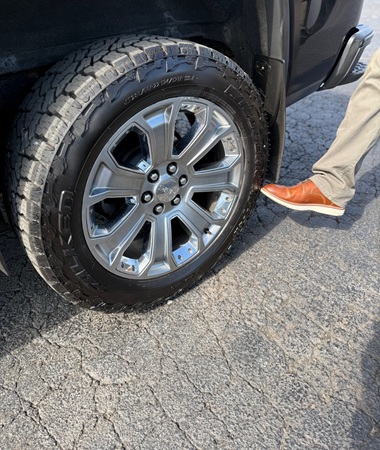
Kick the Tires--foot kicking a tireBefore we buy a car, we want to kick the tires. We check the car inside and out from one end to the other. We drive it and try all its gadgets to be sure they work.

To kick the tires means to test the quality of something.

With any purchase, that includes time to:

  • Inspect
  • Research
  • Analyze

We desire the best product for our money.

We also kick the tires to see if a product meets our personal needs.

What works for one person may not work for another. I prefer small cars close to the ground. A tall person usually searches for a large vehicle with more leg room.

Kicking the tires pertains to more than purchases.

  • Employers desire dependable employees.
  • Employees seek the best bosses.
  • Individuals search for lasting relationships.

We want the people in our lives to meet our standards.

If we fail to kick the tires, we may end up kicking ourselves.

A word to the wise: Let’s test before we commit.

Above all else, test for truth.

In every decision, large or small, seek God’s guidance. Especially for spiritual matters:

  • Study the Bible.
  • Pray.
  • Discuss with trustworthy friends.

“Dear friends, do not believe every spirit, but test the spirits to see whether they are from God, because many false prophets have gone out into the world” (1 John 4:1 NIV).

Thanks to Jennifer Annette Graham for the suggestion and to Stan Curry with AutoSmart of Campbellsville for the photo.

Do you have an expression you want explained or thoughts about this one? If so, please comment below.

Subscribe to receive my weekly posts by email and receive a free copy of “Words of Hope for Days that Hurt.”

If you enjoyed this post, please share it with your friends.
Elephant in the Room    

Elephant in the Room    

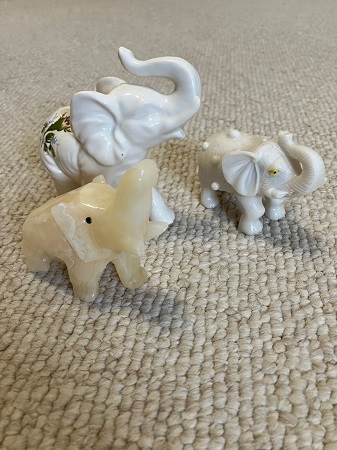
Elephant in the Room--three small ceramic or jade elephantsFew of us desire an elephant in the room. Not the kind on four legs and not unpleasant subjects.

An elephant in the room means a problem no one discusses.

The situation is:

  • Serious
  • Important
  • Obvious

We need to address the topic.

Everyone knows about it. However, no one wants to discuss it because it makes us feel:

  • Uncomfortable
  • Embarrassed
  • Awkward

As a result, we ignore the issue rather than rock the boat.

  • Families don’t mention strained relationships.
  • Workers overlook wasteful systems.
  • Friends choose peace over responsibility.

Excuses for ignoring difficult situations include:

  • “It’s none of my business.”
  • “No one gets hurt.”
  • “I don’t have time to get involved.”

We want to remain on the right track. At times, that means we avoid unnecessary problems. Other times, it means we stand firm for truth and examine the elephant

An elephant in the room’s origin is unknown.

According to The Phrase Finder, it probably began in the United States.

 “It is shameful even to mention what the disobedient do in secret” (Ephesians 5:12 NIV).

Thanks to Ann Klotz and Darrin Jenkins for the suggestion.

The Early Bird Gets the Worm Matin Wiles book
Version 1.0.0

Do you have an expression you want explained or thoughts about this one? If so, please comment below.

Subscribe to receive my weekly posts by email and receive a free copy of “Words of Hope for Days that Hurt.” Congratulations to Larry Bowen whose name was randomly selected from my mailing list to receive a free copy of Martin Wiles’s book, Don’t Just Live…Really Live.”

If you enjoyed this post, please share it with your friends.

Milktoast

Milktoast

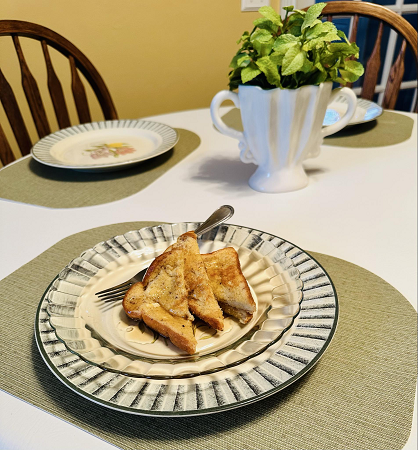
Milktoast--milktoast on a plate on a table with flowers in the middleI don’t want milktoast for breakfast or any other meal. Although I like milk and toast, I prefer them separate. I also want more flavor. Even with sugar, cinnamon, or other spices added, it remains a bland dish. Give me eggs or cereal with fruit and nuts.

Neither do I want to be a milktoast person or give milktoast responses. However, I have been guilty of both.

Milktoast means weak or ineffective.

It can be a noun or an adjective. The person or response is:

Milquetoast mean the same.

According to The Free Dictionary, the character description refers to H. T. Webster’s comic strip character, Caspar Milquetoast. Like edible milktoast (or milk toast), Caspar had a bland personality.

Milktoast is easy to digest.

With so little flavor, it does not upset the body’s system. Neither do weak people upset their social systems of:

  • Business
  • Government
  • Religion
  • Families

They value the status quo above truth or progress.

God seeks boldness in service.

Certainly, quietness and meekness are often appropriate. Yet, God expects and provides courage when the time comes to speak up and stand tall.

“Now, Lord, consider their threats and enable your servants to speak your word with great boldness” (Acts 4:29 NIV).

Thanks to Gail Johnson for the suggestion and to Jeri Gumm Stone for the photo.

The Early Bird Gets the Worm Matin Wiles book
Version 1.0.0

Do you have an expression you want explained or thoughts about this one? If so, please comment below.

Subscribe to receive my weekly posts by email and receive a free copy of “Words of Hope for Days that Hurt.” On 3-29-25, one name will be randomly selected from my mailing list to also receive a free copy of Martin Wiles’s book, Don’t Just Live…Really Live.” If your name is already on the mailing list, you are automatically entered. Please encourage your friends to subscribe.

If you enjoyed this post, please share it with your friends.
So Tight They Squeak When They Walk

So Tight They Squeak When They Walk

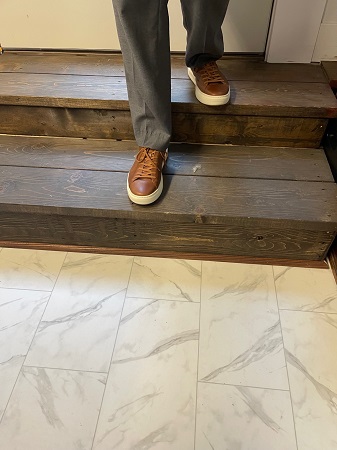
So Tight They Squeak When They Walk--Man's feet walking down stepsOne of my high school teachers could never sneak up on our class. We could hear his squeaky shoes from the far end of the hall. He was not like some people who are so tight they squeak when they walk. He simply had squeaky shoes.

So tight they squeak when they walk means extremely stingy.

Similar expressions include:

Turning loose of money or possessions hurts such people worse than a toothache. They refuse to give to others. Often, they fail to buy what they need themselves. They suffer rather than let go of what they own.

People so tight they squeak when they walk go far beyond thrifty.

Thrifty people save for a rainy day. They remain ready for emergencies. However, they also spend as needed now. Those so tight they squeak when they walk don’t want to spend even when emergencies arise.

They can’t take it with them, so why hang on so tightly now?

How sad to never experience the joy of sharing. Both they and a world of others lose when they ignore opportunities for good.

The owner becomes the owned.

“Command those who are rich in this present world not to be arrogant nor to put their hope in wealth, which is so uncertain, but to put their hope in God, who richly provides us with everything for our enjoyment” (1 Timothy 6:17 NIV).

Thanks to J.D. Wininger for the suggestion and to Laura Mitchell Wilds and Billy Joe Douglas with Mitchell’s for the photo.

Do you have an expression you want explained or thoughts about this one? If so, please comment below.

Subscribe to receive my weekly posts by email and receive a free copy of “Words of Hope for Days that Hurt.”

If you enjoyed this post, please share it with your friends.