Browsed by
Tag: peace

Put to Bed

Put to Bed

Put to Bed--sleeping puppy on a hand-made cherry bedFollowing baths, brushed teeth, prayers, and other routines, children are put to bed every night.

Some of us also put our pets to bed. This puppy receives lots of love and care from its owner. A hand-made cherry bed waits anytime puppy needs a nap. Not a typical dog’s life.

We understand the literal meaning of put to bed.

People and animals need sleep. Going to bed may be voluntary or it may be required. Sometimes it serves as punishment for bad behavior.

It also means to stop discussing or arguing about an issue.

Whether we agree or disagree, we drop the subject. We let sleeping dogs lie.

It often means to complete all or part of an activity.

Final preparation begins or is already finished.

It’s a common saying for newspapers and other printing and means no more edits. Papers or books are ready to print.

The most important decision to put to bed is our eternal destination.

 We don’t want to leave our relationship with Jesus up in the air. At the end of the day, nothing matters more.

“Let perseverance finish its work so that you may be mature and complete, not lacking anything” (James 1:4 NIV).

Thanks to J.D. Wininger for the suggestion and to Ina Ree Pickett for the photo.

Do you have an expression you want explained or a thought about this one? If so, please comment below.

Subscribe to receive my weekly posts by email and receive a free copy of “Words of Hope for Days that Hurt.”

If you enjoyed this post, please share it with your friends.

Up in the Air

Up in the Air

Up in the Air--clouds cover the sun; sun rays above bare treesA friend’s car died during a recent out-of-town trip. It left her stranded on the side of the road. Her son took his car to her. The fate of her car was up in the air.

Could her car be fixed? Would she have to buy a new one? How much would either of those possibilities cost?

Up in the air means uncertain.

Something is not settled. It could change. The uncertainty may refer to such matters as:

  • Choice of school
  • Plans with friends
  • Work options
  • Food selections
  • Government decisions

Like clouds, anything up in the air floats around waiting for a decision.

 The metaphor may also refer to flying birds.

Some decisions matter little.

The choices are six of one and half a dozen of  the other. Fairly equal, either choice makes no great difference.

  • Dark chocolate or milk chocolate
  • A long walk or two short walks
  • A long book or two short books (or both)

Major decisions must be made.

Failure to decide is to decide to leave results in the hands of others. Riding the fence rarely works.

Choose well. Choose with eternal consequences in mind.

“How can men be wise? The only way to begin is by reverence for God. For growth in wisdom comes from obeying his laws. Praise his name forever” (Psalm 111:10 TLB).

Thanks to Beckham Wilson and Rita Smalley for the idea.

Do you have an expression you want explained or a thought about this one? If so, please comment below.

Subscribe to receive my weekly posts by email and receive a free copy of “Words of Hope for Days that Hurt.”

If you enjoyed this post, please share it with your friends.
Go Haywire

Go Haywire

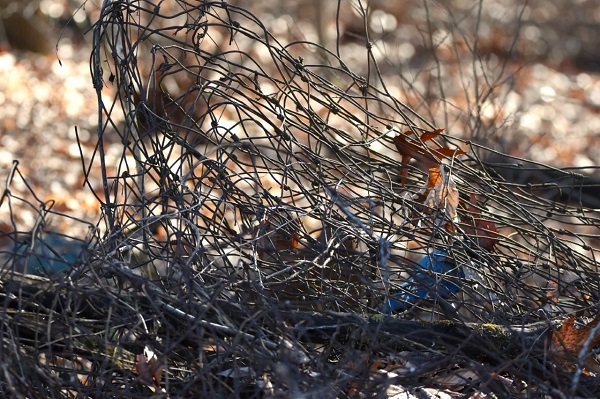
Go Haywire--tangled fence wire and leavesLife goes haywire from time to time. Everything goes wrong. Nothing works right.

Recently, emails of my blog posts stopped sending. I had changed nothing. They simply stopped. Plus:

  • Friends and family members suffered major health problems.
  • Several loved ones died.
  • Freezing temperatures and electricity problems left us in a cold, dark house.
  • Slick roads prevented travel.
  • To-do lists grew out of control.

My life went haywire.

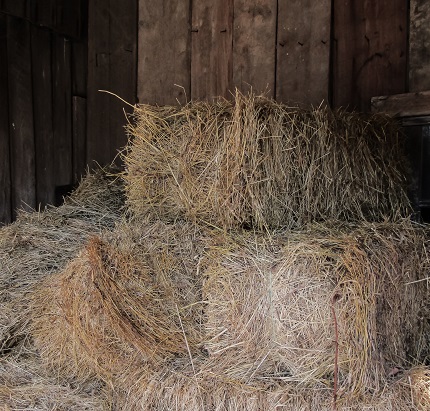
Go Haywire--stacked hayGo haywire probably relates to the wire farmers once used to bale hay.

The wire held the hay together. Farmers also occasionally made repairs with old wire. Such repairs rarely lasted. In addition, thin wire easily tangles, as seen in the fence wire above.

Go haywire has two main meanings.

The Free Dictionary explains both.

  1. “To go wrong; to malfunction; to break down.”

Like the people and possessions in my recent life, everything falls apart.

  1. To become irrational or crazy.”

When life gets crazy, acting crazy often follows. Because my surroundings felt out of control, I had a tough time staying in control.

Personal reactions do not have to depend on circumstances.

Once I changed my self-talk and thoughts, my emotions also changed. Hard times happen. That’s life. Yet, good can come from those times.

Whether circumstances remain calm or go haywire, I want to let go and let God hold my life together.

“Like a city whose walls are broken through is a person who lacks self-control” (Proverbs 25:28 NIV).

Thanks to Randy Gosser for the suggestion and to Connie Atwood Murphy for the photos.

Do you have an expression you want explained or a thought about this one? If so, please comment below.

Subscribe to receive my weekly posts by email and receive a free copy of “Words of Hope for Days that Hurt.”

If you enjoyed this post, please share it with your friends.
Well Begun Is Half Done

Well Begun Is Half Done

Well Begun Is Half Done--Snake River float trip with Grand Tetons in backgroundMy husband and I love to travel. For years, we hopped in our car as often as possible to explore our country. However, we usually spent weeks planning the trip. We learned that well begun is half done.

We decided in advance:

  • How far we wanted to travel
  • What sights we wanted to see
  • How much time we had

We also allowed for short unplanned side trips off the beaten path.

Well begun is half done means if we begin well, we are more likely to end well.

Work begun well usually means:

  • Less work to complete
  • Increased chance for success

This holds true whether we want to:

  • Build a house
  • Write a book
  • Sell a product

If we have no idea what we need to do, we get nowhere.

We spin our wheels and accomplish nothing.

Well begun is half done also relates to our spiritual lives.

For the best life, we make the best plans. Will we focus on ourselves for our brief time on earth? Or will we choose a personal, eternal relationship with Jesus? If we follow Jesus, we receive:

  • Joy for our present journey in both good and bad times
  • Hope for a home in heaven

At the end of life’s road, nothing matters more.

 In this way they will lay up treasure for themselves as a firm foundation for the coming age, so that they may take hold of the life that is truly life” (1 Timothy 6:19 NIV).

Thanks to Joy S. Taylor for the suggestion.

Do you have an expression you want explained or a thought about this one? If so, please comment below.

Subscribe to receive my weekly posts by email and receive a free copy of “Words of Hope for Days that Hurt.”

If you enjoyed this post, please share it with your friends.

Bury the Hatchet

Bury the Hatchet

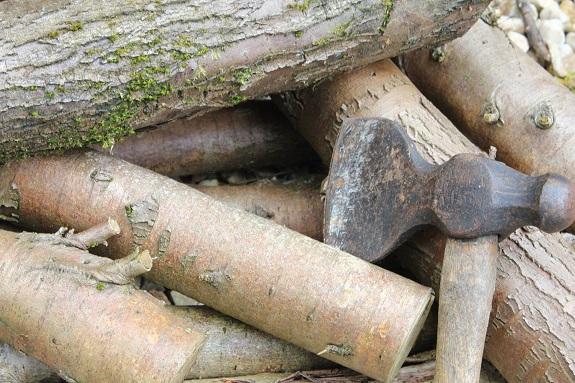
Bury the Hatchet--a hatchet surrounded by pieces of woodHow I wish our world would learn to bury the hatchet. Divisions occur everywhere.

People have always disagreed, and that’s okay. However, why not learn to disagree agreeably? Instead, we:

  • Hate
  • Argue
  • Gossip
  • Fight

We war against one another with words and actions.

This happens among:

  • Family members
  • Friends
  • Neighbors
  • Cities
  • States
  • Countries

Bury the hatchet originated as a Native American tradition.

According to The Phrase Finder, “Hatchets were buried by the chiefs of tribes when they came to a peace agreement.” What a powerful symbol.

We can bury the hatchet too.

When we recognize destructive speech or behavior, we have a choice. We can follow the same pattern, or we can break the cycle.

Peace requires strength.

To choose not to harm another person or group of people calls for courage. If someone hurts us, our natural reaction is to hurt them. We are ready to lock horns. Yet, two wrongs don’t make a right. Suffering continues on both sides.

Jesus taught and lived love and forgiveness for everyone. Although not easy, that remains the only way to true and lasting peace.

“Consider the blameless, observe the upright; a future awaits those who seek peace” (Psalm 37:37 NIV).

Thanks to Ann Knowles for the suggestion. Image by Davie Bicker from Pixabay.

Do you have an expression you want explained or a thought about this one? If so, please comment below.

Subscribe to receive my weekly posts by email and receive a free copy of “Words of Hope for Days that Hurt.”

If you enjoyed this post, please share it with your friends.
Turn the Tables

Turn the Tables

Turn the Tables: chess board reflected underneath itI never played much chess. However, I played checkers with my dad and sister for years. When I was losing, I hoped to turn the tables. I wanted to win.

I never physically turned the tables to play from the opposite side. However, I tried to change the outcome of the game.

When we turn the tables, we reverse a situation.

It becomes the opposite of what it was. We see such major changes in:

  • Board games, like chess or checkers
  • Sports events
  • Job positions
  • Any competition

This expression also applies to major changes in plans.

Usually, the change helps the person who had an earlier disadvantage. Roles reverse. The shoe is on the other foot.

How did this expression begin?

According to The Free Dictionary, “Until the mid-18th century, tables was the usual name for the board game backgammon. Early instances of the use of this phrase, dating from the mid-17th century, made it clear that it comes from the practice of turning the board so that a player had to play what had previously been their opponent’s position.”

We find examples of turned tables throughout history.

 The Bible tells the story of Joseph and his brothers. Joseph’s brothers were jealous of him and sold him into slavery. Eventually, Joseph achieved an important leadership position. When famine struck, Joseph’s brothers went to him for grain. They did not recognize him. After Joseph identified himself, his brothers feared for their lives.

Yet, Joseph did not act high and mighty when their roles changed. Instead, he forgave his brothers and provided for them.

Like Joseph, we have an opportunity to help others when the tables turn our way.

“‘But Joseph said to them, ‘Don’t be afraid. Am I in the place of God? You intended to harm me, but God intended it for good to accomplish what is now being done, the saving of many lives. So then, don’t be afraid. I will provide for you and your children.’ And he reassured them and spoke kindly to them” (Genesis 50:20-21 NIV).

Thanks to Debbie Tapscott and Beckham Wilson for the suggestion. Image by Waldemar Bajda from Pixabay.

Do you have an expression you want explained or a thought about this one? If so, please comment below.

Subscribe to receive my weekly posts by email and receive a free copy of “Words of Hope for Days that Hurt.”

If you enjoyed this post, please share it with your friends.

Set Your Face Like Flint

Set Your Face Like Flint

Set Your Face Like Flint--water lapping against rocksDo you occasionally face tasks that seem impossible? Yet, you refuse to quit? Instead, you set your face like flint and finish the job before you?

Flint is a hard, dark rock.

It was often used in earlier times to make tools and start fires. Flint also makes strong stone walls.

To set your face like flint means to be determined.

When you face difficulties, you refuse to give up. Instead, you:

  • Focus on the task before you.
  • Dedicate yourself to its completion.

The prophet Isaiah described the Messiah, Jesus, as having “set my face like flint.”

Isaiah tells of Jesus’ determination to complete the role of a suffering servant. Jesus sacrificed His life on a cross to make eternal life possible for all who accept His gift.

You can follow Jesus’ example.

Life gets hard. Many tasks are tough. However, with God’s help, you can endure. You can keep on keeping on. You can also make a positive difference in an often negative world.

“Because the Sovereign Lord helps me, I will not be disgraced. Therefore have I set my face like flint, and I know I will not be put to shame” (Isaiah 50:7 NIV).

Thanks to Linda Russell for the suggestion. Image by Wesley Rocha from Pixabay

Do you have an expression you want explained or a thought about this one? If so, please comment below.

Subscribe to receive my weekly posts by email and receive a free copy of “Words of Hope for Days that Hurt.”

If you enjoyed this post, please share it with your friends.

Blow Your Top

Blow Your Top

Blow Your Top--an erupting volcano Recently, I told a relative about a fake friend request. She hates for people to misuse her pictures and information. As a result, she suggested a post on blow your top.

To blow your top means to become very angry.

Similar expressions include:

All mean you lose your temper.

When you blow your top, you lose control.

Your emotions erupt like an active volcano. During that explosion, anyone nearby risks danger. This often happens quickly and without warning.

Possible behavior includes:

  • Shouting
  • Destroying property
  • Hurting other people
  • Hurting yourself

Such behavior can become a way of life.

You have to be careful not to cut off your nose to spite your face. If anger takes control, everyone loses, including you.

When appropriate, anger can help right a wrong.

You want to manage anger wisely. Use it for good when necessary. If it becomes harmful, nip it in the bud before it gets out of control.

“Better a patient person than a warrior, one with self-control than one who takes a city” (Proverbs 16:32 NIV).

Thanks to Rebecca Stafford for the suggestion. Image by Enrique from Pixabay.

Do you have an expression you want explained or a thought about this one? If so, please comment below.

Subscribe to receive my weekly posts by email and receive a free copy of “Words of Hope for Days that Hurt.”

If you enjoyed this post, please share it with your friends.

Take Their Half Out of the Middle

Take Their Half Out of the Middle

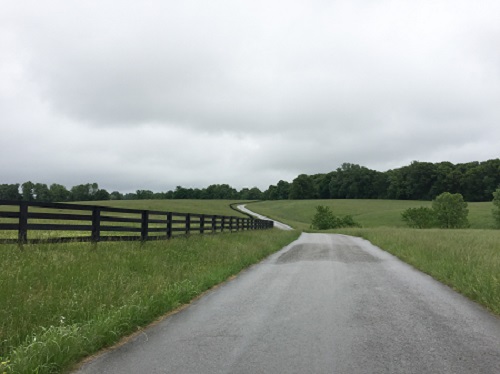
Take Their Half Out of the Middle--winding country roadI never like to meet drivers who take their half out of the middle of the road. Especially on a winding country road. They only take half. However, other drivers have no safe place to go. The person in the middle risks the lives of everyone they meet.

Drivers should remain on one side of the road. In the United States, they stay on the right. In several countries, they drive on the left. Drivers need to remain on the correct side, wherever they travel.

To take their half out of the middle means to take the correct amount but in a way that hurts others.

Although this often refers to drivers, it also applies to other circumstances.

  • People who eat the center of a cream filled cake or cookie
  • Children who refuse to move from the center of a car’s back seat
  • Anyone who takes the best from the center of anything

Instead of a total focus on self, consider the rights of others.

  •  What do they need?
  • How can I help?

Rather than self-centered, why not self-giving?

“Command them to do good, to be rich in good deeds, and to be generous and willing to share” (1 Timothy 6:18 NIV).

Thanks to Judy Beth Shugart Clark for the suggestion.

Do you have an expression you want explained or a thought about this one? If so, please comment below.

Subscribe to receive my weekly posts by email and receive a free copy of “Words of Hope for Days that Hurt.”

If you enjoyed this post, please share it with your friends.
Forever and a Day

Forever and a Day

Forever and a Day--Grand CanyonThousands of people hike the twenty-one-mile Rim to Rim Grand Canyon trail. They probably feel like it takes forever and a day during the heat of summer. The trail includes a one-mile hike down and another up. Most hikers require an overnight stay in the canyon. The park suggests most visitors not try that trail in the hottest weather. Temperatures reach over 100° F.

Forever and a day means a long time.

Forever is eternal or always. It will never end, so we cannot add time to it. Forever and a day simply adds emphasis. It exaggerates the idea.

We wish some experiences would end quickly.

They feel like they last forever.

  • Illness
  • Tests
  • Boring speeches
  • Workdays when we want to go home

We look for the light at the end of the tunnel.

We wish other experiences would last forever.

  • Favorite vacations
  • Love for family
  • Fun with friends

All who follow Jesus have an eternal home in heaven.

  • Time without end in perfect peace with God
  • No more sorrow or pain (or boring speeches)
  • Joy beyond anything we can imagine.

At the end of the road, we have no better way to spend forever and a day.

“After that, we who are still alive and are left will be caught up together with them in the clouds to meet the Lord in the air. And so we will be with the Lord forever” (1 Thessalonians 4:17 NIV).

Thanks to Janna Babak for the suggestion.

Do you have an expression you want explained or a thought about this one? If so, please comment below.

Subscribe to receive my weekly posts by email and receive a free copy of “Words of Hope for Days that Hurt.”

If you enjoyed this post, please share it with your friends.