Browsed by
Tag: problems

Sweat Bullets

Sweat Bullets

Sweat Bullets-sweat on foreheadFew of us like to sweat bullets – physical or emotional.

After a hard day of physical work, giant drops of sweat the size of bullets drip from us. We get:

We long for a cool breeze, swim, or shower to help us feel better.

To sweat bullets also refers to emotional stress.

We become:

  • Anxious
  • Nervous.
  • Distressed
  • Fearful

We turn into worry warts.

Many stresses result from our circumstances.

  • Physical illness
  • Death
  • Job loss
  • Financial problems
  • Natural disasters

Other stresses come from within us.

We worry about:

  • An unknown future
  • Our purpose in life
  • Life after death

Whether external or internal, we tie ourselves in knots.

Next week we will look at a better way to deal with life’s stresses. Until then, stay cool, physically and emotionally. Seek God’s peace and purpose for this life and the next. Enjoy the possibilities of every day.

“Don’t fret and worry—it only leads to harm” (Psalm 37:8 TLB).

Thanks to Ann Maniscalco for the suggestion.

Do you have an expression you want explained? If so, please comment below.

Subscribe to receive my weekly posts by email and receive a free copy of “Words of Hope for Days that Hurt.”

If you enjoyed this post, please share it with your friends.
Spill the Beans

Spill the Beans

Spill the Beans--glass jar with lid off and beans spilling outMost of us know people who cannot keep a secret. They always find a way to spill the beans.

Although they act surprised after they tell what they know, they never fail to share it. Then, they ask us not to tell anyone else.

The origin of this expression is uncertain.

One possible explanation comes from an ancient voting practice of placing different colored beans in pots or jars. No one was supposed to spill the beans until the proper time.

People may spill the beans on purpose.

Telling private information can cause great harm. Words often hurt.

People may also spill the beans by mistake.

Although they don’t intend to reveal the information, it can still hurt.

Not all secrets hurt when told.

Examples include:

  • Plans for a surprise party
  • The contents of a gift
  • Whether an unborn baby is a boy or girl

Some secrets should be told.

  • Abuse
  • Crimes
  • Evil plans

Busybodies need to bite their tongues. However, everyone needs to speak up to right wrongs.

“Watch your words and hold your tongue; you’ll save yourself a lot of grief” (Proverbs 21:23 MSG).

 Thanks to Regina Graham for the suggestion.

Do you have an expression you want explained? If so, please comment below.

Subscribe to receive my weekly posts by email and receive a free copy of “Words of Hope for Days that Hurt.”

If you enjoyed this post, please share it with your friends.
Salt in a Wound

Salt in a Wound


Salt in a Wound -container of saltYears ago, people treated many medical emergencies at home. One common remedy was to pour or rub salt in a wound. That solution often caused more pain than the original problem.

Salt in a wound hurts.

 Although salt (or saltwater) helps heal or sooth certain conditions, it causes damage to others. Even if it helps, salt on an open sore stings.

To pour or rub salt in a wound means to make a bad situation worse.

 Our words or actions hurt rather than help.

  • A friend loses a contest, and we praise the winner.
  • Our neighbor’s boss fires him, and we brag about our promotion.
  • A relative’s wife leaves him, and we talk about her handsome boyfriend.

Whether deliberate or not, we increase the person’s hardship, shame, or sadness.

Rather than rub salt in a wound, let’s serve as salt of the earth.

 When other people feel down in the dumps, let’s lift them up. We have the privilege to share their sorrow as well as their joy.

“Being happy-go-lucky around a person whose heart is heavy is as bad as stealing his jacket in cold weather or rubbing salt in his wounds” (Proverbs 25:20 TLB).

Thanks to Pat Childress Conner Stapp for the suggestion. Image courtesy of  Pixabay.

Do you have an expression you want explained? If so, please comment below.

Subscribe to receive my weekly posts by email and receive a free copy of “Words of Hope for Days that Hurt.”

If you enjoyed this post, please share it with your friends.

Boil the Ocean

Boil the Ocean

Boil the Ocean - volcano lava above the oceanHow many times have we attempted an impossible task? We try to do something no one can do. Remember, we don’t have to boil the ocean.

Lava from an erupting volcano heats the ocean. However, all that lava affects only a tiny portion of the water. It puts on quite a show but with limits.

To boil the ocean means to try the impossible.

We work like a mule and burn our candle at both ends. However, like lava in the ocean, we have limits. We cannot do everything.

  • Students cannot complete years of work in one semester.
  • Builders cannot create a city in a day.
  • Doctors cannot cure every person in the world of every disease.

We make progress one step at a time.

Working together, we move forward. Trying to do everything alone dooms us to failure. Too many jobs make all our jobs more difficult.

We want vision without a waste of time.

Dream big. Reach for the sky. Yet, recognize reality. We never want to destroy ourselves striving for the impossible.

“Even youths grow tired and weary, and young men stumble and fall” (Isaiah 40:30 NIV).

Thanks to Kristy Robinson Horine for the suggestion. Image by Adrian Malec from Pixabay

Do you have an expression you want explained? If so, please comment below.

Subscribe to receive my weekly posts by email and receive a free copy of “Words of Hope for Days that Hurt.”

If you enjoyed this post, please share it with your friends.
The Shoe Is on the Other Foot

The Shoe Is on the Other Foot

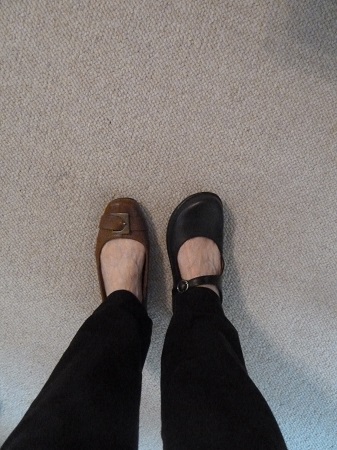
The Shoe Is on the Other Foot--shoes on wrong feetIf we put the right shoe on the right foot, it feels fine. However, if we put it on the left foot, it hurts. We don’t like it when the shoe is on the other foot.

The shoe is on the other foot means circumstances are opposite what they were before.

We change roles.

  • Bosses becomes employees.
  • Teachers becomes students.
  • Bullies get bullied.

With roles reversed, troublemakers receive trouble.

If we held the power, we don’t like it when we become powerless. Like shoes on the wrong feet, the change hurts.

However, if we receive power, it usually feels good. We may be tempted to:

Whatever our role, we don’t want to get off on the wrong foot.

If we hold the power, we never want to act high and mighty. Instead, let’s use our power in a helpful way. If others hold power over us, let’s give a good days work for a good day’s pay. In either role, let’s treat one another with respect.

“Do not set foot on the path of the wicked or walk in the way of evildoers.” (Proverbs 4:14 NIV).

Thanks to Debbie Tapscott for the suggestion and to Laura Mitchell Wilds with Mitchell’s Clothing for the photo.

Do you have an expression you want explained? If so, please comment below.

Subscribe to receive my weekly posts by email and receive a free copy of “Words of Hope for Days that Hurt.”

If you enjoyed this post, please share it with your friends.
Dillydally

Dillydally

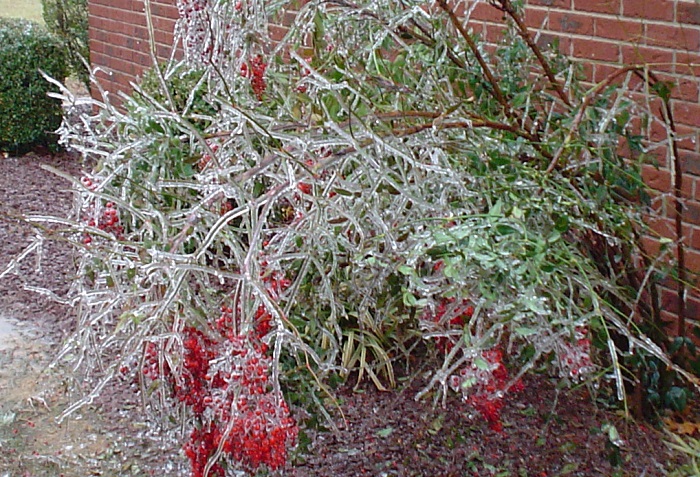
Dillydally-stop sign with a "wasting time" sign below itWhen we were children, adults occasionally warned us not to dillydally. This often happened when we failed to:

  • Do our chores
  • Finish our homework
  • Go to bed on time
  • Get up on time
  • Take a bath
  • Prepare for a special event

Dad often told us to rise and shine when we wanted to stay and sleep.

If we don’t want to do something, we dillydally.

We waste time. Similar words or expressions include:

  • Lollygag
  • Drag our feet
  • Goof off
  • Dawdle

Similar spellings include:

  • Dilly dally
  • Dilly-dally

All mean we do nothing or move slowly. We delay what we should do with less important activity.

We dillydally with actions that have no real purpose.

Rather than meaningful activity, we do something useless.

If we cannot decide, we may dillydally.

We put off doing anything, because we don’t know what to do. However, we can’t ride the fence forever. Eventually we must choose.

Perhaps we have several expressions for wasting time because we do it so often.

What do you think? Please comment.

“Don’t waste time along the way” (Luke 10:4 TLB).

Thanks to Kristy Robinson Horine for the suggestion. Photo courtesy of Pixabay.

Subscribe to receive my weekly posts by email and receive a free copy of “Words of Hope for Days that Hurt.”

If you enjoyed this post, please share it with your friends.
Needle in a Haystack

Needle in a Haystack

Needle in a Haystack--field of haystacksHave you tried to find a needle in a haystack? Believe me, it is not easy. I have never looked for a real needle in a stack of hay. However, I have hunted for several hard-to-locate items.

I have searched high and low and looked up one side and down the other for:

  • A black button in a pile of black clothing
  • A needle in a box of pins
  • A four-leaf clover in a three-leaf clover field

A needle in a haystack means anything hard to find.

A few items are almost impossible to locate. When mixed with other things that look about the same, I can spend hours hunting. Sometimes I succeed. Other times I fail.

Some needles are worth the effort. Others are not.

  • When I need a black button, I keep looking for it.
  • If I have to sew that button on a shirt, I keep looking for the needle.
  • Only when I have free time do I look for four-leaf clovers.

Opportunities to help others require little searching.

Needs exist everywhere.

  • News reports tell of recent events.
  • Churches use volunteers and offerings for local and world-wide ministry.
  • Crisis relief centers meet daily emergencies.

Search for and help with God’s work wherever you find it.

[There is] “a time to search and a time to give up.” (Ecclesiastes 3:6 NIV).

Thanks to Janna Babak for the suggestion. Image by Bronisław Dróżka from Pixabay.

Do you have an expression you want explained? If so, please comment below.

Subscribe to receive my weekly posts by email and receive a free copy of “Words of Hope for Days that Hurt.”

If you enjoyed this post, please share it with your friends.

Ups and Downs

Ups and Downs

Ups and Downs--Grand Tetons behind the Snake RiverWe all have our ups and downs.

  • Good and bad times
  • Positive and negative relationships
  • Happy and sad days
  • Successes and failures

That’s life.

Like a hike up a mountain, our journey through life often feels like an uphill battle. However, once we reach the top, the view takes our breath away.

When we look down, we see how far we have come. A look around reveals the possibilities on every side of us. If we look up, we realize we have hope for future mountains.

We choose whether to focus on the good or the bad.

The choices we make determine how we feel.

When hard times hit, we can dwell on the negatives. Or, on the other side of the coin, we can focus on the positives and hope for the future.

Ups and downs occur in every area of life, including:

  • Marriage
  • Work
  • School
  • Parenting
  • Social activities
  • Health

All our experiences offer opportunities to grow.

Through each one, let’s keep on keeping on. Remember, like a mountain climb, our hardest times often teach the greatest lessons.

“He makes my feet like the feet of a deer; he causes me to stand on the heights” (2 Samuel 22:34 NIV).

Thanks to Laura Lee Leathers for the suggestion.

Do you have an expression you want explained? If so, please comment below.

Subscribe to receive my weekly posts by email and receive a free copy of “Words of Hope for Days that Hurt.”

If you enjoyed this post, please share it with your friends.

Cold Turkey

Cold Turkey

Cold Turkey--two turkeys in the snowI love to eat cold turkey. However, I hate to quit a habit cold turkey.

To stop a habit immediately and completely usually hurts.

Cold turkey means no slow withdrawal. Instead, we tackle the problem all at once.

Few of us enjoy giving up anything that has been part of our lives a long time. Although it may be bad for us, we have a hard time letting go.

Addictions are especially hard to quit cold turkey.

For that reason, support groups exist for addictions to:

  • Alcohol
  • Drugs
  • Gambling
  • Eating
  • Plus, a long list of other behaviors

Support group members talk turkey. Speaking plain hard facts encourages hard, but needed, actions.

Support groups remind us to help one another in all of life.

We may not suffer addiction. Yet, we all need encouragement to make good choices. We also need guidance back to the straight and narrow when we choose poorly.

While we enjoy our post-Thanksgiving cold turkey sandwiches, think:

  • Why wait until the new year to begin better habits?
  • Perhaps now is our best time to quit bad habits once for all.

“Turn away from all your offenses; then sin will not be your downfall” (Ezekiel 18:30 NIV).

Thanks to Tim Lewis  for the suggestion. Photo courtesy of Robert Jones on Pixabay.

Do you have an expression you want explained? If so, please comment below.

Subscribe to receive my weekly posts by email and receive a free copy of “Words of Hope for Days that Hurt.”

If you enjoyed this post, please share it with your friends.

Hang Out to Dry

Hang Out to Dry

Hang Out to Dry--clothes on a clothesline outside a windowAfter Mom washed our clothes and put them through the wringer, she took them to the clothesline to hang out to dry. Most days the clothes dried in sunshine and gentle breezes. However, they occasionally received the worst of weather:

  • Storms
  • Freezing rain
  • Winds so strong clothes blew off the line

Whether good or bad weather, those clothes had no control over the winds that blew.

When we hang others out to dry, we desert them to face danger alone.

Like clothes in the wind, they have:

  • No control over the situation.
  • Little or no support

At times, we want to hurt or punish them. Other times, we simply want to avoid our own trouble.

I don’t know anyone who wants to hang out to dry.

Life is hard enough without others leaving us alone in a bad situation.

Neither should we hang anyone else out to dry.

When anyone deserts us or we desert someone else, remember the situation will eventually come out in the wash.

The Golden Rule tells us, “In everything, do to others what you would have them do to you” (Matthew 7:12 NIV).

Thanks to Karen Hart for the suggestion. Image by Philipp Ruch from Pixabay.

Do you have an expression you want explained? If so, please comment below.

Subscribe to receive my weekly posts by email and receive a free copy of “Words of Hope for Days that Hurt.”

If you enjoyed this post, please share it with your friends.