Browsed by
Tag: reliable

Off the Top of My Head

Off the Top of My Head

Off the Top of My Head--two facing head outlines filled with booksHave you ever felt swamped with work, and someone asked you a question? Perhaps you began your response with, “Off the top of my head …”

Off the top of my head means you reply with little thought.

Your answer requires minimal brain power. However, if you fail to check your memory, your guess might not be right.

Off the top of my head works best if you know your subject well.

The most reliable information comes from experts in the field.

  • Plumbers know how to fix leaky faucets.
  • Doctors understand health issues.
  • Chefs prepare tasty food.

Experts often consult with one another since two heads are better than one.

Verifying usually works best.

Therefore:

  • Reliable plumbers check leaks.
  • Trustworthy doctors perform tests.
  • Top chefs try recipes before they share them.

They investigate before they act—a valuable lesson for everyone.

“Do not be quick with your mouth, do not be hasty in your heart to utter anything before God. (Ecclesiastes 5:2 NIV).

Thanks to Melissa Bright for the suggestion. Image by Gerd Altmann from Pixabay.

Do you have an expression you want explained or thoughts about this one? If so, please comment below.

Subscribe to receive my weekly posts by email and receive a free copy of “Words of Hope for Days that Hurt.”

If you enjoyed this post, please share it with your friends.
With a Grain of Salt

With a Grain of Salt

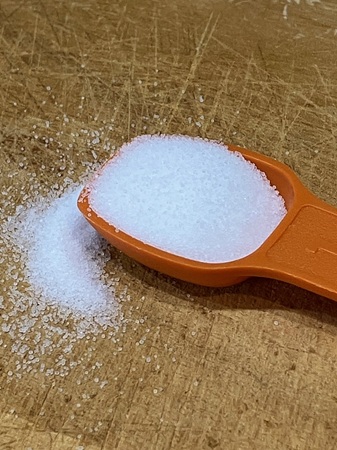
With a Grain of Salt--teaspoon spilling saltSocial media content should be taken with a grain of salt. Along with helpful information, we find untruths and half-truths.

To take with a grain of salt (or a pinch of salt) means with hesitation.

We verify rather than accept without reservation. Especially if we don’t know the information source. Such caution applies to more than social media.

  • Many sources remain reliable and honest.
  • Others, not worth their salt, share unreliable and dishonest material.

Unreliable sources often make a bad situation worse.

They harm instead of help. Although we want to believe information, we often find:

  • Exaggeration
  • Deliberate deceit
  • Unintended untruth

According to The Free Dictionary, with a grain of salt “is a translation of the Latin cum grano salis.”

Pliny used it to describe “Pompey’s discovery of an antidote for poison (to be taken with a grain of salt).”

Let’s always speak truth and guide others to do the same.

Season rather than harm. Preserve rather than destroy.

“Let your conversation be always full of grace, seasoned with salt, so that you may know how to answer everyone” (Colossians 4:6 NIV).

Thanks to Joyce McCullough for the suggestion.

Do you have an expression you want explained or thoughts about this one? If so, please comment below.

Subscribe to receive my weekly posts by email and receive a free copy of “Words of Hope for Days that Hurt.”

If you enjoyed this post, please share it with your friends.

Salt of the Earth

Salt of the Earth

Salt of the Earth-Truck in front of Bonnieville Salt FlatsTo view salt of the earth, take a trip across Utah’s Bonnieville Salt Flats. I thought that solid white scene would last forever.

Such a long stretch of salt flats reminds me of salt’s many uses. Salt helps us:

  • Cook
  • Preserve
  • Clean
  • Remove stains

We also use salt mixtures as a:

  • Mouth rinse for sore throats
  • Spray for stuffy noses
  • Soak for pain relief
  • Beauty scrub

Salt can also cause problems, such as:

  • High blood pressure
  • Road and driveway damage (after using it to melt snow and ice)

Today we will focus on salt’s benefits.

To say people are salt of the earth is a compliment.

We mean they are:

Such people are worth their salt. We respect and trust them. They work hard and treat others well.

This expression comes from the Bible.

Jesus describes His followers as salt and light. Like salt and light, we want to make our world a better place. However, if we fail to fulfill our purpose, we become worthless.

May we always flavor, preserve, protect, beautify, and heal our world, especially in these difficult times.

“You are the salt of the earth. But if the salt loses its saltiness, how can it be made salty again? It is no longer good for anything, except to be thrown out and trampled underfoot” (Matthew 5:13 NIV).

Thanks to Janna Babak for the suggestion.

Do you have an expression you want explained? If so, please comment below.

Subscribe to receive my weekly posts by email and receive a free copy of “Words of Hope for Days that Hurt.”

If you enjoyed this post, please share it with your friends.