Browsed by
Tag: rules

Written in Stone

Written in Stone

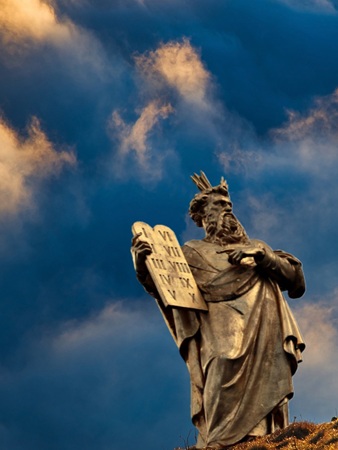
Written in Stone--Statue of Moses with the Ten CommandmentsWhen we receive instructions, we may wonder if they will change or if they are written in stone. That is true for orders from:

  • Parents to children
  • Employers to workers
  • Governments to citizens

Anything written in stone (or set in stone) cannot be changed.

It is:

  • Permanent
  • In final form

Similar expressions include cast in stone or etched in stone.

Written in stone probably originated with the Ten Commandments in the Bible.

Those rules, given by God to Moses, were engraved on stone. They provide direction for every part of our lives.

The first four commandments address our relationship with God.

They tell us to:

  1. Have no other gods before God.
  2. Make no idols.
  3. Never take God’s name in vain.
  4. Remember and keep the Sabbath day holy.

The last six commandments address our relationships with other people.

They tell us to:

  1. Honor our fathers and mothers.

And not to:

  1. Murder
  2. Commit adultery
  3. Steal
  4. Bear false witness
  5. Covet

Years later, a law expert asked Jesus which commandment is greatest.

Jesus replied, “‘Love the Lord your God with all your heart and with all your soul and with all your mind.’ This is the first and greatest commandment. And the second is like it: ‘Love your neighbor as yourself.’ All the Law and the Prophets hang on these two commandments” (Matthew 22:37-40).

Love God. Love others. That covers all the commandments in a nutshell.

Thanks to Tracy Crump for the suggestion. Image by Enlightening Images from Pixabay.

Do you have an expression you want explained or thoughts about this one? If so, please comment below.

Subscribe to receive my weekly posts by email and receive a free copy of “Words of Hope for Days that Hurt.”

If you enjoyed this post, please share it with your friends.

Red Tape

Red Tape

Red Tape--desk piled with paperwork and a red ribbon around the top document. Hand raised above and behind it.I was a social worker for almost thirty years. The work was stressful and the hours horrible. I was on-call twenty-four hours a day seven days a week. Yet I loved it.

I did not love the red tape. We had to jump through hoops of:

  • Endless paperwork
  • Frequent bureaucratic changes
  • Fluctuating budgets that reversed progress

Red tape refers to complicated, time-wasting official procedures.

Such requirements are:

  • Strict
  • Difficult
  • Tiresome

They focus on details and rules rather than efficiency and outcomes. Correct forms overrule positive results.

Red tape results in service delays.

Forms and rules should lead to speedier outcomes rather than needless obstacles. Likewise, successful procedures should remain regardless of leadership changes.

According to The Free Dictionary, this expression refers to “the former British custom of tying up official documents with red ribbon.”

Red ribbons make a document look good. However, appearance matters little. Contents determine the difference, good or bad.

A certain amount of red tape must remain.

  • Rules offer guidelines.
  • Paperwork gathers needed information.

Yet, a fine line exists between:

  • Efficient or ineffective
  • Helpful or hurtful

“Every official is under orders from higher up, and the higher officials look up to their superiors. And so the matter is lost in red tape and bureaucracy” (Ecclesiastes 5:8 TLB).

Thanks to Regina Graham for the suggestion and to Karen Atwood for the photo.

Do you have an expression you want explained or thoughts about this one? If so, please comment below.

Subscribe to receive my weekly posts by email and receive a free copy of “Words of Hope for Days that Hurt.”

If you enjoyed this post, please share it with your friends.
Play by Ear

Play by Ear

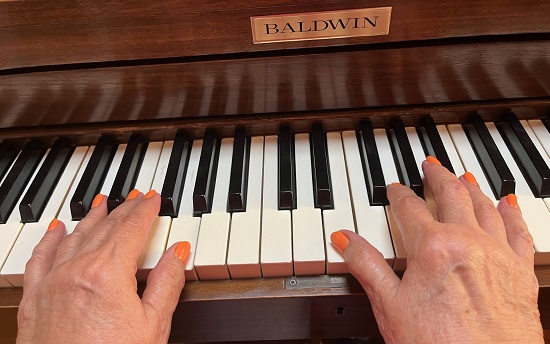
Play by Ear--hands on piano keysMy sister received most of our family’s piano ability. She plays by reading music, plus she can play by ear. If she hears a song, she eventually figures out how to play it.

To play music by ear means to play without looking at printed music.

I have a hard time playing with or without the written score.

Play by ear also means to act without specific plans or rules.

We decide what to do as we go. Rather than worry about details, we

  • Remain flexible.
  • Adapt to the circumstances.
  • Take one step at a time.
  • Deal with events as they arise.

We fly by the seat of our pants.

Some of us do well playing by ear. Others desire more organization.

We want to know:

  • What are we to do?
  • When are we to do it?
  • How do we do it?
  • Who will help us?
  • What happens every step of the way?

Whether we prefer to plan or not, we can make beautiful music with our lives.

Every day offers opportunities to:

  • Do our best.
  • Encourage one another.
  • Worship God.

“I will sing and make music to the Lord” (Psalm 27:6 NIV).

Thanks to Cindy Shoemaker for the suggestion and to Gail Gosser for the photo.

Do you have an expression you want explained or a thought about this one? If so, please comment below.

Subscribe to receive my weekly posts by email and receive a free copy of “Words of Hope for Days that Hurt.”

If you enjoyed this post, please share it with your friends.

Push the Envelope

Push the Envelope

Push the Envelope--planes flying up through cloudsTo push the envelope has nothing to do with cards and letters or their containers. It refers more to math and airplanes.

To push the envelope means to go beyond the usual limits.

 People try to do more than has been done before. They test boundaries.

  • Youth test their parents’ rules.
  • Technology companies go beyond past performance.
  • Sports players set new records.

They attempt what many people would never try. In their minds, nothing ventured, nothing gained. By going to extremes, they often discover new possibilities. However, they also risk ending up in hot water.

Details on math or airplane envelopes can be found at The Phrase Finder.

In simple terms, an airplane’s envelope refers to limits where the plane can safely fly. When pilots push the envelope, they test their plane’s limits. They fly faster or higher or dive more than they have tried before.

If pilots go too far, they put themselves and their plane at risk.

People learn lessons when they push the envelope.

  • Some lessons create new opportunities.
  • Other lessons cause great pain.

The question each person must ask: Is the test worth the risk?

“God is magnificent; he can never be praised enough. There are no boundaries to his greatness” (Psalm 145:3 MSG).

Thanks to Tim Lewis for the suggestion. Photo courtesy of Pixabay.

Do you have an expression you want explained? If so, please comment below.

Subscribe to receive my weekly posts by email and receive a free copy of “Words of Hope for Days that Hurt.”

If you enjoyed this post, please share it with your friends.

No Holds Barred

No Holds Barred

No Holds Barred-two wrestlersNo holds barred means no rules.

Years ago, wrestlers fought with no limits. They used any hold they chose. Today, most follow rules.

No holds barred also means extreme.

We do whatever it takes to get what we want. We fight for:

  • The best job
  • More money
  • Freedom

Nothing gets in the way of our goal.

No holds barred is a dangerous way to live.

Without rules, wrestlers risk injury and death. The same applies to all of us.

We need rules.

We may not always like them. However, rules:

  • Give guidance
  • Keep us safe
  • Let us know what to expect

Rules make life better for everyone. They help keep us out of hot water.

God gave the Ten Commandments for a better life. Jesus said the greatest commandment is to love God and love one another. If we do that, we keep all the others. We stay on the straight and narrow.

“If anyone competes as an athlete, he will not be crowned as the winner unless he competes according to the rules” (2 Timothy 2:5 NET)

Thanks to Timothy Lewis for the suggestion and DeWayne Frazier for the photo.

Do you have an expression you want explained? If so, please comment below.

Subscribe to receive my weekly posts by email and receive a free copy of “Words of Hope for Days that Hurt.”

If you enjoyed this post, please share it with your friends.

Straight and Narrow

Straight and Narrow

Straight and Narrow--alleyTo get from one place to another, we must often follow the straight and narrow:

  • Alleys
  • Streets
  • Paths
  • Seas or rivers

Occasionally we see this expression written strait and narrow.

Some narrow sea passages are called straits.

The Strait of Gibraltar leads from the Atlantic Ocean into the Mediterranean Sea. At one place it is only eight miles wide.

You can find more information about the Strait of Gibraltar here.

When we follow the straight and narrow, we do what we should.

That is true for our lives as well as travel.

We follow the straight and narrow when we:

  • Go the right direction
  • Follow rules or laws
  • Act right
  • Speak the truth

 We may get in trouble if we leave the straight and narrow.

Many times we:

  • Get lost
  • Lead other people the wrong way
  • Get hurt or hurt others

Life can be fun off the beaten path.  However, we want to be sure that path does not take us the wrong way.

Let’s enjoy where we go and what we do when we hit the trail. However, let’s also watch our step and go only where we should go.

“Enter through the narrow gate. For the gate is wide and the road is broad that leads to destruction, and there are many who go through it. How narrow is the gate and difficult the road that leads to life, and few find it” (Matthew 7:13-14 HCSB).

Do you have an expression you want explained or a thought about this one? If so, please comment below.

Subscribe to receive my weekly posts by email and receive a free copy of “Words of Hope for Days that Hurt.”

If you enjoyed this post, please share it with your friends.

Toe the Mark

Toe the Mark

Toe the MarkBefore a race, runners toe the mark.

They place their toes at the starting line, never beyond it. The smallest movement too far disqualifies them. If they want to win, they must follow the rules.

The same requirement applies to a children’s race, a fundraiser for charity, or the Olympics.

We never outgrow rules.

So why do we sometimes ignore them? Why do we act like they apply to other people but not us?

Although not always fun, rules make life easier for everyone. This holds true not only in games but in everything we do.

Yes, some people cheat and never get caught. Yet, they will always know they did not deserve the victory? They will always wonder if their deceit will be discovered. They can never relax and completely enjoy their prize.

A runner who breaks the rules loses only a game. In life, we risk losing far more:

  • Our self-respect.
  • The respect of others.
  • Our good name.
  • The ability to enjoy life.

Let’s play by the rules.

In everything, let’s do what’s right. That way we win, whether we cross the finish line first or not.

“You’ve all been to the stadium and seen the athletes race. Everyone runs; one wins. Run to win. All good athletes train hard. They do it for a gold medal that tarnishes and fades. You’re after one that’s gold eternally” (1 Corinthians 9:24-25 MSG).

Do you have an expression you want explained? If so, please comment below.

Subscribe to receive my weekly posts by email and receive a free copy of “Words of Hope for Days that Hurt.”

If you enjoyed this post, please share it with your friends.