Blog

Jumping-off Place

Jumping-off Place

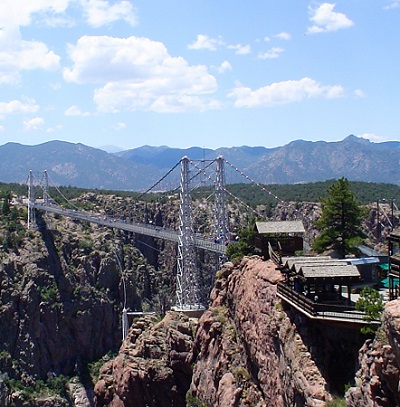
Jumping-off Place --Royal Gorge BridgeOn my first trip to Cañon City, Colorado, my husband and I walked across the nearby Royal Gorge Bridge. Several people use that bridge as a jumping-off place. They bungee jump from the highest bridge in the United States.

I like adventure, but that looks crazy. I have no desire to bounce like a rubber ball between The Royal Gorge Bridge and the Arkansas River 955 feet below.

Jumping-off place (or jumping-off point) has two meanings.

  1. The beginning point
  2. A very remote place

We will explore the first meaning, the beginning point.

A jumping-off place may be the beginning of:

  • Adventure, like those crazy bungee jumpers
  • Journeys, like our trip to Colorado
  • Business plans, like starting a new company
  • Discussions, like the beginning of peace talks
  • Investigations, like exploring space

A jumping-off place is often scary.

Anything new involves risk. Therefore, we decide whether the beginning is worth the risk. I took the risk of a hot air balloon ride, an adventure on my bucket list. I have no plans to risk a bungee jump. That cord could break, and I would end up graveyard dead.

When we jump into something wrong, we usually try to change directions.

We want to correct our mistake. However, we don’t want to make a bad situation worse. That would be like jumping from the frying pan into the fire. Instead we make a wiser choice.

God put a head on our shoulders. Let’s use it for something more than a hat rack.

“Throwing his cloak aside, he jumped to his feet and came to Jesus” (Mark 10:50 NIV).

Thanks to Brenda Mullins for the suggestion.

Do you have an expression you want explained or a thought about this one? If so, please comment below.

Subscribe to receive my weekly posts by email and receive a free copy of “Words of Hope for Days that Hurt.”

If you enjoyed this post, please share it with your friends.
In the Short Rows

In the Short Rows

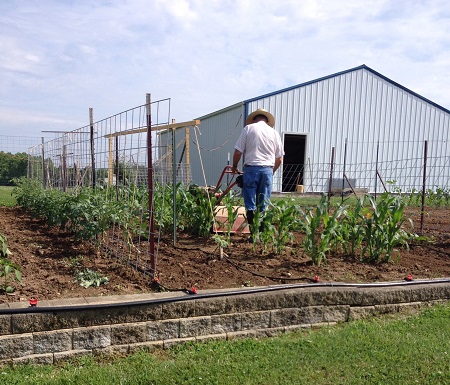
In the Short Rows--person tilling a gardenAfter a long hard day, most of us look forward to work in the short rows.
In the short rows means we are almost finished.

We have a certain amount of work to do, and the end is in sight.

How well I remember hoeing weeds out of our garden as a child. We had long hard rows to hoe – much work to complete. A few rows on the edge of the garden were shorter than most. Those were our favorites.

We usually look forward to reaching the short rows.

For many people Thursday and Friday are in the short rows of their work week. They look forward to those last two days before the weekend.

Other short rows include:

  • Authors writing the last pages of a book
  • Long distance drivers nearing the end of their journey
  • Children waiting for the last days of school

If we love what we do, we also enjoy our long rows.

Rest helps when we tire. Yet, every day becomes an adventure. We don’t believe the grass is greener on the other side. We find joy in our own garden spot of the world.

My cousin Iva loves to garden. Family and friends love when he shares his garden goodies. He sets a good example in both his work and his generosity.

Look for joy in every moment, whether in long or short rows.

“Whoever works his land will have plenty of bread, but he who follows worthless pursuits will have plenty of poverty” (Proverbs 28:19 ESV).

Thanks to Emily Akin for the suggestion and to Jewell Withers Wade for the photo.

Do you have an expression you want explained or a thought about this one? If so, please comment below.

Subscribe to receive my weekly posts by email and receive a free copy of “Words of Hope for Days that Hurt.”

If you enjoyed this post, please share it with your friends.

Out of the Woods

Out of the Woods

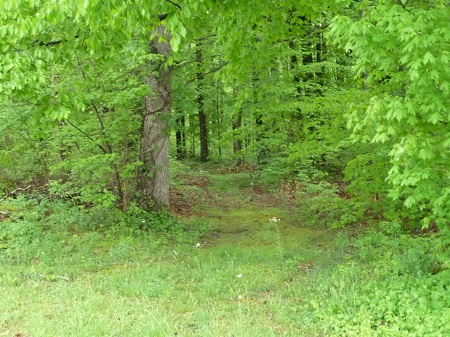
Out of the Woods--path through treesA few years ago, my husband was in the hospital, not expected to live. The next day a doctor said he was much better but not out of the woods yet. He meant my husband still had to fight for his life.

Out of the woods means safe and secure.

A person no longer faces immediate danger.

  • The worst trouble has passed.
  • Known and unknown threats are over.
  • The greatest danger is gone.
  • Circumstances are no longer critical,

Like exiting a dangerous forest, a person out of the woods feels relief.

The escape frees the person to:

  • Relax
  • Enjoy better circumstances
  • Give thanks for improvement

In addition to health issues, out of the woods applies to:

  • Finances
  • Relationships
  • Work

Whether in the woods or out, everyone chooses how to react.

Life gets hard. People get hurt. When that happens, they decide whether to:

Why not make the best of a bad situation? This life will soon pass. Let go and let God make the most of it.

My husband did make it out of the woods and left the hospital a few days later.

“Even the trees of the woods—the fir trees and cedars of Lebanon—sing out this joyous song: ‘Your power is broken; no one will bother us now; at last we have peace’” (Isaiah 14:8 TLB).

Thanks to Ann Knowles for the suggestion.

Do you have an expression you want explained? If so, please comment below.

Subscribe to receive my weekly posts by email and receive a free copy of “Words of Hope for Days that Hurt.”

If you enjoyed this post, please share it with your friends.

I Swan

I Swan

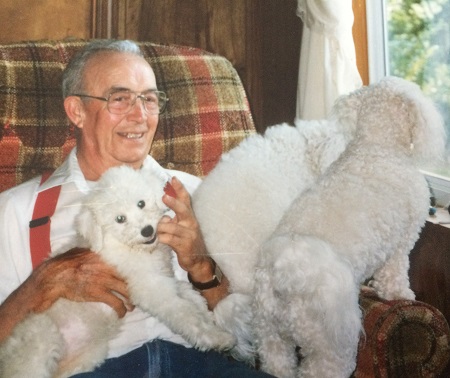
I Swan--Uncle Lowell and three dogs

My Uncle Lowell, like many in our family, loved to use idioms and slang. He often expressed surprise with, “I swan.” He occasionally changed that to:

  • “I’ll swan.”
  • “I swanny.”
  • “Well, I swan.”
  • “I declare.”

All meant the same.

Uncle Lowell’s “I swan” meant something happened he did not expect.

He may or may not have known it also meant the same as “I swear.”

Like most of us, Uncle Lowell preferred pleasant surprises:

  • News of a new grandchild
  • Gifts out of the blue
  • Contact from an old friend

Unfortunately, he also received unpleasant surprises:

  • Deaths of friends or family members
  • Bad accidents
  • Weather related crop losses

However, Uncle Lowell was a tough cookie.

He often laughed through his troubles by:

  • Telling tall tales
  • Playing jokes on anyone around him
  • Giving children funny nicknames

Singing also helped him through hard times. I can still hear his deep bass remind us to have a little talk with Jesus.

If Uncle Lowell knew about this post, I have a feeling he would respond, “Well, I swan. Who ever heard of such a thing?”

“Even when I am old and gray, do not forsake me, my God, till I declare your power to the next generation, your mighty acts to all who are to come” (Psalm 71:18 NIV).

Did you have family members like my Uncle Lowell? Please comment below.

Thanks to Stacey Marcum and Gail Gosser for the suggestion. Special thanks to Stacey for the photo.

Subscribe to receive my weekly posts by email and receive a free copy of “Words of Hope for Days that Hurt.”

If you enjoyed this post, please share it with your friends.

The Proof Is in the Pudding

The Proof Is in the Pudding

The proof is in the pudding--bowl of vanilla pudding with raspberriesPudding, or any other food, may look good. It may smell good. Other people may say it tastes good. However, the proof of the pudding is in the eating.
The proof is in the pudding comes from the above longer and older expression, according to The Phrase Finder.

We know anything is good when it works as it should.

Does it fulfill its purpose? To find out, we:

  • Taste food
  • Turn on a computer
  • Drive a car

We test it. If it works, we use it. If it does not work, we get something else.

The proof is in the pudding applies to our work as well.

We don’t know if we have succeeded until we check the final results. Then we know if what we did worked as it should.

We may think we have failed when time will show we succeeded.

  • Our pudding may not be beautiful, but it tastes great.
  • We may think children never listen until they thank us years later.
  • What seemed a failure may lead to a better plan.

We will never know the final results of all our efforts in this life.

Therefore, we should never give up.

When we get discouraged, we:

  • Keep working.
  • Do what God called us to do.
  • Let our light shine.
  • Leave the results in God’s hands.
  • Pray that our work will make a difference long after we are gone.

“His master replied, ‘Well done, good and faithful servant! You have been faithful with a few things; I will put you in charge of many things. Come and share your master’s happiness!’” (Matthew 25:21 NIV).

Thanks to Allen T. Booth, Jr. for the suggestion. Photo courtesy of Pixabay.

Do you have an expression you want explained? If so, please comment below.

Subscribe to receive my weekly posts by email and receive a free copy of “Words of Hope for Days that Hurt.”

If you enjoyed this post, please share it with your friends.

A Lick and a Promise

A Lick and a Promise

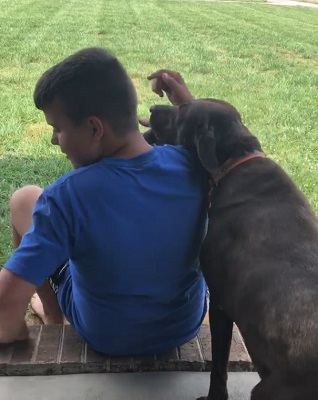
A Lick and a Promise--dog licking boy's faceLike Kaleb’s puppy, too many times, I have cleaned with a lick and a promise. What about you?

When we give something a lick and a promise, we do our work quickly and poorly.

We don’t take the time to do it right. This can apply to:

  • House work
  • Personal cleaning (Children often prefer a lick and a promise rather than a full bath.)
  • Jobs
  • School work

The lick is the fast work. The promise is to do better later.

A Lick and a Promise--two dogsSometimes we have to give a lick and a promise.

We have no choice. That can happen when we:

  • Don’t have time to do a job well
  • Get swamped with more work than one person can do
  • Become ill and need to rest

We can’t control everything. That’s life.

We may also choose to meet more important needs.

A lick and a promise then becomes the better plan. We focus on:

  • Children who hurt rather than housework
  • Friends in need rather than lawn care
  • A neighbor in the hospital rather than a perfect meal

When possible, we want to be Johnny on the spot and do our work well. However, when greater needs arise, we choose to tackle what matters most.

“We remember before our God and Father your work produced by faith, your labor prompted by love, and your endurance inspired by hope in our Lord Jesus Christ” (1 Thessalonians 1:3 NIV).

Thanks to Becky Nash Rowe for the suggestion and to Trevor Gosser with Gosser Farms for the photos.

Do you have an expression you want explained? If so, please comment below.

Subscribe to receive my weekly posts by email and receive a free copy of “Words of Hope for Days that Hurt.”

If you enjoyed this post, please share it with your friends.

Just Stepped Out of a Band Box

Just Stepped Out of a Band Box

Just Stepped Out of a Band Box - Harriet Michael headshotPlease welcome my friend Harriet Michael as today’s guest writer. Harriet and I met at Kentucky Christian Writers Conference. She is a multi-published author and freelance writer. Harriet currently has five books out with two more coming out this year and three more under contract for release over the next two years. She also has hundreds of articles, devotions, and stories published in numerous magazines and books. Follow her on her blog or on her Amazon author page.
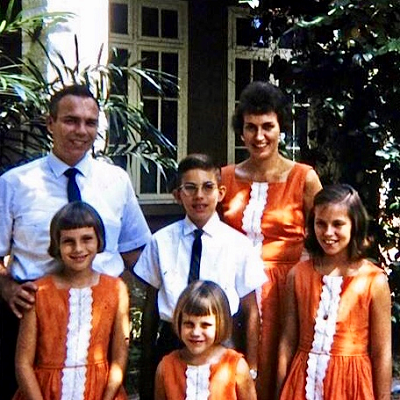
Looking Good!

Matching dresses made by Harriet’s mom

When I was a child, I often heard my mother say, “You look like you just stepped out of a band box!” She would say this to me when I was dressed up for church or some other nice occasion. I came to understand from the way she used this expression that she meant I looked nice:

  • Clean
  • Hair brushed
  • Clothes washed and pressed
  • Shoes shined

Where did the expression come from?

I actually did not know the answer to this question until I looked it up for this post. Here is what I found:

The bands in this expression are clerical bands—the white linen bands often worn around ministers’ necks. The bandbox then is the box that holds the ministers’ clothing which is always spotless and neatly pressed. So, if people look like they just stepped out of a bandbox, they look:

  • Neat
  • Clean
  • Spotless
  • In order

“And whatever you do, whether in word or deed, do it all in the name of the Lord Jesus, giving thanks to God the Father through him” (Colossians 3:17 NIV).

Do you have an expression you want explained? If so, please comment below.

Subscribe to receive my weekly posts by email and receive a free copy of “Words of Hope for Days that Hurt.”

If you enjoyed this post, please share it with your friends.

Can of Worms

Can of Worms

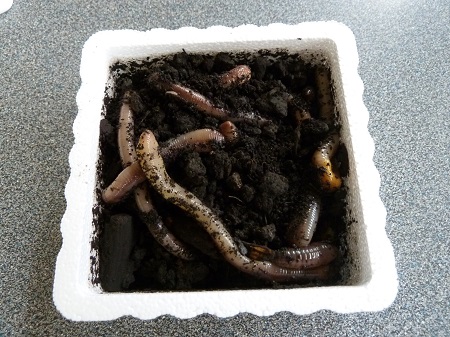
Can of Worms--a box of baitWhen we open a can of worms, we find a tangled mess.

Worms wrap around one another. They look and feel gross.

Many in my family enjoy fishing. They use worms as their bait. However, before they can fish, they must untangle the worms.

A can of worms means a problem.

We begin a difficult process. Often complicated, it may cause:

  • Hard times for the people involved
  • Unexpected or bad results
  • Trouble we cannot correct

It can become a real mess.

Often, we prefer to ignore the situation than to deal with it. We want to turn a blind eye.

Some situations are better left alone.

To talk about them or act on them may:

  • Hurt people for no good reason
  • Cause worse problems than before

Other situations need to be solved.

We want to nip them in the bud. However, making a wrong situation right is often hard. We may:

  • Feel uncomfortable with a new way of life
  • Lose power we enjoy
  • Have to change hurtful or abusive behavior
  • Deal with other related problems

At times, we may feel in over our heads. Yet, the sooner we tackle a problem, the sooner we solve it.

Will we do what needs to be done, even if it makes life hard?

“I cling to your commands and follow them as closely as I can. Lord, don’t let me make a mess of things” (Psalm 119: 31 TLB).

Thanks to Janna Babak for the suggestion.

Do you have an expression you want explained? If so, please comment below.

Subscribe to receive my weekly posts by email and receive a free copy of “Words of Hope for Days that Hurt.”

If you enjoyed this post, please share it with your friends.

Cut the Mustard

Cut the Mustard

Cut the Mustard-mustard flowerYears ago, Ernest Tubb and Red Foley sang “Too Old to Cut the Mustard.” They gave people a good laugh about aging. You can read the song lyrics here.

Young people often think senior adults are as old as the hills or over the hill. However, many older people still cut the mustard. Many young people cannot. Age does not always make a difference.

Cut the mustard means to work well.    

 People do what needs to be done. They do what is:

  • Expected
  • Required

They:

  • Work with energy and enthusiasm
  • Successfully accomplish their task

Cut the mustard applies to things as well as people.

People want what they use to:

  • Work well
  • Keep working

However, like people, things do not always work as they should.

  • Computers crash.
  • Cars run out of gas.
  • Stoves fail to cook.

Several guesses about how this expression began include the:

  • Hard work required to cut mustard plants
  • Difficulty in cutting tiny mustard seeds
  • Need to cut (dilute) mustard with vinegar to create a good taste

Others ideas have nothing to do with mustard.

However the expression began, it reminds everyone to do their best. Each day offers the opportunity to:

“[The righteous] will still bear fruit in old age, they will stay fresh and green” (Psalm 92:14 NIV).

Thanks to Emily Akin for the suggestion. Photo courtesy of Pixabay. 

Do you have an expression you want explained or a thought about this one? If so, please comment below.

Subscribe to receive my weekly posts by email and receive a free copy of “Words of Hope for Days that Hurt.”

If you enjoyed this post, please share it with your friends.

Over the Top

Over the Top

Over the Top--winding stairway at Biltmore EstatesTo get to the top floor of a house, we usually climb stairs. To go over the top of the house requires more work – extreme efforts. Most of us would be foolish to try.

Over the top often means to go beyond acceptable behavior.

 We describe such actions as:

  • Extreme
  • Reckless
  • Strange
  • Shameful
  • Foolish

Over the top occasionally means brave behavior.

Some soldiers in battle go over the top of their trenches. They leave safety to attack their enemy. That action puts them at greater risk for losing their lives.

Yet, those soldiers:

  • Value the battle’s purpose more than personal safety
  • Go beyond the call of duty
  • Take the risk for a greater cause

They are willing to die for what they believe. Because of such bravery, we celebrate our country’s independence on the Fourth of July.

Let’s choose our behavior carefully.

When we need to be careful, stay wise as an owl. However, when we need to be brave, go over the top.

“The Lord makes firm the steps of the one who delights in him” (Psalm 37:23 NIV).

Thanks to Karen Atwood for the suggestion.

Do you have an expression you want explained or a thought about this one? If so, please comment below.

Subscribe to receive my weekly posts by email and receive a free copy of “Words of Hope for Days that Hurt.”

If you enjoyed this post, please share it with your friends.