Browsed by
Category: Problems

Keep On Keeping On

Keep On Keeping On

Keep On Keeping On--storm at seaMany times we feel like we are drowning in a sea of responsibility. The storms of life hit. We have too much to do with too little time or energy to do it. Yet, we keep on keeping on.

Storms at sea can arise quickly and cause much trouble.

  • Clouds roll in.
  • Thunder and lightning threaten danger ahead.
  • Rain pounds, and waves toss our boats.

Yet, we have no escape, so we batten down the hatches and keep going.

If we keep on keeping on, we refuse to give up.

Instead, we keep doing what we are doing — what we have to do.

Like storms at sea, life storms can arise quickly and cause much trouble. They may also be slow-moving day-to-day responsibilities with no relief in sight. Either way, we hang on for dear life and do the best we can.

Most storms soon pass.

The sun comes out, and a rainbow appears.

All is well. Our troubles of the moment disappear.

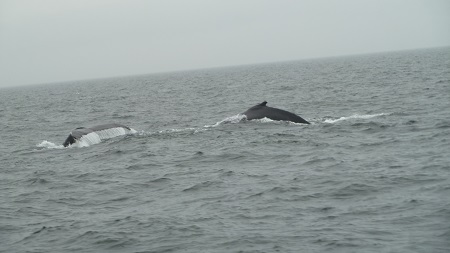
Keep On Keeping On--whales in a choppy seaOther storms remain with us.

Our troubles continue, yet we make the best of a bad situation.

We look for moments of pleasure, like the sudden appearance of whales in a storm-tossed sea.

  • Friends call or visit to offer encouragement.
  • A funny moment occurs in the midst of many not-so-funny moments.
  • We enjoy a brief walk, beautiful music, or favorite foods.

Whether storms come and go or come and stay, we do not have to face them alone.

Other people will help if they know our needs. Jesus promised the presence of His Spirit to all who trust in Him.

When hard times come, keep on keeping on, my friend. May you know God’s never-failing peace.

“I will pray the Father, and he shall give you another Comforter, that he may abide with you for ever” (John 14:16 KJV).

Thanks to a 5-3-20 commenter on Upper Room for the suggestion. First photo by enriquelopezgarre from Pixabay.

Do you have an expression you want explained? If so, please comment below.

Subscribe to receive my weekly posts by email and receive a free copy of “Words of Hope for Days that Hurt.”

If you enjoyed this post, please share it with your friends.

Rat Race

Rat Race

As much as I hate rats, I feel sorry for them. The poor things never escape their rat race for survival. Not only do they compete against one another for food, people try to kill them.

A rat race means constant competition.

People compete for:

  • Money
  • Power
  • Success
  • Social status

They struggle against one another for the best position. Although they may not kill one another, they do often damage the work or reputation of competitors.

In addition, constant stress destroys people’s health. Intense pressure leaves little time to relax. Instead, they end up running on fumes.

Many people decide to escape their rat race.

Rat Race--city traffic jamThey choose a slower, more relaxed lifestyle.
When I think of a rat race, I usually imagine big cities. I love to visit New York City, San Francisco, and Chicago. However, I never want to live there. I hate traffic jams and daily crowds.

Instead, give me country life with wide open spaces. My little garden spot of the world suits me fine. I prefer the middle of nowhere to crowded city streets.

Of course, people in the country live with stress too. A too-busy schedule happens everywhere.

All people need moments to relax.

A slower pace gives time to

  • Enjoy the moment
  • Experience all of life
  • Recognize the importance of relationships
  • Give of oneself for a greater good

Work hard, but live well.

“Always strive to do what is good for each other and for everyone else” (1 Thessalonians 5:15 NIV).

Thanks to Shelia Price for the suggestion. Photo by Rebekah Blocker on Unsplash.

Do you have an expression you want explained? If so, please comment below.

Subscribe to receive my weekly posts by email and receive a free copy of “Words of Hope for Days that Hurt.”

If you enjoyed this post, please share it with your friends.

Too Many Irons in the Fire

Too Many Irons in the Fire

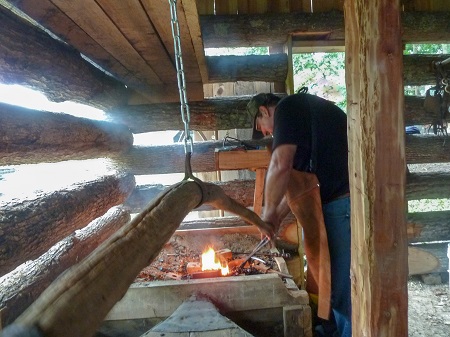
Too Many Irons in the Fire--Anthony SalyersAnthony Salyers demonstrates the work of an old-time blacksmith shop during Greg Lawhorn’s Molasses Day a few years ago. Anthony knows not to put too many irons in the fire. If he does, he will probably ruin part of his work.

Many of us have not learned that lesson. We fail to limit ourselves. Instead, we stay busy as bees with too many activities at one time.

Too many irons in the fire means we try to do more than we can handle.

A blacksmith must limit the number of irons in the fire when making horseshoes or other items. We must also limit what we do, if we want to do anything well.

Although we know better, we still try to do too much.

We overload ourselves with:

  • Work commitments
  • Family responsibilities
  • Community events

Often vacations get overloaded as well. We cram as much as we can into the short time we have. As a result, we return to work exhausted.

With too many irons in the fire, something will eventually fail.

  • Our work becomes less than the best.
  • We get sick.
  • Our families struggle.
  • No one’s needs get met.

Rather than overdo, why not do what we can do well?

Focus on the most important. If we have time and energy, we can add more. If we see we cannot do it all, let someone help.

“You’re going to wear yourself out—and if you do, what will happen to the people?” (Exodus 18:18 TLB).

Thanks to Emily Akin for the suggestion.

Do you have an expression you want explained? If so, please comment below.

Subscribe to receive my weekly posts by email and receive a free copy of “Words of Hope for Days that Hurt.”

If you enjoyed this post, please share it with your friends.

Running on Fumes

Running on Fumes

Running on Fumes-Andrea GiordanoPlease welcome my friend Andrea Giordano as today’s guest writer. I met Andrea when she was Executive Director of TESOL and ESL Programs at Campbellsville University. Andrea is the founder of StudyWithAndrea.com and has taught more than 1,000,000 students from 180 countries. She is a proven leader in online English teaching and is driven by her passion to help you speak English clearly. You can study with Andrea at the following places:
English with Andrea podcast 
The Study With Andrea YouTube channel 

I was driving a friend’s truck last summer when, all of a sudden, the gas light came on. I was miles from a gas station and didn’t know if I would make it to a gas station in time. For the next few miles, I was dangerously close to running out of gas. I was running on fumes.

Just like that truck, I’ve had times in my life when I was running on fumes. These were times I had given all my energy away. I found myself with little ability to handle life easily because of how tired I was.

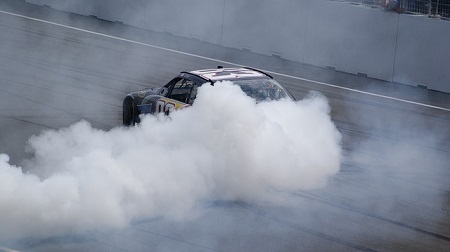
Running on Fumes--race car with fumesRunning on fumes means you are tired or have little emotional energy. 
  • Tired
  • Emotionally tired
  • Exhausted

There are many situations where you can be running on fumes. You might be a student who stayed up all night finishing a research paper but still have to show up for an early morning class.

You might be a mom with a newborn baby where you never get more than three hours of sleep at a time.

You might be locked down to protect yourself from COVID-19. Even though you are safer at home, you feel lonely and overwhelmed by financial pressures and the constant bad news on TV.

In all of those scenarios, you would be running on fumes.

When I feel like I’m running on fumes, I do a few things to refuel:

  1. Get some time alone to pray about what is really exhausting me. A lot of times, just identifying an underlying stress or issue helps me feel like I can do something about it.
  2. I try to go to bed earlier and drink more water.
  3. I listen to worship music and remember that God is strong enough to help me through whatever I’m facing.
  4. I read Scripture, especially verses like Matthew 11:28 (NIV), “Come to me, all you who are weary and burdened [running on fumes], and I will give you rest.”

What helps you when you are running on fumes? Please comment below.

Subscribe to receive my weekly posts by email and receive a free copy of “Words of Hope for Days that Hurt.”

If you enjoyed this post, please share it with your friends.

Photo courtesy of Pixabay.

Good to Go

Good to Go

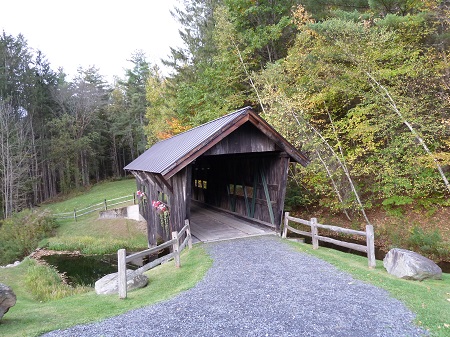
Good to Go--road leading to covered bridge“Are you ready?”

“Yes, we are good to go.”

When planning a trip, we like to hear that news.

Good to go means we are ready.

Excited to hit the trail, we have:

  • Prepared
  • Packed (but no excess baggage)
  • Repaired, if necessary
  • Checked and double-checked

Good to go includes more than travel.

It may refer to our:

  • Health (a return to good health)
  • Possessions (all work well)
  • Activities (ready to start or restart)
  • Work (complete and correct)

Sometimes good to go means ready to stay.

At times, we must stay home because of health issues. When that happens, people call, text, or message to check on us. Questions usually include:

  • Are you okay?
  • Do you need anything?

Once I said, “We are good to go, or – in that case – stay.” What I meant was:

  • We were okay.
  • We did not need anything or to go anywhere.

In this life, let’s stay good to go, whether we stay or go. For the next life, let’s definitely get ready to go.

“So you also must be ready, because the Son of Man will come at an hour when you do not expect him” (Matthew 24:44 NIV).

Do you have an expression you want explained? If so, please comment below.

Subscribe to receive my weekly posts by email and receive a free copy of “Words of Hope for Days that Hurt.”

If you enjoyed this post, please share it with your friends.

The End of Your Rope

The End of Your Rope

The End of Your Rope--climber hanging from a rope“When you reach the end of your rope, tie a knot in it and hang on.” –Franklin D. Roosevelt.

Many can identify with the former president. Hard times hit, and you hurt. You wonder:

  • How will I survive?
  • Who can help?
  • Why did this happen?

When you reach the end of your rope, you feel out of options.

Like a person hanging from a cliff with no more rope, you feel desperate. You have no:

  • Strength
  • Hope
  • Patience
  • Desire to continue

You are ready to give up. You want to throw in the towel.

Problems may be as simple as no time to do all you need to do. However, problems may also be life threatening.

Whatever the problem, hold on.

Tie a knot and hang on for dear life. Help may be on the way. Many people want to help, if you let them know your need. Once you receive what you need, pay it forward by helping someone else.

When you get to the end of your rope, remember two words: “But God.”

You may not know the answer, but God does.

  • Troubles may not stop, but God walks with you through them.
  • Uncertainty may remain, but God gives you peace in the midst of it.
  • Life may look hopeless, but God offers hope for this life and the life to come.

When trials around you cause stress within you, look up.

“But you, God, see the trouble of the afflicted; you consider their grief and take it in hand” (Psalm 10:14 NIV).

Thanks to Ann Knowles for the suggestion. Photo courtesy of Pixabay.

Do you have an expression you want explained? If so, please comment below.

Subscribe to receive my weekly posts by email and receive a free copy of “Words of Hope for Days that Hurt.”

If you enjoyed this post, please share it with your friends.

In the Nick of Time

In the Nick of Time

In the Nick of Time--planes flying toward a setting sunOn a trip to Minneapolis years ago, I caught a plane just in the nick of time. My first plane had engine trouble, so I had to change flights. That made me late for my second flight. As a result, I had to run through the airport about 1:00 a.m. to board my plane on time.

In the nick of time means at the last moment.

  • Doctors perform surgery just in time to save a life.
  • Basketball players make winning shots in the last seconds of games.
  • Parents grab children before they run into traffic.

Any delay beyond the nick of time is too late.

  • I would have missed my flight. (I did miss the boat later on that same trip.)
  • Doctors’ patients would die.
  • Basketball teams would lose.
  • Cars would hit children

Each situation goes down to the wire but is saved by the bell.

A good plan helps avoid the nick of time.

  • Prepare for the unexpected.
  • Stay organized.
  • Focus on the most important.
  • Never put off what needs to be done today.

“As God’s co-workers we urge you not to receive God’s grace in vain. For he says, ‘In the time of my favor I heard you, and in the day of salvation I helped you.’ I tell you, now is the time of God’s favor, now is the day of salvation” (2 Corinthians 6:1-2).

Thanks to Jane Ashley Pace for the suggestion.

Do you have an expression you want explained? If so, please comment below.

Subscribe to receive my weekly posts by email and receive a free copy of “Words of Hope for Days that Hurt.”

If you enjoyed this post, please share it with your friends.

Heebie-Jeebies

Heebie-Jeebies

Heebie-jeebies--two small frogsFrogs give me the heebie-jeebies. Big ugly frogs. Cute little frogs. All frogs. They jump too fast. Plus, a friend once had a frog get tangled in her hair.

I am working on my frog fear. Since these little ones were behind glass, I was brave.

Having the heebie-jeebies is no fun. They make us feel:

  • Fear
  • Anxiety
  • Uncertainty
  • Dread
  • Worry

We differ on what gives us the heebie-jeebies.

Frequent fears include:

  • Death, so we use words like kick the bucket.
  • Frogs or other animals, so we try to stay away from them.
  • Public speaking, so we let other people speak for us.
  • The dark, so we keep lights on all night.

A few of us fear or worry about everything.

We are afraid of our own shadow and stay tied in knots.

A certain amount of fear can be helpful.

Fear may cause us to:

  • Take care of our health
  • Stay away from dangerous animals
  • Avoid dangerous people
  • Watch our step in dangerous situations

 Faith leads us away from fear and worry.

Faith does not remove all our problems. However, if we trust Jesus, He will be with us through life’s troubles. Faith in Jesus also leads us to a home in heaven.

So do not fear, for I am with you; do not be dismayed, for I am your God. I will strengthen you and help you; I will uphold you with my righteous right hand” (Isaiah 41:10).

Thanks to Margaret Bertram for the suggestion.

Do you have an expression you want explained? If so, please comment below.

Subscribe to receive my weekly posts by email and receive a free copy of “Words of Hope for Days that Hurt.”

If you enjoyed this post, please share it with your friends.

Saved by the Bell

Saved by the Bell

Saved by the Bell--a small glass bell with a humingbird and flowerSaved by the bell means we escape a difficult situation at the last moment.

A bell rings to end each round in a boxing match. If a boxer is knocked down, he may be counted out. However, if the bell rings first, he can continue the match.

Few of us have been boxers. However, many of us have been saved by the bell.

We escape trouble by the skin of our teeth.

Saved by the bell sometimes applies to embarrassing situations.

  • We fail to write a paper for class. The class ends before the teacher asks for it.
  • We have food on our face. A friend tells us before we meet our new boss.
  • We almost fall in front of a crowd. Someone catches us before we hit the floor.

Saved by the bell also applies to serious situations.

  • We get trapped in a burning car. A policeman pulls us from the car before it explodes.
  • We cannot pay a past-due bill. Unexpected money comes in the mail.
  • We will soon be homeless. Friends ask us to stay with them.

Years ago, a few people put bells on coffins. They thought anyone accidentally buried alive could ring the bell. However, according to The Phrase Finder, saved by the bell relates to boxing, not coffins.

Bear Our Cross: a cross with crown of thornsOur greatest salvation comes through Jesus’ death on a cross.

Jesus died for our wrongs. After three days, He rose from the grave. If we accept Jesus’ gift of salvation, we receive eternal life and a home in heaven. We don’t have to wait to be saved by the bell at the last moment. Jesus offers salvation now.

“He died for our sins and rose again to make us right with God” (Romans 4:25 TLB).

Thanks to Carol York Patterson Brangers for the suggestion.

Do you have an expression you want explained or a thought about this one? If so, please comment below.

Subscribe to receive my weekly posts by email and receive a free copy of “Words of Hope for Days that Hurt.”

If you enjoyed this post, please share it with your friends.

Come Out in the Wash

Come Out in the Wash

Come Out in the Wash-blouse hanging on a porch with tree in the background“Don’t worry about it. It will come out in the wash.” Those words have probably helped many of us deal with problems or disappointments.

To come out in the wash tells us everything will be okay.

We hate to get stains on our clothing. However, most stains wash out. In the same way, we hate to have problems in life. Yet, most problems work out.

We try to cover up when we do wrong. That also comes out in the wash. We cannot hide bad behavior forever.

With time:

  • Wrongs will be made right.
  • Truth will expose lies.
  • Hard times will pass.
  • Good will win over evil.

Some troubles come out in the wash faster than others.

Not all stains come out quickly. We have to wash our clothes several times to get rid of them. Likewise, not all troubles disappear as soon as we like.

We often worry when all we need to do is wait.

When we wring our hands in worry, we make ourselves feel worse. Most problems cause little harm. If harm comes, it usually does not last long. However, if we do suffer a long time, we can look for lessons from our experiences.

Life gets dirty, but God offers to wash us clean.

If we accept Jesus as personal Savior, life’s troubles will one day end. The best is yet to come. Jesus paid the price for our wrongs and invites us to come clean. He will give us a fresh start.

“Wash me, and I will be whiter than snow” (Psalm 51:7 NIV).

Thanks to Linda Dean-Peavey for the suggestion and to Jeri Stone for the photo.

Do you have an expression you want explained? If so, please comment below.

Subscribe to receive my weekly posts by email and receive a free copy of “Words of Hope for Days that Hurt.”

If you enjoyed this post, please share it with your friends.