
Browsed by
Category: Relationships

Split Hairs

Split Hairs

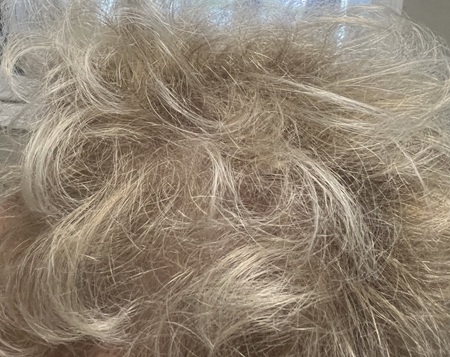
Split Hairs--top of head with teased hairDo you remember sky-high teased hairstyles? Or have you seen pictures of them? Can you imagine all the split hairs that caused? Worse damage occurs when we split hairs with our words.

When we split hairs, we fight about minor details that make no major difference.

We focus on the petty or unimportant.

This metaphor “was first recorded in the late 17th century,” according to The Free Dictionary.

Most of us have split a few hairs.

Yet why let anything that is neither here nor there steal our attention? No need to stress. No need to waste that time. If it will not matter six months from now, let it go.

Let’s focus on the worthy.

  • Do what needs to be done.
  • Forget what makes little or no difference.
  • Never let trivial matters get our goat.

A single hair should not overtake the rest of our body. Neither should one small detail overtake our minds, emotions, or relationships.

“Keep reminding God’s people of these things. Warn them before God against quarreling about words; it is of no value, and only ruins those who listen” (2 Timothy 2:14 NIV).

Thanks to Tracy Crump for the suggestion and to Misty Durham for the photo.

Do you have an expression you want explained or thoughts about this one? If so, please comment below.

Subscribe to receive my weekly posts by email and receive a free copy of “Words of Hope for Days that Hurt.”

If you enjoyed this post, please share it with your friends.
Skinned Alive

Skinned Alive

Skinned Alive--man who appears in pain with shaving cream on his face and holding a razorHave you ever been skinned alive? It is no fun, is it? We may not lose skin, but it hurts like we have.

To be skinned alive means to be severely scolded or punished.

Many of us think scolding hurts the most.

People of all ages receive threats to be skinned alive.

  • Children who break their parents’ rules
  • Employees who fail to do their work
  • Friends or family who break promises

This phrase comes from the cruel “practice of flaying a live prisoner.”

The Free Dictionary dates it to the mid-1800s.

The threat to skin alive often comes with the strength and power to hurt others.

However, we never want to harm anyone.

Encouraging people to straighten up and fly right is okay. Blowing our top is not.

When people threaten to skin us alive, we want to make necessary changes.

However, if we have done nothing wrong, we may need to say so. Regardless of how they treat us, we want to treat them with respect. Two wrongs don’t make a right.

“Consider it pure joy, my brothers and sisters, whenever you face trials of many kinds” (James 1:2 NIV).

Thanks to Kristy Robinson Horine for the suggestion. Image by Sammy-Sander from Pixabay.

Do you have an expression you want explained or thoughts about this one? If so, please comment below.

Subscribe to receive my weekly posts by email and receive a free copy of “Words of Hope for Days that Hurt.”

If you enjoyed this post, please share it with your friends.

Lie Like a Rug

Lie Like a Rug

Lie Like a Rug--Jumbled multicolored arrows with truth or lie on themMy dad loved to play with words. He would deliberately use the wrong word to give a sentence a totally new meaning. I’m sure some people thought he did not know better. However, he knew exactly what he was doing. Lie like a rug was one of his favorite expressions.

Lie like a rug is a pun, a usually funny play on words.

Puns use words that are alike or nearly alike but have different meanings. “Lie” can mean either to tell an untruth or to rest in a flat position. Lie like a rug combines those two meanings since a rug lies flat on a floor.

If we lie like a rug, we lie boldly and shamelessly.

Our untruth is no mistake. We deliberately lie. Sometimes we know that no one will believe us but lie anyway.

If we repeat an untruth often enough, we may persuade some people to believe.

We sound ridiculous. Yet repetition eventually convinces those unwilling to look at the evidence. If not convinced, they may choose not to confront us or face the truth.

Always weigh the evidence.

Take what sounds like a lie with a grain of salt. Search for truth and follow it.

“Whoever lives by the truth comes into the light, so that it may be seen plainly that what they have done has been done in the sight of God” (John 3:21 NIV).

Thanks to Melissa Henderson for the suggestion. Image by Gerd Altmann from Pixabay.

Do you have an expression you want explained or thoughts about this one? If so, please comment below.

Subscribe to receive my weekly posts by email and receive a free copy of “Words of Hope for Days that Hurt.”

If you enjoyed this post, please share it with your friends.
Carry Someone Somewhere

Carry Someone Somewhere

Carry Someone Somewhere--large boy carrying small girl on his backI still remember a college professor saying he had to carry someone somewhere. His statement puzzled me. I knew he could not carry the grown man on his back. Instead, he meant he had to transport the man in his car.

To carry someone somewhere means to take the person somewhere.

Like my college professor, we may take others to:

  • Appointments
  • Church
  • Family gatherings
  • Wherever they need to go

When the need arises, we don’t hem and haw.  We do what needs to be done. That kind of carrying takes time but is easier on our backs.

To carry someone somewhere also means to accompany the person.

Whether we provide transportation or not, people do not have to go alone. We escort them for:

  • Safety precautions
  • Fun times
  • Dates

The key to both meanings is to be there.

At times, we meet needs. Other times, we simply enjoy one another’s company. Either way, we share friendship and fellowship.

“Then Esau said, ‘Let us be on our way; I’ll accompany you.’” (Genesis 33:12 NIV).

Thanks to Joyce Cordell for the suggestion and to Crystal Gosser for the photo.

Do you have an expression you want explained or thoughts about this one? If so, please comment below.

Subscribe to receive my weekly posts by email and receive a free copy of “Words of Hope for Days that Hurt.”

If you enjoyed this post, please share it with your friends.
Chew the Fat

Chew the Fat

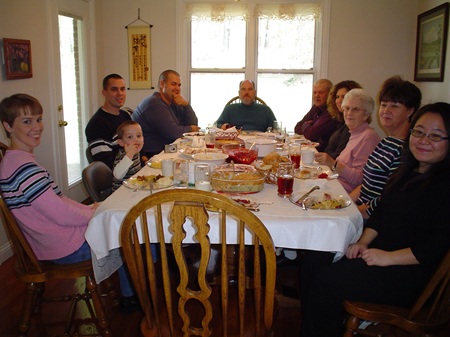
Chew the Fat--family around a table for ThanksgivingOur family loves to meet and eat. Thanksgiving, Christmas, special birthdays, or for no reason at all. We also love to chew the fat, spending hours talking and laughing.

To chew the fat means to have long, relaxed conversations.

  • No rush
  • Easy laughter
  • No schedule

We enjoy leisure from the daily grind.

To chew the fat involves little or no heavy discussion.

We simply shoot the breeze. Chats stay:

  • Friendly
  • Relaxed
  • Informal

Conversations may occasionally include bits of gossip. When tempted to gossip, we need to bite our tongue.

Two other expressions share similar meanings.

  • Chew the rag
  • Chew the cud

Origins for chew the fat and chew the rug are unknown. People have guessed possibilities but with no certainty. We find a simpler explanation for chew the cud.

According to Phrase Finder, a cud is the food cows “bring back into their mouths from their first stomach to chew at leisure.” We see that slow chewing while cows graze in pastures.

Enjoy special time to chew the fat with friends and family.

Make memories and strengthen relationships. They are gifts from God.

“I have not stopped giving thanks for you, remembering you in my prayers” (Ephesians 1:16 NIV).

Thanks to Gail Gosser and Regina Graham for the suggestion.

Do you have an expression you want explained or thoughts about this one? If so, please comment below.

Subscribe to receive my weekly posts by email and receive a free copy of “Words of Hope for Days that Hurt.”

If you enjoyed this post, please share it with your friends.

Cold Shoulder

Cold Shoulder

Cold Shoulder--back of a young woman with off-the-shoulder blouse in a field of yellow flowersHas anyone given you the cold shoulder? It’s no fun, is it?

To receive a cold shoulder means people ignore or reject you.

They:

  • Snub you.
  • Pay no attention to you.
  • Turn away from you.

Rejection is depressing.

A cold shoulder is not accidental. Those who snub you have no interest in contact with you.

The origin of cold shoulder probably differs from widespread belief.

According to The Phrase Finder and The Free Dictionary, many people believe this expression began with a nineteenth century custom.

  • Hosts served a meal of roasted meat to welcomed guests.
  • They served a cold shoulder of meat to guests who outstayed their welcome.

The Phrase Finder says, “There’s no evidence to support this view.” It adds, “The first reference to the phrase in print is in Sir Walter Scott’s ‘The Antiquary,’ 1816.”

Rather than an unfriendly cold shoulder, show love and concern for others.

“If you see some brother or sister in need and have the means to do something about it but turn a cold shoulder and do nothing, what happens to God’s love? It disappears. And you made it disappear” (1 John 3:17 MSG).

Thanks to Kay Emerick for the suggestion. Image by Eszter Miller from Pixabay.

Do you have an expression you want explained or thoughts about this one? If so, please comment below.

Subscribe to receive my weekly posts by email and receive a free copy of “Words of Hope for Days that Hurt.”

If you enjoyed this post, please share it with your friends.

Scapegoat

Scapegoat

Scapegoat--goat lying in field, face to cameraHave you ever been a scapegoat? Something bad happened. It was not your fault, but you received the blame. Or have you ever scapegoated someone else?

A scapegoat receives all the blame or punishment for the wrongs of others.

The person may be innocent or only partially at fault. However, they receive total blame.

  • Family members accuse a relative for all their problems.
  • Company leaders condemn an employee for the company’s losses.
  • Team members blame one player for their team’s defeat.

We don’t like to be accused when innocent.

Neither do other people.

We find the background for a scapegoat in the Bible.

God gave Moses directions for the Day of Atonement. Aaron, Israel’s first high priest, took two male goats for a sin offering. One goat was sacrificed. The other (the scapegoat) had the sins of the people symbolically placed on it. It was then driven into the wilderness.

Rather than condemn others unfairly, let’s:

  • Take responsibility for our own actions.
  • Encourage one another to make wise choices.
  • Forgive the mistakes of others and ask forgiveness for ours.

Let’s not hang one another out to dry. Instead, let’s treat others like we want to be treated.

“He is to lay both hands on the head of the live goat and confess over it all the wickedness and rebellion of the Israelites—all their sins—and put them on the goat’s head. He shall send the goat away into the wilderness in the care of someone appointed for the task.  (Leviticus 16:21 NIV).

Thanks to Karen Atwood for the suggestion and to Lori Carmicle for the photo.

Do you have an expression you want explained or thoughts about this one? If so, please comment below.

Subscribe to receive my weekly posts by email and receive a free copy of “Words of Hope for Days that Hurt.”

If you enjoyed this post, please share it with your friends.

Upper Hand

Upper Hand

Upper Hand-two boys with alternating hands on the top of a batBefore we played ball during recess in elementary school, one player tossed the bat to another. Those two players alternated hands on the bat until they reached the top. The person with the upper hand had first choice for team players.

Upper hand means a higher or better position.  

We hold an advantage over another person or situation.

The position includes more:

  • Power
  • Control
  • Benefits

We find people with an upper hand in most of life.

  • Sports
  • Business
  • Games
  • Education
  • Families

Those people may be obvious right off the bat. Other times, we remain in the dark about who holds the most power.

An upper hand does not equal a superior person.

We are not:

  • What we do
  • Where we work
  • Who we know

To be the best we can be, we:

  • Love God.
  • Love one another.
  • Live as God created us to live.
  • Look for ways to serve rather than be served.

 “The greatest among you will be your servant. For those who exalt themselves will be humbled, and those who humble themselves will be exalted” (Matthew 23:11-12 NIV).

Thanks to J.D. Wininger for the suggestion and to Karen Atwood for the photo.

Do you have an expression you want explained or thoughts about this one? If so, please comment below.

Subscribe to receive my weekly posts by email and receive a free copy of “Words of Hope for Days that Hurt.”

If you enjoyed this post, please share it with your friends.
I Don’t Care to

I Don’t Care to

I Don't Care to--back of man in a suit with a ? over his head

I began my blog in 2013 to help international friends understand English idioms. I don’t care to is an idiom that also confuses people who speak English as their primary language.

I don’t care to has two opposite meanings.

In other parts of the world, it means I don’t want to do something. However, in my neck of the woods, it means I don’t mind, or I will be glad to do it.

Same phrase. Opposite meanings. Are you confused yet? I usually try to avoid this expression but still say it occasionally.

I don’t care to can be changed to a question.

Asking, “Do you care to?” risks all the same confusion.

Usually, I don’t care (without the “to”) means I have no feelings either way.

It doesn’t matter. I have no preference.

However, it often means the opposite when a person becomes upset. Then, it means I care a great deal but refuse to admit it. I am angry or hurt but don’t want to say so.

I delayed tackling this expression for a long time.

How could I explain it without confusing everyone?

I apologize if you must read this post again to understand it. However, I hope it helps when you encounter people who mean the opposite of what you think.

“Listen carefully to what I say; let my words ring in your ears” (Job 13:17 NIV).

Thanks to Denise Wilder for the suggestion. Photo courtesy of Pixabay.

Honoring God with My Body book coverDo you have an expression you want explained or thoughts about this one? If so, please comment below.

Subscribe to receive my weekly posts by email and receive a free copy of “Words of Hope for Days that Hurt.” Congratulations to Lynn Zimbelman whose name was randomly selected from my mailing list to receive a free copy of Katherine Pasour’s book, Honoring God with My Body: Journey to Wellness and a Healthy Lifestyle.

If you enjoyed this post, please share it with your friends.

The More the Merrier

The More the Merrier

The More the Merrier, yellow blooms and yellow butterflyWith flowers and butterflies, the more the merrier. They brighten our world and our attitudes. When I was a little girl, our house and yard overflowed with my grandmother’s:

  • Potted plants
  • Flower beds
  • Shrubs and trees

All those blooms resulted in:

  • Butterflies
  • Bees
  • An abundance of beauty

People came from here to yonder to admire and receive plant starts.

The more the merrier usually refers to people.

Often, the more people at a place or event, the more fun everyone has.

During my childhood summers, our house overflowed with relatives as well as flowers. They came from everywhere. Many stayed two weeks or longer. People ate and slept wherever they found a bare spot. We had a whale of a time.

The more the merrier describes a variety of situations.

Not everyone agrees that the more the merrier.

Fewer people may be preferred by:

  • Overworked teachers
  • Tired cooks
  • Exhausted parents

We all need time alone and time together.

The Bible tells us that “Jesus often withdrew to lonely places and prayed” (Luke 5:16 NIV). However, the Bible also reminds us that we need to gather and support one another.

“Let us consider how we may spur one another on toward love and good deeds, not giving up meeting together … but encouraging one another” (Hebrews 10:24-25 NIV).

Thanks to Tracy Crump for the idea and to Debbie Tapscott for the photo.

Honoring God with My Body book coverDo you have an expression you want explained or thoughts about this one? If so, please comment below.

Subscribe to receive my weekly posts by email and receive a free copy of “Words of Hope for Days that Hurt.” On 8-23-25, I will randomly select one name from my mailing list to also receive a free copy of Katherine Pasour’s book, Honoring God with My Body: Journey to Wellness and a Healthy Lifestyle. If your name is already on the mailing list, you are automatically entered. Please encourage your friends to subscribe.

If you enjoyed this post, please share it with your friends.