Browsed by
Category: Relationships

Close-knit

Close-knit

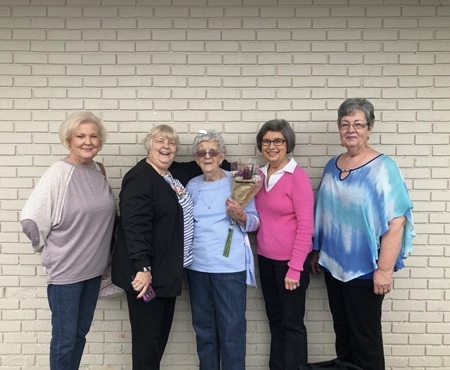
Close-knit--family photoDo you have a close-knit family or group of friends? Few things in life replace those special relationships. Your roots may have run deep for a long time. Or you may have known one another only briefly. Either way, you can depend on one another.

Close-knit means a close relationship.

Your ties to one another may result from shared:

  • Family
  • Friends
  • Culture
  • Interests

Whatever holds you together stays strong.

Time or distance don’t reduce your close-knit commitment.

You remain ready to move heaven and earth for one another at a moment’s notice. Just call, and help is on the way.

That’s the kind of relationship everyone needs.

You never have to wonder. You never have to worry. If you need them, they will be there.

God offers a never-failing close-knit relationship to everyone.

People have limits. God has none. If you want the best of the best, turn to God. God will never leave you alone.

“No one has ever seen God, but the one and only Son, who is himself God and is in closest relationship with the Father, has made him known” (John 1:18 NIV).

 Thanks to Beckham Wilson for the suggestion.

Do you have an expression you want explained or thoughts about this one? If so, please comment below.

Subscribe to receive my weekly posts by email and receive a free copy of “Words of Hope for Days that Hurt.”

If you enjoyed this post, please share it with your friends.

Chopped Liver

Chopped Liver

Chopped Liver--bowl of chopped chicken liverDoes anyone out there like chopped liver? I tried to eat it by:

  • Hiding it in mashed potatoes
  • Holding my nose
  • Breading it and adding spices

Nothing worked. It still tasted like liver. I know liver is good for me, but I don’t like it. I consider it a dish for the birds.

Whether we eat it or not, we sometimes feel like chopped liver.

No matter how hard we try:

  • Not everyone likes us.
  • Many overlook us.
  • Few appreciate our potential.

Chopped liver means worthless.

We judge a person or thing as:

  • Unpleasant
  • Unimportant
  • Undesirable

Emotional responses to such treatment include:

  • Sadness
  • Anger
  • Disappointment
  • Defeat
  • Frustration

A common verbal response is, “So what am I? Chopped liver?”

We may say this when:

  • We fail to get a job.
  • Friends reject us.
  • People make fun of us.

According to The Free Dictionary, this expression “likely originated as a part of Jewish humor.”

It probably refers to “chopped liver as a common side dish.”  It was “overlooked in favor of the main course.” Many people dislike its taste.

We may consider chopped liver as good only for garbage. Yet, we never want to treat one another that way.

“To love [God] with all your heart, with all your understanding and with all your strength, and to love your neighbor as yourself is more important than all burnt offerings and sacrifices” (Mark 12:33 NIV).

Thanks to Joan Borton for the suggestion. Photo courtesy of Pixabay.

Do you have an expression you want explained or thoughts about this one? If so, please comment below.

Subscribe to receive my weekly posts by email and receive a free copy of “Words of Hope for Days that Hurt.”

If you enjoyed this post, please share it with your friends.

Written in Stone

Written in Stone

Written in Stone--Statue of Moses with the Ten CommandmentsWhen we receive instructions, we may wonder if they will change or if they are written in stone. That is true for orders from:

  • Parents to children
  • Employers to workers
  • Governments to citizens

Anything written in stone (or set in stone) cannot be changed.

It is:

  • Permanent
  • In final form

Similar expressions include cast in stone or etched in stone.

Written in stone probably originated with the Ten Commandments in the Bible.

Those rules, given by God to Moses, were engraved on stone. They provide direction for every part of our lives.

The first four commandments address our relationship with God.

They tell us to:

  1. Have no other gods before God.
  2. Make no idols.
  3. Never take God’s name in vain.
  4. Remember and keep the Sabbath day holy.

The last six commandments address our relationships with other people.

They tell us to:

  1. Honor our fathers and mothers.

And not to:

  1. Murder
  2. Commit adultery
  3. Steal
  4. Bear false witness
  5. Covet

Years later, a law expert asked Jesus which commandment is greatest.

Jesus replied, “‘Love the Lord your God with all your heart and with all your soul and with all your mind.’ This is the first and greatest commandment. And the second is like it: ‘Love your neighbor as yourself.’ All the Law and the Prophets hang on these two commandments” (Matthew 22:37-40).

Love God. Love others. That covers all the commandments in a nutshell.

Thanks to Tracy Crump for the suggestion. Image by Enlightening Images from Pixabay.

Do you have an expression you want explained or thoughts about this one? If so, please comment below.

Subscribe to receive my weekly posts by email and receive a free copy of “Words of Hope for Days that Hurt.”

If you enjoyed this post, please share it with your friends.
Talk the Bark Off a Tree

Talk the Bark Off a Tree

Talk the Bark Off a Tree--Large tree surrounded by smaller trees and plantsI have friends who can talk the bark off a tree. They know how to discuss anything with anyone. A former co-worker could also recall details I never noticed. She made a great storyteller in both fact and fiction.

To talk the bark off a tree means to talk constantly.

I occasionally check to see how long before my friends take a break. They do allow time to:

  • Breathe
  • Eat
  • Swallow

Most enjoy laughter as much as words.

To talk the bark off a tree requires energy.

I tried stripping bark from a tree a few times. Not an easy task! Therefore, I decided to let someone else do it.

Likewise, I would be totally tuckered out if I had to talk nonstop.

My verbal friends are not as tight as bark on a tree with conversation.

They offer their words freely, particularly if they want to:

  • Share exciting news.
  • Recall an enjoyable experience.
  • Encourage others.

I give thanks for all my friends, wordy and quiet. Both make life more interesting and the world a better place.

May all I say and avoid saying honor God and uplift the people around me.

May the same be true for all I write and avoid writing.

Will you join me in that prayer?

“Do not let any unwholesome talk come out of your mouths, but only what is helpful for building others up according to their needs, that it may benefit those who listen” (Ephesians 4:29 NIV).

Thanks to Carol Edwards for the suggestion.

Do you have an expression you want explained or a thought about this one? If so, please comment below.

Subscribe to receive my weekly posts by email and receive a free copy of “Words of Hope for Days that Hurt.”

If you enjoyed this post, please share it with your friends.

Have Something Up Your Sleeve

Have Something Up Your Sleeve

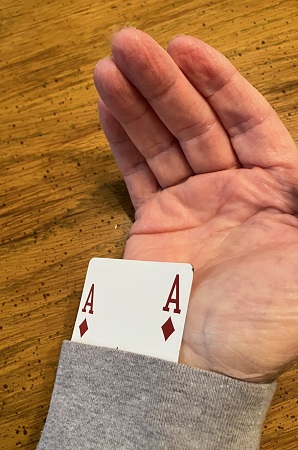
Have Something Up Your Sleeve--hand with ace of diamonds sticking out of sleeveHave you ever had someone say you have something up your sleeve? Or maybe that you always have something up your sleeve?

To have something up your sleeve means you have a secret plan.

That hidden goal will work to your advantage. It remains ready for use at the right time.

This phrase often relates to cheating while playing cards.

You hide a card, often an ace, up your sleeve. When you need it, you play it.

According to The Free Dictionary, this expression “dates at least from the sixteenth century, when clothes generally had no pockets, and sleeves were a usual storage place.”

You may have something up your sleeve other than cards.

Secret plans often exist in:

  • Business schemes
  • Legal tactics
  • Military maneuvers

You keep people in the dark. Most relationships hold potential for such secret moves.

Rather than have something up your sleeve, why not stay honest and open?

When you plot against one another, everyone loses. Instead, roll up your sleeves and work together. If you must keep secrets, be sure they help rather than hurt.

“You have set our iniquities before you, our secret sins in the light of your presence” (Psalm 90:8 NIV).

Thanks to Brad Leverett for the suggestion.

Do you have an expression you want explained or a thought about this one? If so, please comment below.

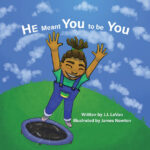
In the Thick of It--He Meant You to be You book coverSubscribe to receive my weekly posts by email and receive a free copy of “Words of Hope for Days that Hurt.” Congratulations to Karen Radjunas, whose name was randomly drawn from my mailing list for a free copy of J.J. LeVan’s book, He Meant You to Be You

If you enjoyed this post, please share it with your friends.

Bite Someone’s Head Off

Bite Someone’s Head Off

Bite Someone's Head Off: tiger with open mouthWhen we see a tiger or other wild animal open its mouth and hear it roar, we may fear it will bite someone’s head off. When we open our mouths while angry, other people may expect us to bite their heads off.

To bite someone’s head off means to react in anger.

We have a bad day, so we take it out on the people around us. They may have no idea why we react as we do, since they did nothing to provoke us.

Other times, people may irritate us with what we consider inappropriate behavior.

Either way, we act or react with:

  • Rage
  • Force
  • Impatience

A similar expression is to snap someone’s head off.

Both mean to scold or speak in a mean manner. If we are mad at the world, whoever comes our way suffers.

Our response to others matters.

Once we speak words, we can’t take them back. We can apologize, but the harm remains.

We all have bad days.

However, we decide whether we will do the best we can or make life miserable for everyone we encounter. Remember, we catch more flies with honey than vinegar. Will we spread:

  • Health or harm?
  • Love or hate?
  • Encouragement or despair?

Let’s not allow bad days to control us. Rather, let’s bite our tongues and treat others as we want to be treated.

“They sharpen their tongues like swords and aim cruel words like deadly arrows. (Psalm 64:3 NIV).

Thanks to Katherine Pasour for the suggestion. Photo by shravan khare on Pexels.

Do you have an expression you want explained or a thought about this one? If so, please comment below.

Subscribe to receive my weekly posts by email and receive a free copy of “Words of Hope for Days that Hurt.”

If you enjoyed this post, please share it with your friends.
Butt Heads with Someone

Butt Heads with Someone

Butt Heads with Someone--two boys with heads together and fists clenchedWhen we butt heads with someone, we cause and receive pain. No fun.

Literally, to butt heads means to hit heads together.

We often see this when animals lock horns. They fight to determine who will lead their group.

Figuratively, to butt heads means to strongly disagree or have an intense argument.

This causes problems in any relationship:

  • Families
  • Friends
  • Neighbors
  • Political parties
  • Social organizations

 The tactics in such arguments aim to hurt rather than heal.

  • Name calling
  • Disrespect
  • Physical or verbal fights

 Rather than butt heads, we need to learn to get along.

We can disagree in an agreeable way. If we explain our differences in a calm, respectful manner, everyone wins. Two heads are better than one applies even when the two heads disagree.

 What causes fights and quarrels among you? Don’t they come from your desires that battle within you?” (James 4:1 NIV).

Thanks to Tracy Crump for the suggestion and to Megan Wollman for the photo.

Do you have an expression you want explained or a thought about this one? If so, please comment below.

Subscribe to receive my weekly posts by email and receive a free copy of “Words of Hope for Days that Hurt.”

If you enjoyed this post, please share it with your friends.

You Got This

You Got This

You Got This! in red on a Rolodex cardIf we want to encourage people who face difficult challenges, we might say, “You got this” or “You’ve got this.” We want them to know we understand their problems. Yet, we also believe they can overcome them.

You got this means we think people can manage their troubles.

We reassure them that they:

  • Can do it
  • Have no reason to fear
  • Can conquer their uncertainty

We believe in their ability to do what they need to do.

You got this offers hope.

We all feel hopeless from time to time. We get discouraged, ready to give up. Yet, a pep talk from a family member or friend can work wonders. It helps us keep on keeping on.

Our present troubles will not last forever.

Instead, we look for light at the end of the tunnel. In addition, if we have placed our faith in Jesus, we look forward to a home in heaven at the end of the road.

“Encourage the disheartened, help the weak, be patient with everyone” (1 Thessalonians 5:14 NIV).

Thanks to Rebecca Stafford for the suggestion.

Do you have an expression you want explained or a thought about this one? If so, please comment below.

Subscribe to receive my weekly posts by email and receive a free copy of “Words of Hope for Days that Hurt.”

If you enjoyed this post, please share it with your friends.

At Loggerheads

At Loggerheads

At Loggerheads--loggerhead turtle on sandAt loggerheads has nothing to do with loggerhead turtles. Although we might enjoy finding the so-ugly-they-are-cute turtles, they give no insight into the idiom. Unless they fight.

At loggerheads means in conflict.

We disagree or argue and fail to resolve the problem. Probably one of the best-known examples of conflict between families is the Hatfield and McCoy feud.

Usually no one wins when at loggerheads.

As with the Hatfields and McCoys, strong disagreement often causes great suffering on both sides including violence or death.

In addition to families, quarrels or disputes occur among:

  • Friends
  • Co-workers
  • Countries
  • Organizations

The Free Dictionary gives two possible origins for the expression.

  1. “A ‘logger’ is a 16th-century term for a block of wood, so a ‘loggerhead’ is a blockhead or fool.”
  2. Loggerhead is also a late 1600s term for “a long-handled iron poker with a bulb-shaped end that was heated in the fire and used to melt pitch.” This “may have been alluded to as a weapon.”

Rather than remain at loggerheads, let’s seek solutions.

  • Compromise when possible.
  • Agree with the other person when we realize we are wrong.
  • Stand firm when necessary.
  • Follow Jesus’ example of self-giving love.

“Hatred stirs up conflict, but love covers over all wrongs” (Proverbs 10:12 NIV).

Thanks to Sarah Burns Hampshire for the suggestion. Photo by Amy Farías with Pexels.

Do you have an expression you want explained or a thought about this one? If so, please comment below.

Subscribe to receive my weekly posts by email and receive a free copy of “Words of Hope for Days that Hurt.”

If you enjoyed this post, please share it with your friends.

On the Same Page

On the Same Page

On the Same Page: Grandmother reading to grandson, his mouth open in surpriseWhen we read a book together, we want to be on the same page. To read the same words and see the same pictures gives us mutual understanding.

On the same page means we agree.

We share the same:

  • Viewpoint or opinion
  • Attitude
  • Goals
  • Perception

By staying on the same page, we avoid confusion.

We begin and proceed with a similar mindset. As a result, we achieve far more than if our plans or ideas clash.

This remains true whatever we do.

  • Work
  • Sports
  • Academics
  • Investments

However, we want to stay on the same page for the right reasons.

Will our choices:

  • Honor God?
  • Serve the needs of others?
  • Challenge us to be the best we can be?

For the best life, go by the best book, the Bible. In it we learn the source of true joy and the challenge to share that joy with others..

“Make my joy complete by being like-minded, having the same love, being one in spirit and of one mind” (Philippians 2:2 NIV).

This idea came from a post by Amy Walsh with Wisdom, Whimsy, and Wordsmithing. Thanks to Tracy Crump for the photo.

Do you have an expression you want explained or a thought about this one? If so, please comment below.

Subscribe to receive my weekly posts by email and receive a free copy of “Words of Hope for Days that Hurt.”

If you enjoyed this post, please share it with your friends.