Browsed by
Category: Relationships

On the Up and Up

On the Up and Up

On the Up and Up--hot air balloons in front of cloudsOn the up and up sometimes refers to people becoming successful.

With high goals and hard work, they strive for a good:

  • Income
  • Reputation
  • Position

They rise in the business world.

On the up and up also refers to anything improving.

  • Health
  • Work
  • Relationships

Today’s focus relates to behavior.

People on the up and up are:

  • Honest
  • Dependable
  • Respectable
  • Fair

Anything they say can be taken to the bank. As good as their word, they have no need to hide anything they do.

  • When they make a deal, they honor their agreement.
  • If they share information, no one doubts its truth.
  • When they promise to do something, they do it.

People whose behavior is on the up and up live clean, moral, legally upright lives.

They want to do what is right. They may not become rich or famous. However, they find far greater success than money or fame. Their choices give them a clear conscience – a gift money can never buy.

“May integrity and uprightness protect me, because my hope, Lord, is in you” (Psalm 25:21 NIV).

Thanks to Brad Leverett for the suggestion. Image by Gerhard G. from Pixabay

Do you have an expression you want explained or a thought about this one? If so, please comment below.

Subscribe to receive my weekly posts by email and receive a free copy of “Words of Hope for Days that Hurt.”

If you enjoyed this post, please share it with your friends.

Let It Be

Let It Be

Let It Be--Green River Lake sceneLet it be. Let it lie. Let sleeping dogs lie. All mean about the same.

To let it be means to leave a situation alone.

  • Wait rather than discuss it.
  • Don’t think too much about it.
  • Choose not to act yet.
  • Don’t dwell on the negative.
  • Get away from it.
  • Relax.

Let it be also relates to people.

We give people space when we let them be. We don’t bother them. They (or we) may need time, so we leave them alone for a while.

We may have to deal with the situation or person later.

However, extra time allows us to:

  • Gain more understanding
  • Think more clearly
  • Prepare a plan

Added time also helps us avoid getting in a jam or opening a can of worms.

 A few situations demand immediate attention.

We must act quickly. When that happens, let’s act wisely. We want to use our information and resources in the best possible way.

“Be still before the Lord and wait patiently for him” (Psalm 37:7 NIV).

Thanks to Laura Lee Leathers for the suggestion.

Do you have an expression you want explained or a thought about this one? If so, please comment below.

Subscribe to receive my weekly posts by email and receive a free copy of “Words of Hope for Days that Hurt.”

If you enjoyed this post, please share it with your friends.

Make No Bones About It

Make No Bones About It

Make No Bones About It-a cup of soupWhen we serve soup, we want no bones about it. We may cook bones in our soup, but we take them out when we eat. Swallowed bones often result in a visit to the hospital.

The origin of make no bones about it is uncertain.

According to The Free Dictionary, possibilities include:

  • Boneless soup or stew
  • Dice (originally made from bones) thrown with no hesitation

Make no bones about it means to be open and honest.

We:

No one has to guess our meaning. We speak frankly.

However, we want to be honest without being mean.

The truth often hurts as much as a lie. Therefore, if a truth helps no one, let’s bite our tongue. Some words are better left unspoken.

Always speak the truth in love.

“Speaking the truth in love, we will grow to become in every respect the mature body of him who is the head, that is, Christ” (Ephesians 4:15 NIV).

Thanks to Margaret Bertram for the suggestion. Image by RitaE from Pixabay.

Do you have an expression you want explained? If so, please comment below.

Subscribe to receive my weekly posts by email and receive a free copy of “Words of Hope for Days that Hurt.”

If you enjoyed this post, please share it with your friends.

Big Head

Big Head

Big Head--Closeup of lion's headLions have a big head, a loud roar, and a reputation as king of the jungle. Although big, strong, and fast, lions can be caught and controlled by smaller, weaker, and slower lion tamers.
People with a big head think they are better or more important than everyone else.

They:

Their actions say:

  • I am better than you.
  • Look at me.
  • I am number one.

Pride controls people with a big head.

Self rules. Everything and everyone else take second place.

However, like lions, pride often leads to a fall.

Humility offers a better way.

Humble people recognize the worth in everyone. They treat others with:

  • Respect
  • Love
  • Wisdom
  • Compassion

When people treat one another as they wish to be treated, everyone wins. Our world becomes a better place.

“When pride comes, then comes disgrace, but with humility comes wisdom” (Proverbs 11:2 NIV).

Thanks to Betty C. Johnson for the suggestion. Image by Kevinsphotos from Pixabay

Do you have an expression you want explained? If so, please comment below.

Subscribe to receive my weekly posts by email and receive a free copy of “Words of Hope for Days that Hurt.”

If you enjoyed this post, please share it with your friends.

Bushel and a Peck

Bushel and a Peck

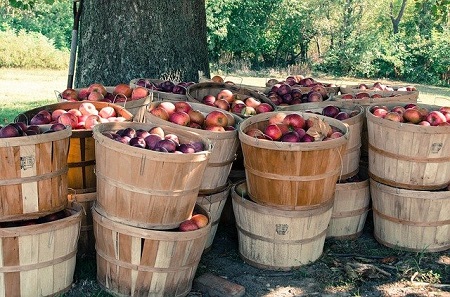
Bushel and a Peck-bushel baskets of applesI grew up with the knowledge that my parents loved me a bushel and a peck. How did I know that? They told me many times. They also sang “A Bushel and a Peck” from the Broadway show, “Guys and Dolls.” Their love made me feel snug as a bug in a rug.
My dad grew apples. Many people bought them in large bushel baskets. Others wanted only a peck (four pecks equal a bushel). Both are large amounts. A bushel and a peck together make a right smart of apples.

A bushel and a peck mean a lot.

Therefore, when my parents told me they loved me a bushel and a peck, they meant they loved me a great deal. At times, they held their arms wide to show another measure of their love.

Bushel and a peck often emphasize one person’s love for another.

Although the Broadway song focuses on romantic love, the expression can also refer to love of other people or things.

God gives the greatest measure of love.

God created all people and all things, including:

  • Everything that goes in our baskets
  • The materials that make the baskets

God also showers us with never-failing love, too great to measure. May we never fail to share God’s love for all creation and everyone in it.

“Who has measured the waters in the hollow of his hand, or with the breadth of his hand marked off the heavens? Who has held the dust of the earth in a basket, or weighed the mountains on the scales and the hills in a balance? (Isaiah 40:12 NIV).

Thanks to Darrin Jenkins for the suggestion. Image by judymccleery from Pixabay

Do you have an expression you want explained? If so, please comment below.

Subscribe to receive my weekly posts by email and receive a free copy of “Words of Hope for Days that Hurt.”

If you enjoyed this post, please share it with your friends.

Spill the Beans

Spill the Beans

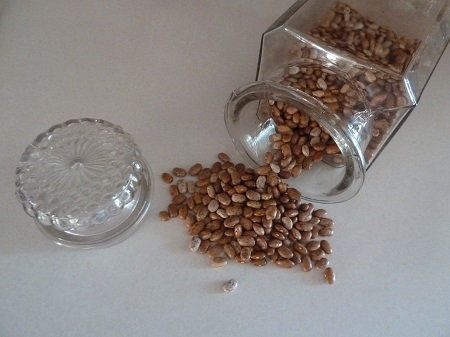
Spill the Beans--glass jar with lid off and beans spilling outMost of us know people who cannot keep a secret. They always find a way to spill the beans.

Although they act surprised after they tell what they know, they never fail to share it. Then, they ask us not to tell anyone else.

The origin of this expression is uncertain.

One possible explanation comes from an ancient voting practice of placing different colored beans in pots or jars. No one was supposed to spill the beans until the proper time.

People may spill the beans on purpose.

Telling private information can cause great harm. Words often hurt.

People may also spill the beans by mistake.

Although they don’t intend to reveal the information, it can still hurt.

Not all secrets hurt when told.

Examples include:

  • Plans for a surprise party
  • The contents of a gift
  • Whether an unborn baby is a boy or girl

Some secrets should be told.

  • Abuse
  • Crimes
  • Evil plans

Busybodies need to bite their tongues. However, everyone needs to speak up to right wrongs.

“Watch your words and hold your tongue; you’ll save yourself a lot of grief” (Proverbs 21:23 MSG).

 Thanks to Regina Graham for the suggestion.

Do you have an expression you want explained? If so, please comment below.

Subscribe to receive my weekly posts by email and receive a free copy of “Words of Hope for Days that Hurt.”

If you enjoyed this post, please share it with your friends.

Deer in the Headlights

Deer in the Headlights

Deer in the Headlights-deer on a foggy road In our garden spot of the world, we have to watch for deer in the headlights. We have several trees on one side of the road and farm fields on the other. Although beautiful and fun to watch, deer cause many accidents.

Deer in the headlights freeze in the middle of the road.

Both cars and the people in them suffer damage if they fail to stop in time. Therefore, we drive slower in certain areas.

If we act like deer in the headlights, we also freeze in place.

Causes include:

  • Fear
  • Surprise
  • Confusion
  • Strong emotions

We might:

  • Get caught red-handed
  • Experience unexpected and overwhelming responsibilities
  • Face decisions with no easy answers
  • Receive news of a birth, marriage, death, or other major family event

Although we freeze at times, unsure what to do, we don’t have to face the future alone.

God offers guidance and hope, whatever our situation.

“Be strong and take heart, all you who hope in the Lord” (Psalm 31:24 NIV).

Thanks to Carole Fite for the suggestion. Image by enriquelopezgarre from Pixabay

Do you have an expression you want explained? If so, please comment below.

Subscribe to receive my weekly posts by email and receive a free copy of “Words of Hope for Days that Hurt.”

If you enjoyed this post, please share it with your friends.

Salt in a Wound

Salt in a Wound


Salt in a Wound -container of saltYears ago, people treated many medical emergencies at home. One common remedy was to pour or rub salt in a wound. That solution often caused more pain than the original problem.

Salt in a wound hurts.

 Although salt (or saltwater) helps heal or sooth certain conditions, it causes damage to others. Even if it helps, salt on an open sore stings.

To pour or rub salt in a wound means to make a bad situation worse.

 Our words or actions hurt rather than help.

  • A friend loses a contest, and we praise the winner.
  • Our neighbor’s boss fires him, and we brag about our promotion.
  • A relative’s wife leaves him, and we talk about her handsome boyfriend.

Whether deliberate or not, we increase the person’s hardship, shame, or sadness.

Rather than rub salt in a wound, let’s serve as salt of the earth.

 When other people feel down in the dumps, let’s lift them up. We have the privilege to share their sorrow as well as their joy.

“Being happy-go-lucky around a person whose heart is heavy is as bad as stealing his jacket in cold weather or rubbing salt in his wounds” (Proverbs 25:20 TLB).

Thanks to Pat Childress Conner Stapp for the suggestion. Image courtesy of  Pixabay.

Do you have an expression you want explained? If so, please comment below.

Subscribe to receive my weekly posts by email and receive a free copy of “Words of Hope for Days that Hurt.”

If you enjoyed this post, please share it with your friends.

Stick Like Glue

Stick Like Glue

Stick Like Glue-Dashaway between young couple on porchMy dog Dashaway was my favorite pet. She would stick like glue anytime I went outside.

Dashaway and I became best buddies while I was in high school. Snow kept everyone home for weeks. My parents and sister had the flu, so all the house and farm chores became my responsibility. A cousin down the road milked the cows, but Dashaway and I did the rest.

When I became tuckered out, too tired to move, Dashaway nudged me with her nose. That reminded me to keep on keeping on. She knew once work was over, we could play in the snow.

After I began dating, Dashaway still stuck like glue. If my boyfriend (now husband), and I walked outside, Dashaway walked between us. When we sat on the front porch steps, Dashaway stood or sat in the middle. She loved us, and we loved her.

To stick like glue means to stay close to someone.

For people or animals, that means we want to be together all the time. We hate to be away from one another.

Other meanings include hard-to-remove items that attach to us, such as:

  • Sticky food
  • Ink
  • Grass stain

This expression may be literal or figurative.

The above are literal examples. Figurative examples include our:

  • Reputation
  • Nickname
  • Memories

Dashaway earned her reputation as a good dog. She actually had six names, with Dashaway as first of the six. Memories of our time together stick like glue in my mind.

“One who has unreliable friends soon comes to ruin, but there is a friend who sticks closer than a brother” (Proverbs 18:24 NIV).

Thanks to Sharon Berry for the suggestion.

Do you have an expression you want explained? If so, please comment below.

Subscribe to receive my weekly posts by email and receive a free copy of “Words of Hope for Days that Hurt.”

If you enjoyed this post, please share it with your friends.

Confession Is Good for the Soul

Confession Is Good for the Soul

Confession Is Good for the Soul- mother kneels to comfort a crying child“Tell me the truth. You will feel better if you do. Confession is good for the soul.”

How many times have children heard those or similar words? They do something wrong and get caught red-handed. The more they try to hide their wrong, the worse they feel. If they don’t tell the truth, they get in more trouble.

Of course, the same relates to adults. Trying to hide our mistakes or deliberate evil only makes a bad situation worse. We feel guilty. Our guilt makes us sick physically, emotionally, and spiritually.

Confession is good for the soul declares great truth.

When we confess, we free ourselves from:

  • Guilt
  • Shame
  • Stress

We come clean. This applies whether we commit small or large misdeeds.

Confession is good for the soul pertains to all our relationships.

  • Family
  • Friends
  • Enemies
  • Strangers

The other person may or may not forgive us. We are not responsible for their reaction. However, we are responsible for our own.

We find this truth in the Bible.

The words vary, but the truth remains the same. Its greatest application is in our relationship with God.

“If we confess our sins, he is faithful and just and will forgive us our sins and purify us from all unrighteousness” (1 John 1:9 NIV).

Thanks to Phyllis Patton for the suggestion and the photo.

Do you have an expression you want explained? If so, please comment below.

Subscribe to receive my weekly posts by email and receive a free copy of “Words of Hope for Days that Hurt.”

If you enjoyed this post, please share it with your friends.