Browsed by
Category: Relationships

Small Potatoes

Small Potatoes

Small Potatoes - freshly dug potatoes of different sizesWhen gardeners dig potatoes, they usually look for lots of large ones. Small potatoes often get thrown away.

Grocery shoppers and cooks also prefer large potatoes most of the time.

Anything small or unimportant may be described as small potatoes.

 Most people consider them of little worth. In the business world, they might include:

Unfortunately, people frequently receive the small potatoes label too.

  • Children or youth
  • Older adults
  • Poor
  • Unemployed
  • Homeless
  • Disabled
  • Anyone different

Others often treat them like they are a dime a dozen.

Yet, small potatoes offer great benefits.

Freshly dug tiny potatoes taste better than larger ones. Unpeeled and cooked with fresh green beans, those small, tender spuds delight the taste buds.

Likewise, small moments, small items, and people of all sizes and backgrounds offer much. A saltshaker on our kitchen counter reads, “Happiness is found in little things.”

Never underestimate the power of the pint-sized. They may not carry great wealth or social status. However, many offer happiness neither wealth nor social status can give.

The God of creation loves everyone — a great plan for all creation to follow.

“The King will reply, ‘Truly I tell you, whatever you did for one of the least of these brothers and sisters of mine, you did for me’” (Matthew 25:40 NIV).

Thanks to Carla Purvis for the suggestion. Photo courtesy of Unsplash.

Do you have an expression you want explained? If so, please comment below.

Subscribe to receive my weekly posts by email and receive a free copy of “Words of Hope for Days that Hurt.”

If you enjoyed this post, please share it with your friends.
Cut Off Your Nose to Spite Your Face

Cut Off Your Nose to Spite Your Face

Cut Off Your Nose to Spite Your Face--closeup of a white dog's noseWhen you try to harm others, you often end up harming yourself more. You cut off your nose to spite your face. This happens at any age.
  • Children run away from good homes because they don’t like the rules.
  • Athletes play less than their best when they get mad at their coaches.
  • Bosses fire their best workers because they are jealous of the workers’ skills.

To cut off your nose to spite your face means you hurt yourself when you try to hurt others.

Anger rather than wisdom rules your actions. You often bite the hand that feeds you.

Never let self-defeating behavior rule.

It may destroy others but will eventually destroy you. Nip it in the bud. If you get angry and must blow off steam, do it in a safe way where no one gets hurt.

“There is a time when a man lords it over others to his own hurt” (Ecclesiastes 8:9 NIV).

Thanks to Emily Akin for the suggestion. Image by Foto-Rabe from Pixabay.

Do you have an expression you want explained? If so, please comment below.

Subscribe to receive my weekly posts by email and receive a free copy of “Words of Hope for Days that Hurt.”

If you enjoyed this post, please share it with your friends.

The Shoe Is on the Other Foot

The Shoe Is on the Other Foot

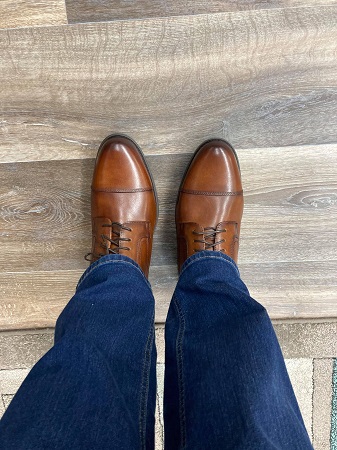
The Shoe Is on the Other Foot--shoes on wrong feetIf we put the right shoe on the right foot, it feels fine. However, if we put it on the left foot, it hurts. We don’t like it when the shoe is on the other foot.
The shoe is on the other foot means circumstances are opposite what they were before.

We change roles.

  • Bosses becomes employees.
  • Teachers becomes students.
  • Bullies get bullied.

With roles reversed, troublemakers receive trouble.

If we held the power, we don’t like it when we become powerless. Like shoes on the wrong feet, the change hurts.

However, if we receive power, it usually feels good. We may be tempted to:

Whatever our role, we don’t want to get off on the wrong foot.

If we hold the power, we never want to act high and mighty. Instead, let’s use our power in a helpful way. If others hold power over us, let’s give a good days work for a good day’s pay. In either role, let’s treat one another with respect.

“Do not set foot on the path of the wicked or walk in the way of evildoers.” (Proverbs 4:14 NIV).

Thanks to Debbie Tapscott for the suggestion and to Laura Mitchell Wilds with Mitchell’s Clothing for the photo.

Do you have an expression you want explained? If so, please comment below.

Subscribe to receive my weekly posts by email and receive a free copy of “Words of Hope for Days that Hurt.”

If you enjoyed this post, please share it with your friends.

It Don’t Make Me No Never Mind

It Don’t Make Me No Never Mind

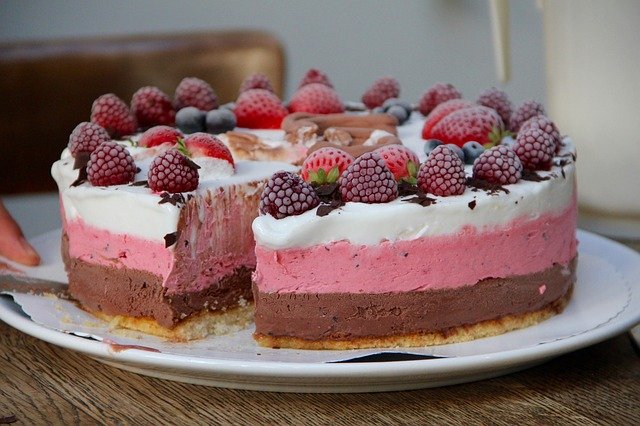
It Don't Make Me No Never Mind-Neapolitan ice cream cake with berries on top “Do you prefer ice cream, cake, or both?” “I’m leaving now. Is that okay?” “Mind if I change the station on TV?”  For all these questions, we might answer, “It don’t make me no never mind.” Of course, we don’t give that answer if we prefer correct grammar.

Other ways to say “It don’t make me no never mind” include:

  • It does not matter to me.
  • I don’t care.
  • It does not bother me.
  • Makes no difference to me.

It don’t make me no never mind means either choice is okay.

We have no strong feelings about a decision. It is six of one and half a dozen of another.

Many choices in life don’t matter.

If they don’t matter, we usually don’t care. Although many probably disagree, the following matter little:

  • House size
  • Car model
  • Clothing style

What difference will those make years from now?

Other choices matter a great deal.

How we choose could mean the difference in life or death. We never want to:

  • Abuse another person
  • Lie, cheat, or steal
  • Neglect someone in need

The results could last for generations. Not everyone will like our actions. However, right choices mean we must occasionally make waves.

May we always choose well when our choices matter most.

“Be careful to do what the Lord your God has commanded you; do not turn aside to the right or to the left” (Deuteronomy 5:32).

I don’t know its origin, but I think of this as a southern expression. Have you heard it used other places?

Thanks to Timothy Lewis for the suggestion. Image by Bernhard Mülhens from Pixabay.

Subscribe to receive my weekly posts by email and receive a free copy of “Words of Hope for Days that Hurt.”

If you enjoyed this post, please share it with your friends.

Bite the Hand That Feeds You

Bite the Hand That Feeds You

Bite the Hand That Feeds You-horse eating out of a handIt makes no sense to bite the hand that feeds you. Some animals who eat out of a person’s hand do. So do many people.

To bite the hand that feeds you means to hurt someone who helps you.

Rather than thank a kind person, you act cruel or rude.

Examples include:

  • Children who mistreat parents who provide for them.
  • Students who make fun of the person who helps them with homework.
  • Employees who gossip about their boss.
  • People who borrow money but never repay it or act ungrateful for it.

Eventually people pay for how they act.

Many receive a taste of their own medicine. Ungrateful children often have children who treat them the same way. They learn from what they see.

Results of biting the hand that feeds you may not be immediate. Usually, however, what goes around comes around.

Why not lend a helping hand?

Instead of hurting others, help them, no strings attached.  Help those who help you, but don’t stop there.

  • Aid others in need.
  • Show kindness to everyone.
  • Learn to love the unlovable. (Remember, we are all unlovable at times.)

“You make me glad by your deeds, Lord; I sing for joy at what your hands have done” (Psalm 92:4 NIV).

Thanks to Brad Leverett for the suggestion and to Jeri Stone for the photo.

Do you have an expression you want explained? If so, please comment below.

Subscribe to receive my weekly posts by email and receive a free copy of “Words of Hope for Days that Hurt.”

If you enjoyed this post, please share it with your friends.

Salt of the Earth

Salt of the Earth

Salt of the Earth-Truck in front of Bonnieville Salt FlatsTo view salt of the earth, take a trip across Utah’s Bonnieville Salt Flats. I thought that solid white scene would last forever.

Such a long stretch of salt flats reminds me of salt’s many uses. Salt helps us:

  • Cook
  • Preserve
  • Clean
  • Remove stains

We also use salt mixtures as a:

  • Mouth rinse for sore throats
  • Spray for stuffy noses
  • Soak for pain relief
  • Beauty scrub

Salt can also cause problems, such as:

  • High blood pressure
  • Road and driveway damage (after using it to melt snow and ice)

Today we will focus on salt’s benefits.

To say people are salt of the earth is a compliment.

We mean they are:

Such people are worth their salt. We respect and trust them. They work hard and treat others well.

This expression comes from the Bible.

Jesus describes His followers as salt and light. Like salt and light, we want to make our world a better place. However, if we fail to fulfill our purpose, we become worthless.

May we always flavor, preserve, protect, beautify, and heal our world, especially in these difficult times.

“You are the salt of the earth. But if the salt loses its saltiness, how can it be made salty again? It is no longer good for anything, except to be thrown out and trampled underfoot” (Matthew 5:13 NIV).

Thanks to Janna Babak for the suggestion.

Do you have an expression you want explained? If so, please comment below.

Subscribe to receive my weekly posts by email and receive a free copy of “Words of Hope for Days that Hurt.”

If you enjoyed this post, please share it with your friends.

Highfalutin

Highfalutin

Highfalutin--four young girls in fancy dresses on steps

Children love to pretend. Many enjoy acting highfalutin. They want to look like someone else – a parent, hero, older sibling, or friend.

They often dress in the other person’s clothes or shoes. Many times, they try to walk or talk like the person. What they see is what they want to be and do.

We smile or laugh at their behavior. However, many never outgrow that desire to be someone they are not.

Highfalutin people pretend to be more important than they are.

They want to appear:

They act proud, trying to impress everyone. However, they usually fall flat.

Acting highfalutin usually makes people look silly.

Years ago, I served as juvenile counselor for a young man on probation. He made several improvements. Then he ran away to a large city. When he returned about two weeks later, everything about him changed. He:

  • Spoke with an artificial accent
  • Walked with a defiant swagger
  • Wore fancy clothes with his hat cocked on the side of his head.

He tried so hard to rid himself of his country background. Instead, he made everyone laugh.

All people have worth without having to pretend.

God created each one:

  • Not better than anyone else
  • Not worse than anyone else
  • Not to be anyone else
  • To be the best unique person possible

A simple down-to-earth life far outweighs a highfalutin one.

“The eyes of the arrogant will be humbled and human pride brought low; the Lord alone will be exalted in that day” (Isaiah 2:11 NIV).

Thanks to Harriet Michael for the suggestion and to Jennifer Van Mersbergen for the photo.

Do you have an expression you want explained? If so, please comment below.

Subscribe to receive my weekly posts by email and receive a free copy of “Words of Hope for Days that Hurt.”

If you enjoyed this post, please share it with your friends.

Cat Got Your Tongue?

Cat Got Your Tongue?

Cat Got Your Tongue--cat with tongue out and paw up“What’s wrong? Cat got your tongue?” I have heard several older relatives ask this, especially to children. Sometimes the children were shy. Other times, little ones feared a truthful answer would get them in trouble.

Rarely have I heard the full question, “Has the cat got your tongue?”

Many people wonder what cats have to do with people not talking. Although a few ideas exist for this expression’s origin, none can be proved.

People usually ask, “Cat got your tongue?” if they think people should be talking.

They may ask the question for fun. Other times, they ask with anger or impatience.

Sometimes we should stay quiet.

We never want to put our foot in our mouth. Better to bite our tongue than speak hurtful or foolish words.

Other times, we should speak.

Whether easy or hard to say, we need to speak up if we know our words will:

  • Improve a situation
  • Help other people
  • Spread love rather than hate

Whatever we say, may we always speak from loving hearts of gold.

“Keep your tongue from evil and your lips from telling lies.” (Psalm 34:13 NIV).

Thanks to Ann Maniscalco for the suggestion and to Jacqueline Graves for the photo.

Do you have an expression you want explained? If so, please comment below.

Subscribe to receive my weekly posts by email and receive a free copy of “Words of Hope for Days that Hurt.”

If you enjoyed this post, please share it with your friends.

Ups and Downs

Ups and Downs

Ups and Downs--Grand Tetons behind the Snake RiverWe all have our ups and downs.

  • Good and bad times
  • Positive and negative relationships
  • Happy and sad days
  • Successes and failures

That’s life.

Like a hike up a mountain, our journey through life often feels like an uphill battle. However, once we reach the top, the view takes our breath away.

When we look down, we see how far we have come. A look around reveals the possibilities on every side of us. If we look up, we realize we have hope for future mountains.

We choose whether to focus on the good or the bad.

The choices we make determine how we feel.

When hard times hit, we can dwell on the negatives. Or, on the other side of the coin, we can focus on the positives and hope for the future.

Ups and downs occur in every area of life, including:

  • Marriage
  • Work
  • School
  • Parenting
  • Social activities
  • Health

All our experiences offer opportunities to grow.

Through each one, let’s keep on keeping on. Remember, like a mountain climb, our hardest times often teach the greatest lessons.

“He makes my feet like the feet of a deer; he causes me to stand on the heights” (2 Samuel 22:34 NIV).

Thanks to Laura Lee Leathers for the suggestion.

Do you have an expression you want explained? If so, please comment below.

Subscribe to receive my weekly posts by email and receive a free copy of “Words of Hope for Days that Hurt.”

If you enjoyed this post, please share it with your friends.

Holier than Thou

Holier than Thou

Holier than Thou--church steeple framed by treesEveryone makes mistakes. Those who act holier than thou rarely admit them.

People with a holier-than-thou attitude look down on others.

Because they view themselves as better than everyone else, they show:

  • Pride – “Look how great I am.”
  • Disrespect – “What you think or feel matters little.”
  • Rudeness – “Get out of my way.”
  • Contempt – “You disgust me.”

Holier-than-thou people are self-righteous.

Truly righteous people love and care for others. Self-righteous people show a hateful, non-caring attitude. Like wolves in sheep’s clothing, they are not what they pretend to be.

The Bible says to be holy. It does not say to be holier than thou.

This expression comes from Isaiah 65:5 (KJV).  Isaiah listed behaviors that displease God. His list included the pride and hypocrisy of those who say, “Stand by thyself, come not near to me; for I am holier than thou.”

Rather than focus on themselves, genuinely holy people focus on God and others. They are the real McCoy. Like  a church steeple, they stand tall and point toward God.

“Just as he who called you is holy, so be holy in all you do; for it is written: “Be holy, because I am holy” (1 Peter 1:15-16 NIV).

Thanks to Judy Corbin for the suggestion.

Do you have an expression you want explained? If so, please comment below.

Subscribe to receive my weekly posts by email and receive a free copy of “Words of Hope for Days that Hurt.”

If you enjoyed this post, please share it with your friends.