Browsed by
Category: Self-Improvement

Hang Out to Dry

Hang Out to Dry

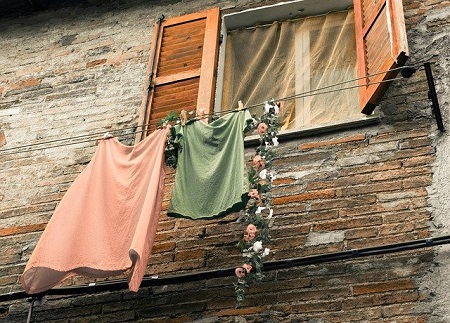
Hang Out to Dry--clothes on a clothesline outside a windowAfter Mom washed our clothes and put them through the wringer, she took them to the clothesline to hang out to dry. Most days the clothes dried in sunshine and gentle breezes. However, they occasionally received the worst of weather:

  • Storms
  • Freezing rain
  • Winds so strong clothes blew off the line

Whether good or bad weather, those clothes had no control over the winds that blew.

When we hang others out to dry, we desert them to face danger alone.

Like clothes in the wind, they have:

  • No control over the situation.
  • Little or no support

At times, we want to hurt or punish them. Other times, we simply want to avoid our own trouble.

I don’t know anyone who wants to hang out to dry.

Life is hard enough without others leaving us alone in a bad situation.

Neither should we hang anyone else out to dry.

When anyone deserts us or we desert someone else, remember the situation will eventually come out in the wash.

The Golden Rule tells us, “In everything, do to others what you would have them do to you” (Matthew 7:12 NIV).

Thanks to Karen Hart for the suggestion. Image by Philipp Ruch from Pixabay.

Do you have an expression you want explained? If so, please comment below.

Subscribe to receive my weekly posts by email and receive a free copy of “Words of Hope for Days that Hurt.”

If you enjoyed this post, please share it with your friends.

Beat around the Bush

Beat around the Bush

Beat around the Bush--a bush behind bare tree limbsA preschool relative visited our family years ago. She used my mother’s perfume without permission. When Mom asked what she had done, Kim beat around the bush. Over and over she responded, “I’m just tired.”
When we don’t want to say something, we may beat around the bush.

Ways we do that include:

  • Avoid a discussion or a question, as Kim did
  • Waste time talking about something else
  • Delay the discussion or our response
  • Answer cautiously, giving little information
  • Offer misleading information

To beat around the bush referred originally to bird hunts.

The Phrase Finder explains, “In bird hunts some of the participants roused the birds by beating the bushes.” Therefore, beating around or “‘beating about the bush’ was the preamble to the main event, which was the capturing of the birds.” According to The Free Dictionary, “Not to go directly to such foliage but to work around it instead gave the impression of wasting time or not trying very hard to raise the birds.”

Beating around the bush may cause a tangled web of trouble.

 If we fail to speak honestly and clearly, we risk harming ourselves or others. Minor issues may not matter. However, important issues demand our best response.

May our words, as well as our actions, always follow the straight and narrow.

Let your conversation be always full of grace, seasoned with salt, so that you may know how to answer everyone (Colossians 4:6 NIV).

Thanks to Brad Leverett for the suggestion.

Do you have an expression you want explained? If so, please comment below.

Subscribe to receive my weekly posts by email and receive a free copy of “Words of Hope for Days that Hurt.”

If you enjoyed this post, please share it with your friends.

In One Ear and Out the Other

In One Ear and Out the Other

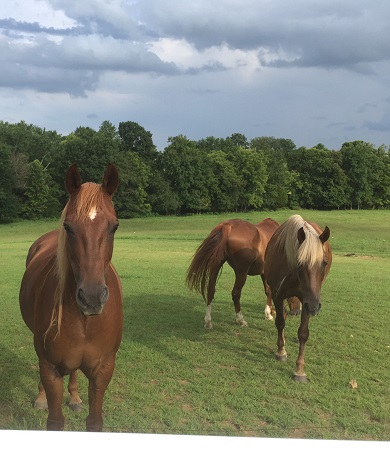
In One Ear and Out the Other--three horses, only one looking and listeningMany people wonder if anyone hears what they say. Their words seem to go in one ear and out the other.
  • Children ignore or forget what parents say.
  • Students fail to remember or do what teachers say.
  • Husbands or wives declare they did not hear their spouse’s words.
  • Pets pay no attention.

Those to whom they speak:

  • Hear noise
  • May hear words
  • Fail to hear the message

In one ear and out the other means people do not hear or quickly forget what another person says.

It often implies they do not listen or pay attention.

Occasionally it refers to selective hearing — hearing what they want to hear and ignoring the rest. Other times, people pay no attention to anyone whose beliefs differ from theirs.

Too many distractions cause many messages to go in one ear and out the other.

Distractions result from:

  • Multi-tasking — trying to do too much at the same time
  • Focusing on phones, television, books, or other interests rather than the person talking

People usually hear and remember if they stay all ears.

They focus totally on the person talking. They listen with their eyes  as well as their ears. That kind of attention shows respect for the speaker and the speaker’s message — a good plan for anyone.

“Ears that hear and eyes that see—the Lord has made them both” (Proverbs 20:12 NIV).

Thanks to Emily Akin for the suggestion and to Mary Lou Rafferty for the photo.

Do you have an expression you want explained? If so, please comment below.

Subscribe to receive my weekly posts by email and receive a free copy of “Words of Hope for Days that Hurt.”

If you enjoyed this post, please share it with your friends.

If It Ain’t Broke, Don’t Fix It

If It Ain’t Broke, Don’t Fix It

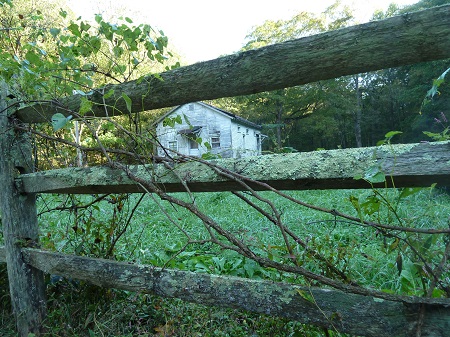
If It Ain't Broke, Don't Fix It-old house and overgrown rail fenceHave you noticed how often we change our lives? We try to improve ourselves, other people, or our possessions. A desire to improve can be a wonderful idea. However, if it ain’t broke, don’t fix it. (I apologize for the poor grammar, but that is the way we say it.)
If it ain’t broke, don’t fix it tells us to leave things alone if they work well.

A word to the wise: Why cause problems if we have no need to change?

Small children who take things apart often fail to put them back together. The same happens with adults. (Ask me about my one and only effort at plumbing.) When we try to fix something not broken, we may never get it to work again.

We often try to fix our lives with the newest, best, and most expensive of everything.

  • Cellphones
  • Laptops
  • Televisions
  • Cars
  • Houses
  • Clothes
  • Shoes
  • Appliances

And the list keeps growing.

We give away, sell, or throw away perfectly good items to buy similar items to take their place.

As a result:

  • We stay in debt.
  • Landfills grow larger with all our trash.
  • We never find satisfaction with who we are or what we have.

Fix what needs to be fixed, but don’t try to correct a problem that does not exist.

We do well when we learn to live well whatever our circumstances. Certainly, we want to:

  • Take care of our health
  • Improve our lives and the lives of others
  • Make our world safer
  • Stand firm for what is right

Yet, we don’t want to:

  • Tear down progress already made
  • Hurt others
  • Destroy our world
  • Compromise what is morally right

When we try to fix what ain’t broken, we get everything out of whack. Instead let’s live in such a way that we and those around us have reason to burst for joy.

“Correct and rebuke your people when they need it, encourage them to do right, and all the time be feeding them patiently with God’s Word” (2 Timothy 4:2 TLB).

Thanks to Charles Smithers for the suggestion.

Do you have an expression you want explained? If so, please comment below.

Subscribe to receive my weekly posts by email and receive a free copy of “Words of Hope for Days that Hurt.”

If you enjoyed this post, please share it with your friends.

Through the Wringer

Through the Wringer

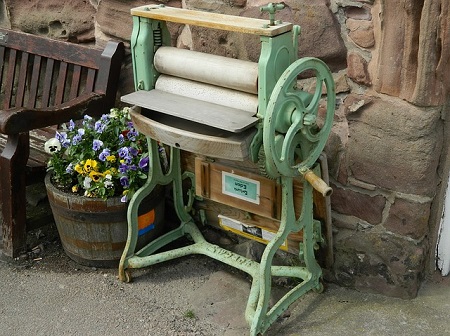
Through the Wringer--old fashioned wringerAfter I told a friend of recent family health problems, she said, “Oh, my goodness, Diana. You have sure been through the wringer.” Life has certainly felt that way.

This summer:

  • My husband spent three weeks in two hospitals.
  • I had an emergency appendectomy three days after he came home.
  • My husband had out-patient surgery a month later.

We have spent most of the past three months with health care providers.

However, people we know (and don’t know) have suffered much worse. They have been through the wringer in ways we cannot imagine.

Through the wringer (or through the ringer) means a difficult or unpleasant experience.

Years ago, my mother used a wringer washer. Water did not spin out of the washer. It was squeezed out. We did not want delicate clothes to go through the wringer. It could ruin them.  Neither did we want our fingers in the wringer. That damage could be far more difficult.

Difficult experiences may result from bad treatment from others.

People may:

  • Gossip about us
  • Scold us
  • Punish us

Difficult experiences may also result from life circumstances.

Our situation this summer fits that description.

We all suffer hard times. That’s life. Yet, we know these experiences will not last forever. Rather than wring our hands in worry, we recall past good times or look forward to better days. We expect everything to come out in the wash.

We can also look to the God of all creation who promises believers:

  • Peace in the midst of storms
  • Eternal life in heaven with no more pain or problems

With God’s love and care, we keep on keeping on.

“When I am in distress, I call to you, because you answer me” (Psalm 86:7 NIV).

Thanks to Tracy Crump for the suggestion. Photo courtesy of dagrimshaw from Pixabay.

Do you have an expression you want explained? If so, please comment below.

Subscribe to receive my weekly posts by email and receive a free copy of “Words of Hope for Days that Hurt.”

If you enjoyed this post, please share it with your friends.

In a Jiffy

In a Jiffy

In a Jiffy-Busy Vancouver, Gas Town street“Stay right there. I’ll be back in a jiffy.” I wonder how many parents have said that to a child. Or how many spouses have said that to one another. They don’t want the person to move. They will return quickly
In a jiffy means in a short amount of time.

 Closely related to immediately, if not sooner, in a jiffy can refer to:

  • The speed of a person’s work (“I will finish this in a jiffy.”)
  • How long a person will be gone (“I will return in a jiffy.”)
  • The promise of good service (“Your waiter will be with you in a jiffy.)
  • No delay of any kind

In today’s world of instant gratification, people expect almost everything in a jiffy.

No one wants to wait. Patience remains in short supply.

However, much in life is better with time.

  • Fresh fruit and vegetables need time to ripen.
  • People need time to learn.
  • Research requires time for accuracy.

In these and other instances, haste makes waste.

Speed is often necessary. However, rather than rush, people usually do well to take one step at a time.

“If we hope for what we do not yet have, we wait for it patiently” (Romans 8:25 NIV).

Thanks to Liz Gray for the suggestion.

Do you have an expression you want explained? If so, please comment below.

Subscribe to receive my weekly posts by email and receive a free copy of “Words of Hope for Days that Hurt.”

If you enjoyed this post, please share it with your friends.

A Hill of Beans

A Hill of Beans

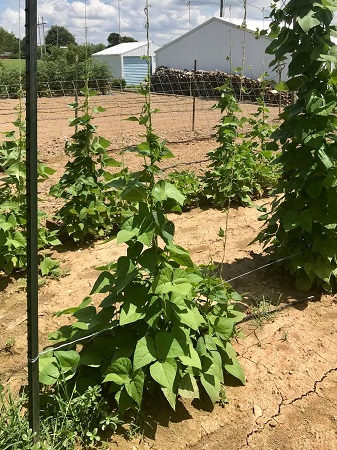
A Hill of Beans-stick beans in a gardenMy grandmother often said, “That doesn’t amount to a hill of beans.” In other words, it is not worth much.

A hill of beans means something has little value.

It is not important – a dime a dozen.

Beans are fairly common and grow easily. If we don’t grow them, we can find them on most grocery shelves. They cost little. Therefore, a hill of beans is worth little. If we don’t like beans, they are worth nothing.

Several items are not worth a hill of beans:

  • Outdated coupons
  • Broken tools
  • Electronics no one uses

Most things don’t amount to a hill of beans. All people do.

As long as we have what we need to survive, possessions matter little. Plus, we can’t take them with us.

Rather than focus on the things we own, let’s aim to treat others well.

  • Show the respect we desire.
  • Love others as God loves.
  • Encourage everyone to be their best.

“Be devoted to one another in love. Honor one another above yourselves” (Romans 12:10 NIV).

Thanks to Darrin Jenkins for the suggestion and to Jewell Wade for the photo.

Do you have an expression you want explained? If so, please comment below.

Subscribe to receive my weekly posts by email and receive a free copy of “Words of Hope for Days that Hurt.”

If you enjoyed this post, please share it with your friends.

Let Sleeping Dogs Lie

Let Sleeping Dogs Lie

Let Sleeping Dogs Lie--dog curled up in sleepLike several animals (and a few people) dogs can be dangerous when suddenly wakened. Therefore, we usually let sleeping dogs lie. We leave them alone to sleep in peace.

In daily life, we often choose to let sleeping dogs lie.

Instead of causing trouble, we avoid it. We don’t want to make a bad situation worse. If all is well and no one will benefit, why hurt anyone? We leave good enough alone.

Many words or actions only cause problems. Therefore,

Most situations are none of our business. Gossip and interference make us busybodies and do no one any good

However, at times we need to speak or act.

We must take a stand when necessary to:

  • Make a bad situation better
  • Help someone who hurts

Stay out of the doghouse. Unless actions will help, let sleeping dogs lie.

“It is to one’s honor to avoid strife, but every fool is quick to quarrel” (Proverbs 20:3 NIV).

Thanks to Brad Leverett for the suggestion. Photo courtesy of Pixabay.

Do you have an expression you want explained? If so, please comment below.

Subscribe to receive my weekly posts by email and receive a free copy of “Words of Hope for Days that Hurt.”

If you enjoyed this post, please share it with your friends.

Cold Feet

Cold Feet

Cold Feet: Six uncovered feet at the foot of a bedMany of us live with cold feet. We don’t need winter, snow, or freezing rain. Our feet stay cold any time of year in any kind of weather.

However, cold feet means more than the temperature of our toes.

Cold feet freeze our plans or desires.

Cold feet refers to fear of doing something.

We lose our nerve. We get:

  • Discouraged
  • Shy
  • Anxious

Enthusiasm disappears. Cowardice replaces confidence. We wring our hands, afraid to do what we want to do.

A little fear can be a good thing.

It helps us:

  • Focus
  • Try harder
  • Avoid mistakes

Yet, cold feet paralyze us. They stop us in our tracks.

Faith overcomes fear.

Like socks or blankets warm our feet, faith covers us with courage.

We find support for our faith in:

  • The Bible and prayer for God’s strength (a perfect plan for every day)
  • Practice of what scares us (get our feet wet)
  • Encouragement from others (give it as well as receive it)

We choose. Will we freeze in fear or step forward in faith wherever God leads?

“The Lord himself goes before you and will be with you; he will never leave you nor forsake you. Do not be afraid; do not be discouraged” (Deuteronomy 31:8 NIV).

Thanks to Margaret Bertram for the suggestion. Photo courtesy of Unsplash.

Do you have an expression you want explained? If so, please comment below.

Subscribe to receive my weekly posts by email and receive a free copy of “Words of Hope for Days that Hurt.”

If you enjoyed this post, please share it with your friends.

Up One Side and Down the Other

Up One Side and Down the Other

Up One Side and Down the Other--Theodore Roosevelt National ParkMany of us enjoy exploring our world up one side and down the other. We want to go everywhere and see everything. We stay ready to hit the trail, whether we go off the beaten path or somewhere well known.

Up one side and down the other means we do something thoroughly.

We go to extremes, such as when we:

  • Travel to as many places as possible.
  • Fuss without mercy when someone upsets us.
  • Look everywhere for items we lose.

We want to be thorough, but we don’t want to waste time.

A few activities are worth extra effort. Others keep us from more important matters.

  • Enjoy travel, but don’t neglect home.
  • Confront problems but deal with them and move on.
  • Keep items where they need to go, so searching up one side and down the other remains unnecessary.

“Praise the Lord, all his works everywhere in his dominion” (Psalm 103:22 NIV).

Thanks to Glenda Britton for the suggestion.

Do you have an expression you want explained? If so, please comment below.

Subscribe to receive my weekly posts by email and receive a free copy of “Words of Hope for Days that Hurt.”

If you enjoyed this post, please share it with your friends.