Browsed by
Category: Wisdom

The Hand That Rocks the Cradle

The Hand That Rocks the Cradle

The Hand That Rocks the Cradle--vintage doll in cradleIn 1865, William Ross Wallace wrote a poem, “What Rules the World.” According to The Free Dictionary, it later became known as “The Hand that Rules the World.” The poem’s refrain, “The hand that rocks the cradle is the hand that rules the world” has become an often-repeated proverb.

The hand that rocks the cradle refers to the influence mothers have on children.

Mothers guide their children’s overall growth.

  • Social
  • Emotional
  • Physical
  • Mental
  • Spiritual

Think about the power in that position.

The hand that rocks the cradle applies to more than biological mothers.

Some of the most influential include:

  • Foster mothers
  • Adoptive mothers
  • Mothers-in-law
  • Stepmothers
  • Grandmothers
  • Other relatives
  • Friends
  • Neighbors
  • Teachers
  • Anyone who assumes a mother’s role, formal or informal

This Mother’s Day, thank the mothers in your life.

I am so grateful for the positive influence of my mother plus several others in informal mother roles. Many now live in heaven, but their impact remains.

“Her children arise and call her blessed” (Proverbs 31:28 NIV).

What mothers would you add to the list I made. Please comment.

Thanks to Debbie Tapscott for the suggestion and to Virginia Graves for the photo taken at Taylor County Museum – The Heistand House in Campbellsville, KY.

Subscribe to receive my weekly posts by email and receive a free copy of “Words of Hope for Days that Hurt.”

If you enjoyed this post, please share it with your friends.
Spin a Yarn

Spin a Yarn

Spin a Yarn--sailor knotWhen our extended family gets together, a few relatives always spin a yarn. They keep us entertained with their tall tales. Some stories are true or based on truth. Others stretch beyond belief. Most are a hoot.

To spin a yarn means to tell a story.

Often that story is:

  • Long
  • Made-up
  • Full of twists and turns

Sometimes we spin a yarn to stay out of trouble.

We know we did something wrong. To avoid the consequences, we lie or tell a partial truth. However, two wrongs don’t make a right. Not when other people hurt us. Not when we mess up.

This idiom originated with ropes made of long fibers called yarns.

According to The Free Dictionary, “Sailors used to spin yarns … to make ropes. They were also famous for telling unlikely stories of their adventures.”  The nautical term dates from around 1800. We now enjoy the double meaning of “spun fiber” and “a tale.”

Everyone has a story.

From our experiences, we can share lessons of:

  • Hope
  • Joy
  • Peace
  • Love

The Bible holds the greatest story ever told.

  • Life changing
  • All truth
  • Available to everyone

“Give thanks to the Lord, for he is good; his love endures forever. Let the redeemed of the Lord tell their story.” (Psalm 107:1-2 NIV).

Thanks to Beckham Wilson for the suggestion. Image courtesy of Pixabay.

Do you have an expression you want explained or thoughts about this one? If so, please comment below.

Subscribe to receive my weekly posts by email and receive a free copy of “Words of Hope for Days that Hurt.”

If you enjoyed this post, please share it with your friends.

Kick the Tires

Kick the Tires

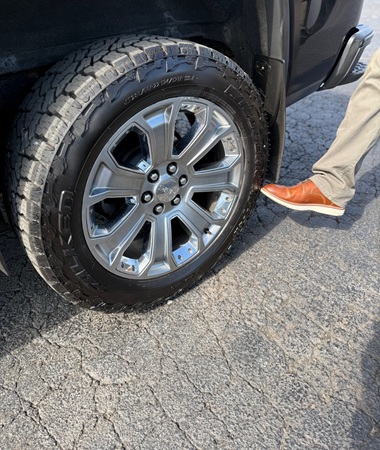
Kick the Tires--foot kicking a tireBefore we buy a car, we want to kick the tires. We check the car inside and out from one end to the other. We drive it and try all its gadgets to be sure they work.

To kick the tires means to test the quality of something.

With any purchase, that includes time to:

  • Inspect
  • Research
  • Analyze

We desire the best product for our money.

We also kick the tires to see if a product meets our personal needs.

What works for one person may not work for another. I prefer small cars close to the ground. A tall person usually searches for a large vehicle with more leg room.

Kicking the tires pertains to more than purchases.

  • Employers desire dependable employees.
  • Employees seek the best bosses.
  • Individuals search for lasting relationships.

We want the people in our lives to meet our standards.

If we fail to kick the tires, we may end up kicking ourselves.

A word to the wise: Let’s test before we commit.

Above all else, test for truth.

In every decision, large or small, seek God’s guidance. Especially for spiritual matters:

  • Study the Bible.
  • Pray.
  • Discuss with trustworthy friends.

“Dear friends, do not believe every spirit, but test the spirits to see whether they are from God, because many false prophets have gone out into the world” (1 John 4:1 NIV).

Thanks to Jennifer Annette Graham for the suggestion and to Stan Curry with AutoSmart of Campbellsville for the photo.

Do you have an expression you want explained or thoughts about this one? If so, please comment below.

Subscribe to receive my weekly posts by email and receive a free copy of “Words of Hope for Days that Hurt.”

If you enjoyed this post, please share it with your friends.
Hop, Skip, and a Jump

Hop, Skip, and a Jump

Hop, Skip, and a Jump--two tall rock formations close togetherOnly a hop, skip, and a jump separate these two rock formations. However, I don’t want to try that jump, do you?

A hop, skip, and a jump means a short distance.

To get from one place to another takes little time. As a child, I lived close to my Uncle Lowell. Perhaps, like me, you have often walked to nearby favorite places.

A hop, skip, and a jump also means similar.

This includes closely related:

  • Ideas
  • Work
  • Activities
  • Words
  • Interests

According to The Free Dictionary, this idiom dates to the early 1700s.

It “originally referred to an exercise or game involving these movements.” However, it was used figuratively by the mid-1800s.

Similar expressions rearrange or eliminate part of the words.

Compared to eternity, this life is only a hop, skip, and a jump from start to finish.

Let’s use our time wisely until we reach the end of the road.

“My only aim is to finish the race and complete the task the Lord Jesus has given me—the task of testifying to the good news of God’s grace” (Acts 20:24 NIV).

Thanks to Kristy Robinson Horine for the suggestion.

Do you have an expression you want explained or thoughts on this one? If so, please comment below.

Subscribe to receive my weekly posts by email and receive a free copy of “Words of Hope for Days that Hurt.”

If you enjoyed this post, please share it with your friends.
Keep Your Head

Keep Your Head

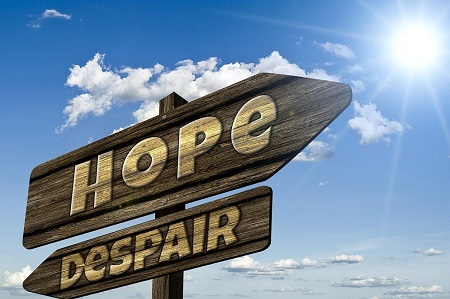
Keep Your Head--Hope and Despair arrow signs pointing opposite directionsWhen life goes out of control, it’s hard to keep your head. Uncertainty leads to panic rather than patience.

Keep your head means to remain calm.

Although everything around you falls apart at the seams, you don’t. Instead, you find calm in the middle of the storms.

Keep your head does not mean you never feel stressed.

With so much turmoil in the world today, stress affects everyone. Daily news bombards us with updates on:

  • Wars
  • Price increases
  • Abuse
  • Disasters
  • Crime

Everything goes haywire. Yet you find personal control in the worst of it.

Rather than give in to problems, get a grip on solutions.

As a former teacher often said, “Think. Just think.” Apply the good sense God gave you.

Choose:

  • Faith over fear
  • Hope over despair
  • Peace over pressure
  • Calm in chaos

“But you, keep your head in all situations” (2 Timothy 4:5 NIV).

Thanks to Joanne Viola for the suggestion. Image by Gerd Altmann from Pixabay.

Do you have an expression you want explained or a thought about this one? If so, please comment below.

Subscribe to receive my weekly posts by email and receive a free copy of “Words of Hope for Days that Hurt.”

If you enjoyed this post, please share it with your friends.

Feet of Clay

Feet of Clay

Feet of Clay--two clay feetHow often do we admire people and think they can do no wrong? Yet, we eventually learn they have feet of clay.

Feet of clay means a failure or weakness.

We have faults. Our heroes have faults. No matter how hard we try to be perfect, everyone falls short of perfection.

This idiom originated in the Bible.

Daniel 2 tells the story of King Nebuchadnezzar and a dream he could not understand. God revealed the dream and its meaning to Daniel, one of the king’s captives. In the dream, a statue had:

  • A head of gold
  • A body of silver, bronze, and iron
  • Feet of iron and clay

A large rock hit the feet, and the statue crumbled.

Daniel told the king his dream meant the Babylonian kingdom would fall. However, God’s kingdom would last forever.

Because we have feet of clay, we find hope only in our Creator.

If we rely on ourselves, we fall flat. However, God’s strength and guidance enable us to stand firm. Like Daniel, may we faithfully follow the one and only true God.

“Praise be to the name of God for ever and ever; wisdom and power are his” (Daniel 2:20 NIV).

Thanks to Meghan Bowker, editor of Missions Mosaic magazine, for the idea. Photo by Matt Seymour on Unsplash.

Do you have an expression you want explained or a thought about this one? If so, please comment below.

Subscribe to receive my weekly posts by email and receive a free copy of “Words of Hope for Days that Hurt.”

If you enjoyed this post, please share it with your friends.

Saddle Up

Saddle Up

Saddle Up--rider mounting a saddled horseBefore we ride a horse, we usually saddle up. We put the saddle on the horse. Sometimes for competition. Other times for a leisurely ride.

A few people ride bareback, but most of us prefer the comfort and control a saddle gives.

Saddle up means to get ready.

Before we begin any activity, we plan what we need to do and the best way to do it. Then we are good to go.

Even with the best of plans, we all make mistakes. However, when that happens, we get back on the horse and keep going.

Failure to saddle up hurts everyone.

Proper planning results in greater opportunities for success. Lack of preparation leads to disappointment and defeat.

Prepare for life’s greatest ride.

If we join a trail ride, a leader often calls out, “Saddle up. Let’s ride.” Everyone gets ready. No one wants to be left behind.

God extends opportunities for this life plus life in heaven. Let’s get ready for both.

Saddle up. Let’s ride!

“Abraham … saddled his donkey… and went to the place of which God had told him” (Genesis 22:3 ESV).

Thanks to Sharon Berry for the suggestion and to Chelsey Stone for the photo.

Do you have an expression you want explained or a thought about this one? If so, please comment below.

Subscribe to receive my weekly posts by email and receive a free copy of “Words of Hope for Days that Hurt.”

If you enjoyed this post, please share it with your friends.
Fruit of Your Labor

Fruit of Your Labor

Fruit of Your Labor--flower and vegetable garden with orchard in backgroundMy dad’s garden and orchard fed our family plus dozens of others. He spent years growing food and flowers as a labor of love. Dad also understood what it means to enjoy the fruit of your labor.

The fruit of your labor means the reward for your work.

Your efforts pay off. Because you refuse to give up, you bear fruit.

Long hours and hard work make you appreciate the fruit of your labor.

  • Farmers harvest their crops.
  • Gardeners enjoy vegetables, fruit, and flowers.
  • Students celebrate graduation.
  • Business owners enjoy profits.

You benefit from your investment of:

  • Time
  • Money
  • Muscle (mental or physical)

The harder the work the more enjoyable the fruit of your labor.

Life may give you long rows to hoe. However, you usually reap what you sow. Greater efforts result in greater rewards.

Make relationships your most important investment.

According to the Bible, the greatest commandments are to love God and love one another. The best fruit does not result from a focus on self. Rather, it grows from love and service.

“Blessed are all who fear the Lord, who walk in obedience to him. You will eat the fruit of your labor; blessings and prosperity will be yours” (Psalm 128:1-2 NIV).

Thanks to Beckham Wilson for the suggestion.

Do you have an expression you want explained or a thought about this one? If so, please comment below.

Subscribe to receive my weekly posts by email and receive a free copy of “Words of Hope for Days that Hurt.”

If you enjoyed this post, please share it with your friends.

Tipping Point

Tipping Point

Tipping Point--turtle climbing over the edge of water dishThis turtle has reached a tipping point. Small movements will pop him out of the water pan and onto the ground.

Tipping point means a critical moment when small actions cause great change.

That change may be in:

  • Ideas
  • Behavior
  • Words

It may affect one person or thing, or it may affect many.

Tipping points occur in all areas of life.

  • Businesses
  • Governments
  • Homes
  • Churches

The change may be gradual at first.

This turtle inched his way to the edge of the pan. Little happened when he started. However, he has now reached a decisive moment. What happens next is up in the air. Will he continue forward or go back?

Some tipping points result from the choices of others.

They may or may not seek input from those they affect.

 Other tipping points result from personal choices.

Everyone has influence, whether small or great. Everyone also lives with the results of their choices.

Stay on the right track. Choose well the direction your life will take.

“Choose for yourselves this day whom you will serve … But as for me and my household, we will serve the Lord” (Joshua 24:15 NIV).

Thanks to Tracy Crump for the suggestion and the photo.

Do you have an expression you want explained or a thought about this one? If so, please comment below.

Subscribe to receive my weekly posts by email and receive a free copy of “Words of Hope for Days that Hurt.”

If you enjoyed this post, please share it with your friends.