Browsed by
Tag: idioms

Saved by the Bell

Saved by the Bell

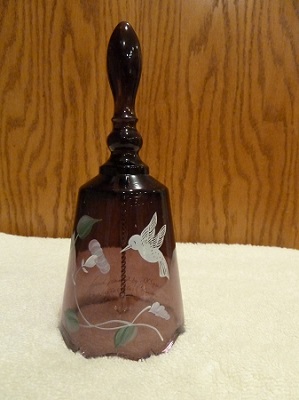
Saved by the Bell--a small glass bell with a humingbird and flowerSaved by the bell means we escape a difficult situation at the last moment.

A bell rings to end each round in a boxing match. If a boxer is knocked down, he may be counted out. However, if the bell rings first, he can continue the match.

Few of us have been boxers. However, many of us have been saved by the bell.

We escape trouble by the skin of our teeth.

Saved by the bell sometimes applies to embarrassing situations.

  • We fail to write a paper for class. The class ends before the teacher asks for it.
  • We have food on our face. A friend tells us before we meet our new boss.
  • We almost fall in front of a crowd. Someone catches us before we hit the floor.

Saved by the bell also applies to serious situations.

  • We get trapped in a burning car. A policeman pulls us from the car before it explodes.
  • We cannot pay a past-due bill. Unexpected money comes in the mail.
  • We will soon be homeless. Friends ask us to stay with them.

Years ago, a few people put bells on coffins. They thought anyone accidentally buried alive could ring the bell. However, according to The Phrase Finder, saved by the bell relates to boxing, not coffins.

Bear Our Cross: a cross with crown of thornsOur greatest salvation comes through Jesus’ death on a cross.

Jesus died for our wrongs. After three days, He rose from the grave. If we accept Jesus’ gift of salvation, we receive eternal life and a home in heaven. We don’t have to wait to be saved by the bell at the last moment. Jesus offers salvation now.

“He died for our sins and rose again to make us right with God” (Romans 4:25 TLB).

Thanks to Carol York Patterson Brangers for the suggestion.

Do you have an expression you want explained or a thought about this one? If so, please comment below.

Subscribe to receive my weekly posts by email and receive a free copy of “Words of Hope for Days that Hurt.”

If you enjoyed this post, please share it with your friends.

Kit and Caboodle

Kit and Caboodle

Kit and Caboodle--Yellowstone park with bisonIf I want all of something, I want the whole kit and caboodle. For example, I would love to visit all the national parks. So far, Yellowstone remains my favorite.

The whole kit and caboodle means an entire collection.

  • All the parts
  • Everything

According to The Phrase Finder:

  • A kit is a “set of objects, as in a toolkit, or what a soldier would put in his kit-bag.” (A kit-bag is a knapsack.)
  • A caboodle (or boodle) “is an archaic term meaning group or collection, usually of people.”

We rarely hear kit or caboodle used alone. However, we still hear them used together, either as:

  • Kit and caboodle, or
  • The whole kit and caboodle

The whole kit and caboodle can be a good or fun description.

For example:

  • Family reunions with all the relatives
  • A collection of books from a favorite author
  • Choir rehearsal when everyone shows up

The whole kit and caboodle can also describe something not good or fun.

For example:

  • All the side effects of cancer treatments
  • The loss of everything in a fire
  • A car accident that kills an entire family

I appreciate all you readers, the whole kit and caboodle.

You warm the cockles of my heart. Thank you for your:

  • Comments and messages (You can comment below.)
  • Suggestions for blog posts
  • Shares on social media

Above all, thank you for your prayers for God’s guidance.

“I thank my God through Jesus Christ for all of you” (Romans 1:8).

Thanks to Carole Fite and Brad Leverett for the suggestion.

Do you have an expression you want explained? If so, please comment below.

Subscribe to receive my weekly posts by email and receive a free copy of “Words of Hope for Days that Hurt.”

If you enjoyed this post, please share it with your friends.

Come Out in the Wash

Come Out in the Wash

Come Out in the Wash-blouse hanging on a porch with tree in the background“Don’t worry about it. It will come out in the wash.” Those words have probably helped many of us deal with problems or disappointments.

To come out in the wash tells us everything will be okay.

We hate to get stains on our clothing. However, most stains wash out. In the same way, we hate to have problems in life. Yet, most problems work out.

We try to cover up when we do wrong. That also comes out in the wash. We cannot hide bad behavior forever.

With time:

  • Wrongs will be made right.
  • Truth will expose lies.
  • Hard times will pass.
  • Good will win over evil.

Some troubles come out in the wash faster than others.

Not all stains come out quickly. We have to wash our clothes several times to get rid of them. Likewise, not all troubles disappear as soon as we like.

We often worry when all we need to do is wait.

When we wring our hands in worry, we make ourselves feel worse. Most problems cause little harm. If harm comes, it usually does not last long. However, if we do suffer a long time, we can look for lessons from our experiences.

Life gets dirty, but God offers to wash us clean.

If we accept Jesus as personal Savior, life’s troubles will one day end. The best is yet to come. Jesus paid the price for our wrongs and invites us to come clean. He will give us a fresh start.

“Wash me, and I will be whiter than snow” (Psalm 51:7 NIV).

Thanks to Linda Dean-Peavey for the suggestion and to Jeri Stone for the photo.

Do you have an expression you want explained? If so, please comment below.

Subscribe to receive my weekly posts by email and receive a free copy of “Words of Hope for Days that Hurt.”

If you enjoyed this post, please share it with your friends.

Another Think Coming

Another Think Coming

Another Think Coming--little girl lectures stuffed sheep“If that is what you think, you have another think coming!” Sadie’s poor sheep are in trouble.

Many of us have heard similar warnings as children and as adults. We were told, in no uncertain terms, our thinking was wrong. Such poor thinking often put us in hot water.

If we have another think coming, our thoughts are mistaken.

We may honestly believe wrong information. However, we may also try to twist the truth to get what we want.

Wrong thinking includes:

  • Believing most people enjoy an easier life than ours. Yet, everyone has problems.
  • Trying to lie or cheat in order to succeed. Yet, we hurt ourselves and others in the process.
  • Thinking we are better or worse than other people. Yet, every person is created in God’s image and worthy of respect.

We all make mistakes. Yet, God forgives and offers a fresh start when we repent of our wrong choices.

When we change our thoughts, we also change how we feel and act.

Negative thoughts make us feel bad. When we feel bad, our actions often turn bad. Therefore, remember:

  • God created us for a special purpose.
  • We choose whether to accept that purpose — to think and act according to God’s plan.
  • What we think, plus how we feel and act, makes a difference in our lives and in our world.

“A person may think their own ways are right, but the Lord weighs the heart” (Proverbs 21:2 NIV).

Thanks to Kristy Robinson Horine for the suggestion and the photo.

Do you have an expression you want explained or a thought about this one? If so, please comment below.

Subscribe to receive my weekly posts by email and receive a free copy of “Words of Hope for Days that Hurt.”

If you enjoyed this post, please share it with your friends.

Sour Grapes

Sour Grapes

Sour grapes--grapes on a vineMost of us have probably had sour grapes moments. We want something but cannot get it.

Sour grapes mean we fail to reach what we want, so we pretend it is not important.

We give a sour grapes explanation when we:

  • Criticize or make fun of what we cannot have
  • Say we never really wanted it or would not have enjoyed it
  • Criticize or make fun of the person who gets what we wanted
  • Say we don’t care

Although we try to hide it, we are:

  • Disappointed we did not get what we wanted
  • Jealous of the person who received it.

We find the sour grapes fable in Aesop’s The Fox and the Grapes.

A hungry fox finds good looking grapes hanging above him. When he never succeeds in reaching them, the fox says the grapes are sour.

With an attitude like the fox, we decide if we cannot have something, it was never worth our time or effort – we would not have liked it.

The Bible also mentions sour grapes but with a different meaning.

The Bible’s sour grapes (in Ezekiel 18:2 and Jeremiah 31:29-30) refer to people suffering the consequences for their actions. Expressions that fit those verses include:

“In those days they shall no longer say: ‘The fathers have eaten sour grapes, and the children’s teeth are set on edge.’ But everyone shall die for his own iniquity. Each man who eats sour grapes, his teeth shall be set on edge” (Jeremiah 31:29-30 ESV).

Thanks to Carole Fite for the suggestion. Image by skeeze from Pixabay.

Do you have an expression you want explained? If so, please comment below.

Subscribe to receive my weekly posts by email and receive a free copy of “Words of Hope for Days that Hurt.”

If you enjoyed this post, please share it with your friends.

A Good Day’s Work for a Good Day’s Pay

A Good Day’s Work for a Good Day’s Pay

A Good Day's Work for a Good Day's Pay--youth replacing a ceilingNot everyone believes in a good day’s work for a good day’s pay. Honest, hard-working people do. Others work as little as possible for their pay.
Good employees give a good day’s work for a good day’s pay.

Those employees:

  • Work the number of hours expected
  • Take breaks only during break time
  • Work well with others
  • Show respect to everyone
  • Never cheat the boss

They put their hands to the plow and get the job done. A few employees work more than required for good measure.

On the other side of the coin, good bosses give a good day’s pay for a good day’s work.

Those employers:

  • Pay a fair wage
  • Do not overwork employees
  • Allow time for regular breaks and emergency leave
  • Provide worker training
  • Never act high and mighty
  • Respect and never cheat employees

A few employers pay more than expected for good measure.

Money is not always the greatest reward for hard work.

These youth team members from Campbellsville Baptist Church worked hard on their mission trip. They received no money. However, they did experience the joy of helping others. No amount of money can buy that feeling.

As 2020 begins:

  • Work hard and well if you work for someone.
  • Pay well and fairly if someone works for you.
  • Help someone in need.

“The work of their hands brings them reward” (Proverbs 12:14 NIV).

Thanks to Bonnie Alley for the suggestion and to Jenny Burgess for the photo.

Do you have an expression you want explained? If so, please comment below.

Subscribe to receive my weekly posts by email and receive a free copy of “Words of Hope for Days that Hurt.”

If you enjoyed this post, please share it with your friends.

Pay the Fiddler

Pay the Fiddler

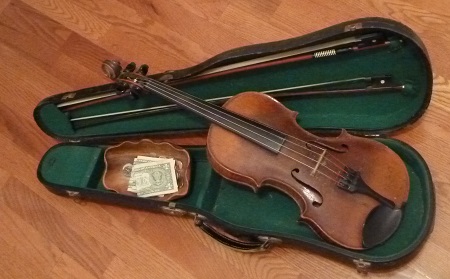
Pay the Fiddler--fiddle in case with a money containerA friend’s father often said, “The one who dances has to pay the fiddler.” That makes sense. We live with the consequences of the choices we make.
To pay the fiddler means we suffer the results of what we say or do.

To pay the piper means the same. We use these expressions most often to describe the results of bad behavior. If we get in trouble, we get punished. Our choices force us to face the music.

The same truth applies to gardening: We reap what we sow.

  • Follow the wrong crowd — get in trouble.
  • Cheat on tests — fail to learn.
  • Hurt other people — lose their trust.

When we choose the right words and actions, we enjoy better results.

  • Follow the right examples — learn the best way to live.
  • Work as we should — grow in knowledge and abilities.
  • Treat others well — build trust in relationships.

Choose well to live well.

As another year begins, may we always choose the best. Happy New Year!

“Be sure your sin will find you out” (Numbers 32:23 KJV).

Thanks to Patty Cooper Emerson for the suggestion.

Do you have an expression you want explained? If so, please comment below.

Subscribe to receive my weekly posts by email and receive a free copy of “Words of Hope for Days that Hurt.”

If you enjoyed this post, please share it with your friends.

In a Jam

In a Jam

In a Jam-young woman making jamEating jam is fun. Getting in a jam is not.
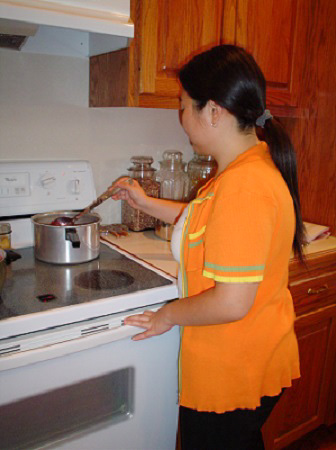
Amy, a former Campbellsville University student, learned how to make jam during one of her visits to our home. We enjoyed an afternoon of fun.

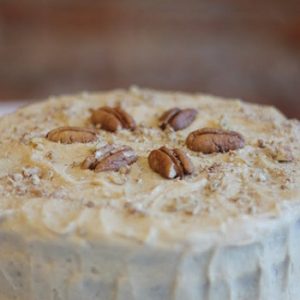
Eating jam cake made by my husband’s mother and other relatives became a family tradition. We had fun as we talked and ate.

One of my favorite Christmas gifts from my mother was homemade raspberry jam and jelly. What fun my sister and I had when we opened that special gift.

If we get in a jam, we get in a difficult situation.

We have a problem and cannot find an answer. As a result, we feel like we are beating our heads against a wall.

Some jams are not our fault. However, we often end up in trouble because of our poor choices, such as:

  • Doing what we should not do
  • Going where we should not go
  • Wanting what we do not need

In a Jam--jam cakeDuring Christmas or other holidays, we can easily get in a jam. We plan too much to do with too little time to do it. We forget to have fun.

Slow down. Cut back on activities. Focus on what really matters. Take time to remember the reason for this joyful season.

Merry Christmas! May all your jams be edible.

 “A prudent man foresees the difficulties ahead and prepares for them; the simpleton goes blindly on and suffers the consequences” (Proverbs 22:3 TLB).

Thanks to Shanon Camille O’Banion and Cakes by Camille for the jam cake photo.

Do you have an expression you want explained? If so, please comment below.

Subscribe to receive my weekly posts by email and receive a free copy of “Words of Hope for Days that Hurt.”

If you enjoyed this post, please share it with your friends.

Shake Off

Shake Off

If dogs get wet, stand back. We don’t want to be too close when they shake off the water. However, we can learn from their actions.

We try to shake off what bothers us.

Problems we might want rid of include:

  • Dirt, bugs, and other yukky stuff
  • Sickness
  • Bad moods
  • People
  • Fear

Some problems are easier to shake off than others.

  • Dirt washes off easier than mud.
  • We get over a cold easier than the flu.
  • Grief over a lost game hurts less than grief following a loved one’s death.
  • An annoying child upsets us less than an abusive adult.
  • Bugs don’t scare us as much as bears.

Many of us need to shake off stress.

We become worry warts over:

  • Mistakes from the past
  • Difficulties we face today
  • What will happen in the future

Perhaps we should pay more attention to ducks and dogs.

Like water off a duck’s back or water off a dog’s body, let that stress go. Shake it off.

  • Get some exercise.
  • Take a walk.
  • Sing.
  • Make a list of what bothers us and then rip the list to pieces.
  • Let go and let God lead.

“Shake off your dust;  rise up” (Isaiah 52:2 NIV).

Thanks to Joy S. Taylor for the suggestion. Photo by Katrin B on Pixabay

Do you have an expression you want explained? If so, please comment below.

Subscribe to receive my weekly posts by email and receive a free copy of “Words of Hope for Days that Hurt.”

If you enjoyed this post, please share it with your friends.

Out of Whack

Out of Whack

Out of Whack-- dark, snow covered trees with sun shining throughSome days everything gets out of whack.

Nothing works right.

  • Snow and ice make travel treacherous.
  • The car won’t start.
  • Our laptop freezes.

We don’t feel well.

  • A cold keeps us coughing and sneezing.
  • Muscles ache.
  • Our head hurts.

Life gets crazy.

  • We have too much to do and no time to do it.
  • No one offers to help.
  • We see no hope for improvement.

Days out of whack put us down in the dumps. We become emotional wrecks and can’t get a grip.

Most of us face times like that.

 That’s life, but how do we deal with it?

We can:

  • Complain. That usually makes us and everyone around us feel worse.
  • Pretend nothing is wrong. As a result, we never make anything better.
  • Do the best we can. That way, something gets done.
  • Ask for help. People usually don’t know we need help, unless we tell them.
  • Pray for guidance and peace. Even if circumstances never change, our attitude can.

On the darkest days, let the light of God’s hope shine through.

“Guide me in your truth and teach me, for you are God my Savior, and my hope is in you all day long” (Psalm 25:5 NIV).

Thanks to Darrin Jenkins for the suggestion.

Do you have an expression you want explained? If so, please comment below.

Subscribe to receive my weekly posts by email and receive a free copy of “Words of Hope for Days that Hurt.”

If you enjoyed this post, please share it with your friends.