Browsed by
Tag: Jesus

Down the Road

Down the Road

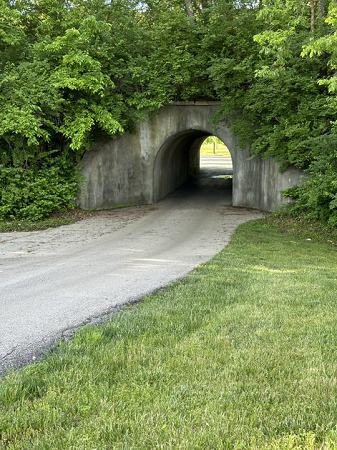
Down the Road--road leading into a greenery-covered tunnelWhen I was a child, several relatives lived down the road from us. My sister and I often walked to their houses to play with our cousins.

We also spent time wondering what God had down the road for our futures. Where would we live? What would we do?

Down the road has two meanings.

  1. On the same road or nearby
  2. In the future

This post will focus on the second meaning.

It pays to plan for what lies down the road.

“Failing to plan is planning to fail.” That quote or similar ones have been credited to Benjamin Franklin, Reverend H. K. Williams, and others. Yet, the source remains uncertain. Regardless of who first said it, the truth endures.

We face an uncertain future.

Although we want to plan, life offers no guarantees. Therefore, we prepare for our goals. Yet, we also prepare for life’s unknowns.

God remains with us both now and down the road.

In spite of life’s uncertainties, we can always count on God’s peace and presence. Whether our plans work out or go down the drain, God promises never to leave us alone. All we have to do is follow Him in faith.

 As we travel down life’s road, may we never stray from the straight and narrow.

“Mixed motives twist life into tangles; pure motives take you straight down the road” (Proverbs 21:8 MSG).

Thanks to Beckham Wilson for the suggestion and the photo.

Do you have an expression you want explained or a thought about this one? If so, please comment below.

Subscribe to receive my weekly posts by email and receive a free copy of “Words of Hope for Days that Hurt.”

If you enjoyed this post, please share it with your friends.

At Loggerheads

At Loggerheads

At Loggerheads--loggerhead turtle on sandAt loggerheads has nothing to do with loggerhead turtles. Although we might enjoy finding the so-ugly-they-are-cute turtles, they give no insight into the idiom. Unless they fight.

At loggerheads means in conflict.

We disagree or argue and fail to resolve the problem. Probably one of the best-known examples of conflict between families is the Hatfield and McCoy feud.

Usually no one wins when at loggerheads.

As with the Hatfields and McCoys, strong disagreement often causes great suffering on both sides including violence or death.

In addition to families, quarrels or disputes occur among:

  • Friends
  • Co-workers
  • Countries
  • Organizations

The Free Dictionary gives two possible origins for the expression.

  1. “A ‘logger’ is a 16th-century term for a block of wood, so a ‘loggerhead’ is a blockhead or fool.”
  2. Loggerhead is also a late 1600s term for “a long-handled iron poker with a bulb-shaped end that was heated in the fire and used to melt pitch.” This “may have been alluded to as a weapon.”

Rather than remain at loggerheads, let’s seek solutions.

  • Compromise when possible.
  • Agree with the other person when we realize we are wrong.
  • Stand firm when necessary.
  • Follow Jesus’ example of self-giving love.

“Hatred stirs up conflict, but love covers over all wrongs” (Proverbs 10:12 NIV).

Thanks to Sarah Burns Hampshire for the suggestion. Photo by Amy Farías with Pexels.

Do you have an expression you want explained or a thought about this one? If so, please comment below.

Subscribe to receive my weekly posts by email and receive a free copy of “Words of Hope for Days that Hurt.”

If you enjoyed this post, please share it with your friends.
Good Taste

Good Taste

Good Taste--table decorated in front of two stained-glass windows

What qualifies as good taste? That’s a great question, but it has no single correct answer. We vary from one another and so does our description of good taste. Yet, we can agree on two general definitions.

Good taste means a sense of what is proper and pleasing in social activities.

Acceptable behavior in some settings causes great discomfort in others. Wise choices and tactfulness outweigh personal preferences.

Good taste also means wise beauty, art, and intellectual choices.

We know how to make ourselves and our surroundings attractive. We find examples in:

  • Housing
  • Decorations
  • Food
  • Clothing
  • Music
  • Books

Yet, what we consider refined or sophisticated, other people consider snobbish or laughable. We may be dressed to the nines for our neck of the woods. Yet, the same attire would be inappropriate or highfalutin in other settings.

Love and respect for others are always in good taste.

Jesus set the perfect example in word and deed. May we faithfully follow.

“Taste and see that the Lord is good; blessed is the one who takes refuge in him “ (Psalm 34:8 NIV).

Thanks to Joe and Ann Klotz for the suggestion and to Jeri Stone for the photo.

Do you have an expression you want explained or a thought about this one? If so, please comment below.

Subscribe to receive my weekly posts by email and receive a free copy of “Words of Hope for Days that Hurt.”

If you enjoyed this post, please share it with your friends.
Kiss of Death

Kiss of Death

Kiss of Death--statue of Judas kissing JesusA kiss of death means something that causes failure or ruin.

It may be:

  • Actions. Poor attitudes or behaviors often result in the loss of jobs, friendships, or other positions.
  • Relationships. Associating with troublemakers frequently leaves people in trouble.
  • Events. Being in the wrong place at the wrong time can destroy plans.
  • Poor timing. Failures frequently occur because people begin too early or too late to accomplish their purposes.

A kiss of death may look good but result in great harm.

Damage often occurs even if intentions appear helpful. A handshake or endorsement from the wrong people kills countless business deals and reputations.

This expression relates to Judas Iscariot’s kiss that betrayed Jesus.

When religious leaders wanted to rid themselves of Jesus, they enlisted Judas, one of Jesus’ followers, for help. Matthew 26:48-49 records it. “The betrayer had arranged a signal with them: ‘The one I kiss is the man; arrest him.’ Going at once to Jesus, Judas said, ‘Greetings, Rabbi!’ and kissed him” (NIV).  A kiss of death has also been called a Judas kiss.

Not every kiss of death ends in permanent harm.

Although Jesus died on the cross, He arose from the dead on the third day. His death and resurrection conquered sin and death. All who place their faith in Jesus also receive victory over sin and death. That’s the message of Easter. Jesus offers everyone a fresh start, a new beginning.

“He is not here; he has risen, just as he said” (Matthew 28:6 NIV).

Thanks to Terrie Wilson for the suggestion. Photo by Francesco Alberti on Unsplash

Do you have an expression you want explained or a thought about this one? If so, please comment below.

Subscribe to receive my weekly posts by email and receive a free copy of “Words of Hope for Days that Hurt.”

If you enjoyed this post, please share it with your friends.
Work Wonders

Work Wonders

Work Wonders-- wooden Christmas ornament--Mary and baby Jesus in center--"For unto you a child is born cut out around the edges

This hand-crafted ornament came from a local school’s art fair. I watched the craftsman work wonders with simple pieces of wood.

To work wonders means to create an excellent outcome.

My dad also produced amazing woodwork. I have examples throughout our house. You can find one in my explanation of “Make Do.”

Although successful in his craft, Dad did not make money from it. Instead, he gave away almost everything he created. He defined success as helping others.

After a busy day, rest works wonders for minds and bodies.

Whatever work we do, we need time away from it. Other wonder-working aids include:

  • Proper nutrition
  • Regular exercise
  • Social interaction
  • Ongoing learning
  • Daily devotions

All help us be our best selves.

The greatest wonder of history came in the form of a baby.

  •  Jesus left the splendor of heaven to be born to a peasant family.
  • He left absolute safety for a life of danger.
  • God in flesh died so we might have life.
  • He arose from the grave and has prepared a home in heaven for all who follow Him.

That is what Christmas is all about. God who works wonders. Immanuel — God with us.

Merry Christmas!

“The virgin will conceive and give birth to a son, and they will call him Immanuel” (which means ‘God with us’)” (Matthew 1:23 NIV).

Thanks to Tracy Crump for the suggestion.

Do you have an expression you want explained or a thought about this one? If so, please comment below.

Subscribe to receive my weekly posts by email and receive a free copy of “Words of Hope for Days that Hurt.”

If you enjoyed this post, please share it with your friends.

Bridge the Gap

Bridge the Gap

Bridge the Gap--swinging bridge among trees and plants

On a mission trip several years ago, a subway recording told us to mind the gap. That warning to watch our step prevented accidents. More important than minding the gap, our team wanted to bridge the gap.

To bridge the gap means to serve as a bridge.

We connect two:

  • Points
  • People
  • Groups of people

We bridge the gap when we build physical bridges.

Many of us love old swinging bridges. However, most bridges today are stronger, safer, and not as scary. All bridges make it easier to get from one place to another.

We also build relationship bridges.

Two people or groups of people may disagree or misunderstand one another. To bridge the gap, we unite them. Gaps occur in:

  • Beliefs
  • Languages
  • Goals

To bridge the gap relieves a problem.

If we:

  • Need money, we request a loan.
  • Feel overwhelmed, we seek support.
  • Require help, we ask for assistance.

Jesus bridges the gap between God and people.

That was the message our mission team shared.

Our sins or wrongdoings separate us from the one and only holy God. Jesus came to earth to pay the price for our sins. He:

  • Lived a sinless life.
  • Died on a cross to pay the price for our sins.
  • Rose from the dead on the third day, defeating sin and death.

Jesus solved our sin problem. When we turn from our wrongs and give control of our lives to Jesus, we cross the bridge from death to eternal life.

As we celebrate Christmas, may we never forget the reason Jesus came.

“Very truly I tell you, whoever hears my word and believes him who sent me has eternal life and will not be judged but has crossed over from death to life” (John 5:24).

Thanks to Beckham Wilson for the suggestion.

Do you have an expression you want explained or a thought about this one? If so, please comment below.

Subscribe to receive my weekly posts by email and receive a free copy of “Words of Hope for Days that Hurt.”

If you enjoyed this post, please share it with your friends.

Beside Myself

Beside Myself

Beside Myself--globe in glassThe first time I went on an international mission trip, I was beside myself with joy. The opportunity before me almost took my breath away.

Beside myself refers to extreme emotion.

 In addition to awe or joy, I may feel intense:

  • Shock
  • Anger
  • Excitement
  • Sadness
  • Worry
  • Panic

Recent news about some of the areas I served leaves me beside myself with grief. I ache for the difficulties my friends now face.

When I am beside myself, I feel out of control.

Strong emotions overwhelm me. I must work to regain a sense of balance—to get a grip.

This phrase appears in the Bible.

The Apostle Paul had shared the story of his encounter with Jesus on the road to Damascus. He had also discussed his life since that time. Festus, the Roman governor, responded in a loud voice, “Paul, thou art beside thyself; much learning doth make thee mad” (Acts 26:24 KJV). Paul explained that he was not crazy but was sharing God’s truth.

If anyone says I am beside myself, I can think of no better reason than God’s call to share eternal truth and love.

“They were all amazed at the greatness of God” (Luke 9:43 NIV).

What about you? What makes you beside yourself?

Thanks to Stan Crump for the suggestion.

Subscribe to receive my weekly posts by email and receive a free copy of “Words of Hope for Days that Hurt.”

If you enjoyed this post, please share it with your friends.

Happy-Go-Lucky

Happy-Go-Lucky

Happy-Go-Lucky baby and child on tree swingsChildren on swings usually look and sound happy-go-lucky.

However, like those swings, most of us have our ups and downs. Circumstances often dictate whether we feel:

  • Happy
  • Sad
  • Lonely
  • Mad
  • Scared

Yet, a few people remain happy-go-lucky regardless of their situations. Little, if anything, gets them down.

Happy-go-lucky means always happy.

Such people’s moods remain cheery and good natured. Life never seems to trouble them. They stay happy as a lark and worry free.

Happy-go-lucky people dwell on the positives.

Although they don’t deny negative experiences, they remain optimistic. They treat problems like water off a duck’s back by shaking off any negative reactions.

We may not always feel happy, but we can always experience joy.

God offers each of us the joy of a relationship with Jesus as Savior and Lord. For many people in the world, that decision leads to persecution and/or death. In spite of the dangers, they continue to share their joy with others. True joy makes that great a difference.

“In all our troubles my joy knows no bounds.” (2 Corinthians 7:4 NIV.)

Thanks to Brad Leverett for the suggestion and to Darrin Jenkins for the photo.

Do you have an expression you want explained or a thought about this one? If so, please comment below.

Subscribe to receive my weekly posts by email and receive a free copy of “Words of Hope for Days that Hurt.”

If you enjoyed this post, please share it with your friends.
Down the Drain

Down the Drain

Down the Drain--waterfall between cliff wallsWe love to watch water fall into a river. However, we rarely want to watch water go down the drain. We lose that water, and it costs us.

Down the drain means wasted.

Our resources have:

  • Failed
  • Disappeared
  • Ruined

This may apply to:

  • Companies
  • Finances
  • Relationships
  • Personal or professional plans

Sometimes, we control what goes down the drain.

We do that when we:

  • Make risky investments.
  • Spend money recklessly.
  • Fail to nurture relationships.
  • Focus only on ourselves.

Other times, we have no control.

  • Banks or companies make poor decisions.
  • Thieves rob us.
  • People desert us.

Whether we have control or not, we lose.

Similar metaphors include:

  • Down the tubes
  • Down the pan
  • Down the toilet
  • Down the plughole

Life constantly changes.

With all its ups and downs, we look for a constant. We find that in a relationship with Jesus. Whatever the situation, Jesus remains with us and will guide us through it.

Circumstances may go down the drain. With Jesus, our eternity remains secure.

“Deep calls to deep in the roar of your waterfalls; all your waves and breakers have swept over me. (Psalm 42:7 NIV).

Thanks to Beckham Wilson for the suggestion.

Do you have an expression you want explained or a thought about this one? If so, please comment below.

Subscribe to receive my weekly posts by email and receive a free copy of “Words of Hope for Days that Hurt.”

If you enjoyed this post, please share it with your friends.

Put to Bed

Put to Bed

Put to Bed--sleeping puppy on a hand-made cherry bedFollowing baths, brushed teeth, prayers, and other routines, children are put to bed every night.

Some of us also put our pets to bed. This puppy receives lots of love and care from its owner. A hand-made cherry bed waits anytime puppy needs a nap. Not a typical dog’s life.

We understand the literal meaning of put to bed.

People and animals need sleep. Going to bed may be voluntary or it may be required. Sometimes it serves as punishment for bad behavior.

It also means to stop discussing or arguing about an issue.

Whether we agree or disagree, we drop the subject. We let sleeping dogs lie.

It often means to complete all or part of an activity.

Final preparation begins or is already finished.

It’s a common saying for newspapers and other printing and means no more edits. Papers or books are ready to print.

The most important decision to put to bed is our eternal destination.

 We don’t want to leave our relationship with Jesus up in the air. At the end of the day, nothing matters more.

“Let perseverance finish its work so that you may be mature and complete, not lacking anything” (James 1:4 NIV).

Thanks to J.D. Wininger for the suggestion and to Ina Ree Pickett for the photo.

Do you have an expression you want explained or a thought about this one? If so, please comment below.

Subscribe to receive my weekly posts by email and receive a free copy of “Words of Hope for Days that Hurt.”

If you enjoyed this post, please share it with your friends.