Browsed by
Tag: Jesus

The More the Merrier

The More the Merrier

The More the Merrier, yellow blooms and yellow butterflyWith flowers and butterflies, the more the merrier. They brighten our world and our attitudes. When I was a little girl, our house and yard overflowed with my grandmother’s:

  • Potted plants
  • Flower beds
  • Shrubs and trees

All those blooms resulted in:

  • Butterflies
  • Bees
  • An abundance of beauty

People came from here to yonder to admire and receive plant starts.

The more the merrier usually refers to people.

Often, the more people at a place or event, the more fun everyone has.

During my childhood summers, our house overflowed with relatives as well as flowers. They came from everywhere. Many stayed two weeks or longer. People ate and slept wherever they found a bare spot. We had a whale of a time.

The more the merrier describes a variety of situations.

Not everyone agrees that the more the merrier.

Fewer people may be preferred by:

  • Overworked teachers
  • Tired cooks
  • Exhausted parents

We all need time alone and time together.

The Bible tells us that “Jesus often withdrew to lonely places and prayed” (Luke 5:16 NIV). However, the Bible also reminds us that we need to gather and support one another.

“Let us consider how we may spur one another on toward love and good deeds, not giving up meeting together … but encouraging one another” (Hebrews 10:24-25 NIV).

Thanks to Tracy Crump for the idea and to Debbie Tapscott for the photo.

Honoring God with My Body book coverDo you have an expression you want explained or thoughts about this one? If so, please comment below.

Subscribe to receive my weekly posts by email and receive a free copy of “Words of Hope for Days that Hurt.” On 8-23-25, I will randomly select one name from my mailing list to also receive a free copy of Katherine Pasour’s book, Honoring God with My Body: Journey to Wellness and a Healthy Lifestyle. If your name is already on the mailing list, you are automatically entered. Please encourage your friends to subscribe.

If you enjoyed this post, please share it with your friends.

Written in Stone

Written in Stone

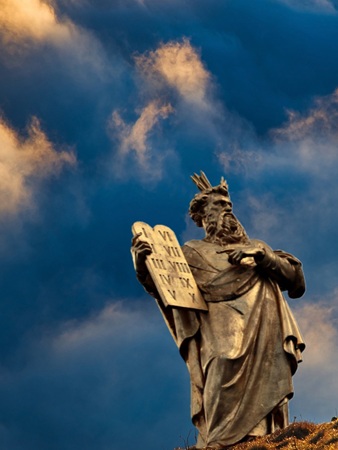
Written in Stone--Statue of Moses with the Ten CommandmentsWhen we receive instructions, we may wonder if they will change or if they are written in stone. That is true for orders from:

  • Parents to children
  • Employers to workers
  • Governments to citizens

Anything written in stone (or set in stone) cannot be changed.

It is:

  • Permanent
  • In final form

Similar expressions include cast in stone or etched in stone.

Written in stone probably originated with the Ten Commandments in the Bible.

Those rules, given by God to Moses, were engraved on stone. They provide direction for every part of our lives.

The first four commandments address our relationship with God.

They tell us to:

  1. Have no other gods before God.
  2. Make no idols.
  3. Never take God’s name in vain.
  4. Remember and keep the Sabbath day holy.

The last six commandments address our relationships with other people.

They tell us to:

  1. Honor our fathers and mothers.

And not to:

  1. Murder
  2. Commit adultery
  3. Steal
  4. Bear false witness
  5. Covet

Years later, a law expert asked Jesus which commandment is greatest.

Jesus replied, “‘Love the Lord your God with all your heart and with all your soul and with all your mind.’ This is the first and greatest commandment. And the second is like it: ‘Love your neighbor as yourself.’ All the Law and the Prophets hang on these two commandments” (Matthew 22:37-40).

Love God. Love others. That covers all the commandments in a nutshell.

Thanks to Tracy Crump for the suggestion. Image by Enlightening Images from Pixabay.

Do you have an expression you want explained or thoughts about this one? If so, please comment below.

Subscribe to receive my weekly posts by email and receive a free copy of “Words of Hope for Days that Hurt.”

If you enjoyed this post, please share it with your friends.

Flip the Script

Flip the Script

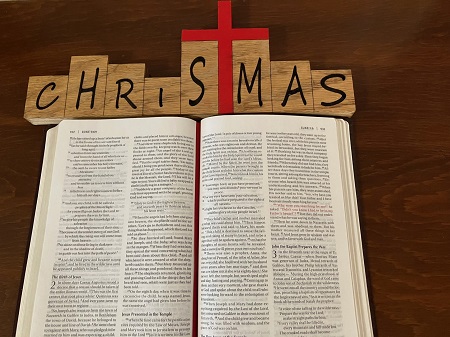
Flip the Script--Bible opened to Luke 2 with a wooden Christmas plague--the "t" a red crossGod flipped the script with Jesus’ birth. Rather than an expected warrior king, the Messiah arrived as a helpless baby.

To flip the script means a drastic change.

The tables turn. Circumstances or positions reverse.

  • Little-known sports teams win tournaments.
  • Political unknowns win elections.
  • Weak students outperform strong scholars.

Flip the script sometimes means to lie.

People change their stories to fit their circumstances. They tell one person one story but another person something else. What they say depends on:

  • What benefits them
  • What they think the other person wants to hear

When God flips the script, His word proves true.

The written Word, the Bible, prophesies of the Living Word, Jesus. Although God in flesh did not meet human expectations, Jesus fulfilled God’s perfect plan.

God offers an everlasting life change to all people.

Jesus, the Christ of Christmas, came to replace:

  • Despair with hope
  • Unrest with peace
  • Sorrow with joy
  • Hate with love

Will you allow God to flip the script for you?

“This will be a sign to you: You will find a baby wrapped in cloths and lying in a manger” (Luke 2:12 NIV).

Thanks to Bobbie Smith Bryant for the suggestion.

Do you have an expression you want explained or a thought about this one? If so, please comment below.

Subscribe to receive my weekly posts by email and receive a free copy of “Words of Hope for Days that Hurt.”

If you enjoyed this post, please share it with your friends.

Wouldn’t be Caught Dead in It

Wouldn’t be Caught Dead in It

Wouldn't be Caught Dead in It--puppy in Christmas sweaterWhen we see an ugly Christmas sweater, we might say we wouldn’t be caught dead in it. However, cute puppies can wear whatever they want, including ugly sweaters, and still look cute.

Wouldn’t be caught dead in it refers to at least two possibilities.

  1. Clothing
  2. Places

We don’t always agree on clothing choices.

Styles come and go. However, some of us choose to wear what we like regardless of the latest trend. That includes our favorite Christmas sweaters, shirts, or jackets.

Likewise, we may love places other people would never go.

That holds true for:

  • Expensive versus inexpensive stores
  • Gourmet versus fast food restaurants
  • Resorts versus camping trips
  • High priced versus third world countries

Many of us wouldn’t be caught dead in Jesus’ circumstances on earth.

The creator of the world:

  • Was born to a poor family
  • Slept in a feeding trough
  • Received little respect from the high and mighty
  • Died on a criminal’s cross
  • Was buried in a borrowed tomb

Yet, Jesus offers the world an eternal home in heaven.

Jesus walked out of that borrowed tomb, victorious over sin and death. If we follow Jesus, we share that victory. Because of His humble life on earth, we can look forward to the glory of heaven

“She wrapped him in cloths and placed him in a manger, because there was no guest room available for them” (Luke 2:7 NIV).

 Thanks to Joy S. Taylor for the suggestion. Image by Christiana from Pixabay.
Do you have an expression you want explained or a thought about this one? If so, please comment below.

Subscribe to receive my weekly posts by email and receive a free copy of “Words of Hope for Days that Hurt.”

If you enjoyed this post, please share it with your friends.

In the Wings

In the Wings

In the Wings--girl in angel wings walking forwardBefore little angels appear in Christmas performances, they wait in the wings. They stay off stage, ready to make their entrance.

In the wings means ready to do something.

Resources, people or other, remain available to help. They prepare to act at a moment’s notice. However, they linger in the background until needed.

The expression has an acting origin.

According to The Free Dictionary, “In a theatre, the wings are the hidden areas to the left and right of a stage, where the actors wait before going on to the stage.”

People may remain in the wings for several reasons.

In addition to general help, they may wait to:

  • Replace someone.
  • Make information public.
  • Offer special services.

At Christmas, we remember that Jesus waited in the wings before coming to earth.

He remained ready to appear, God’s light to the world. Yet, He waited for the right:

  • Time
  • Place
  • Plan

May we follow Jesus’ example by responding:

  • When God calls
  • Where God leads
  • According to God’s purpose

Whether we wait in the wings or step out to follow, we receive what we need under God’s wings,

“When the set time had fully come, God sent his Son” (Galatians 4:4 NIV).

Thanks to Cathy Chinn for the suggestion Photo by Ksenia Chernaya with Pexels.

Do you have an expression you want explained or a thought about this one? If so, please comment below.

Subscribe to receive my weekly posts by email and receive a free copy of “Words of Hope for Days that Hurt.”

If you enjoyed this post, please share it with your friends.

High Water Pants Poor

High Water Pants Poor

High Water Pants Poor--boy's legs and bare feet wearing tight, ripped, and too short jeansAll my life, I heard people talk about high water pants. They meant pants that were too short. Sometimes they bought them without trying them on for a proper fit. In most cases, they had either outgrown them or washed them until they shrank

When children outgrew their pants and families could not afford more, they were high water pants poor.

They had to make do until they could do better.

High water pant legs stop above the ankle.

I never considered that a fashion statement. However, many people desire high water pants. In fact, I have worn them without realizing they fit the definition. Various names include:

  • Capris
  • Cropped pants
  • Flood pants
  • Ankle pants
  • Kick flares
  • Clam diggers
  • Pedal Pushers

Like ripped jeans, what was once a sign of poverty became a fashion trend.

The high water pants poor are often richer than they think.

Like the dirt poor, they enjoy wealth beyond measure if they have:

  • Safe housing
  • Food for every day
  • Access to medical care
  • More than one change of clothes, fashionable or not
  • Family and friends who love them

Money cannot buy the greatest riches.

Peace, love, hope, and joy do not depend on stylish clothes or financial gain. Those signs of success never last. Rather, true riches come from following Jesus and finding new life and purpose in Him.

“For you know the grace of our Lord Jesus Christ, that though he was rich, yet for your sake he became poor, so that you through his poverty might become rich” (2 Corinthians 8:9 NIV).

Thanks to Ona Buckner Sidebottom for the suggestion and to Karen Atwood for the photo.

Do you have an expression you want explained or a thought about this one? If so, please comment below.

Subscribe to receive my weekly posts by email and receive a free copy of “Words of Hope for Days that Hurt.”

If you enjoyed this post, please share it with your friends.

On the Mend

On the Mend

On the Mend--jeans pocket with scissors, thread, thimble, pin cushion, and measuring tapeSeveral family members recently suffered significant health problems. Most are now on the mend.

On the mend refers to healing.

  • Surgeries are over.
  • Health has improved.
  • They feel better.

Some continue treatments or therapy. Although still in recovery, they look forward to further healing.

Improved health does not equal perfect health.

However, they can enjoy:

  • Mended bones
  • Cured diseases
  • Restored strength and energy

They are alive and kicking (only not too high), and they keep on keeping on.

On the mend describes more than physical healing.

It also means repairs to:

  • Torn clothing
  • Ruined relationships
  • Damaged roads
  • Faulty morals
  • Shattered emotions

Although broken, all can mend.

Jesus offers to mend broken lives.

Just as He called fishermen mending their nets to follow Him, Jesus also calls people today. A positive answer results in:

  • Forgiveness for sins
  • A personal relationship with God
  • Peace, hope, joy, and love regardless of life’s circumstances
  • A perfect, eternal home in heaven

“Going on from there, He saw two other brothers, James the son of Zebedee, and John his brother, in the boat with Zebedee their father, mending their nets. He called them, and immediately they left the boat and their father, and followed Him (Matthew 4:21-22 NKJV).

Thanks to Melissa Bright for the suggestion.

Do you have an expression you want explained or a thought about this one? If so, please comment below.

Subscribe to receive my weekly posts by email and receive a free copy of “Words of Hope for Days that Hurt.”

If you enjoyed this post, please share it with your friends.

Foot in the Door

Foot in the Door

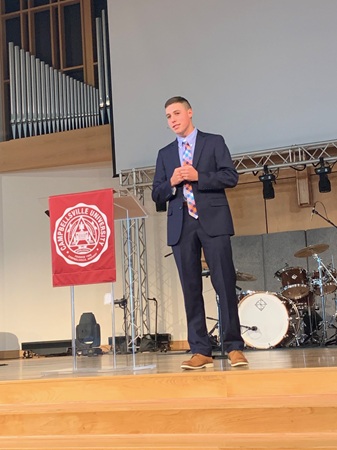
Foot in the Door--leg and foot with jeans and cowboy boot entering a doorMy friend Collin White recently got his foot in the door for a lifelong dream. He performed on stage at the Grand Ole Opry. For anyone, that is quite a feat (pun intended). For a young man still in college, it’s nothing short of amazing.

Foot in the Door--Collin White with guitar, jeans, jacket, and cowboy hatTo get a foot in the door means the first step toward a goal.

Collin wants to sing professionally. He already sings in community, school, church, and multi-state events. He has released two songs. Both fit the Christian country genre. His dream is falling into place, one step at a time.

To get a foot in the door occasionally refers to a pushy person.

Such people use aggressive tactics. Door-to-door salespeople who stick their feet in doors so homeowners can’t close them come to mind. Their behavior often proves self-defeating (another pun intended). Instead of reaching their goals, they turn people against them.

That does not describe Collin. Instead, he puts his best foot forward.

The greatest door of opportunity remains open for all.

Jesus extends an invitation for:

  • Forgiveness
  • Salvation
  • Guidance
  • A home in heaven.

Never pushy, Jesus waits patiently for our response. It’s up to us to invite Jesus into our lives and to follow Him.

“Here I am! I stand at the door and knock. If anyone hears my voice and opens the door, I will come in and eat with that person, and they with me” (Revelation 3:20 NIV).

Thanks to Tracy Crump and Beckham Wilson for the suggestion and to Jill and Steve Floyd and Collin White for the photos.

Do you have an expression you want explained or a thought about this one? If so, please comment below.

Subscribe to receive my weekly posts by email and receive a free copy of “Words of Hope for Days that Hurt.”

If you enjoyed this post, please share it with your friends.

Burn Boats

Burn Boats

Burn Boats--a burning ship at nightBurn boats is another expression more common among the British. In America, we usually refer to burning bridges or burning our bridges behind us. The two expressions have the same meaning.

Burn boats (or burn the ships) means to destroy all means of retreat.

 We leave no way to return to our previous situation. According to U.S. Dictionary, this idiom comes from “the story of Hernán Cortés, who, upon arriving in Mexico in 1519, ordered his men to burn their boats, making it clear that there was no turning back.”

When we burn boats in our lives, our commitment forces us to go forward.

We can only move toward the goal or battle before us. As with Cortez and his men, our decision is both brave and risky.

  • It is difficult or impossible to reverse.
  • Yet, we strive harder to achieve our purpose.

The song, “Burn the Ships,” by for King and Country is based on this expression. Learn the reason for their song choice here.

Sometimes we must turn away from our past in order to follow the right road ahead.

Rather than look back, we pursue the good God offers before us.

 “Forgetting what is behind and straining toward what is ahead, I press on toward the goal to win the prize for which God has called me heavenward in Christ Jesus” (Philippians 3:13-14 NIV).

Thanks to Jonna J. LeVan for the suggestion. Photo by Klub Boks on Pexels.

Do you have an expression you want explained or a thought about this one? If so, please comment below.

Subscribe to receive my weekly posts by email and receive a free copy of “Words of Hope for Days that Hurt.”

If you enjoyed this post, please share it with your friends.

You Got This

You Got This

You Got This! in red on a Rolodex cardIf we want to encourage people who face difficult challenges, we might say, “You got this” or “You’ve got this.” We want them to know we understand their problems. Yet, we also believe they can overcome them.

You got this means we think people can manage their troubles.

We reassure them that they:

  • Can do it
  • Have no reason to fear
  • Can conquer their uncertainty

We believe in their ability to do what they need to do.

You got this offers hope.

We all feel hopeless from time to time. We get discouraged, ready to give up. Yet, a pep talk from a family member or friend can work wonders. It helps us keep on keeping on.

Our present troubles will not last forever.

Instead, we look for light at the end of the tunnel. In addition, if we have placed our faith in Jesus, we look forward to a home in heaven at the end of the road.

“Encourage the disheartened, help the weak, be patient with everyone” (1 Thessalonians 5:14 NIV).

Thanks to Rebecca Stafford for the suggestion.

Do you have an expression you want explained or a thought about this one? If so, please comment below.

Subscribe to receive my weekly posts by email and receive a free copy of “Words of Hope for Days that Hurt.”

If you enjoyed this post, please share it with your friends.