Browsed by
Tag: problems

Don’t Know If We’re Afoot or on Horseback

Don’t Know If We’re Afoot or on Horseback

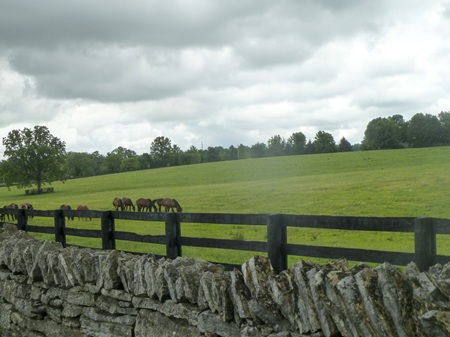
Don’t Know if We’re Afoot or on Horseback-horses in field with stone fence in forefrontOften caregivers don’t know if we’re afoot or on horseback. We are spread so thin, we meet ourselves coming or going. However, we are not alone. That happens to many people.

When we don’t know if we’re afoot or on horseback, we don’t know what we’re doing.

We are so confused we can’t remember:

  • What we have done
  • What we are doing now
  • What we need to do next

We lose our sense of direction and awareness of our actions.

Not knowing if we are afoot or on horseback often results from feeling overwhelmed.

Causes include:

Too much to do and too little time leave us bumfuzzled.

A day away does our bodies and minds good.

Whether we sit, walk, or ride, we need to rest and relax. A trip through the countryside refreshes and restores me. What helps you?

“Come to me, all you who are weary and burdened, and I will give you rest” (Matthew 11:28 NIV).

Thanks to Lori Carol Maloy for the suggestion.

Do you have an expression you want explained or thoughts about this one? If so, please comment below.


Subscribe to receive my weekly posts by email and receive a free copy of “Words of Hope for Days that Hurt.”

If you enjoyed this post, please share it with your friends.

Cooking with Gas

Cooking with Gas

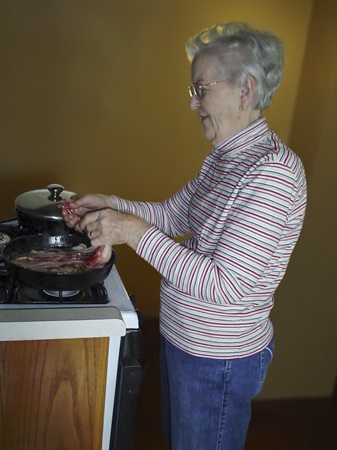
Cooking with Gas--Bernice ChildressOne of my husband’s caregivers and I were dealing with a difficult situation. When we finally had everything working well, she said, “Now we’re cooking with gas!” That was a new expression for me.

This saying originated when gas stoves began replacing wood burning stoves.

My caregiver friend explained that gas stoves were considered a wonderful invention. Although wood burning stoves made delicious meals, they required hours of work.

  • Chopping wood
  • Starting a fire
  • Deciding when to start cooking
  • Wiping sweat during hot summer months
  • Cleaning ashes from the stove after cooking

Plus, cooking temperatures were hard to control.

Gas stoves were easier to use and resulted in fewer mistakes.

Cooks were more likely to achieve the results they desired. My mom loved her gas stove.

Cooking with gas means we achieve success.

Like a cook who prepares a gourmet meal or bakes a perfect cake, we get something right.

We successfully:

  • Solve a problem.
  • Correct an error.
  • Receive a promotion.

We do our work well.

If we are cooking with gas, people may think we work wonders.

Whether we create perfect meals or the perfect ball team, those who share our success love it.

Whatever we do, let’s encourage one another to do our best.

If we want to take the cake, we can’t use half-baked ideas. Neither can we do half-baked work.

“We have different gifts, according to the grace given to each of us. If your gift is prophesying, then prophesy in accordance with your faith; if it is serving, then serve; if it is teaching, then teach; if it is to encourage, then give encouragement; if it is giving, then give generously; if it is to lead, do it diligently; if it is to show mercy, do it cheerfully” (Romans 12:6-8 NIV).

Thanks to J.D. Wininger and Rita Smalley for the suggestion.

Do you have an expression you want explained or thoughts about this one? If so, please comment below.
Subscribe to receive my weekly posts by email and receive a free copy of “Words of Hope for Days that Hurt.”

If you enjoyed this post, please share it with your friends.

Chew on

Chew on

Chew on--puppy chewing on a shoeBabies like to chew on whatever they find. Human babies keep teething rings wet with their efforts. Puppies often chew shoes and other non-food items. Their gnawing may last for hours.

To chew on something means to think about it.

We consider it from different viewpoints. Our thinking, like puppy gnawing, often lasts a long time.

We rarely like to chew on tough circumstances.

Although we enjoy chewing the fat with friends and family, we don’t want to think about problems.

Life’s struggles come from all directions.

  • Difficult relationships
  • Illness
  • Death
  • Work stress

We do enjoy chewing on positive situations or possibilities.

  • Special events with family and friends
  • Vacations
  • Births
  • Promotions

When we chew on all God has done, everything else fades in comparison.

We know our current concerns will not last forever. However, God will. His faithfulness offers hope for now and eternity.

“I will consider all your works and meditate on all your mighty deeds.” (Psalm 77:12 NIV).

Thanks to Sarah Burns Hampshire for the suggestion. Photo courtesy of Pixabay.

Do you have an expression you want explained or thoughts about this one? If so, please comment below.

Subscribe to receive my weekly posts by email and receive a free copy of “Words of Hope for Days that Hurt.”

If you enjoyed this post, please share it with your friends.

At Your Wits’ End

At Your Wits’ End

At Your Wits' End--railroad track with end missingHave you ever been at your wits’ end? Like a train conductor with no track, you wonder, What now?

At your wits’ end means you have no idea what to do.

You have tried everything you can think of, but nothing works. You feel:

At your wits’ end may result from your problem or someone else’s.

  • A difficult project or repair
  • An unruly child
  • Unexplained delays in services

You run out of patience, and frustration grows.

Your distress often affects other people. They see your negative reaction, or you hurt them with your words or deeds.

This idiom has a long history.

The Free Dictionary says it “appeared in Piers Ploughman (c. 1377).” We also find it in the Bible.

When at your wits’ end, seek guidance.

Someone else may be able to help you figure out an answer. With both major and minor problems, two heads are usually better than one. Turning to God for peace and direction is even better.

What joy when we finally understand what to do.

“They were at their wits’ end. Then they cried out to the Lord in their trouble, and he brought them out of their distress” (Psalm 107:27-28).

Thanks to Meghan Bowker, Editor, Missions Mosaic for the suggestion. Image by Niek Verlaan from Pixabay.

Do you have an expression you want explained or thoughts about this one? If so, please comment below.
Subscribe to receive my weekly posts by email and receive a free copy of “Words of Hope for Days that Hurt.”

If you enjoyed this post, please share it with your friends.

Split Hairs

Split Hairs

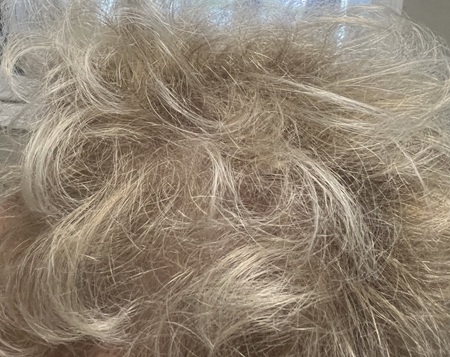
Split Hairs--top of head with teased hairDo you remember sky-high teased hairstyles? Or have you seen pictures of them? Can you imagine all the split hairs that caused? Worse damage occurs when we split hairs with our words.

When we split hairs, we fight about minor details that make no major difference.

We focus on the petty or unimportant.

This metaphor “was first recorded in the late 17th century,” according to The Free Dictionary.

Most of us have split a few hairs.

Yet why let anything that is neither here nor there steal our attention? No need to stress. No need to waste that time. If it will not matter six months from now, let it go.

Let’s focus on the worthy.

  • Do what needs to be done.
  • Forget what makes little or no difference.
  • Never let trivial matters get our goat.

A single hair should not overtake the rest of our body. Neither should one small detail overtake our minds, emotions, or relationships.

“Keep reminding God’s people of these things. Warn them before God against quarreling about words; it is of no value, and only ruins those who listen” (2 Timothy 2:14 NIV).

Thanks to Tracy Crump for the suggestion and to Misty Durham for the photo.

Do you have an expression you want explained or thoughts about this one? If so, please comment below.
Subscribe to receive my weekly posts by email and receive a free copy of “Words of Hope for Days that Hurt.”

If you enjoyed this post, please share it with your friends.

Whistle Past the Graveyard

Whistle Past the Graveyard

Whistle Past the Graveyard-graves at Arlington National CemeteryI grew up near a graveyard. Later, my husband and I built a house across the road from one. We laughed and said we would have quiet neighbors. However, some people fear living so close to graves. They feel the need to whistle past the graveyard.

When we whistle past the graveyard, we hide our fear by acting calm.

We may be afraid of our own shadow. However, we don’t want anyone to know.

Whistling past the graveyard happens often.

In addition to passing a cemetery, we fear:

  • Public speaking
  • Competition for a championship
  • Any embarrassing situation

To whistle past the graveyard may increase courage.

Acting with courage often makes us more courageous. We survive what we fear, so the next time becomes easier.

The Bible tells us we have no need to fear death.

Followers of Jesus know that death and the grave are not the end. When Jesus arose from the grave, He conquered sin and death. We can share that same victory and look forward to an eternal home in heaven.

“Do not be amazed at this, for a time is coming when all who are in their graves will hear his voice” (John 5:28 NIV).

Thanks to Bobbie Smith Bryant and Martha Orlando for the suggestion. Image by Carol Colman from Pixabay

Do you have an expression you want explained or thoughts about this one? If so, please comment below.
Subscribe to receive my weekly posts by email and receive a free copy of “Words of Hope for Days that Hurt.”

If you enjoyed this post, please share it with your friends.

Weather the Storm

Weather the Storm

Weather the Storm--Snow covered shrub (nandina) with red berries

How did you weather the recent storm? Some of you may have escaped snow, ice, and frigid temperatures. However, we experienced all three. More than one person said our driveway was like a skating rink.

Literally, to weather the storm means to stay where we are until a storm passes.

We go nowhere. With few options, we hunker down and wait until the worst is over.

Figuratively, to weather the storm means to survive a hard time or situation.

We experience and live through it. Many close to us have recently faced such hardships.

  • Health crises
  • Death of family members
  • Job loss
  • Financial difficulties
  • Family problems

According to The Free Dictionary, this expression “has been used figuratively from about 1650.”

A similar expression is to ride out the storm.

We hang on for dear life through our difficulties.

Life is not always easy.

We experience ups and downs. Hard times come and go. Yet we can make it.

We never have to weather the storm alone.

God promises never to leave  those who follow Him. Because He remains near, we have no need to fear.

“The Lord is my helper; I will not be afraid” (Hebrews13:6 NIV).

Thanks to Beckham Wilson for the suggestion.

Do you have an expression you want explained or thoughts about this one? If so, please comment below.

Subscribe to receive my weekly posts by email and receive a free copy of “Words of Hope for Days that Hurt.”

If you enjoyed this post, please share it with your friends.

Flash in the Pan

Flash in the Pan

Flash in the Pan--musket pistol and other antiquesI thought flash in the pan originated with gold mining.

If a miner saw glitter in his pan, he became excited. Rather than gold, what he often saw was only a flash in the pan.

I was wrong.

According to The Phrase Finder, flash in the pan originated with flintlock muskets that had small pans for gunpowder. When gunpowder flared but no bullet fired, it was called a flash in the pan.

The expression, “hang fire,” has a similar origin.

Flash in the pan refers to a promise of success that fails.

  • Authors write only one bestseller.
  • Musicians record one hit but no others.
  • Actors star in only one major movie or play.
  • Athletes lose their positions after a brief career.
  • Businesses boom and then go bankrupt.

They make a splash, but their success does not last.

Doing our best beats trying to impress.

Let’s use our abilities, great or small, to make the world a better place. Now, that’s success!

“May the God of peace …  equip you with everything good for doing his will” (Hebrews 13:20-21 NIV).

Thanks to Frank Cheatham for the flash in the pan suggestion and to Brad Leverett for hang fire. Image by Alexander Lesnitsky from Pixabay.

Flash in the Pan--flintlock rifleDo you have an expression you want explained or thoughts about this one? If so, please comment below.

Subscribe to receive my weekly posts by email and receive a free copy of “Words of Hope for Days that Hurt.”

If you enjoyed this post, please share it with your friends.

UPDATE: Thanks to Warren Johnson who noticed that the pistol in my photo is a percussion pistol, not a flintlock. See his comments below for more interesting details about his flintlock rifle pictured here.

Do or Die

Do or Die

Do or Die-little girl using chairs and stools to reach cabinet topHave you watched people fight to succeed when failure seemed certain? Their final effort is do or die. This little one was determined to get to her uncle’s chewing gum. She succeeded with her extra effort.

Do or die means we give our best to succeed and avoid failure.

We keep on keeping on despite:

  • Difficulties
  • Danger
  • Death

We refuse to give up.

Do or die also means our last chance.

  • Ballgames hinge on the last play.
  • Companies depend on end-of-year sales to stay in business.
  • Relationships rely on a final effort to stay together.

Results rest on our willingness to do our best.

We cannot depend on:

  • Past success
  • Reputation
  • Other people

Like the little girl above, let’s refuse to give up.

We all face hard times. That’s life. Turn to Jesus who helps us through every challenge and every storm.

“My flesh and my heart may fail, but God is the strength of my heart and my portion forever” (Psalm 73:26 NIV).

Thanks to Chris J. Beam for the suggestion and to Debbie Tapscott for the photo.

Do you have an expression you want explained or thoughts about this one? If so, please comment below.
Subscribe to receive my weekly posts by email and receive a free copy of “Words of Hope for Days that Hurt.”

If you enjoyed this post, please share it with your friends.

Scapegoat

Scapegoat

Scapegoat--goat lying in field, face to cameraHave you ever been a scapegoat? Something bad happened. It was not your fault, but you received the blame. Or have you ever scapegoated someone else?

A scapegoat receives all the blame or punishment for the wrongs of others.

The person may be innocent or only partially at fault. However, they receive total blame.

  • Family members accuse a relative for all their problems.
  • Company leaders condemn an employee for the company’s losses.
  • Team members blame one player for their team’s defeat.

We don’t like to be accused when innocent.

Neither do other people.

We find the background for a scapegoat in the Bible.

God gave Moses directions for the Day of Atonement. Aaron, Israel’s first high priest, took two male goats for a sin offering. One goat was sacrificed. The other (the scapegoat) had the sins of the people symbolically placed on it. It was then driven into the wilderness.

Rather than condemn others unfairly, let’s:

  • Take responsibility for our own actions.
  • Encourage one another to make wise choices.
  • Forgive the mistakes of others and ask forgiveness for ours.

Let’s not hang one another out to dry. Instead, let’s treat others like we want to be treated.

“He is to lay both hands on the head of the live goat and confess over it all the wickedness and rebellion of the Israelites—all their sins—and put them on the goat’s head. He shall send the goat away into the wilderness in the care of someone appointed for the task.  (Leviticus 16:21 NIV).

Thanks to Karen Atwood for the suggestion and to Lori Carmicle for the photo.

Do you have an expression you want explained or thoughts about this one? If so, please comment below.

Subscribe to receive my weekly posts by email and receive a free copy of “Words of Hope for Days that Hurt.”

If you enjoyed this post, please share it with your friends.