Browsed by
Tag: problems

On the Tip of Your Tongue

On the Tip of Your Tongue

On the Tip of Your Tongue -- dog with tongue outHave you ever had someone’s name on the tip of your tongue? You know the person well, but the name simply will not come to mind.

On the tip of your tongue means something you can almost remember.

The thought is nearly there but not quite. When you start to say it, it disappears. You could kick yourself, but that would do no good.

On the tip of your tongue refers to more than names.

People often forget:

  • Answers to questions
  • Thoughts
  • Quotes
  • Words

The inability to recall information affects everyone.

However, certain conditions make the situation worse.

  • Age
  • Stress
  • Multi-tasking
  • Distractions
  • Illness

Those and other circumstances often make the brain work at a snail’s pace.

Humor helps when anything remains on the tip of your tongue.

Like water off a duck’s back, let it go. Learn to laugh at yourself. You are not alone.

Aren’t you glad God never forgets?

Never has. Never will.

“Before a word is on my tongue you, Lord, know it completely” (Psalm 139:4 NIV).

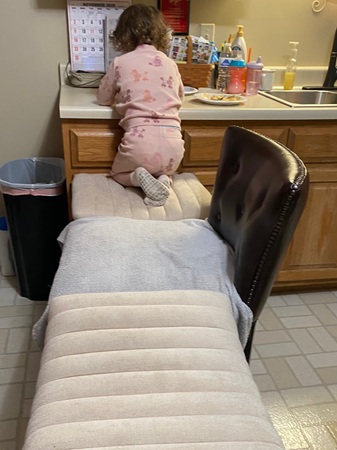
Thanks to Lindy Pierce for the suggestion and to Chelsey Stone for the photo.

Do you have an expression you want explained or thoughts about this one? If so, please comment below.

Subscribe to receive my weekly posts by email and receive a free copy of “Words of Hope for Days that Hurt.”

If you enjoyed this post, please share it with your friends.

Mayday

Mayday

Mayday--helicopters at Ft. Campbell, KYOld movies often show someone in trouble who calls, “Mayday! Mayday! Mayday!”

Mayday is an internationally recognized radiotelephone signal for help.

The person, usually on a ship or in an airplane, is in crisis. Problems may include:

  • A fire
  • Engine trouble
  • A collision

If the person in the thick of it survives, it may be on a wing and a prayer.

According to The Free Dictionary, mayday originated with the French phrase, m’aider.

M’aider means “Help me.” Danger threatens.

Mayday now includes other difficulties or dangers.

Most of us have experienced the stress of major and minor disasters.

  • Storms destroy property.
  • Appliances stop working.
  • Cars break down.
  • Electronics die.

Mayday should not be confused with May Day, the May 1 springtime celebration.

May 1 is also Labor Day in some countries.  

 When emergencies arise, God directs us to help one another.

God comforts us. Yet, God also guides us to help the hurting. Shared love and support encourage us to get a grip and keep on keeping on.

“The Lord is good, a refuge in times of trouble. He cares for those who trust in him” (Nahum 1:7 NIV).

Thanks to Mike Bertoglio for the suggestion.

Do you have an expression you want explained or thoughts about this one? If so, please comment below.

Subscribe to receive my weekly posts by email and receive a free copy of “Words of Hope for Days that Hurt.”

If you enjoyed this post, please share it with your friends.

In a Pickle

In a Pickle

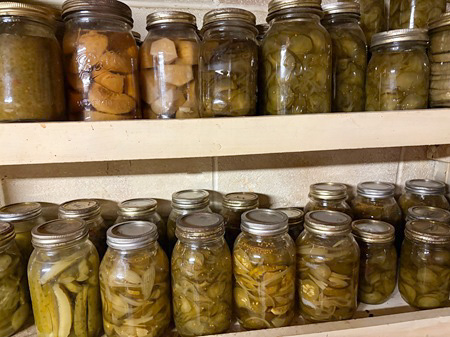
In a Pickle--two shelves of assorted picklesA friend recently said, “I don’t like to put you in a pickle.” She did not want her plans to cause me trouble.

In a pickle means in a difficult situation.

Similar expressions include in a jam or in hot water.

We often end up in a pickle or in a jam through no fault of our own.

  • Circumstances work against us.
  • People’s actions hurt us.
  • Weather destroys our property.
  • Sickness strikes our family.

We have no control over those situations.

Occasionally we get ourselves in a pickle or in hot water.

Our actions work against us when we:

  • Mistreat others
  • Break laws or rules
  • Refuse to work

Sometimes we add words to this expression.

Examples include:

  • In a pretty pickle.
  • In a right pickle.
  • In a real pickle.

However we say it, we get in a mess.

Simple steps may help us out of our messes.

  • Request help from friends, family, or coworkers.
  • Apologize for mistakes.
  • Pray for God’s guidance.

“I cling to your commands and follow them as closely as I can. Lord, don’t let me make a mess of things” (Psalm 119:31 TLB).

Thanks to Rita Smalley for the suggestion and to Gail Gosser for the photo.

Do you have an expression you want explained or thoughts about this one? If so, please comment below.

Subscribe to receive my weekly posts by email and receive a free copy of “Words of Hope for Days that Hurt.”

If you enjoyed this post, please share it with your friends.

Chopped Liver

Chopped Liver

Chopped Liver--bowl of chopped chicken liverDoes anyone out there like chopped liver? I tried to eat it by:

  • Hiding it in mashed potatoes
  • Holding my nose
  • Breading it and adding spices

Nothing worked. It still tasted like liver. I know liver is good for me, but I don’t like it. I consider it a dish for the birds.

Whether we eat it or not, we sometimes feel like chopped liver.

No matter how hard we try:

  • Not everyone likes us.
  • Many overlook us.
  • Few appreciate our potential.

Chopped liver means worthless.

We judge a person or thing as:

  • Unpleasant
  • Unimportant
  • Undesirable

Emotional responses to such treatment include:

  • Sadness
  • Anger
  • Disappointment
  • Defeat
  • Frustration

A common verbal response is, “So what am I? Chopped liver?”

We may say this when:

  • We fail to get a job.
  • Friends reject us.
  • People make fun of us.

According to The Free Dictionary, this expression “likely originated as a part of Jewish humor.”

It probably refers to “chopped liver as a common side dish.”  It was “overlooked in favor of the main course.” Many people dislike its taste.

We may consider chopped liver as good only for garbage. Yet, we never want to treat one another that way.

“To love [God] with all your heart, with all your understanding and with all your strength, and to love your neighbor as yourself is more important than all burnt offerings and sacrifices” (Mark 12:33 NIV).

Thanks to Joan Borton for the suggestion. Photo courtesy of Pixabay.

Do you have an expression you want explained or thoughts about this one? If so, please comment below.

Subscribe to receive my weekly posts by email and receive a free copy of “Words of Hope for Days that Hurt.”

If you enjoyed this post, please share it with your friends.
Red Tape

Red Tape

Red Tape--desk piled with paperwork and a red ribbon around the top document. Hand raised above and behind it.I was a social worker for almost thirty years. The work was stressful and the hours horrible. I was on-call twenty-four hours a day seven days a week. Yet I loved it.

I did not love the red tape. We had to jump through hoops of:

  • Endless paperwork
  • Frequent bureaucratic changes
  • Fluctuating budgets that reversed progress

Red tape refers to complicated, time-wasting official procedures.

Such requirements are:

  • Strict
  • Difficult
  • Tiresome

They focus on details and rules rather than efficiency and outcomes. Correct forms overrule positive results.

Red tape results in service delays.

Forms and rules should lead to speedier outcomes rather than needless obstacles. Likewise, successful procedures should remain regardless of leadership changes.

According to The Free Dictionary, this expression refers to “the former British custom of tying up official documents with red ribbon.”

Red ribbons make a document look good. However, appearance matters little. Contents determine the difference, good or bad.

A certain amount of red tape must remain.

  • Rules offer guidelines.
  • Paperwork gathers needed information.

Yet, a fine line exists between:

  • Efficient or ineffective
  • Helpful or hurtful

“Every official is under orders from higher up, and the higher officials look up to their superiors. And so the matter is lost in red tape and bureaucracy” (Ecclesiastes 5:8 TLB).

Thanks to Regina Graham for the suggestion and to Karen Atwood for the photo.

Do you have an expression you want explained or thoughts about this one? If so, please comment below.

Subscribe to receive my weekly posts by email and receive a free copy of “Words of Hope for Days that Hurt.”

If you enjoyed this post, please share it with your friends.

Elephant in the Room    

Elephant in the Room    

Elephant in the Room--three small ceramic or jade elephantsFew of us desire an elephant in the room. Not the kind on four legs and not unpleasant subjects.

An elephant in the room means a problem no one discusses.

The situation is:

  • Serious
  • Important
  • Obvious

We need to address the topic.

Everyone knows about it. However, no one wants to discuss it because it makes us feel:

  • Uncomfortable
  • Embarrassed
  • Awkward

As a result, we ignore the issue rather than rock the boat.

  • Families don’t mention strained relationships.
  • Workers overlook wasteful systems.
  • Friends choose peace over responsibility.

Excuses for ignoring difficult situations include:

  • “It’s none of my business.”
  • “No one gets hurt.”
  • “I don’t have time to get involved.”

We want to remain on the right track. At times, that means we avoid unnecessary problems. Other times, it means we stand firm for truth and examine the elephant

An elephant in the room’s origin is unknown.

According to The Phrase Finder, it probably began in the United States.

 “It is shameful even to mention what the disobedient do in secret” (Ephesians 5:12 NIV).

Thanks to Ann Klotz and Darrin Jenkins for the suggestion.

The Early Bird Gets the Worm Matin Wiles book
Version 1.0.0

Do you have an expression you want explained or thoughts about this one? If so, please comment below.

Subscribe to receive my weekly posts by email and receive a free copy of “Words of Hope for Days that Hurt.” Congratulations to Larry Bowen whose name was randomly selected from my mailing list to receive a free copy of Martin Wiles’s book, Don’t Just Live…Really Live.”

If you enjoyed this post, please share it with your friends.

Keep Your Head

Keep Your Head

Keep Your Head--Hope and Despair arrow signs pointing opposite directionsWhen life goes out of control, it’s hard to keep your head. Uncertainty leads to panic rather than patience.

Keep your head means to remain calm.

Although everything around you falls apart at the seams, you don’t. Instead, you find calm in the middle of the storms.

Keep your head does not mean you never feel stressed.

With so much turmoil in the world today, stress affects everyone. Daily news bombards us with updates on:

  • Wars
  • Price increases
  • Abuse
  • Disasters
  • Crime

Everything goes haywire. Yet you find personal control in the worst of it.

Rather than give in to problems, get a grip on solutions.

As a former teacher often said, “Think. Just think.” Apply the good sense God gave you.

Choose:

  • Faith over fear
  • Hope over despair
  • Peace over pressure
  • Calm in chaos

“But you, keep your head in all situations” (2 Timothy 4:5 NIV).

Thanks to Joanne Viola for the suggestion. Image by Gerd Altmann from Pixabay.

Do you have an expression you want explained or a thought about this one? If so, please comment below.

Subscribe to receive my weekly posts by email and receive a free copy of “Words of Hope for Days that Hurt.”

If you enjoyed this post, please share it with your friends.

Stinking Thinking

Stinking Thinking

Stinking Thinking-skunk behind a logJust as we avoid a skunk’s stinking spray, we want to avoid stinking thinking. We accomplish nothing when we focus on messages like:

  • Woe is me.
  • I’m awful.
  • You’re awful.
  • The whole world is awful.
  • Life is awful.
  • Nothing will ever get better.

Do you see a pattern here?

Stinking thinking means negative thinking.

We see only the wrong, never the right. Everything and everyone ruffle our feathers.

Rather than happy-go-lucky we remain:

Focused on problems, our outlook grows progressively worse.

*Stinking thinking can lead to emotional problems.

After long stretches of negative self-talk, we have a tough time changing. Our thinking, feelings, and actions grow worse. As our stress level increases, tolerance decreases.

God offers a better life.

The one and only God who created the world created us. God also:

  • Loves us
  • Has a special plan for us
  • Forgives us when we repent of our wrongs
  • Gives eternal life and a home in heaven to all who follow Jesus

That should give us a positive outlook on life. Don’t you agree?

“Their thinking became futile and their foolish hearts were darkened” (Romans 1:21 NIV).

Thanks to Becky Nash Rowe for the suggestion. Photo by Jack Bulmer on Pexels.

Do you have other examples of stinking thinking or an expression you want explained? If so, please comment below.

Subscribe to receive my weekly posts by email and receive a free copy of “Words of Hope for Days that Hurt.”

If you enjoyed this post, please share it with your friends.

*Seek professional help if needed to overcome extreme negative thought patterns.

Wild Goose Chase

Wild Goose Chase

Wild Goose Chase--geese in flight formationI have gone on a few wild goose chases. How about you?

A wild goose chase means a pursuit certain to fail.

We waste our time when we chase the impossible. Although a hopeless effort, we try anyway.

The earliest meaning of wild goose chase differs from today’s.

According to The Free Dictionary, “This idiom originally referred to a form of 16th-century horseracing.” It required riders “to follow a leader in a particular formation.” The horses mimicked a flock of geese in flight.

 We love to watch wild geese in flight.

However, we will probably never be able to catch them.

Likewise, we love to dream big dreams.

Seemingly impossible dreams may be possible. More often, we must accept our limits. If we ignore reality, our goose is cooked.

A wild goose chase differs from a God-sized dream.

Both challenge us.

  • A wild goose chase takes us nowhere.
  • A God-sized dream leads us beyond our wildest imagination.

May God, who created the birds of the air, guide us in the dreams we chase.

“Those who work their land will have abundant food, but those who chase fantasies have no sense” (Proverbs 12:11 NIV).

Thanks to Janna Babak for the suggestion. Photo courtesy of Pixabay.

Do you have an expression you want explained or a thought about this one? If so, please comment below.

Subscribe to receive my weekly posts by email and receive a free copy of “Words of Hope for Days that Hurt.”

If you enjoyed this post, please share it with your friends.
Cruising for a Bruising

Cruising for a Bruising

Cruising for a Bruising--wrecked car against a treeIf we drive a car too fast, we are cruising for a bruising. Possible results include:

  • A speeding ticket
  • A wreck
  • Injury or death

Cruising for a bruising means headed for trouble.

Our behavior works against us.

  • Parents, teachers, or others in authority punish us.
  • People we insult or bully injure us.
  • Natural or logical consequences cause temporary or permanent pain.

Cruising for a bruising hurts in several ways.

  • Physical: Actual bruises or other injuries to our bodies
  • Emotional: Conflicts or losses
  • Spiritual: Lack of or a poor relationship with God
  • Financial: Reduction or total loss of economic resources
  • Mental: Decreased abilities

Many people shorten this expression to cruisin for a bruisin.

However we say it, the meaning remains the same. We suffer the costs of the trouble we pursue. If we don’t straighten up and fly right, we must face the music.

God forgives when we repent of our misbehavior.

We receive a new beginning, a fresh start. However, we must choose. Do we want to keep cruising for a bruising or turn to Jesus for healing and eternal life?

“Repent, then, and turn to God, so that your sins may be wiped out, that times of refreshing may come from the Lord” (Acts 3:19 NIV).

Thanks to Laura Leathers and the ladies in her Women on Mission group for the suggestion. Image by Rico Löb from Pixabay

Do you have an expression you want explained or a thought about this one? If so, please comment below.

Subscribe to receive my weekly posts by email and receive a free copy of “Words of Hope for Days that Hurt.”

If you enjoyed this post, please share it with your friends.