Browsed by
Tag: problems

Nip It in the Bud

Nip It in the Bud

Nip It in the Bud--plant with flowers and buds“Nip it in the bud. Just nip it in the bud.” Barney Fife on The Andy Griffith Show said that over and over. We laughed at Barney’s many messes. However, he did get a few things right.

We often need to nip it in the bud.

 We want to:

  • Stop something at an early stage
  • Prevent a problem before it happens
  • End a problem before it gets bigger

Taking action now may prevent regret later. Better safe than sorry.

If we don’t want a flower to bloom, we nip it in the bud.

We cut or break off the bud before it blooms. Sometimes, cold weather nips a flower in the bud.

Like flowers, some situations need nipping. To prevent problems or danger:

  • Parents punish their children’s bad behaviors.
  • Bosses fire lazy workers.
  • We quit bad habits.

Whether we nip buds or let them bloom, we can trust the Creator of them all. 

Also, with God’s help, we can always bloom where we’re planted.

“Though the fig tree does not bud and there are no grapes on the vines, though the olive crop fails and the fields produce no food, though there are no sheep in the pen and no cattle in the stalls, yet I will rejoice in the Lord, I will be joyful in God my Savior” (Habakkuk 3:17-18 NIV).

Do you have an expression you want explained or a thought about this one? If so, please comment below.

Subscribe to receive my weekly posts by email and receive a free copy of “Words of Hope for Days that Hurt.”

If you enjoyed this post, please share it with your friends.
Up a Stump

Up a Stump

Up a Stump--stump I always thought up a stump meant the same as stumped. My friend Patty Cooper Emerson explained a difference in the two.

Stumped means confused or puzzled.

We cut a few trees in our back year. I was stumped about what to do with the stumps. Should I:

  • Dig them up
  • Burn them
  • Leave them alone

Up a Stump--honeysuckle-covered stumpWith one stump, I let nature take control. Honeysuckle grew near it. I allowed the honeysuckle to keep growing. Now, it covers the stump and blooms all summer. Problem solved.

No longer stumped, I have a pretty stump.

Up a stump means a situation too big to manage.

I cannot solve the problem. I:

  • Have no choice
  • Must live with it

Patty gave the example of a young man who arrives 30 minutes late to work every day. If he is my sister’s son, I might feel up a stump – like I can do nothing.

What makes me feel up a stump may not make you feel that way.  

  • You may be comfortable firing your sister’s son.
  • I may feel comfortable with a problem you cannot manage.

Nothing leaves God up a stump. Rather than tying myself in knots or becoming a worry wart, I can take all my problems to God. So can you.

“A life devoted to things is a dead life, a stump; a God-shaped life is a flourishing tree” (Proverbs 11:28 MSG).

If you use up a stump and stumped, do you mean the same? Please comment below.

Do you have an expression you want explained or a thought about this one? If so, please comment below.

Subscribe to receive my weekly posts by email and receive a free copy of “Words of Hope for Days that Hurt.”

If you enjoyed this post, please share it with your friends.

You Can’t Squeeze Blood from a Turnip

You Can’t Squeeze Blood from a Turnip

You Can't Squeeze Blood from a Turnip--basket of turnipsYou can’t squeeze blood from a turnip means something is extremely hard to do.

You may also hear:

  • It is like getting blood from a turnip.
  • You can’t draw blood from a turnip.
  • It is like getting blood from a stone.

All usually deal with efforts to get money or information from someone.

 The person:

  • Has what we need but will not share or help
  • Or has little or no money or information

Often a person has a bill but no way to pay it.

A few businesspeople understand. Others do not.

During my social work years, a doctor cared for a couple and their children. One day we discussed their many needs. The doctor said, “You can’t squeeze blood from a turnip.” He knew the family was poor as a church mouse. They would probably never be able to pay his bill.

However, the doctor continued to treat the family. He also gave them the same respect he gave everyone else. The family paid him $1 every month. He admired their effort to pay what they could.

You can’t squeeze blood from a turnip. You can treat everyone with respect.

 Count your blessings. Then share those blessings with others.

“Whoever oppresses the poor shows contempt for their Maker, but whoever is kind to the needy honors God” (Proverbs 14:31 NIV).

Thanks to Rhonda Wade Royster for the suggestion.

Do you have an expression you want explained or a thought about this one? If so, please comment below.

Subscribe to receive my weekly posts by email and receive a free copy of “Words of Hope for Days that Hurt.”

If you enjoyed this post, please share it with your friends.

That’s Life

That’s Life

That's Life-tree with hard lifeWe can’t control everything in our lives.

  • Both good and bad happen.
  • We celebrate, and we mourn.
  • Everything can change in an instant.

That’s life.

This tree reminds me of life. All wrapped together, we see:

  • Healthy limbs
  • Dead limbs
  • Missing limbs
  • Injured limbs
  • Other plants pulling life from it

The poor tree, a victim of many storms, looks terrible. Yet, it stands. It:

  • Continues to grow
  • Refuses to fall
  • Still offers shade to everything and everyone under it

We can control parts of our lives.

Like this lovely old tree, we may have suffered much.

  • We probably caused part of our pain.
  • Others may have hurt us.
  • Life storms often leave us scarred.
  • We feel in over our heads.

That’s life.

In spite of our suffering, will we choose to stand? Will we:

  • Stand tall
  • Continue to grow
  • Refuse to fall
  • Still offer help to those around us

Will we pick up the pieces of our lives, give them to God, and keep going?

Life and death
Struggles and scars
Beauty and ugliness
All wrapped together
That’s life.

“[God] comforts us in all our troubles, so that we can comfort those in any trouble with the comfort we ourselves receive from God” (2 Corinthians 1:4 NIV).

Do you have an expression you want explained or a thought about this one? If so, please comment below.

Subscribe to receive my weekly posts by email and receive a free copy of “Words of Hope for Days that Hurt.”

If you enjoyed this post, please share it with your friends.

Lock Horns

Lock Horns

Lock Horns--Elk fightingIf you have seen elk or other animals lock horns, you know exactly what this expression means. Two animals fight one another. The fight often results in locked horns (or antlers).

A fight usually begins when the animals:

  • Face one another
  • Dig their feet in the dirt
  • Run toward each other
  • Hit their heads together

Two males often fight over a female.

If we lock horns with one another, we have conflict.

Our conflict may be:

  • Physical fights
  • Verbal arguments

Locking horns may also affect us:

  • Mentally
  • Emotionally
  • Spiritually

Conflict may arise over:

  • Money
  • Jobs
  • Relationships (romance, family, friends)
  • Silly disagreements

Sometimes we must lock horns.

We see wrongs that need to be made right. Our efforts may not be easy. Yet, we must figure out how to make necessary changes happen.

Usually, we want to avoid locking horns.

Much that we fight over is not worth the fight. We end up hurting others and ourselves. We get off on the wrong foot. Then we have to mend fences.

We can disagree without locking horns. That sounds like the better plan.

“If it is possible, as far as it depends on you, live at peace with everyone” (Romans 12:18 NIV).

Do you have an expression you want explained or a thought about this one? If so, please comment below.

Subscribe to receive my weekly posts by email and receive a free copy of “Words of Hope for Days that Hurt.”

If you enjoyed this post, please share it with your friends.

Johnny on the Spot

Johnny on the Spot

Johnny on the Spot--flowersA Johnny on the spot helps anytime he is needed.

He remains:

  • Prepared
  • Willing to work

Every day he gets up ready to put his hand to the plow.

According to the NTC’s American Idioms Dictionary, a Johnny on the spot is “in the right place at the right time.”

Employers love such workers.

The workers:

  • Have the tools they need
  • Get to work on time
  • Do a good job

Johnny on the spot can refer to anyone of any age or position.

Whether men, women, boys, or girls, they decide to do their best at whatever they do.

  • Gardeners remain ready to garden.
  • Drivers remain ready to drive.
  • Students remain ready to study.

A Johnny on the spot teaches by example.

He helps keep everyone else on their toes:

  • Younger workers learn good work habits.
  • Older workers decide to work harder.
  • Bosses often learn as well.

Like the pictured flower garden, a Johnny on the spot bears good fruit. He also encourages others to do the same.

“Remind them … to be ready for every good work” (Titus 3:1 NKJV).

Thanks to Joyce Cordell for the suggestion

Do you have an expression you want explained or a thought about this one? If so, please comment below.

Subscribe to receive my weekly posts by email and receive a free copy of “Words of Hope for Days that Hurt.”

If you enjoyed this post, please share it with your friends.

On the Square

On the Square

On the Square-Kristy HorinePlease welcome my friend Kristy Robinson Horine as today’s guest writer. Kristy and I met at Kentucky Christian Writers Conference, where she serves on staff. Kristy makes her life in Paris, Kentucky with her husband, Eric, and is mother to four children – Hanson, Anna, Emily, and Sadie. Her professional and creative work has been published in newspapers, magazines and anthologies in Kentucky and beyond. Kristy can be reached via email: kristyhorine@gmail.com.

On the Square--Patrick Joseph Moran plaque


In the Cincinnati Reds Hall of Fame Museum, a bronze plaque and statue honor former Reds manager, Patrick Joseph Moran.

The plaque lists Moran’s achievements. It also says, “He played life’s game on the square, beloved by both players and the public.”

Many Squares

In real life, we try not to end up as a square peg in a round hole. However, no one can escape the reality of a square life. We often have:

  • Square roots in math
  • Public squares in politics and speech
  • Square deals in business and trade

Or,

  • We can be squared away when we tie up all our loose ends.
  • We can square off against opponents in any area.

On the Square: 2 carpenter squaresPerhaps the best kind of square is like the one a carpenter uses.

Carpenter squares come in many sizes and are made of varied materials. They have a 90-degree right angle. Some have a cross bar between the angle’s two sides for additional measurement.

To be squared up against a carpenter’s square is to be true, steady, and wise.

  • A wall that is not square poses a danger to those inside or out. Angles that are too wide (obtuse) or too narrow (acute) cannot support weight without falling eventually.
  • A floor that is not level causes objects to slide, roll, or lose balance.

Walls, floors, and lives built on the square:

  • Are not in danger of toppling over
  • Do not cause others to slide, roll, or lose balance
  • Bear up well under weight.

May we all live our lives as if we were built by the best carpenter of all time – Jesus Christ.

“In the beginning you laid the foundations of the earth, and the heavens are the work of your hands” (Psalm 102:25 NIV).

Do you have an expression you want explained or a thought about this one? If so, please comment below.

Subscribe to receive my weekly posts by email and receive a free copy of “Words of Hope for Days that Hurt.”

If you enjoyed this post, please share it with your friends.

Down in the Mouth

Down in the Mouth

Down in the Mouth-sad puppy between two smiling scarecrowsWe all get down in the mouth sometimes.

Down in the mouth and down in the dumps mean almost the same. We feel:

  • Sad
  • Depressed
  • Hopeless

In the middle of smiling faces, we still feel bad.

We may be able to hide how we feel when we get down in the dumps.

Usually people know when we feel down in the mouth.

Happy faces disappear. Smiles turn upside down. We:

  • Frown
  • Cry
  • Have nothing good to say

Hard times often make us down in the mouth.

We have trouble with:

  • Relationships
  • Jobs
  • Health
  • Daily life
  • Bad news of any kind

We don’t have to stay down in the mouth.

Sure, life gets hard. We all have problems. However, good can come from the hardest times. God offers hope in both good times and bad.

Therefore, let’s remember to always:

  • Count our blessings
  • Learn from tough cookies who have gone through worse times than ours
  • Look to God for guidance

“My soul is downcast within me; therefore I will remember you” (Psalm 42:6 NIV).

Thanks to Brad Leverett for the suggestion and to Gosser Farms for the photo.

Do you have an expression you want explained or a thought about this one? If so, please comment.

Subscribe to receive my weekly posts by email and receive a free copy of “Words of Hope for Days that Hurt.”

If you enjoyed this post, please share it with your friends.

Put Your Foot in Your Mouth

Put Your Foot in Your Mouth

Put Your Foot in Your Mouth--baby with foot in mouthEveryone smiles at a baby with its foot in its mouth. However, you don’t want to put your foot in your mouth as an adult.

I doubt most of you can physically get your foot to your mouth. Yet, most have probably had foot-in-your-mouth moments. You wish you had kept your mouth shut.

When you put your foot in your mouth you say something you regret.

Your words sound:

  • Silly
  • Mean
  • Insulting
  • Embarrassing

Once out of your mouth, you wish you could take those words back.

But you cannot. You end up in hot water.

Think before you speak.

Sometimes you need to bite your tongue instead of saying anything. Silence is golden more often than you realize.

Better to keep quiet than get off on the wrong foot.

“Don’t talk so much. You keep putting your foot in your mouth. Be sensible and turn off the flow!” (Proverbs 10:19 TLB).

Thanks to Karen Atwood for the photo.

Do you have a favorite expression or one you want explained? If so, please comment below.

Subscribe to receive my weekly posts by email and receive a free copy of “Words of Hope for Days that Hurt.”

If you enjoyed this post, please share it with your friends.

Mad as a Wet Hen

Mad as a Wet Hen

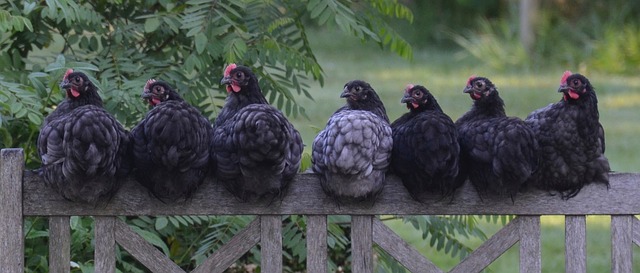
Mad as a Wet Hen--chickenWhen we get mad as a wet hen, we get angry – very angry.

This seems like a strange expression, because most hens don’t mind getting wet. (Hen usually means a female chicken.)

We may not get mad often. Yet, most of us get mad as a wet hen or fit to be tied when people:

  • Hurt someone we love
  • Steal from us
  • Lie to us

Sometimes we get mad as a wet hen for no good reason. A little problem occurs, but we make a mountain out of a molehill. We usually regret that anger.

How do we act when we get mad as a wet hen?

We have several bad choices:

  • Fly off the handle and do something we regret
  • Scream like a baby
  • Destroy property
  • Hit something or someone

We also have several good choices:

  • Think before we act
  • Admit our anger
  • Learn how to express anger without hurting anyone
  • Use our anger to improve life for everyone, if possible

As with all emotions, we choose how we show anger.

May we always use it for good.

“A gentle answer turns away wrath, but a harsh word stirs up anger” (Proverbs 15:1 NIV).

Thanks to Pam Barnes Harlow for the photo.

Do you have a favorite expression or one you want explained? If so, please comment.

Subscribe to receive my weekly posts by email and receive a free copy of “Words of Hope for Days that Hurt.”

If you enjoyed this post, please share it with your friends.