Browsed by
Tag: relationships

In a Pickle

In a Pickle

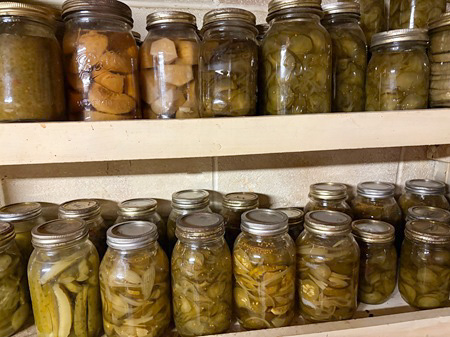
In a Pickle--two shelves of assorted picklesA friend recently said, “I don’t like to put you in a pickle.” She did not want her plans to cause me trouble.

In a pickle means in a difficult situation.

Similar expressions include in a jam or in hot water.

We often end up in a pickle or in a jam through no fault of our own.

  • Circumstances work against us.
  • People’s actions hurt us.
  • Weather destroys our property.
  • Sickness strikes our family.

We have no control over those situations.

Occasionally we get ourselves in a pickle or in hot water.

Our actions work against us when we:

  • Mistreat others
  • Break laws or rules
  • Refuse to work

Sometimes we add words to this expression.

Examples include:

  • In a pretty pickle.
  • In a right pickle.
  • In a real pickle.

However we say it, we get in a mess.

Simple steps may help us out of our messes.

  • Request help from friends, family, or coworkers.
  • Apologize for mistakes.
  • Pray for God’s guidance.

“I cling to your commands and follow them as closely as I can. Lord, don’t let me make a mess of things” (Psalm 119:31 TLB).

Thanks to Rita Smalley for the suggestion and to Gail Gosser for the photo.

Do you have an expression you want explained or thoughts about this one? If so, please comment below.

Subscribe to receive my weekly posts by email and receive a free copy of “Words of Hope for Days that Hurt.”

If you enjoyed this post, please share it with your friends.

Chopped Liver

Chopped Liver

Chopped Liver--bowl of chopped chicken liverDoes anyone out there like chopped liver? I tried to eat it by:

  • Hiding it in mashed potatoes
  • Holding my nose
  • Breading it and adding spices

Nothing worked. It still tasted like liver. I know liver is good for me, but I don’t like it. I consider it a dish for the birds.

Whether we eat it or not, we sometimes feel like chopped liver.

No matter how hard we try:

  • Not everyone likes us.
  • Many overlook us.
  • Few appreciate our potential.

Chopped liver means worthless.

We judge a person or thing as:

  • Unpleasant
  • Unimportant
  • Undesirable

Emotional responses to such treatment include:

  • Sadness
  • Anger
  • Disappointment
  • Defeat
  • Frustration

A common verbal response is, “So what am I? Chopped liver?”

We may say this when:

  • We fail to get a job.
  • Friends reject us.
  • People make fun of us.

According to The Free Dictionary, this expression “likely originated as a part of Jewish humor.”

It probably refers to “chopped liver as a common side dish.”  It was “overlooked in favor of the main course.” Many people dislike its taste.

We may consider chopped liver as good only for garbage. Yet, we never want to treat one another that way.

“To love [God] with all your heart, with all your understanding and with all your strength, and to love your neighbor as yourself is more important than all burnt offerings and sacrifices” (Mark 12:33 NIV).

Thanks to Joan Borton for the suggestion. Photo courtesy of Pixabay.

Do you have an expression you want explained or thoughts about this one? If so, please comment below.

Subscribe to receive my weekly posts by email and receive a free copy of “Words of Hope for Days that Hurt.”

If you enjoyed this post, please share it with your friends.

The Hand That Rocks the Cradle

The Hand That Rocks the Cradle

The Hand That Rocks the Cradle--vintage doll in cradleIn 1865, William Ross Wallace wrote a poem, “What Rules the World.” According to The Free Dictionary, it later became known as “The Hand that Rules the World.” The poem’s refrain, “The hand that rocks the cradle is the hand that rules the world” has become an often-repeated proverb.

The hand that rocks the cradle refers to the influence mothers have on children.

Mothers guide their children’s overall growth.

  • Social
  • Emotional
  • Physical
  • Mental
  • Spiritual

Think about the power in that position.

The hand that rocks the cradle applies to more than biological mothers.

Some of the most influential include:

  • Foster mothers
  • Adoptive mothers
  • Mothers-in-law
  • Stepmothers
  • Grandmothers
  • Other relatives
  • Friends
  • Neighbors
  • Teachers
  • Anyone who assumes a mother’s role, formal or informal

This Mother’s Day, thank the mothers in your life.

I am so grateful for the positive influence of my mother plus several others in informal mother roles. Many now live in heaven, but their impact remains.

“Her children arise and call her blessed” (Proverbs 31:28 NIV).

What mothers would you add to the list I made. Please comment.

Thanks to Debbie Tapscott for the suggestion and to Virginia Graves for the photo taken at Taylor County Museum – The Heistand House in Campbellsville, KY.

Subscribe to receive my weekly posts by email and receive a free copy of “Words of Hope for Days that Hurt.”

If you enjoyed this post, please share it with your friends.

Written in Stone

Written in Stone

Written in Stone--Statue of Moses with the Ten CommandmentsWhen we receive instructions, we may wonder if they will change or if they are written in stone. That is true for orders from:

  • Parents to children
  • Employers to workers
  • Governments to citizens

Anything written in stone (or set in stone) cannot be changed.

It is:

  • Permanent
  • In final form

Similar expressions include cast in stone or etched in stone.

Written in stone probably originated with the Ten Commandments in the Bible.

Those rules, given by God to Moses, were engraved on stone. They provide direction for every part of our lives.

The first four commandments address our relationship with God.

They tell us to:

  1. Have no other gods before God.
  2. Make no idols.
  3. Never take God’s name in vain.
  4. Remember and keep the Sabbath day holy.

The last six commandments address our relationships with other people.

They tell us to:

  1. Honor our fathers and mothers.

And not to:

  1. Murder
  2. Commit adultery
  3. Steal
  4. Bear false witness
  5. Covet

Years later, a law expert asked Jesus which commandment is greatest.

Jesus replied, “‘Love the Lord your God with all your heart and with all your soul and with all your mind.’ This is the first and greatest commandment. And the second is like it: ‘Love your neighbor as yourself.’ All the Law and the Prophets hang on these two commandments” (Matthew 22:37-40).

Love God. Love others. That covers all the commandments in a nutshell.

Thanks to Tracy Crump for the suggestion. Image by Enlightening Images from Pixabay.

Do you have an expression you want explained or thoughts about this one? If so, please comment below.

Subscribe to receive my weekly posts by email and receive a free copy of “Words of Hope for Days that Hurt.”

If you enjoyed this post, please share it with your friends.

Milktoast

Milktoast

Milktoast--milktoast on a plate on a table with flowers in the middleI don’t want milktoast for breakfast or any other meal. Although I like milk and toast, I prefer them separate. I also want more flavor. Even with sugar, cinnamon, or other spices added, it remains a bland dish. Give me eggs or cereal with fruit and nuts.

Neither do I want to be a milktoast person or give milktoast responses. However, I have been guilty of both.

Milktoast means weak or ineffective.

It can be a noun or an adjective. The person or response is:

Milquetoast mean the same.

According to The Free Dictionary, the character description refers to H. T. Webster’s comic strip character, Caspar Milquetoast. Like edible milktoast (or milk toast), Caspar had a bland personality.

Milktoast is easy to digest.

With so little flavor, it does not upset the body’s system. Neither do weak people upset their social systems of:

  • Business
  • Government
  • Religion
  • Families

They value the status quo above truth or progress.

God seeks boldness in service.

Certainly, quietness and meekness are often appropriate. Yet, God expects and provides courage when the time comes to speak up and stand tall.

“Now, Lord, consider their threats and enable your servants to speak your word with great boldness” (Acts 4:29 NIV).

Thanks to Gail Johnson for the suggestion and to Jeri Gumm Stone for the photo.

The Early Bird Gets the Worm Matin Wiles book
Version 1.0.0

Do you have an expression you want explained or thoughts about this one? If so, please comment below.

Subscribe to receive my weekly posts by email and receive a free copy of “Words of Hope for Days that Hurt.” On 3-29-25, one name will be randomly selected from my mailing list to also receive a free copy of Martin Wiles’s book, Don’t Just Live…Really Live.” If your name is already on the mailing list, you are automatically entered. Please encourage your friends to subscribe.

If you enjoyed this post, please share it with your friends.

Fruit of Your Labor

Fruit of Your Labor

Fruit of Your Labor--flower and vegetable garden with orchard in backgroundMy dad’s garden and orchard fed our family plus dozens of others. He spent years growing food and flowers as a labor of love. Dad also understood what it means to enjoy the fruit of your labor.

The fruit of your labor means the reward for your work.

Your efforts pay off. Because you refuse to give up, you bear fruit.

Long hours and hard work make you appreciate the fruit of your labor.

  • Farmers harvest their crops.
  • Gardeners enjoy vegetables, fruit, and flowers.
  • Students celebrate graduation.
  • Business owners enjoy profits.

You benefit from your investment of:

  • Time
  • Money
  • Muscle (mental or physical)

The harder the work the more enjoyable the fruit of your labor.

Life may give you long rows to hoe. However, you usually reap what you sow. Greater efforts result in greater rewards.

Make relationships your most important investment.

According to the Bible, the greatest commandments are to love God and love one another. The best fruit does not result from a focus on self. Rather, it grows from love and service.

“Blessed are all who fear the Lord, who walk in obedience to him. You will eat the fruit of your labor; blessings and prosperity will be yours” (Psalm 128:1-2 NIV).

Thanks to Beckham Wilson for the suggestion.

Do you have an expression you want explained or a thought about this one? If so, please comment below.

Subscribe to receive my weekly posts by email and receive a free copy of “Words of Hope for Days that Hurt.”

If you enjoyed this post, please share it with your friends.

Have Something Up Your Sleeve

Have Something Up Your Sleeve

Have Something Up Your Sleeve--hand with ace of diamonds sticking out of sleeveHave you ever had someone say you have something up your sleeve? Or maybe that you always have something up your sleeve?

To have something up your sleeve means you have a secret plan.

That hidden goal will work to your advantage. It remains ready for use at the right time.

This phrase often relates to cheating while playing cards.

You hide a card, often an ace, up your sleeve. When you need it, you play it.

According to The Free Dictionary, this expression “dates at least from the sixteenth century, when clothes generally had no pockets, and sleeves were a usual storage place.”

You may have something up your sleeve other than cards.

Secret plans often exist in:

  • Business schemes
  • Legal tactics
  • Military maneuvers

You keep people in the dark. Most relationships hold potential for such secret moves.

Rather than have something up your sleeve, why not stay honest and open?

When you plot against one another, everyone loses. Instead, roll up your sleeves and work together. If you must keep secrets, be sure they help rather than hurt.

“You have set our iniquities before you, our secret sins in the light of your presence” (Psalm 90:8 NIV).

Thanks to Brad Leverett for the suggestion.

Do you have an expression you want explained or a thought about this one? If so, please comment below.

In the Thick of It--He Meant You to be You book coverSubscribe to receive my weekly posts by email and receive a free copy of “Words of Hope for Days that Hurt.” Congratulations to Karen Radjunas, whose name was randomly drawn from my mailing list for a free copy of J.J. LeVan’s book, He Meant You to Be You

If you enjoyed this post, please share it with your friends.

On the Mend

On the Mend

On the Mend--jeans pocket with scissors, thread, thimble, pin cushion, and measuring tapeSeveral family members recently suffered significant health problems. Most are now on the mend.

On the mend refers to healing.

  • Surgeries are over.
  • Health has improved.
  • They feel better.

Some continue treatments or therapy. Although still in recovery, they look forward to further healing.

Improved health does not equal perfect health.

However, they can enjoy:

  • Mended bones
  • Cured diseases
  • Restored strength and energy

They are alive and kicking (only not too high), and they keep on keeping on.

On the mend describes more than physical healing.

It also means repairs to:

  • Torn clothing
  • Ruined relationships
  • Damaged roads
  • Faulty morals
  • Shattered emotions

Although broken, all can mend.

Jesus offers to mend broken lives.

Just as He called fishermen mending their nets to follow Him, Jesus also calls people today. A positive answer results in:

  • Forgiveness for sins
  • A personal relationship with God
  • Peace, hope, joy, and love regardless of life’s circumstances
  • A perfect, eternal home in heaven

“Going on from there, He saw two other brothers, James the son of Zebedee, and John his brother, in the boat with Zebedee their father, mending their nets. He called them, and immediately they left the boat and their father, and followed Him (Matthew 4:21-22 NKJV).

Thanks to Melissa Bright for the suggestion.

Do you have an expression you want explained or a thought about this one? If so, please comment below.

Subscribe to receive my weekly posts by email and receive a free copy of “Words of Hope for Days that Hurt.”

If you enjoyed this post, please share it with your friends.

Short Leash

Short Leash

Short leash--Dog on short leash across a fence from a horseA friend recently said, “when we are dog-tired, we can be on that short leash of frustration and bark at others too easily.” How true. Fatigue often leads to frustration and harsh answers.

A short leash means strong control by someone or something.

When dog owners want more control over their dogs, they keep the leash short and the dogs close.

People on short emotional leashes know the feeling well. They enjoy little freedom.

We suffer if we allow emotions to keep us on a short leash.

God gave us emotions, but God also gave us minds. We never want our emotions to cloud good judgement.

Let’s choose a better way.

Rather than bark or yell at someone when upset, why not take time to calm down? We don’t want to say anything we regret. If we give it a rest long enough to get a grip, we don’t have to worry about going haywire.

“Where there is no revelation, people cast off restraint; but blessed is the one who heeds wisdom’s instruction” (Proverbs 29:18 NIV).

Thanks to Martha J. Orlando for the suggestion and to Chelsey Stone for the photo.

Do you have an expression you want explained or a thought about this one? If so, please comment below.

Subscribe to receive my weekly posts by email and receive a free copy of “Words of Hope for Days that Hurt.”

If you enjoyed this post, please share it with your friends.