Browsed by
Tag: relationships

Bite Someone’s Head Off

Bite Someone’s Head Off

Bite Someone's Head Off: tiger with open mouthWhen we see a tiger or other wild animal open its mouth and hear it roar, we may fear it will bite someone’s head off. When we open our mouths while angry, other people may expect us to bite their heads off.

To bite someone’s head off means to react in anger.

We have a bad day, so we take it out on the people around us. They may have no idea why we react as we do, since they did nothing to provoke us.

Other times, people may irritate us with what we consider inappropriate behavior.

Either way, we act or react with:

  • Rage
  • Force
  • Impatience

A similar expression is to snap someone’s head off.

Both mean to scold or speak in a mean manner. If we are mad at the world, whoever comes our way suffers.

Our response to others matters.

Once we speak words, we can’t take them back. We can apologize, but the harm remains.

We all have bad days.

However, we decide whether we will do the best we can or make life miserable for everyone we encounter. Remember, we catch more flies with honey than vinegar. Will we spread:

  • Health or harm?
  • Love or hate?
  • Encouragement or despair?

Let’s not allow bad days to control us. Rather, let’s bite our tongues and treat others as we want to be treated.

“They sharpen their tongues like swords and aim cruel words like deadly arrows. (Psalm 64:3 NIV).

Thanks to Katherine Pasour for the suggestion. Photo by shravan khare on Pexels.

Do you have an expression you want explained or a thought about this one? If so, please comment below.

Subscribe to receive my weekly posts by email and receive a free copy of “Words of Hope for Days that Hurt.”

If you enjoyed this post, please share it with your friends.

Butt Heads with Someone

Butt Heads with Someone

Butt Heads with Someone--two boys with heads together and fists clenchedWhen we butt heads with someone, we cause and receive pain. No fun.

Literally, to butt heads means to hit heads together.

We often see this when animals lock horns. They fight to determine who will lead their group.

Figuratively, to butt heads means to strongly disagree or have an intense argument.

This causes problems in any relationship:

  • Families
  • Friends
  • Neighbors
  • Political parties
  • Social organizations

 The tactics in such arguments aim to hurt rather than heal.

  • Name calling
  • Disrespect
  • Physical or verbal fights

 Rather than butt heads, we need to learn to get along.

We can disagree in an agreeable way. If we explain our differences in a calm, respectful manner, everyone wins. Two heads are better than one applies even when the two heads disagree.

 What causes fights and quarrels among you? Don’t they come from your desires that battle within you?” (James 4:1 NIV).

Thanks to Tracy Crump for the suggestion and to Megan Wollman for the photo.

Do you have an expression you want explained or a thought about this one? If so, please comment below.

Subscribe to receive my weekly posts by email and receive a free copy of “Words of Hope for Days that Hurt.”

If you enjoyed this post, please share it with your friends.

You Got This

You Got This

You Got This! in red on a Rolodex cardIf we want to encourage people who face difficult challenges, we might say, “You got this” or “You’ve got this.” We want them to know we understand their problems. Yet, we also believe they can overcome them.

You got this means we think people can manage their troubles.

We reassure them that they:

  • Can do it
  • Have no reason to fear
  • Can conquer their uncertainty

We believe in their ability to do what they need to do.

You got this offers hope.

We all feel hopeless from time to time. We get discouraged, ready to give up. Yet, a pep talk from a family member or friend can work wonders. It helps us keep on keeping on.

Our present troubles will not last forever.

Instead, we look for light at the end of the tunnel. In addition, if we have placed our faith in Jesus, we look forward to a home in heaven at the end of the road.

“Encourage the disheartened, help the weak, be patient with everyone” (1 Thessalonians 5:14 NIV).

Thanks to Rebecca Stafford for the suggestion.

Do you have an expression you want explained or a thought about this one? If so, please comment below.

Subscribe to receive my weekly posts by email and receive a free copy of “Words of Hope for Days that Hurt.”

If you enjoyed this post, please share it with your friends.
At Loggerheads

At Loggerheads

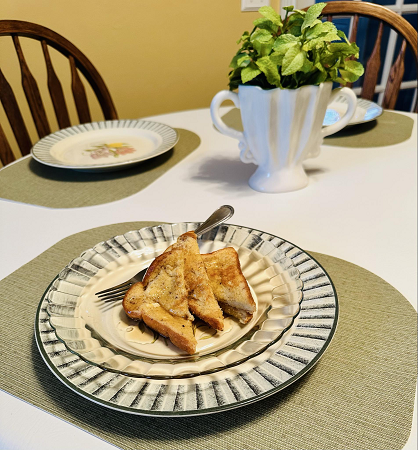
At Loggerheads--loggerhead turtle on sandAt loggerheads has nothing to do with loggerhead turtles. Although we might enjoy finding the so-ugly-they-are-cute turtles, they give no insight into the idiom. Unless they fight.

At loggerheads means in conflict.

We disagree or argue and fail to resolve the problem. Probably one of the best-known examples of conflict between families is the Hatfield and McCoy feud.

Usually no one wins when at loggerheads.

As with the Hatfields and McCoys, strong disagreement often causes great suffering on both sides including violence or death.

In addition to families, quarrels or disputes occur among:

  • Friends
  • Co-workers
  • Countries
  • Organizations

The Free Dictionary gives two possible origins for the expression.

  1. “A ‘logger’ is a 16th-century term for a block of wood, so a ‘loggerhead’ is a blockhead or fool.”
  2. Loggerhead is also a late 1600s term for “a long-handled iron poker with a bulb-shaped end that was heated in the fire and used to melt pitch.” This “may have been alluded to as a weapon.”

Rather than remain at loggerheads, let’s seek solutions.

  • Compromise when possible.
  • Agree with the other person when we realize we are wrong.
  • Stand firm when necessary.
  • Follow Jesus’ example of self-giving love.

“Hatred stirs up conflict, but love covers over all wrongs” (Proverbs 10:12 NIV).

Thanks to Sarah Burns Hampshire for the suggestion. Photo by Amy Farías with Pexels.

Do you have an expression you want explained or a thought about this one? If so, please comment below.

Subscribe to receive my weekly posts by email and receive a free copy of “Words of Hope for Days that Hurt.”

If you enjoyed this post, please share it with your friends.

On the Same Page

On the Same Page

On the Same Page: Grandmother reading to grandson, his mouth open in surpriseWhen we read a book together, we want to be on the same page. To read the same words and see the same pictures gives us mutual understanding.

On the same page means we agree.

We share the same:

  • Viewpoint or opinion
  • Attitude
  • Goals
  • Perception

By staying on the same page, we avoid confusion.

We begin and proceed with a similar mindset. As a result, we achieve far more than if our plans or ideas clash.

This remains true whatever we do.

  • Work
  • Sports
  • Academics
  • Investments

However, we want to stay on the same page for the right reasons.

Will our choices:

  • Honor God?
  • Serve the needs of others?
  • Challenge us to be the best we can be?

For the best life, go by the best book, the Bible. In it we learn the source of true joy and the challenge to share that joy with others..

“Make my joy complete by being like-minded, having the same love, being one in spirit and of one mind” (Philippians 2:2 NIV).

This idea came from a post by Amy Walsh with Wisdom, Whimsy, and Wordsmithing. Thanks to Tracy Crump for the photo.

Do you have an expression you want explained or a thought about this one? If so, please comment below.

Subscribe to receive my weekly posts by email and receive a free copy of “Words of Hope for Days that Hurt.”

If you enjoyed this post, please share it with your friends.

Pickin’ and Grinnin’

Pickin’ and Grinnin’

Pickin' and Grinnin'--dulcimerMy dad and a few friends often gathered in our kitchen on Friday or Saturday nights for pickin’ and grinnin’. Instruments included guitars, banjo, fiddle, and an occasional mandolin. They made music with laughter as well as instruments.

Pickin’ and grinnin’ refers to playing musical instruments while having a good time.

Instruments usually have strings such as guitar or banjo. Musicians may not play the best, but they play with enthusiasm. Favorite songs fill the air.

The 1969-1997 television show, Hee Haw, made pickin’ and grinnin’ a more common expression.

Hosts Buck Owens and Roy Clark frequently said it. All the performers looked and sounded happy as a lark.

The dulcimer makes me grin.

Jean Ritchie is one of the best-known dulcimer musicians. She has traveled the world playing and singing Appalachian music.

My dad and I shared an appreciation for the dulcimer. We made the one in the photo above. (Actually, he did the work while I did whatever he told me to do.) He made and gifted several others.

Music makes our world a better place. Enjoy and share!

“Sing and make music from your heart to the Lord” (Ephesians 5:19 NIV).

Do you have an expression you want explained or a thought about this one? If so, please comment below.

Subscribe to receive my weekly posts by email and receive a free copy of “Words of Hope for Days that Hurt.”

If you enjoyed this post, please share it with your friends.

Keep Your Hair On

Keep Your Hair On

Keep Your Hair On -- Girl with hair blowing around her faceHave you ever been in a windstorm where you felt like your hair was lifting off your head? If you wear a wig, the results can be disastrous and hilarious. You want to keep your hair on. Therefore, you hope the wind calms so your hair can do the same.

To keep your hair on means to stay calm.

People say this if you are:

They often say it as an order. They want you to get a grip.

You hear this expression primarily in the UK.

An American equivalent is to keep your shirt on. Both expressions caution you to regain control.

Keeping your hair on helps you be your best self.

Remaining calm and patient leads to a better:

  • Attitude
  • Blood pressure
  • Relationship with others

I pray you stay settled and at peace.

“I have calmed and quieted myself” (Psalm 131:2 NIV).

Thanks to Victor S E Moubarak for the suggestion. Image by Petra from Pixabay.

Do you have an expression you want explained or a thought about this one? If so, please comment below.

Subscribe to receive my weekly posts by email and receive a free copy of “Words of Hope for Days that Hurt.”

If you enjoyed this post, please share it with your friends.
Hit the Roof

Hit the Roof

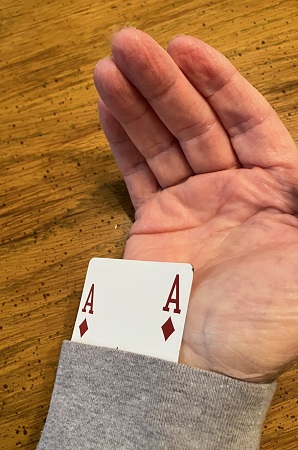
Hit the Roof: Fist up through shattered glassPeople rarely hit the roof physically. However, they frequently hit the roof emotionally.

To hit the roof means to become extremely angry or upset.

According to The Idioms, the expression refers to “being so enraged that you could actually bang your head on the roof (or ceiling) … because you feel like exploding.” Similar expressions include:

People lose their temper.

Reasons people hit the roof vary.

For example, they get angry when they:

  • Fail to get their way
  • See rules broken
  • Experience loss or injury
  • Discover betrayal

Hit the roof also refers to sharp price increases.

  • Goods and services grow more expensive.
  • Stocks rise.

If people invest money, they enjoy those increases. If they make purchases, they want the costs to remain low.

It pays to invest emotions and finances wisely.

Maintain control and do what’s right. Spend time and money productively.

“Get rid of all bitterness, rage and anger, brawling and slander, along with every form of malice” (Ephesians 4:31 NIV).

Thanks to Lindy Pierce for the suggestion. Image by wendy CORNIQUET from Pixabay.

Do you have an expression you want explained or a thought about this one? If so, please comment below.

Subscribe to receive my weekly posts by email and receive a free copy of “Words of Hope for Days that Hurt.”

If you enjoyed this post, please share it with your friends.
Dirt-poor

Dirt-poor

Dirt-poor--wildflowers among grass and leavesAlthough I did not know it, our family was close to dirt-poor during my early childhood. In addition to our share of my grandparents’ farm, Dad bought surrounding farmland.

Dirt-poor means extremely poor.

Since we had the basics for survival, we were not extremely poor. However, we had little cash and few luxuries.

Yet, who needed luxuries? The farm provided:

  • Woods and fields to explore
  • A large yard for play
  • Animals, a garden, and an orchard for food and milk

We also enjoyed lots of books (We were book poor too!), games, and family time.

Our financial resources grew over the years, but I would take nothing for those early lean years.

Rather than dirt poor, many families today are house poor.

They may not have much land, but they buy large houses with large mortgages to match. Like our young family, that leaves them little extra money.

Evidence fails to support a popular internet story that dirt poor relates to dirt floors.

Although it makes an interesting story, it offers no proof.

Financial wealth holds no eternal importance.

If all we do is hoard our money, it does no good. Remember, you can’t take it with you when you die.

Whether poor as a church mouse or filthy rich, let’s use the resources we have to make our world a better place.

“Defend the weak and the fatherless; uphold the cause of the poor and the oppressed” (Psalm 82:3 NIV).

Thanks to Gail Gosser for the suggestion.

Do you have an expression you want explained or a thought about this one? If so, please comment below.

Subscribe to receive my weekly posts by email and receive a free copy of “Words of Hope for Days that Hurt.”

If you enjoyed this post, please share it with your friends.
Snail’s Pace

Snail’s Pace

Snail's Pace--a snail on a leafA friend recently told me she has slowed to a snail’s pace after a major health episode. However, she has not given up. She keeps on keeping on.

A snail’s pace means a slow speed.

If we watch a snail, we understand the connection. It moves so slowly it almost looks like it stands still. However, that snail does move. If we watch it on a plant, we see that it likes to eat as it goes.

Life often moves at a snail’s pace.

Like my friend, health issues make us slow down. Life also feels like it crawls when:

  • Work takes longer than we like.
  • Study requires long, difficult hours.
  • Favorite activities are delayed.

A slower pace allows time to enjoy the moment.

We frequently move so fast, we forget to relish life’s simple pleasures. Instead of constant motion, why not:

  • Watch the snails, butterflies, and other sights in nature.
  • Take deep breaths and look around at all God gives.
  • Stop and listen to family and friends.
  • Learn to relax.

Sometimes we need to adjust our pace for the benefit of others.

Small children or the elderly may need more time. We want to match our movement to theirs. Whether fast or slow, let’s help others enjoy their moments too.

We will follow slowly, at a pace that is comfortable for the livestock and the children” (Genesis 33:14 NIV).

Thanks to E. Pearl Anderson for the suggestion. Photo courtesy of Pexels.

Do you have an expression you want explained or a thought about this one? If so, please comment below.

Subscribe to receive my weekly posts by email and receive a free copy of “Words of Hope for Days that Hurt.”

If you enjoyed this post, please share it with your friends.