
Browsed by
Tag: relationships

Make Up for Lost Time

Make Up for Lost Time

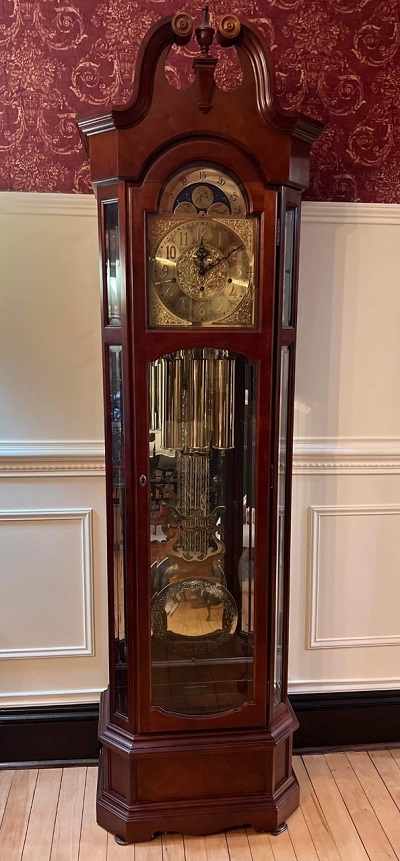
Make Up for Lost Time--grandfather clockMost of us have had to make up for lost time. We plan to complete tasks. Yet, other events interfere with those plans.

To make up for lost time means to spend time doing what we should have done earlier.

Because of our delay, we have to work quicker or longer to get the job done. For example, we:

  • Leave late and drive faster to arrive on time. (I don’t recommend this.)
  • Fail to complete a work assignment and have to work harder later.

We occasionally make up for lost time in our relationships.

  • After years apart or with little time together, we focus on one another.
  • When illness prevents favorite activities, we spend extra time on them after we heal.

Too often, we waste time.

That looks different for each of us. We dillydally when we:

  • Delay a task we don’t want to perform
  • Sleep late
  • Spend excess time on fun but useless activities

 We also make up for lost time through no fault of our own.

We simply have more to do than we can do.

  • Emergencies occur.
  • We complete the work other people failed to do.
  • Unexpected requests or assignments arise.

God gives each of us twenty-four hours a day.

Will we:

  • Use it wisely?
  • Keep our priorities in order?
  • Do our best?

As John Wooden said, “If you don’t have time to do it right, when are you going to have the time to do it over?”

“I trust in you, Lord; I say, ‘You are my God.’ My times are in your hands.” —Psalm 31:14-15

Thanks to Beckham Wilson for the suggestion and to Beverly Ennis for the photo.

Do you have an expression you want explained or a thought about this one? If so, please comment below.

Subscribe to receive my weekly posts by email and receive a free copy of “Words of Hope for Days that Hurt.”

If you enjoyed this post, please share it with your friends.

Heart-to-Heart

Heart-to-Heart

Heart to Heart--sunset silhouette of young girls forming heart with handsMost relationships benefit from occasional heart-to-heart talks. When we open our hearts to one another, we learn to appreciate each other more.

Heart-to-heart means open and honest.

It usually refers to conversations where we don’t hide our emotions. Such talks occur between:

  • Family members
  • Friends
  • Coworkers
  • Neighbors

Honest discussion helps us work through differences of opinion.

The outcome varies. We may:

  • Agree
  • Compromise
  • Agree to disagree

Although such talks don’t always end the way we hope, they usually result in improvement.

Most heart-to-heart talks involve serious subjects.

We don’t just shoot the breeze. Through open discussion, we try to prevent or work through conflicts. Under ideal circumstances, our talks build on already strong relationships.

We celebrate Valentine’s Day with hearts of all kinds:

  • Candy
  • Cards
  • Cakes
  • Clothing

Why not also include heart-filled conversations? Resolve conflicts. Strengthen bonds. Love with both words and actions.

“I have a lot more things to tell you, but I’d rather not use paper and ink. I hope to be there soon in person and have a heart-to-heart talk. That will be far more satisfying to both you and me” (2 John 1:12-13 MSG).

Thanks to Glenda Britton for the suggestion. Image by u_uf78c121 from Pixabay.

Do you have an expression you want explained or a thought about this one? If so, please comment below.

Subscribe to receive my weekly posts by email and receive a free copy of “Words of Hope for Days that Hurt.”

If you enjoyed this post, please share it with your friends.
What’s Good for the Goose Is Good for the Gander

What’s Good for the Goose Is Good for the Gander

What's Good for the Goose Is Good for the Gander--geese in flight from waterIf my sister received a privilege as a child, I thought I had the same right. My little brain believed what’s good for the goose is good for the gander.

Since my grandmother raised geese, I knew a gander was a male goose. However, I also knew this expression applied to both males and females.

What’s good for the goose is good for the gander relates to fairness.

If my sister enjoyed a treat, I wanted one too. That included such favors as:

  • No chores
  • Late curfews
  • New clothes or books

If anything is okay for one person, it should be for another.

I wanted equal treatment, and so did my sister.

Regardless of backgrounds or circumstances, most people want to be treated with:

  • Respect
  • Dignity
  • Worth

What’s good for the goose is good for the gander keeps everyone off a high horse.

If my sister and I acted too high and mighty, we knew our goose was cooked. We ended up in trouble.

God created all people in His image.

To follow God means to treat one another with the same love, forgiveness, and justice God gives.

“Do not pervert justice; do not show partiality to the poor or favoritism to the great, but judge your neighbor fairly” (Leviticus 19:15 NIV).

Thanks to Becky Nash Rowe for the suggestion. Image by Ted Erski from Pixabay.

Do you have an expression you want explained or a thought about this one? If so, please comment below.

Subscribe to receive my weekly posts by email and receive a free copy of “Words of Hope for Days that Hurt.”

If you enjoyed this post, please share it with your friends.
Hand Over Fist

Hand Over Fist

Hand Over Fist-two puppies pulling a ropeWhen puppies have a tug of war, they use their mouths. However, people pull with their hands. Each team wants to pull the other over a line between them. Team members pull by alternating hand over fist.

Today, hand over fist usually means a quick and continuous action.

Hand Over Fist--Boys in tug-of-warThis applies whether:

  • Playing tug of war
  • Climbing a rope
  • Pulling something or someone with a rope

According to The Phrase Finder, an earlier version was hand over hand and meant “making steady progress.” Steady progress may be slower. However, it often results in more secure and lasting results.

This expression frequently refers to people who make money hand over fist.

Shrewd financial decisions increase their wealth. They may not grab money with their hands, but they do profit from business deals. Many times, their gain means someone else’s loss. They fight with no holds barred.

 No decision or action should deliberately harm others.

The bottom line: If anyone suffers unnecessarily, the price is too high. Neither financial profit nor social gain are worth it. In a personal tug of war, let love for God and love for others pull every choice to the right side.

“The love of money is a root of all kinds of evil. Some people, eager for money, have wandered from the faith and pierced themselves with many griefs” (1 Timothy 6:10 NIV).

Thanks to Cindy Shoemaker for the suggestion. Images by Darby Browning and Stéphane CHADOURNE from Pixabay

Do you have an expression you want explained or a thought about this one? If so, please comment below.

Subscribe to receive my weekly posts by email and receive a free copy of “Words of Hope for Days that Hurt.”

If you enjoyed this post, please share it with your friends.

Outside the Box

Outside the Box

Outside the Box--two wrapped giftsSometimes we find ourselves doing the same thing over and over again. We make no progress because we never change. When that happens, we need to think outside the box.

To think outside the box means to think beyond the usual limits.

We think, plan, and act:

  • In new ways
  • Outside the norm
  • In unusual directions
  • With imagination
  • Apart from tradition

We no longer box ourselves in with the same old patterns.

Routine no longer rules. We leave our fear of the unknown and move into new territory.

During Christmas, let’s also think outside the box.

Rather than focus on giving gifts in boxes or bags, let’s focus on gifts that last. We soon forget or throw away most of our wrapped presents. Yet, we remember for a lifetime such treasures as:

  • Kindness
  • Trustworthiness
  • Helping hands
  • Time together
  • Shared sorrow or joy
  • True friendship

Now is a great time to throw out the box. Let’s:

Merry Christmas!

“This is how God showed his love among us: He sent his one and only Son into the world that we might live through him” (1 John 4:9 NIV).

Thanks to Brad Leverett for the suggestion.

Do you have an expression you want explained or a thought about this one? If so, please comment below.

Subscribe to receive my weekly posts by email and receive a free copy of “Words of Hope for Days that Hurt.”

If you enjoyed this post, please share it with your friends.

The Blind Leading the Blind

The Blind Leading the Blind

The Blind Leading the Blind: Man and guide dog on sidewalkThe blind leading the blind does not work.

I have two friends who are blind. Both possess amazing talents — musically, intellectually, spiritually, and socially. However, they can’t help one another, or anyone else, safely cross a street. That requires someone with sight.

Both have loving family and friends who assist them when needed. Both also have guide dogs specially trained to help them.

The blind leading the blind describes people unable to do a task who try to help others perform that same task.

They can’t do it. If they try, both end up in a right smart of trouble.

People need to know what they are doing in order to help someone else.

They must have:

  • Knowledge
  • Experience
  • Skills

For example:

  • Help with math requires an understanding of math.
  • Assistance with cooking requires the ability to cook.
  • Guiding a tour group requires knowledge of the area.

We find the blind leading the blind in the Bible.

Jesus used it in Luke 6:39 and Matthew 15:14. In Matthew, religious leaders rejected the truth. Jesus described them as the blind leading the blind.

To help others is a good thing. Yet, that requires:

  • A willingness to learn
  • The ability to assist

Learn and develop skills first.

Then offer help.

“Leave them; they are blind guides. If the blind lead the blind, both will fall into a pit.” (Matthew 15:14 NIV).

Thanks to Brad Leverett for the suggestion and to Cole Torbert (and Louie) for the photo.

Do you have an expression you want explained or a thought about this one? If so, please comment below.

Subscribe to receive my weekly posts by email and receive a free copy of “Words of Hope for Days that Hurt.”

If you enjoyed this post, please share it with your friends.

Putting on the Ritz

Putting on the Ritz

Putting on the Ritz-gold stars on a fine gold wire backgroundDuring Christmas, we see examples of putting on the Ritz all around us.

  • Elaborate decorations
  • Rich food
  • Lavish gifts (and lots of them)
  • Lovely lights

Those of us who usually live simple lives go overboard in December.

Putting on the Ritz refers to the Ritz Hotels.

Those hotels offer a life of luxury. Only the wealthy can afford them. Occasionally, we may save enough money to enjoy that lifestyle for a few days. Sadly, some of us charge now and pay much more than the original cost later.

Fred Astaire made the Irving Berlin song, “Putting on the Ritz” popular.

When we put on the Ritz, we act rich and stylish.

We may not be able to afford to live high on the hog. Yet, we pretend we can. We like special treatment. An occasional splurge may lift our spirits.

However, let’s never forget those who need the basics.

Many in our world don’t have enough food, heat, shelter, or clothing. This Christmas and throughout the year, let’s brighten their lives by sharing with them.

“Do not store up for yourselves treasures on earth, where moths and vermin destroy, and where thieves break in and steal. But store up for yourselves treasures in heaven, where moths and vermin do not destroy, and where thieves do not break in and steal” (Matthew 6:19-20 NIV).

Thanks to Lindy Pierce for the suggestion. Image by Annette Meyer from Pixabay

Do you have an expression you want explained or a thought about this one? If so, please comment below.

Subscribe to receive my weekly posts by email and receive a free copy of “Words of Hope for Days that Hurt.”

If you enjoyed this post, please share it with your friends.
Bury the Hatchet

Bury the Hatchet

Bury the Hatchet--a hatchet surrounded by pieces of woodHow I wish our world would learn to bury the hatchet. Divisions occur everywhere.

People have always disagreed, and that’s okay. However, why not learn to disagree agreeably? Instead, we:

  • Hate
  • Argue
  • Gossip
  • Fight

We war against one another with words and actions.

This happens among:

  • Family members
  • Friends
  • Neighbors
  • Cities
  • States
  • Countries

Bury the hatchet originated as a Native American tradition.

According to The Phrase Finder, “Hatchets were buried by the chiefs of tribes when they came to a peace agreement.” What a powerful symbol.

We can bury the hatchet too.

When we recognize destructive speech or behavior, we have a choice. We can follow the same pattern, or we can break the cycle.

Peace requires strength.

To choose not to harm another person or group of people calls for courage. If someone hurts us, our natural reaction is to hurt them. We are ready to lock horns. Yet, two wrongs don’t make a right. Suffering continues on both sides.

Jesus taught and lived love and forgiveness for everyone. Although not easy, that remains the only way to true and lasting peace.

“Consider the blameless, observe the upright; a future awaits those who seek peace” (Psalm 37:37 NIV).

Thanks to Ann Knowles for the suggestion. Image by Davie Bicker from Pixabay.

Do you have an expression you want explained or a thought about this one? If so, please comment below.

Subscribe to receive my weekly posts by email and receive a free copy of “Words of Hope for Days that Hurt.”

If you enjoyed this post, please share it with your friends.
Go Off the Deep End

Go Off the Deep End

Go Off the Deep End--Cumberland FallsAs children, my sister, brother, and I loved to go off the deep end of a swimming pool. We wanted to see what was under the water. Usually, we found nothing but the bottom of the pool.

In contrast, a dive into the depths of rivers or oceans reveals a new world. We find ourselves surrounded by:

  • Fish
  • Rocks
  • Plants
  • Other natural wonders

However, a word to the wise: Learn to swim before jumping into deep water.

To go off the deep end means to act crazy.

What we do makes no sense. Our behavior may result from feeling:

  • Upset
  • Angry
  • Excited
  • Grieved
  • Lovesick

We go overboard.

When we go off the deep end, we let our emotions take control.

Like a person who can’t swim but jumps into deep water, we fail to use reason. We overreact. We:

  • Speak before we think
  • Hurt others or ourselves
  • Act before we get the facts
  • Withdraw from sources of help
  • Move too fast in a relationship

God gave us emotions, but God also gave us brains. Let’s use our heads for more than hat racks.

“Leave behind your foolishness and begin to live; learn how to be wise” (Proverbs 9:6 TLB).

Thanks to Janna Babak for the suggestion.

Do you have an expression you want explained or a thought about this one? If so, please comment below.

Subscribe to receive my weekly posts by email and receive a free copy of “Words of Hope for Days that Hurt.”

If you enjoyed this post, please share it with your friends.
Turn the Tables

Turn the Tables

Turn the Tables: chess board reflected underneath itI never played much chess. However, I played checkers with my dad and sister for years. When I was losing, I hoped to turn the tables. I wanted to win.

I never physically turned the tables to play from the opposite side. However, I tried to change the outcome of the game.

When we turn the tables, we reverse a situation.

It becomes the opposite of what it was. We see such major changes in:

  • Board games, like chess or checkers
  • Sports events
  • Job positions
  • Any competition

This expression also applies to major changes in plans.

Usually, the change helps the person who had an earlier disadvantage. Roles reverse. The shoe is on the other foot.

How did this expression begin?

According to The Free Dictionary, “Until the mid-18th century, tables was the usual name for the board game backgammon. Early instances of the use of this phrase, dating from the mid-17th century, made it clear that it comes from the practice of turning the board so that a player had to play what had previously been their opponent’s position.”

We find examples of turned tables throughout history.

 The Bible tells the story of Joseph and his brothers. Joseph’s brothers were jealous of him and sold him into slavery. Eventually, Joseph achieved an important leadership position. When famine struck, Joseph’s brothers went to him for grain. They did not recognize him. After Joseph identified himself, his brothers feared for their lives.

Yet, Joseph did not act high and mighty when their roles changed. Instead, he forgave his brothers and provided for them.

Like Joseph, we have an opportunity to help others when the tables turn our way.

“‘But Joseph said to them, ‘Don’t be afraid. Am I in the place of God? You intended to harm me, but God intended it for good to accomplish what is now being done, the saving of many lives. So then, don’t be afraid. I will provide for you and your children.’ And he reassured them and spoke kindly to them” (Genesis 50:20-21 NIV).

Thanks to Debbie Tapscott and Beckham Wilson for the suggestion. Image by Waldemar Bajda from Pixabay.

Do you have an expression you want explained or a thought about this one? If so, please comment below.

Subscribe to receive my weekly posts by email and receive a free copy of “Words of Hope for Days that Hurt.”

If you enjoyed this post, please share it with your friends.