Browsed by
Tag: self-improvement

Red Herring

Red Herring

Red Herring-school of fishFew of us like to discuss difficult issues. Instead, we turn attention from the facts with a red herring.

This expression refers to a distraction from crucial matters.

A red herring is a dried smoked fish. Smoking to preserve the herring creates its red color.

The Free Dictionary says the expression may have come from using the fish’s strong smell to distract hunting dogs from a trail.

It may also have come from a writer “who used the scent-laying image as a metaphor.” Mystery writers still give misleading clues about “who-done-it.”

Children frequently use a red herring.

They don’t want to:

  • Complete chores.
  • Work on school assignments.
  • Admit when they disobey.

Instead, they:

  • Complain about unfair rules.
  • Ask irrelevant questions.
  • Talk about another child’s behavior.

A red herring from adults causes much greater harm.

Like children, we distract attention from:

  • Responsibilities we want to avoid
  • Main issues
  • Poor choices

We focus away from our involvement in:

  • Abuse, neglect, or other criminal activity
  • Political misdeeds
  • Business errors

Rather than do what we should, we:

  • Blame innocent people.
  • Focus on unrelated issues.
  • Make self-centered decisions.

A red herring often misleads as well as distracts.

We don’t just chase rabbits. We deliberately point people in the wrong direction.

Enjoy novels with red herrings. Avoid red herrings in real life.

“Jesus answered: ‘Watch out that no one deceives you’” (Matthew 24:4 NIV).

Thanks to Kay Emerick for the suggestion. Image by Hans from Pixabay.

Do you have an expression you want explained or thoughts about this one? If so, please comment below.

Subscribe to receive my weekly posts by email and receive a free copy of “Words of Hope for Days that Hurt.”

If you enjoyed this post, please share it with your friends.
Close but No Cigar

Close but No Cigar

Close but No Cigar--booths with Farris wheel in backgroundEvery summer of my childhood, I looked forward to a county fair. Several booths offered games with prizes. When I failed to win, the booth operator occasionally said, “Close but no cigar.”

Close but no cigar means almost, but not quite, successful.

That happens when we:

  • Barely miss the bull’s eye on a target
  • Almost win a contest
  • Make a close but incorrect answer

Years ago, cigars were a frequent prize.

The Free Dictionary says, “This expression comes from the old US custom of giving a cigar as a prize in fairground games of skill.”

Close but no cigar can encourage or discourage.

Some of us try again and try harder. Others give up in defeat.

Keep working toward worthwhile goals.

Don’t worry about what matters little. Trinkets from fairs rarely last. Focus on goals with eternal value.

Everyone falls short of perfection.

We miss the mark in life. For that reason, Jesus, the only perfect one, came to pay the price for our imperfections. Jesus offers life’s greatest prize, forgiveness for our sins and eternal life with Him.

“All have sinned and fall short of the glory of God. The wages of sin is death, but the gift of God is eternal life in Christ Jesus our Lord.” (Romans 3:23; 6:23 NIV).

Thanks to Ann Klotz, Lindy Pierce, and Becky Nash Rowe for the suggestion. Image by Jill Wellington from Pixabay.

Do you have an expression you want explained or thoughts about this one? If so, please comment below.

Subscribe to receive my weekly posts by email and receive a free copy of “Words of Hope for Days that Hurt.”

If you enjoyed this post, please share it with your friends.

Fake It Till You Make It

Fake It Till You Make It

Fake It Till You Make It--Little girl dressed in medical clothes with a pretend needle and magnifying glassHave you ever had to do a job you did not think you could do? Yet you had to do it. When that happens, you fake it till you make it.

When you fake it till you make it, you act like you know what you are doing.

You:

  • Act confident until you feel confident.
  • Imitate the skills of others until you learn the skills yourself.
  • Pretend you feel brave until you become brave.

You whistle past the graveyard until your fear disappears. The more optimistic you behave, the more optimistic you become.

You fake it till you make it to cheer yourself through tough times.

To survive, you act like a survivor. Although not always easy, it often helps.

Watch children play to learn this skill.

They pretend to be:

  • Famous singers and dancers
  • Sports champions
  • Doctors or teachers

They also imitate parents, best friends, and heroes. They learn competence by acting competent.

Fake it till you make it does not always work.

Some skills, feelings, or behaviors may exceed your abilities.

Choose wisely what to learn and who to imitate.

Learn well from those who teach you to live well.

“I applied my heart to what I observed and learned a lesson from what I saw” (Proverbs 24:32 NIV).

Thanks to Kathy Rouser for the suggestion. Photo courtesy of Pixabay.

Do you have an expression you want explained or thoughts about this one? If so, please comment below.

Subscribe to receive my weekly posts by email and receive a free copy of “Words of Hope for Days that Hurt.”

If you enjoyed this post, please share it with your friends.
Split Hairs

Split Hairs

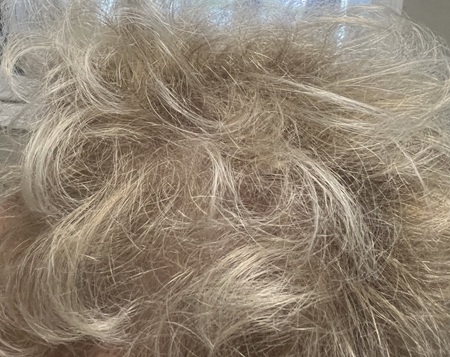
Split Hairs--top of head with teased hairDo you remember sky-high teased hairstyles? Or have you seen pictures of them? Can you imagine all the split hairs that caused? Worse damage occurs when we split hairs with our words.

When we split hairs, we fight about minor details that make no major difference.

We focus on the petty or unimportant.

This metaphor “was first recorded in the late 17th century,” according to The Free Dictionary.

Most of us have split a few hairs.

Yet why let anything that is neither here nor there steal our attention? No need to stress. No need to waste that time. If it will not matter six months from now, let it go.

Let’s focus on the worthy.

  • Do what needs to be done.
  • Forget what makes little or no difference.
  • Never let trivial matters get our goat.

A single hair should not overtake the rest of our body. Neither should one small detail overtake our minds, emotions, or relationships.

“Keep reminding God’s people of these things. Warn them before God against quarreling about words; it is of no value, and only ruins those who listen” (2 Timothy 2:14 NIV).

Thanks to Tracy Crump for the suggestion and to Misty Durham for the photo.

Do you have an expression you want explained or thoughts about this one? If so, please comment below.

Subscribe to receive my weekly posts by email and receive a free copy of “Words of Hope for Days that Hurt.”

If you enjoyed this post, please share it with your friends.
Bigger Fish to Fry

Bigger Fish to Fry

Bigger Fish to Fry-red plate filled with fried fish and lemon slicesDo you prefer small fish piping hot from the grill or oven? Or do you enjoy bigger fish to fry?

For non-food decisions, go for bigger fish to fry.

Bigger fish to fry means more important matters to manage.

You deal with:

  • Major activities rather than minor
  • Emergencies rather than routine
  • Long lasting rather than brief

Bigger fish to fry does not mean never having fun.

Meaningful moments include:

  • Relaxing
  • Resting
  • Focusing on relationships

Personal accomplishments do not equal success.

  • Quality time with family is more important than awards.
  • Helping people in need matters more than promotions.
  • Investing in lives outlasts investing in stocks.

How you spend your time and money reveals what you value most.

  • Will it make a difference?
  • Does it have eternal worth?

Be sure bigger fish to fry are worth the effort.

Focusing only on self often leads to fishy situations. Focusing on God’s will and helping others keeps you on the right track. Jesus said to follow Him and become fishers of people. All people. Everywhere.

“Don’t be afraid; from now on you will fish for people” (Luke 5:10 NIV).

Thanks to Lindy Pierce for the suggestion and to Terry Pennington, owner of Creekside Restaurant, for the photo.

Do you have an expression you want explained or thoughts about this one? If so, please comment below.

Subscribe to receive my weekly posts by email and receive a free copy of “Words of Hope for Days that Hurt.”

If you enjoyed this post, please share it with your friends.

Lie Like a Rug

Lie Like a Rug

Lie Like a Rug--Jumbled multicolored arrows with truth or lie on themMy dad loved to play with words. He would deliberately use the wrong word to give a sentence a totally new meaning. I’m sure some people thought he did not know better. However, he knew exactly what he was doing. Lie like a rug was one of his favorite expressions.

Lie like a rug is a pun, a usually funny play on words.

Puns use words that are alike or nearly alike but have different meanings. “Lie” can mean either to tell an untruth or to rest in a flat position. Lie like a rug combines those two meanings since a rug lies flat on a floor.

If we lie like a rug, we lie boldly and shamelessly.

Our untruth is no mistake. We deliberately lie. Sometimes we know that no one will believe us but lie anyway.

If we repeat an untruth often enough, we may persuade some people to believe.

We sound ridiculous. Yet repetition eventually convinces those unwilling to look at the evidence. If not convinced, they may choose not to confront us or face the truth.

Always weigh the evidence.

Take what sounds like a lie with a grain of salt. Search for truth and follow it.

“Whoever lives by the truth comes into the light, so that it may be seen plainly that what they have done has been done in the sight of God” (John 3:21 NIV).

Thanks to Melissa Henderson for the suggestion. Image by Gerd Altmann from Pixabay.

Do you have an expression you want explained or thoughts about this one? If so, please comment below.

Subscribe to receive my weekly posts by email and receive a free copy of “Words of Hope for Days that Hurt.”

If you enjoyed this post, please share it with your friends.

Cold Shoulder

Cold Shoulder

Cold Shoulder--back of a young woman with off-the-shoulder blouse in a field of yellow flowersHas anyone given you the cold shoulder? It’s no fun, is it?

To receive a cold shoulder means people ignore or reject you.

They:

  • Snub you.
  • Pay no attention to you.
  • Turn away from you.

Rejection is depressing.

A cold shoulder is not accidental. Those who snub you have no interest in contact with you.

The origin of cold shoulder probably differs from widespread belief.

According to The Phrase Finder and The Free Dictionary, many people believe this expression began with a nineteenth century custom.

  • Hosts served a meal of roasted meat to welcomed guests.
  • They served a cold shoulder of meat to guests who outstayed their welcome.

The Phrase Finder says, “There’s no evidence to support this view.” It adds, “The first reference to the phrase in print is in Sir Walter Scott’s ‘The Antiquary,’ 1816.”

Rather than an unfriendly cold shoulder, show love and concern for others.

“If you see some brother or sister in need and have the means to do something about it but turn a cold shoulder and do nothing, what happens to God’s love? It disappears. And you made it disappear” (1 John 3:17 MSG).

Thanks to Kay Emerick for the suggestion. Image by Eszter Miller from Pixabay.

Do you have an expression you want explained or thoughts about this one? If so, please comment below.

Subscribe to receive my weekly posts by email and receive a free copy of “Words of Hope for Days that Hurt.”

If you enjoyed this post, please share it with your friends.

Feeling Their Oats

Feeling Their Oats

Feeling Their Oats--horse raised on back hooves in front of lake and a cloudy sunsetHave you watched children on school playgrounds? They are feeling their oats! Free from classrooms, they run, jump, and play. Excitement fills the air.

Feeling their oats means being active and full of energy.

This expression applies to more than children. Adults also want to move after long periods of inactivity.

Feeling their oats suggests the behavior of horses after they are fed.

Oats or other grains increase their energy and liveliness. According to The Free Dictionary, this early nineteenth century expression is American in origin.

Feeling their oats also refers to feelings of self-importance.

Those feelings show up when:

Full of energy works well. Full of self-importance does not.

Increase the first. Avoid the second.

“Pride goes before destruction, a haughty spirit before a fall.” (Proverbs 16:18 NIV).

Thanks to Judy Fagan for the suggestion. Image by Patou Ricard from Pixabay.

Do you have an expression you want explained or thoughts about this one? If so, please comment below.

Subscribe to receive my weekly posts by email and receive a free copy of “Words of Hope for Days that Hurt.”

If you enjoyed this post, please share it with your friends.

Get on the Stick

Get on the Stick

Get on the Stick--ladybug on a tree branchDid anyone ever tell you to get on the stick? You rested too long. Or were busy with something else. Or simply felt lazy. The person talking may have been a:

  • Parent
  • Boss
  • Co-worker
  • Friend

Whoever it was, they wanted you to do the job they had in mind.

To get on the stick means to get busy.

Fixing to do something is not enough. You must get up and do it.

Get on the stick also applies to non-work activities.

Those include:

  • School
  • Sports
  • Anything you should do but keep avoiding

Put your best foot forward. You will be glad you did.

“We do not want you to become lazy, but to imitate those who through faith and patience inherit what has been promised.” (Hebrews 6:12 NIV).

Thanks to Darrin Jenkins for the suggestion and to Debbie Tapscott for the photo.

Do you have an expression you want explained or thoughts about this one? If so, please comment below.

Subscribe to receive my weekly posts by email and receive a free copy of “Words of Hope for Days that Hurt.”

If you enjoyed this post, please share it with your friends.
Throw Your Hat into the Ring

Throw Your Hat into the Ring

Throw Your Hat into the Ring--two people throwing their hats into the air with the sun setting behind themDo you often throw your hat into the ring? Maybe for a group activity, fun event, or political office? You decide to give it a whirl.

If you throw your hat into the ring, you announce your decision to join or compete.

You may:

  • Enter a contest.
  • Make or accept a challenge.
  • Participate in a special event.
  • Start a new step in life.

Throw your hat into the ring began with boxing.

According to The Phrase Finder, “The expression dates from at least the early 19th century.” Boxing rings were “circular spaces in a crowd of onlookers.” No “square roped ‘rings’” like today. If someone wanted to compete, he threw his hat into the ring. That was easier than shouting above the noisy crowd.

Be careful before you throw your hat into the ring.

Many activities prove worthwhile. Others you want to avoid at all costs.

When Jesus calls, always follow.

The cost may be great, but the reward will be greater. Many believers endure persecution such as:

  • Ridicule
  • Job loss
  • Rejection from friends and family
  • Imprisonment
  • Death

Nevertheless, they throw their hat into the ring with Jesus. They prefer to suffer rather than deny their Savior.

“Join with me in suffering, like a good soldier of Christ Jesus.” (2 Timothy 2:3 NIV).

 Thanks to Lam DeBrot for the suggestion. Photo by Nabil Naidu with Pexels.

Do you have an expression you want explained or thoughts about this one? If so, please comment below.

Subscribe to receive my weekly posts by email and receive a free copy of “Words of Hope for Days that Hurt.”

If you enjoyed this post, please share it with your friends.