Browsed by
Category: Self-Improvement

Bring Down the House

Bring Down the House

Bring Down the House-cast of Once Upon a MattressUniversity and community plays often bring down the house. Audiences love local drama and give frequent standing ovations.

Actors have a great time too, as we see with this Campbellsville University cast.

Entertainers bring down the house when the audience claps, stands, or cheers for a long time.

 The greater the approval, the longer the ovation. Comedies bring down the house with laughter.

According to The Free Dictionary, “The term comes from the mid-eighteenth-century theater.” It implied noise loud enough to endanger a house. Back then, if audiences did not laugh or clap at a joke, comedians would say, “Don’t clap so hard; you’ll bring the house down (it’s a very old house).”

Real life rarely brings down the house.

We don’t receive applause for activities such as:

  • Cleaning
  • Going to work
  • Cooking
  • Mowing
  • Caring for family needs

However, all that work needs to be done – over and over again.

Keeping up the good work means far more than bringing down the house.

May we always prove worth our salt, whether we receive praise or not.

  • Faithfully follow God’s call.
  • Work well.
  • Serve others.
  • Live the best life possible.

“Am I now trying to win the approval of human beings, or of God?” (Galatians 1:10 NIV).

Thanks to Jane Ashley Pace for the suggestion and to Ariel C. Emberton for the photo.

Do you have an expression you want explained? If so, please comment below.

Subscribe to receive my weekly posts by email and receive a free copy of “Words of Hope for Days that Hurt.”

If you enjoyed this post, please share it with your friends.
Ups and Downs

Ups and Downs

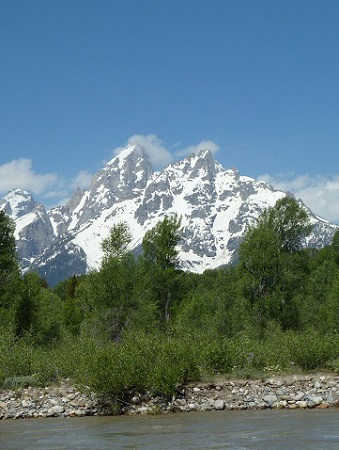
Ups and Downs--Grand Tetons behind the Snake RiverWe all have our ups and downs.

  • Good and bad times
  • Positive and negative relationships
  • Happy and sad days
  • Successes and failures

That’s life.

Like a hike up a mountain, our journey through life often feels like an uphill battle. However, once we reach the top, the view takes our breath away.

When we look down, we see how far we have come. A look around reveals the possibilities on every side of us. If we look up, we realize we have hope for future mountains.

We choose whether to focus on the good or the bad.

The choices we make determine how we feel.

When hard times hit, we can dwell on the negatives. Or, on the other side of the coin, we can focus on the positives and hope for the future.

Ups and downs occur in every area of life, including:

  • Marriage
  • Work
  • School
  • Parenting
  • Social activities
  • Health

All our experiences offer opportunities to grow.

Through each one, let’s keep on keeping on. Remember, like a mountain climb, our hardest times often teach the greatest lessons.

“He makes my feet like the feet of a deer; he causes me to stand on the heights” (2 Samuel 22:34 NIV).

Thanks to Laura Lee Leathers for the suggestion.

Do you have an expression you want explained? If so, please comment below.

Subscribe to receive my weekly posts by email and receive a free copy of “Words of Hope for Days that Hurt.”

If you enjoyed this post, please share it with your friends.

Cold Turkey

Cold Turkey

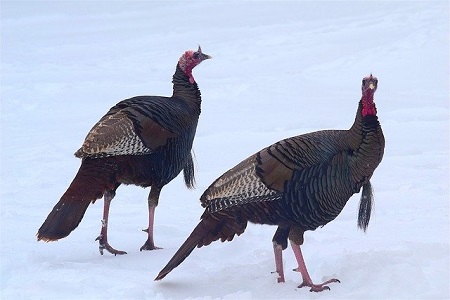
Cold Turkey--two turkeys in the snowI love to eat cold turkey. However, I hate to quit a habit cold turkey.
To stop a habit immediately and completely usually hurts.

Cold turkey means no slow withdrawal. Instead, we tackle the problem all at once.

Few of us enjoy giving up anything that has been part of our lives a long time. Although it may be bad for us, we have a hard time letting go.

Addictions are especially hard to quit cold turkey.

For that reason, support groups exist for addictions to:

  • Alcohol
  • Drugs
  • Gambling
  • Eating
  • Plus, a long list of other behaviors

Support group members talk turkey. Speaking plain hard facts encourages hard, but needed, actions.

Support groups remind us to help one another in all of life.

We may not suffer addiction. Yet, we all need encouragement to make good choices. We also need guidance back to the straight and narrow when we choose poorly.

While we enjoy our post-Thanksgiving cold turkey sandwiches, think:

  • Why wait until the new year to begin better habits?
  • Perhaps now is our best time to quit bad habits once for all.

“Turn away from all your offenses; then sin will not be your downfall” (Ezekiel 18:30 NIV).

Thanks to Tim Lewis  for the suggestion. Photo courtesy of Robert Jones on Pixabay.

Do you have an expression you want explained? If so, please comment below.

Subscribe to receive my weekly posts by email and receive a free copy of “Words of Hope for Days that Hurt.”

If you enjoyed this post, please share it with your friends.

Holier than Thou

Holier than Thou

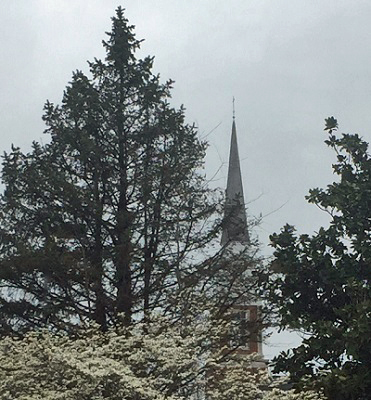
Holier than Thou--church steeple framed by treesEveryone makes mistakes. Those who act holier than thou rarely admit them.
People with a holier-than-thou attitude look down on others.

Because they view themselves as better than everyone else, they show:

  • Pride – “Look how great I am.”
  • Disrespect – “What you think or feel matters little.”
  • Rudeness – “Get out of my way.”
  • Contempt – “You disgust me.”

Holier-than-thou people are self-righteous.

Truly righteous people love and care for others. Self-righteous people show a hateful, non-caring attitude. Like wolves in sheep’s clothing, they are not what they pretend to be.

The Bible says to be holy. It does not say to be holier than thou.

This expression comes from Isaiah 65:5 (KJV).  Isaiah listed behaviors that displease God. His list included the pride and hypocrisy of those who say, “Stand by thyself, come not near to me; for I am holier than thou.”

Rather than focus on themselves, genuinely holy people focus on God and others. They are the real McCoy. Like  a church steeple, they stand tall and point toward God.

“Just as he who called you is holy, so be holy in all you do; for it is written: “Be holy, because I am holy” (1 Peter 1:15-16 NIV).

Thanks to Judy Corbin for the suggestion.

Do you have an expression you want explained? If so, please comment below.

Subscribe to receive my weekly posts by email and receive a free copy of “Words of Hope for Days that Hurt.”

If you enjoyed this post, please share it with your friends.

Brass Ring

Brass Ring

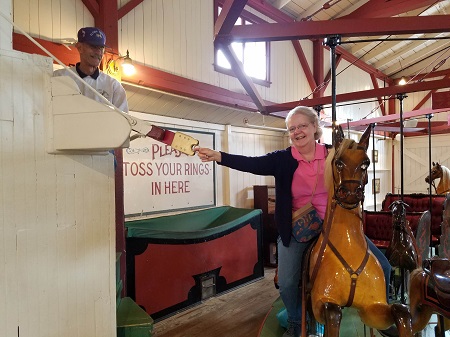
Brass Ring-Ann Klotz on carousel horse reaching for brass ring My friend Ann learned to grab the brass ring while at the Flying Horses Carousel on Martha’s Vineyard.

For years, many merry-go-rounds placed a brass ring in hard-to-reach places. Riders who reached the ring received a free ride.

The brass ring represents success or the opportunity for success.

Success might mean:

  • Achievement
  • Profit
  • Rewards

People who grab the brass ring show great ambition.

They don’t wait for someone else to hand them an easy job. They take the steps necessary to get where they want to go.

To reach for or grab the brass ring usually involves hard work.

Like farmers, workers get up early to put their hands to the plow. Their efforts usually include:

  • Long hours
  • Willingness to grow and change
  • More work than most co-workers
  • Jobs no one else wants to do
  • Going back to the drawing board when they make mistakes

Success means different things to different people.

Some people thrive in the rat race of competition. Others desire a slower, quieter life. Whatever route a person takes, the key lies in finding one’s purpose in life.

“If anyone cleanses himself from what is dishonorable, he will be a vessel for honorable use, set apart as holy, useful to the master of the house, ready for every good work (2 Timothy 2:21 ESV).

Thanks to Joe and Ann Klotz for the suggestion and photo.

Do you have an expression you want explained? If so, please comment below.

Subscribe to receive my weekly posts by email and receive a free copy of “Words of Hope for Days that Hurt.”

If you enjoyed this post, please share it with your friends.

The Real McCoy

The Real McCoy

Penn’s Store, three miles southeast of Gravel Switch, Kentucky, is the real McCoy. According to its website, Penn’s Store “is not a restored landmark; it is an authentic landmark … the oldest country store in America run by the same family since 1850.”

The real McCoy means the real thing.

  • It makes no false claims.
  • Buyers or visitors get what they expect.
  • It is the original or the best example of what it represents.

Penn’s Store represents a genuine old country store. Not all stores that make such a claim live up to their ads. A visit reveals the truth.

People may also be the real McCoy.

In a similar way to stores, people show their true colors. Time with them reveals the truth of who they claim to be.

 No one knows the origin of the real McCoy.

Several possibilities exist. However, the origin matters little. The meaning matters much.

For eternal truth and life, follow the one and only genuine source of both.

Jesus offers the best life possible. He is the real thing.

“We know also that the Son of God has come and has given us understanding, so that we may know him who is true. And we are in him who is true by being in his Son Jesus Christ. He is the true God and eternal life” (I John 5:20 NIV).

Thanks to Carole Fite for the suggestion and to Dawn Osborn (sixth generation Penn) for the photo.

Do you have an expression you want explained? If so, please comment below.

Subscribe to receive my weekly posts by email and receive a free copy of “Words of Hope for Days that Hurt.”

If you enjoyed this post, please share it with your friends.

Half-Hearted

Half-Hearted

Half-Hearted--autumn maple leaf with heart in centerI don’t like to play golf. When family or friends invite me, I play a half-hearted game. I prefer to hit the trail for a long walk in the country. Nature’s beauty thrills me any time of year, not hours on a golf course.
Half-hearted means my heart is not in an activity.

I don’t care for the activity or its results. Therefore, I give it little attention or effort. Other half-hearted examples include to:

  • Say, “I am sorry,” but not mean it
  • Invite a friend to visit but hope they stay home
  • Study for a test while texting and watching television

Sometimes half-hearted means I lack courage.

I act like a coward, full of fear. Rather than do what needs to be done, I hope someone else does it.

For example, if a frog were to get in my house, I would probably wait in another room while a braver person gets it out. I might yell at the frog to leave – from a distance. Because frogs jump too fast, I would want help. So far, all frogs have stayed outside.

When others need help, I want to give them whole-hearted attention.

May God fill me with the courage to show true love and concern. Like so many who have helped me, I want to serve God and help others from the heart—my whole heart.

“I will praise you, Lord my God, with all my heart; I will glorify your name forever” (Psalm 86:12 NIV).

Thanks to Becky Nash Rowe for the suggestion. Image by Rebekka D with Pixabay.

Do you have an expression you want explained? If so, please comment below.

Subscribe to receive my weekly posts by email and receive a free copy of “Words of Hope for Days that Hurt.”

If you enjoyed this post, please share it with your friends.

More than One Way to Skin a Cat

More than One Way to Skin a Cat

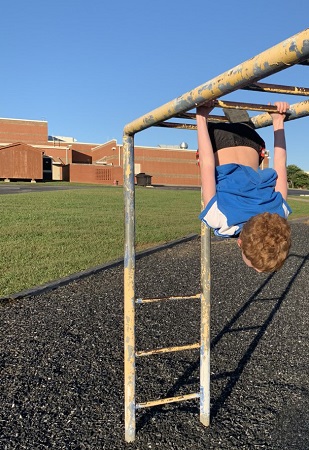
More than One Way to Skin a Cat--child on playground barsMore than one way to skin a cat sounds cruel. We don’t want our cute, fur-covered pets to suffer.
However, many of us grew up climbing trees or playing on swing sets or horizontal bars. We learned to skin cats without a single pet around. We hung by our hands and lifted our feet and legs between our arms. Then we reversed that position.

More than one way to skin a cat means more than one way to reach a goal.

Simple examples include different ways to:

  • Bake a cake
  • Grow a garden
  • Study for a test

We learn and work based on our personal skills and interests.

  • I learn and work better with words.
  • My husband prefers math.

We figure out how to do our best work. Sometimes we do well and hit the bull’s eye. Other times our efforts fall short of what we hope.

Whatever our skills or our results, let’s aim for the best way to do whatever we do.

“We continually ask God to fill you with the knowledge of his will through all the wisdom and understanding that the Spirit gives” (Colossians 1:9 NIV).

Thanks to Tillie Cowherd for the suggestion and to Karen Atwood for the photo.

Do you have an expression you want explained? If so, please comment below.

Subscribe to receive my weekly posts by email and receive a free copy of “Words of Hope for Days that Hurt.”

If you enjoyed this post, please share it with your friends.

Hang Out to Dry

Hang Out to Dry

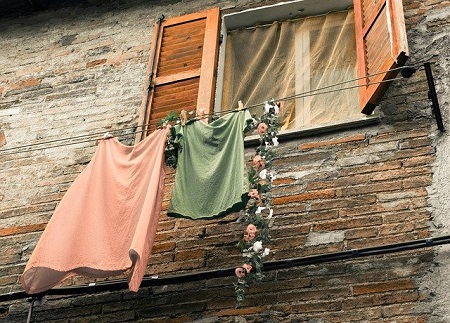
Hang Out to Dry--clothes on a clothesline outside a windowAfter Mom washed our clothes and put them through the wringer, she took them to the clothesline to hang out to dry. Most days the clothes dried in sunshine and gentle breezes. However, they occasionally received the worst of weather:

  • Storms
  • Freezing rain
  • Winds so strong clothes blew off the line

Whether good or bad weather, those clothes had no control over the winds that blew.

When we hang others out to dry, we desert them to face danger alone.

Like clothes in the wind, they have:

  • No control over the situation.
  • Little or no support

At times, we want to hurt or punish them. Other times, we simply want to avoid our own trouble.

I don’t know anyone who wants to hang out to dry.

Life is hard enough without others leaving us alone in a bad situation.

Neither should we hang anyone else out to dry.

When anyone deserts us or we desert someone else, remember the situation will eventually come out in the wash.

The Golden Rule tells us, “In everything, do to others what you would have them do to you” (Matthew 7:12 NIV).

Thanks to Karen Hart for the suggestion. Image by Philipp Ruch from Pixabay.

Do you have an expression you want explained? If so, please comment below.

Subscribe to receive my weekly posts by email and receive a free copy of “Words of Hope for Days that Hurt.”

If you enjoyed this post, please share it with your friends.

Beat around the Bush

Beat around the Bush

Beat around the Bush--a bush behind bare tree limbsA preschool relative visited our family years ago. She used my mother’s perfume without permission. When Mom asked what she had done, Kim beat around the bush. Over and over she responded, “I’m just tired.”

When we don’t want to say something, we may beat around the bush.

Ways we do that include:

  • Avoid a discussion or a question, as Kim did
  • Waste time talking about something else
  • Delay the discussion or our response
  • Answer cautiously, giving little information
  • Offer misleading information

To beat around the bush referred originally to bird hunts.

The Phrase Finder explains, “In bird hunts some of the participants roused the birds by beating the bushes.” Therefore, beating around or “‘beating about the bush’ was the preamble to the main event, which was the capturing of the birds.” According to The Free Dictionary, “Not to go directly to such foliage but to work around it instead gave the impression of wasting time or not trying very hard to raise the birds.”

Beating around the bush may cause a tangled web of trouble.

 If we fail to speak honestly and clearly, we risk harming ourselves or others. Minor issues may not matter. However, important issues demand our best response.

May our words, as well as our actions, always follow the straight and narrow.

Let your conversation be always full of grace, seasoned with salt, so that you may know how to answer everyone (Colossians 4:6 NIV).

Thanks to Brad Leverett for the suggestion.

Do you have an expression you want explained? If so, please comment below.

Subscribe to receive my weekly posts by email and receive a free copy of “Words of Hope for Days that Hurt.”

If you enjoyed this post, please share it with your friends.