Browsed by
Category: Self-Improvement

A Lick and a Promise

A Lick and a Promise

A Lick and a Promise--dog licking boy's faceLike Kaleb’s puppy, too many times, I have cleaned with a lick and a promise. What about you?

When we give something a lick and a promise, we do our work quickly and poorly.

We don’t take the time to do it right. This can apply to:

  • House work
  • Personal cleaning (Children often prefer a lick and a promise rather than a full bath.)
  • Jobs
  • School work

The lick is the fast work. The promise is to do better later.

A Lick and a Promise--two dogsSometimes we have to give a lick and a promise.

We have no choice. That can happen when we:

  • Don’t have time to do a job well
  • Get swamped with more work than one person can do
  • Become ill and need to rest

We can’t control everything. That’s life.

We may also choose to meet more important needs.

A lick and a promise then becomes the better plan. We focus on:

  • Children who hurt rather than housework
  • Friends in need rather than lawn care
  • A neighbor in the hospital rather than a perfect meal

When possible, we want to be Johnny on the spot and do our work well. However, when greater needs arise, we choose to tackle what matters most.

“We remember before our God and Father your work produced by faith, your labor prompted by love, and your endurance inspired by hope in our Lord Jesus Christ” (1 Thessalonians 1:3 NIV).

Thanks to Becky Nash Rowe for the suggestion and to Trevor Gosser with Gosser Farms for the photos.

Do you have an expression you want explained? If so, please comment below.

Subscribe to receive my weekly posts by email and receive a free copy of “Words of Hope for Days that Hurt.”

If you enjoyed this post, please share it with your friends.

Just Stepped Out of a Band Box

Just Stepped Out of a Band Box

Just Stepped Out of a Band Box - Harriet Michael headshotPlease welcome my friend Harriet Michael as today’s guest writer. Harriet and I met at Kentucky Christian Writers Conference. She is a multi-published author and freelance writer. Harriet currently has five books out with two more coming out this year and three more under contract for release over the next two years. She also has hundreds of articles, devotions, and stories published in numerous magazines and books. Follow her on her blog or on her Amazon author page.
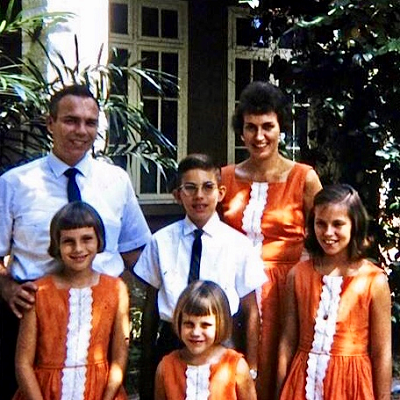
Looking Good!

Matching dresses made by Harriet’s mom

When I was a child, I often heard my mother say, “You look like you just stepped out of a band box!” She would say this to me when I was dressed up for church or some other nice occasion. I came to understand from the way she used this expression that she meant I looked nice:

  • Clean
  • Hair brushed
  • Clothes washed and pressed
  • Shoes shined

Where did the expression come from?

I actually did not know the answer to this question until I looked it up for this post. Here is what I found:

The bands in this expression are clerical bands—the white linen bands often worn around ministers’ necks. The bandbox then is the box that holds the ministers’ clothing which is always spotless and neatly pressed. So, if people look like they just stepped out of a bandbox, they look:

  • Neat
  • Clean
  • Spotless
  • In order

“And whatever you do, whether in word or deed, do it all in the name of the Lord Jesus, giving thanks to God the Father through him” (Colossians 3:17 NIV).

Do you have an expression you want explained? If so, please comment below.

Subscribe to receive my weekly posts by email and receive a free copy of “Words of Hope for Days that Hurt.”

If you enjoyed this post, please share it with your friends.

Cut the Mustard

Cut the Mustard

Cut the Mustard-mustard flowerYears ago, Ernest Tubb and Red Foley sang “Too Old to Cut the Mustard.” They gave people a good laugh about aging. You can read the song lyrics here.

Young people often think senior adults are as old as the hills or over the hill. However, many older people still cut the mustard. Many young people cannot. Age does not always make a difference.

Cut the mustard means to work well.    

 People do what needs to be done. They do what is:

  • Expected
  • Required

They:

  • Work with energy and enthusiasm
  • Successfully accomplish their task

Cut the mustard applies to things as well as people.

People want what they use to:

  • Work well
  • Keep working

However, like people, things do not always work as they should.

  • Computers crash.
  • Cars run out of gas.
  • Stoves fail to cook.

Several guesses about how this expression began include the:

  • Hard work required to cut mustard plants
  • Difficulty in cutting tiny mustard seeds
  • Need to cut (dilute) mustard with vinegar to create a good taste

Others ideas have nothing to do with mustard.

However the expression began, it reminds everyone to do their best. Each day offers the opportunity to:

“[The righteous] will still bear fruit in old age, they will stay fresh and green” (Psalm 92:14 NIV).

Thanks to Emily Akin for the suggestion. Photo courtesy of Pixabay. 

Do you have an expression you want explained or a thought about this one? If so, please comment below.

Subscribe to receive my weekly posts by email and receive a free copy of “Words of Hope for Days that Hurt.”

If you enjoyed this post, please share it with your friends.

Over the Top

Over the Top

Over the Top--winding stairway at Biltmore EstatesTo get to the top floor of a house, we usually climb stairs. To go over the top of the house requires more work – extreme efforts. Most of us would be foolish to try.

Over the top often means to go beyond acceptable behavior.

 We describe such actions as:

  • Extreme
  • Reckless
  • Strange
  • Shameful
  • Foolish

Over the top occasionally means brave behavior.

Some soldiers in battle go over the top of their trenches. They leave safety to attack their enemy. That action puts them at greater risk for losing their lives.

Yet, those soldiers:

  • Value the battle’s purpose more than personal safety
  • Go beyond the call of duty
  • Take the risk for a greater cause

They are willing to die for what they believe. Because of such bravery, we celebrate our country’s independence on the Fourth of July.

Let’s choose our behavior carefully.

When we need to be careful, stay wise as an owl. However, when we need to be brave, go over the top.

“The Lord makes firm the steps of the one who delights in him” (Psalm 37:23 NIV).

Thanks to Karen Atwood for the suggestion.

Do you have an expression you want explained or a thought about this one? If so, please comment below.

Subscribe to receive my weekly posts by email and receive a free copy of “Words of Hope for Days that Hurt.”

If you enjoyed this post, please share it with your friends.

Use Your Head for More Than a Hat Rack

Use Your Head for More Than a Hat Rack

Use Your Head for More Than a Hat Rack--a hat rack with two hatsDr. Seuss wrote, “With your head full of brains and your shoes full of feet, you’re too smart to go down any not-so-good street.”

Similar to Dr. Seuss’s words, we may say “Use your head for more than a hat rack.

Use your head for more than a hat rack tells us to think.

Similar expressions include:

  • Use your head for something besides a hat rack.
  • Use your head for more than something to keep your ears apart.

People might say this to us if we:

  • Start to make a foolish choice
  • Fail to see a clear answer to a problem
  • Need to think harder
  • Have our head in the clouds

One of my high school teachers often said, “Think, just think!” I was thinking — maybe not hard enough.

When we use our head for more than a hat rack, we make better choices.

Letting others decide for us looks easy. However, their choices may lead us the wrong direction. We want to make the right choices – to mind our Ps and Qs.

People who love us and want the best for us encourage us to think.

They refuse to let us waste our God-given abilities. To keep us on the straight and narrow, they expect us to learn from:

  • Spoken words
  • Written words
  • Good examples
  • Every experience

Learn well in order to live well.

“If any of you lacks wisdom, you should ask God, who gives generously to all without finding fault, and it will be given to you” (James 1:5 NIV).

Thanks to Mina Raulston for the suggestion. Photo courtesy of Pixabay.

Do you have an expression you want explained? If so, please comment below.

Subscribe to receive my weekly posts by email and receive a free copy of “Words of Hope for Days that Hurt.”

If you enjoyed this post, please share it with your friends.

Your Guess Is as Good as Mine

Your Guess Is as Good as Mine

Your Guess Is as Good as Mine-two small girls shrugging with hands upSomeone asks a question. We don’t know the answer. What do we do? We may say, “You’re guess is as good as mine.”

 Your guess is as good as mine means we have no idea.

We don’t know any more than the person who asked the question. Neither of us can figure out what to do.

When we don’t know answers, we find someone who does.

We look for people wise as an owl. They may not know everything, but they know more than we do. Such wisdom often comes from older people, but not always. Occasionally it comes out of the mouths of babes.

No one but God knows all things.

We cannot possibly learn everything in our short lives. We do the best we can. However, we still make guesses in many situations.

God never guesses. God knows.

The one and only Creator of all things is:

  • All powerful
  • Always present
  • All knowing

Trust God for answers that never fail.

“The foolishness of God is wiser than human wisdom, and the weakness of God is stronger than human strength” (1 Corinthians 1:25 NIV).

Thanks to Laurel Blevins for the suggestion and to Rita Smalley for the photo.

Do you have an expression you want explained? If so, please comment below.

Subscribe to receive my weekly posts by email and receive a free copy of “Words of Hope for Days that Hurt.”

If you enjoyed this post, please share it with your friends.

Food for Thought

Food for Thought

Food for Though-fruit trayFood for thought means something to consider.

What we consider may come from:

  • Our own minds
  • Something we see or read
  • An event
  • Another person (They offer information, or we pick their brain.)

All make us think about an idea.

Much like we digest food in our stomachs, we digest food for thought in our minds.

The digestion process may be easy or hard. We enjoy easy thoughts. However, we probably gain more from the hard ones.

Food we eat may give us food for thought.

Most of us enjoy food. It fills our stomachs and takes away our hunger. In addition, food offers:

  • Fellowship
  • Comfort
  • Fun
  • Learning opportunities

Some people have slim pickings in food. Others of us enjoy more food than we need. Rather than keeping it all for ourselves, perhaps we should consider giving more away. What better way to show an attitude of gratitude?

By sharing with others, our thoughts become action.

Please comment below with your ideas for putting thoughts into actions.

“Whatever is true, whatever is noble, whatever is right, whatever is pure, whatever is lovely, whatever is admirable—if anything is excellent or praiseworthy—think about such things” (Philippians 4:8 NIV).

Thanks to Carole Fite for the suggestion.

Subscribe to receive my weekly posts by email and receive a free copy of “Words of Hope for Days that Hurt.”

If you enjoyed this post, please share it with your friends.

You Made Your Bed, You Must Lie in It

You Made Your Bed, You Must Lie in It

You Made Your Bed--bed in The Elms (R. I.)You made your bed, you must lie in it has nothing to do with making a bed. The expression focuses on behavior.
You have to live with the results of what you do.

  • Good choices bring good results.
  • Bad choices bring bad results.

If you cause problems, expect problems in your life. If you share joy, expect joy in return.

 Of course, exceptions to the rule occur. However, you usually experience the natural or logical effects of your actions. You did it, so you must live with it.

Several expressions have the same meaning.

Whether you talk about beds, gardens, music, or chickens, the message remains the same. For the best life, make the best choices.

“When you see trouble coming, don’t be stupid and walk right into it— be smart and hide” (Proverbs 22:3 CEV).

Thanks to Bonnie Alley for the suggestion.

Do you have an expression you want explained or a thought about this one? If so, please comment below.

Subscribe to receive my weekly posts by email and receive a free copy of “Words of Hope for Days that Hurt.”

If you enjoyed this post, please share it with your friends.

Cool as a Cucumber

Cool as a Cucumber

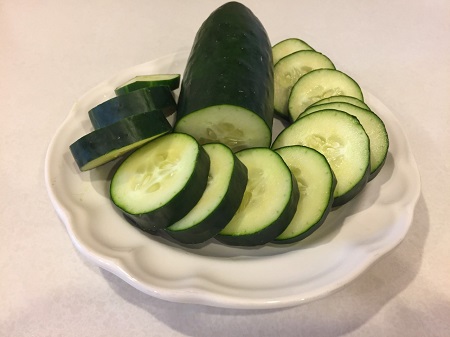
Cool as a Cucumber--sliced cucumberSome people stay cool as a cucumber.

Whether good times or bad, they remain calm.

Cucumbers are mostly water, which keeps them cool. A slice of cucumber in a glass of water provides cool refreshment on a hot summer day.

However, cool as a cucumber does not refer to a cool temperature. It means people who rarely get upset.

  • Plans don’t go their way. They make other plans.
  • People mistreat them. They still treat those people well.
  • Losses occur. They give thanks for what they had.

They live an easy-does-it life and look for the light at the end of the tunnel.

Few things get them down.

When they do get down, they soon rise again and keep going. They know that nothing in this life lasts forever. Therefore, they make the most of the moments they have.

Cool as a cucumber people spread peace.

By staying calm and peaceful, they help people around them stay calm and peaceful.

Peace that never fails can be found when anyone lets go and lets God.

“[God’s] peace will keep your thoughts and your hearts quiet and at rest as you trust in Christ Jesus” (Philippians 4:7 TLB).

Thanks to Janna Babak for the suggestion.

Do you have an expression you want explained? If so, please comment below.

Subscribe to receive my weekly posts by email and receive a free copy of “Words of Hope for Days that Hurt.”

If you enjoyed this post, please share it with your friends.

Consider the Source

Consider the Source

Consider the Source--Bonneville Salt Flats
Bonneville Salt Flats

Before we trust anyone or anything, we consider the source.

 We do not want to:

  • Eat food from a garbage can
  • Buy a car from a junk store
  • Drink water from a lake filled with salt

We usually trust what was good, safe, and trustworthy in the past.

However, if anything has not been good, safe, or trustworthy, we do not trust them now.

The same applies to people.

Have they:

  • Made many mistakes? If so, we will not ask their help.
  • Proved themselves trustworthy? If so, we usually trust them.
  • Hurt others? If so, we fear they may hurt us.

Consider the source is often a warning.

It tells us to be careful.

If we want others to trust us, we must prove worthy of their trust.

We build a reputation by every:

  • Choice we make
  • Action we take
  • Word we say
  • Attitude we show

May others always know us as a source worthy of their trust – as good as our word.

“What a wonderful God we have—he is the Father of our Lord Jesus Christ, the source of every mercy, and the one who so wonderfully comforts and strengthens us in our hardships and trials. And why does he do this? So that when others are troubled, needing our sympathy and encouragement, we can pass on to them this same help and comfort God has given us” (2 Corinthians 1:3-4 TLB).

Thanks to Becky Nash Rowe for the suggestion

Do you have an expression you want explained? If so, please comment below.

Subscribe to receive my weekly posts by email and receive a free copy of “Words of Hope for Days that Hurt.”

If you enjoyed this post, please share it with your friends.