Browsed by
Category: Self-Improvement

His Name Is Mud

His Name Is Mud

His Name Is Mud--runner in mudMany children love to play in mud. Some animals roll in mud. However, no one wants to hear his name is mud.

Anyone whose name is mud is in trouble.

 The person’s bad situation makes him:

  • Unpopular
  • Dishonored
  • Have a bad reputation

Many believe his name is mud began with Dr. Samuel Mudd.

Dr. Mudd treated John Wilkes Booth’s broken leg after Booth killed President Abraham Lincoln. Dr. Mudd went to jail but was later pardoned. Many say he was innocent of any wrong. However, his reputation suffered.

His name is mud was a common expression before Dr. Mudd.

It often meant a person was a fool.

A person whose name is mud can come clean.

If guilty of bad behavior, he can:

  • Admit his mistakes
  • Ask forgiveness
  • Turn to God for guidance

If innocent of bad behavior, he can:

  • Live a life that shows his innocence
  • Explain what happened, if he thinks that will help
  • Show proof of his innocence
  • Watch his step to prevent future problems

“He lifted me out of the slimy pit, out of the mud and mire; he set my feet on a rock and gave me a firm place to stand” (Psalm 40:2).

Thanks to Terry Brewer for the suggestion.

Do you have an expression you want explained or a thought about this one? If so, please comment below.

Subscribe to receive my weekly posts by email and receive a free copy of “Words of Hope for Days that Hurt.”

If you enjoyed this post, please share it with your friends.

Pick Someone’s Brain

Pick Someone’s Brain

Pick Someone's Brain cartoonWhen we pick someone’s brain, we get information from that person.
We need ideas or advice. Therefore, we ask questions, sometimes lots of questions. A few of us probably drive parents and teachers wild with all our questions.

I recently picked several people’s brains.

My blog needed a new theme. Although I love to write blog posts, I hate the technical work. It makes me feel:

I was ready to throw in the towel before I got started.

As much as I wanted to give up, I did not. After picking lots of brains, I finally have a new theme.

Now, I need to pick your brain.

Will you check out the different pages on my site? You don’t have to know any technical information. Just see if it looks okay or if I need to make any changes.

You can comment below or contact me by email.

Thank you for your help.

“Wisdom is found in those who take advice” (Proverbs 13:10 NIV).

Do you have an expression you want explained or a thought about this one? If so, please comment below.

Subscribe to receive my weekly posts by email and receive a free copy of “Words of Hope for Days that Hurt.”

If you enjoyed this post, please share it with your friends.

Photo courtesy of Pixabay.

Grass Is Always Greener on the Other Side

Grass Is Always Greener on the Other Side

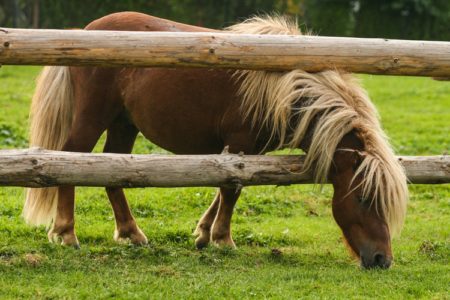
Grass is Always Greener on the Other Side--pony eating through fenceThe grass is always greener on the other side of the fence. Or so it seems.

That applies to both animals and people. Cows or horses stick their heads through fences to eat grass on the other side. People often try to reach the other side as well.

Many of us believe other people live a better life.

Therefore, we want what we don’t have:

  • Bigger homes
  • Nicer cars
  • Cooler clothes
  • Better-paying jobs
  • More travel
  • Well-behaved children

Life seems perfect for others, while we struggle from day to day. As a result, we get down in the mouth.

The grass is not always greener on the other side.

Most people have problems. No one may see those problems, but they are there. Their problems may differ from ours, but that does not make them any easier.

Happiness comes from within.

We never find happiness by:

  • Comparing our lives with others
  • Getting more than everyone else
  • Eating high on the hog

We find true happiness by:

  • Following God’s plan
  • Learning to be content in good times and bad
  • Valuing people more than things
  • Sharing what we have with those in need

Don’t believe the grass is always greener on the other side. It may be occasionally. Usually it is not.

“Godliness with contentment is great gain” (1 Timothy 6:6 NIV).

Thanks to Shirley Redding Rice for the suggestion. Photo courtesy of Unsplash.

Do you have an expression you want explained or a thought about this one? If so, please comment below.

Subscribe to receive my weekly posts by email and receive a free copy of “Words of Hope for Days that Hurt.”

If you enjoyed this post, please share it with your friends.

Search High and Low

Search High and Low

Search High and Low-tree with holes high and lowIf we search high and low, we look everywhere.

We try our best to find something or someone. Examples of people who search high and low include:

  • Children playing “Hide and Seek”
  • Adults having a senior moment (forgetting where they put something)
  • Shoppers searching for the perfect gift

Similar expressions include:

My friend Laurel Blevins found this tree on a local walking trail. Animals can hole up high and low inside it.

Many of us search high and low for joy.

Yet, our search fails when we look for joy in:

  • Money
  • Power
  • Popularity
  • Drugs and alcohol
  • Anything that does not last

We don’t need to wear ourselves out searching. Look to God, our only source of true joy.

“The joy of the Lord is your strength” (Nehemiah 8:10 NIV).

Does this tree remind anyone else of a cookie commercial?

Subscribe to receive my weekly posts by email and receive a free copy of “Words of Hope for Days that Hurt.”

If you enjoyed this post, please share it with your friends.

Easy Does It

Easy Does It

Easy Does It--gentle streamEasy does it tells us to move slowly and carefully.

 Like gently flowing water, we:

  • Take our time
  • Work around hard spots
  • Go with the flow

If we move too fast, we quickly learn that haste makes waste.

Sometimes easy does it relates to work.

We remain careful when we:

  • Move a heavy piece of furniture
  • Carry a special painting or piece of pottery

We don’t want to drop or break any of those.

Other times easy does it relates to our emotions.

When we feel out of control, rather than blow off steam, we:

  • Calm down
  • Relax
  • Control our temper
  • Treat everyone as we want to be treated

Ways to stay in control include:

  • Taking deep breaths
  • Lowering our shoulders, so our muscles relax
  • Closing our eyes and thinking of a favorite place
  • Praying
  • Asking if what upsets us will matter in ten years

Easy does it works well for everything and everybody.

“The fruit of the Spirit is love, joy, peace, forbearance, kindness, goodness, faithfulness, gentleness and self-control” (Galatians 5:22-23 NIV).

Thanks to Janna Babak for the suggestion.

Do you have an expression you want explained or a thought about this one? If so, please comment below.

Subscribe to receive my weekly posts by email and receive a free copy of “Words of Hope for Days that Hurt.”

If you enjoyed this post, please share it with your friends.

Nip It in the Bud

Nip It in the Bud

Nip It in the Bud--plant with flowers and buds“Nip it in the bud. Just nip it in the bud.” Barney Fife on The Andy Griffith Show said that over and over. We laughed at Barney’s many messes. However, he did get a few things right.

We often need to nip it in the bud.

 We want to:

  • Stop something at an early stage
  • Prevent a problem before it happens
  • End a problem before it gets bigger

Taking action now may prevent regret later. Better safe than sorry.

If we don’t want a flower to bloom, we nip it in the bud.

We cut or break off the bud before it blooms. Sometimes, cold weather nips a flower in the bud.

Like flowers, some situations need nipping. To prevent problems or danger:

  • Parents punish their children’s bad behaviors.
  • Bosses fire lazy workers.
  • We quit bad habits.

Whether we nip buds or let them bloom, we can trust the Creator of them all. 

Also, with God’s help, we can always bloom where we’re planted.

“Though the fig tree does not bud and there are no grapes on the vines, though the olive crop fails and the fields produce no food, though there are no sheep in the pen and no cattle in the stalls, yet I will rejoice in the Lord, I will be joyful in God my Savior” (Habakkuk 3:17-18 NIV).

Do you have an expression you want explained or a thought about this one? If so, please comment below.

Subscribe to receive my weekly posts by email and receive a free copy of “Words of Hope for Days that Hurt.”

If you enjoyed this post, please share it with your friends.

Up a Stump

Up a Stump

Up a Stump--stump I always thought up a stump meant the same as stumped. My friend Patty Cooper Emerson explained a difference in the two.
Stumped means confused or puzzled.

We cut a few trees in our back year. I was stumped about what to do with the stumps. Should I:

  • Dig them up
  • Burn them
  • Leave them alone

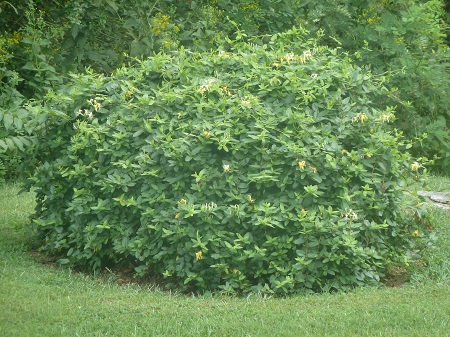
Up a Stump--honeysuckle-covered stumpWith one stump, I let nature take control. Honeysuckle grew near it. I allowed the honeysuckle to keep growing. Now, it covers the stump and blooms all summer. Problem solved.

No longer stumped, I have a pretty stump.

Up a stump means a situation too big to manage.

I cannot solve the problem. I:

  • Have no choice
  • Must live with it

Patty gave the example of a young man who arrives 30 minutes late to work every day. If he is my sister’s son, I might feel up a stump – like I can do nothing.

What makes me feel up a stump may not make you feel that way.  

  • You may be comfortable firing your sister’s son.
  • I may feel comfortable with a problem you cannot manage.

Nothing leaves God up a stump. Rather than tying myself in knots or becoming a worry wart, I can take all my problems to God. So can you.

“A life devoted to things is a dead life, a stump; a God-shaped life is a flourishing tree” (Proverbs 11:28 MSG).

If you use up a stump and stumped, do you mean the same? Please comment below.

Do you have an expression you want explained or a thought about this one? If so, please comment below.

Subscribe to receive my weekly posts by email and receive a free copy of “Words of Hope for Days that Hurt.”

If you enjoyed this post, please share it with your friends.

Lock Horns

Lock Horns

Lock Horns--Elk fightingIf you have seen elk or other animals lock horns, you know exactly what this expression means. Two animals fight one another. The fight often results in locked horns (or antlers).

A fight usually begins when the animals:

  • Face one another
  • Dig their feet in the dirt
  • Run toward each other
  • Hit their heads together

Two males often fight over a female.

If we lock horns with one another, we have conflict.

Our conflict may be:

  • Physical fights
  • Verbal arguments

Locking horns may also affect us:

  • Mentally
  • Emotionally
  • Spiritually

Conflict may arise over:

  • Money
  • Jobs
  • Relationships (romance, family, friends)
  • Silly disagreements

Sometimes we must lock horns.

We see wrongs that need to be made right. Our efforts may not be easy. Yet, we must figure out how to make necessary changes happen.

Usually, we want to avoid locking horns.

Much that we fight over is not worth the fight. We end up hurting others and ourselves. We get off on the wrong foot. Then we have to mend fences.

We can disagree without locking horns. That sounds like the better plan.

“If it is possible, as far as it depends on you, live at peace with everyone” (Romans 12:18 NIV).

Do you have an expression you want explained or a thought about this one? If so, please comment below.

Subscribe to receive my weekly posts by email and receive a free copy of “Words of Hope for Days that Hurt.”

If you enjoyed this post, please share it with your friends.

If the Shoe Fits, Wear It

If the Shoe Fits, Wear It

If the Shoe Fits, Wear ItIf the shoe fits, wear it sounds like a shoe ad. However, we usually mean something much different:

If people say anything bad, but true, about us, admit it.

We may not like to hear it. Yet, if we complain, someone may say, “If the shoe fits, wear it.” In other words, if it applies, accept it. Face the music.

If the shoe fits, wear it may follow:

  • “He called me lazy.”
  • “She said I can’t cook.”
  • “The doctor said I need to exercise more.”

Perhaps we need to change shoes.

Just because a shoe fits, we don’t have to keep wearing it. We can choose other shoes.

If we have a bad habit, we don’t have to keep doing it. We can come clean. We can choose a different way to live.

  • Work harder, if we don’t want to be called lazy.
  • Take cooking lessons, if our food tastes bad.
  • Exercise more to get a better doctor’s report.

We may have our work cut out for us, but we can do it.

Choose the best shoes for the best fit.

“Wear shoes that are able to speed you on as you preach the Good News of peace with God” (Ephesians 6:15 TLB).

Thanks to Carole Fite for the suggestion.

Do you have an expression you want explained or a thought about this one? If so, please comment below.

Subscribe to receive my weekly posts by email and receive a free copy of “Words of Hope for Days that Hurt.”

If you enjoyed this post, please share it with your friends.

Johnny on the Spot

Johnny on the Spot

Johnny on the Spot--flowersA Johnny on the spot helps anytime he is needed.

He remains:

  • Prepared
  • Willing to work

Every day he gets up ready to put his hand to the plow.

According to the NTC’s American Idioms Dictionary, a Johnny on the spot is “in the right place at the right time.”

Employers love such workers.

The workers:

  • Have the tools they need
  • Get to work on time
  • Do a good job

Johnny on the spot can refer to anyone of any age or position.

Whether men, women, boys, or girls, they decide to do their best at whatever they do.

  • Gardeners remain ready to garden.
  • Drivers remain ready to drive.
  • Students remain ready to study.

A Johnny on the spot teaches by example.

He helps keep everyone else on their toes:

  • Younger workers learn good work habits.
  • Older workers decide to work harder.
  • Bosses often learn as well.

Like the pictured flower garden, a Johnny on the spot bears good fruit. He also encourages others to do the same.

“Remind them … to be ready for every good work” (Titus 3:1 NKJV).

Thanks to Joyce Cordell for the suggestion

Do you have an expression you want explained or a thought about this one? If so, please comment below.

Subscribe to receive my weekly posts by email and receive a free copy of “Words of Hope for Days that Hurt.”

If you enjoyed this post, please share it with your friends.