
Browsed by
Tag: Diana Derringer

Push the Envelope

Push the Envelope

Push the Envelope--planes flying up through cloudsTo push the envelope has nothing to do with cards and letters or their containers. It refers more to math and airplanes.

To push the envelope means to go beyond the usual limits.

 People try to do more than has been done before. They test boundaries.

  • Youth test their parents’ rules.
  • Technology companies go beyond past performance.
  • Sports players set new records.

They attempt what many people would never try. In their minds, nothing ventured, nothing gained. By going to extremes, they often discover new possibilities. However, they also risk ending up in hot water.

Details on math or airplane envelopes can be found at The Phrase Finder.

In simple terms, an airplane’s envelope refers to limits where the plane can safely fly. When pilots push the envelope, they test their plane’s limits. They fly faster or higher or dive more than they have tried before.

If pilots go too far, they put themselves and their plane at risk.

People learn lessons when they push the envelope.

  • Some lessons create new opportunities.
  • Other lessons cause great pain.

The question each person must ask: Is the test worth the risk?

“God is magnificent; he can never be praised enough. There are no boundaries to his greatness” (Psalm 145:3 MSG).

Thanks to Tim Lewis for the suggestion. Photo courtesy of Pixabay.

Do you have an expression you want explained? If so, please comment below.

Subscribe to receive my weekly posts by email and receive a free copy of “Words of Hope for Days that Hurt.”

If you enjoyed this post, please share it with your friends.
Wring Our Hands

Wring Our Hands

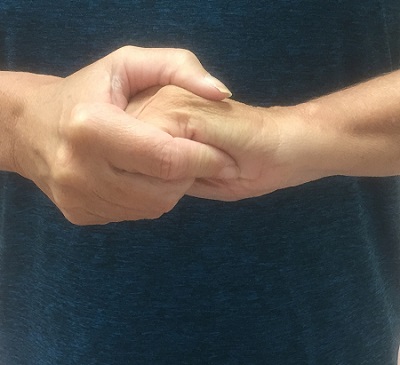
Wring Our Hands -- woman wringing handsWe cannot sleep. We cannot eat, or we eat too much. We wring our hands until the skin almost comes off.
Does that sound familiar?

To wring our hands is one sign of worry.

We twist our hands and rub them together over and over again. However, we often do nothing about what worries us. Rather than try to fix the problem, we spend all our time as a worry wart.

We:

  • Worry about our bills but fail to follow a budget
  • Complain about young people but don’t show them a better way
  • Cry over hungry children but never help feed them
  • Complain about the government but refuse to vote

Wringing our hands will not make a difference.

Rather than waste time worrying, why not lift our hands in prayer. But let’s not stop there. Why not also put feet to our prayers?

Seek God’s guidance. Then do something to improve the situation.

We cannot change all the world’s problems. We can change a few.

Will we dare to make a difference?

“Therefore I tell you, do not worry about your life” (Matthew 6:25 NIV).

Thanks to Tillie Cowherd for the suggestion.

Do you have an expression you want explained? If so, please comment below.

Subscribe to receive my weekly posts by email and receive a free copy of “Words of Hope for Days that Hurt.”

If you enjoyed this post, please share it with your friends.

Under Your Wing

Under Your Wing

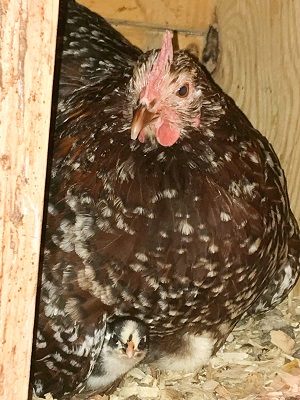
Under Your Wing, hen with chicks under wingsWhen a storm approaches, a mother hen gathers her baby chicks under her wing. She wants to keep them safe.
If you take people under your wing, you care for them.

You batten down the hatches during life’s storms by:

  • Protecting them
  • Loving them
  • Meeting their needs

Taking someone under your wing may require little or much time.

  • Older students tutor younger students.
  • Bosses guide new workers.
  • Friends take care of a sick friend.
  • Neighbors offer a place to stay when another neighbor loses her home.
  • Relatives rear a child when its parents die.

Look for opportunities to care for a hurting world.

  • Show love in all you do.
  • Help the hopeless see light at the end of the tunnel.
  • Give financial help to people going through hard times.
  • Show respect to everyone, whether you agree with them or not.
  • Treat people the way you want to be treated.
  • Don’t get mad as a wet hen when you don’t get your way.
  • Ask God to guide you in all you do and say.

“[God] will cover you with His feathers;
you will take refuge under His wings.
His faithfulness will be a protective shield” (Psalm 91:4 HCSB).

Thanks to Carole Fite for the suggestion and to Pam Barnes Harlow for the photo.

Do you have an expression you want explained? If so, please comment below.

Subscribe to receive my weekly posts by email and receive a free copy of “Words of Hope for Days that Hurt.”

If you enjoyed this post, please share it with your friends.

Wait for the Next Shoe to Drop

Wait for the Next Shoe to Drop

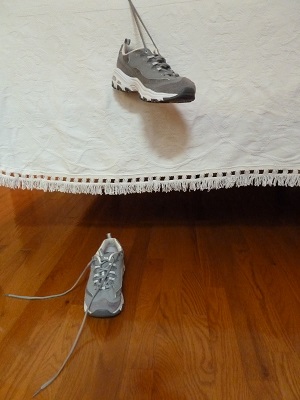
Wait for the Next Shoe to Drop--shoe hanging beside bedWhen we sleep in a room with thin walls, we don’t want noisy neighbors. If those neighbors live in the room above us, we often wait for the next shoe to drop.
To wait for the next shoe to drop means to wait for the next event to happen.

A noisy neighbor drops one shoe. We know the next shoe will soon follow.

Because of what has already happened, we predict what will happen next.

This expression usually means we wait for something bad to happen.

We receive bad news. We expect worse news soon.

  • A family member gets sick. We fear our loved one will die.
  • Our boss fires other workers. We expect to lose our job soon.
  • A rainstorm damages our property. We dread flooding that may follow.

What do we do when the next shoe drops?

Hard times may cause us to:

The reaction we choose changes our lives. It also changes the lives of others around us.

“Stop being afraid of what you are about to suffer … Remain faithful even when facing death and I will give you the crown of life—an unending, glorious future” (Revelation 2:10).

Thanks to Ann Klotz for the suggestion.

Do you have an expression you want explained? If so, please comment below.

Subscribe to receive my weekly posts by email and receive a free copy of “Words of Hope for Days that Hurt.”

If you enjoyed this post, please share it with your friends.

A Little Better than Plumb

A Little Better than Plumb

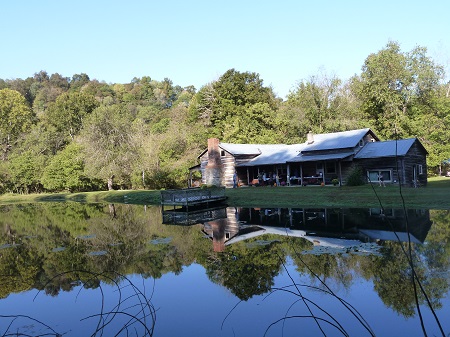
A Little Better than Plumb--Henry and Janice Holt Giles cabinIf anything is plumb, it is perfectly straight.
It is exact. Therefore, a little better than plumb is not really better. Instead, it is:

  • Off plumb
  • Out of plumb
  • Not straight

Kentucky authors Henry and Janice Holt Giles wrote about building their cabin in the book A Little Better than Plumb: The Biography of a House.

One worker asked another if what they just nailed was plumb. The reply: “Sure was. Fact is … hit was jist a little bit better’n plumb ….” The Giles’ discovered that several parts of their cabin were a little better than plumb.

Read more about the Giles family and their cabin in the September 2019 Kentucky Monthly magazine.

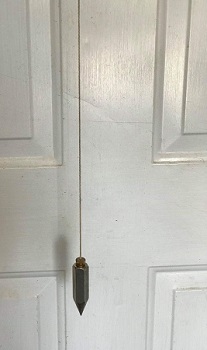
A Little Better than Plumb -- plumb lineA plumb line helps measure whether anything is straight or plumb.
A metal weight (plumb bob) at the end of a line holds the line straight. It may be low tech, but it works.

Our lives often get off plumb or out of plumb.

We leave the straight and narrow and end up in hot water. Yet, God offers us a fresh start.

If we accept that fresh start, God expects us, like plumb lines, to show others the perfect way.

“I will make justice the measuring line and righteousness the plumb line” (Isaiah 28:17 NIV).

Thanks to Jeri Stone for the suggestion and to Iva and Jewel Wade for the plumb line photo.

Do you have an expression you want explained? If so, please comment below.

Subscribe to receive my weekly posts by email and receive a free copy of “Words of Hope for Days that Hurt.”

If you enjoyed this post, please share it with your friends.

What Goes Down in the Well Comes Up in the Bucket

What Goes Down in the Well Comes Up in the Bucket

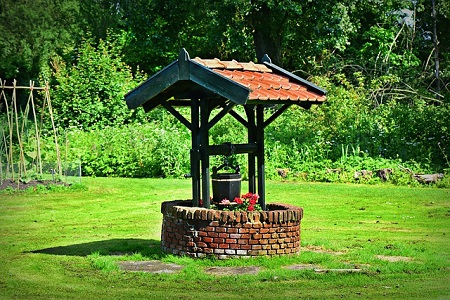
What Goes Down in the Well Comes Up in the Bucket --well with bucketAs a little girl, I loved to visit relatives who had a well with a bucket. The bucket was tied to the end of a rope. To get water, we had to:
  • Lower the bucket into the well
  • Listen for the bucket to go under the water
  • Turn the crank on the side of the well to bring up the bucket of water

I learned what goes down in the well comes up in the bucket.

  • Throw toys in the well; toys come up.
  • Dump garbage in the well; garbage comes up.
  • Spill food in the well; food comes up.

The same holds true for our lives.

What we pour into our lives comes out in how we live.

  • Feed our minds and hearts good thoughts; good behavior follows.
  • Dump trash into our brains; we treat ourselves and others like trash.
  • Fill our lives with truth; we live that truth.

Our actions show what we believe.

  • If we believe in respect, we show respect.
  • When we love others, we show love.
  • If we have faith in God, we demonstrate that faith.

Let’s get our lives right before we kick the bucket. Let’s make our good deeds more than a drop in the bucket.

“Jesus answered, ‘Everyone who drinks this water will be thirsty again, but whoever drinks the water I give them will never thirst. Indeed, the water I give them will become in them a spring of water welling up to eternal life’” (John 4:13-14 NIV).

Thanks to Dr. Dwayne Norman, pastor of Campbellsville Baptist Church, for the suggestion. Photo courtesy of Pixabay.

Do you have an expression you want explained or a thought about this one? If so, please comment below.

Subscribe to receive my weekly posts by email and receive a free copy of “Words of Hope for Days that Hurt.”

If you enjoyed this post, please share it with your friends.

Slow as Molasses

Slow as Molasses

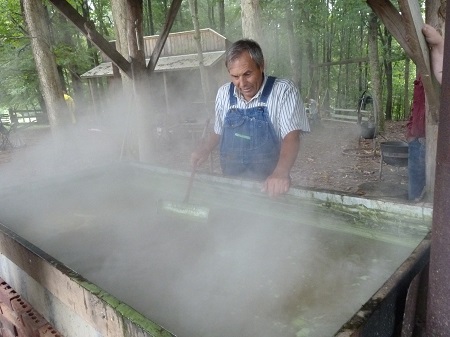
Slow as Molasses--Greg Lawhorn making molassesI have been told I am as slow as molasses. I have also been told I go too fast. I suppose my speed depends on what I do.
When anyone or anything is slow as molasses, it is really slow.

A few exceptionally slow items include:

  • Dial up internet service
  • Turtles
  • Many children (and teachers) on the first day of school

Making molasses is a slow process.

My friend Greg Lawhorn makes molasses every September. It takes all day, but the finished product makes it well worth the time. Read about Greg’s Molasses Day in the September Kentucky Monthly magazine.

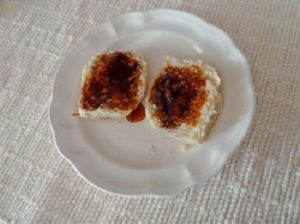
Slow as Molasses--molasses on a biscuitPouring molasses is also a slow process.
Thick sticky molasses takes its time getting from the jar onto a waiting hot biscuit. However, once again, the taste makes it well worth the time. Molasses covered biscuits stick to the ribs.

Occasionally people talk about something or someone as slow as molasses in January. Cold temperatures make molasses pour slower than usual. Although I may be slow, I hope no one thinks I am that slow.

Better to go slowly and work well rather than fast and work poorly.

As the story, The Tortoise and the Hare, teaches, “Slow and steady wins the race.” Watch a cute children’s song based on that story here.

“The Lord is gracious and compassionate, slow to anger and rich in love” (Psalm 145:8 NIV).

Do you have an expression you want explained or a thought about this one? If so, please comment below.

Subscribe to receive my weekly posts by email and receive a free copy of “Words of Hope for Days that Hurt.”

If you enjoyed this post, please share it with your friends.

Jumping-off Place

Jumping-off Place

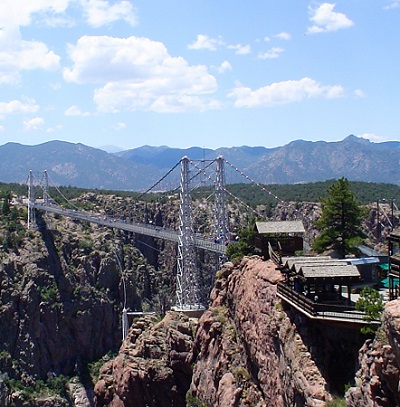
Jumping-off Place --Royal Gorge BridgeOn my first trip to Cañon City, Colorado, my husband and I walked across the nearby Royal Gorge Bridge. Several people use that bridge as a jumping-off place. They bungee jump from the highest bridge in the United States.
I like adventure, but that looks crazy. I have no desire to bounce like a rubber ball between The Royal Gorge Bridge and the Arkansas River 955 feet below.

Jumping-off place (or jumping-off point) has two meanings.

  1. The beginning point
  2. A very remote place

We will explore the first meaning, the beginning point.

A jumping-off place may be the beginning of:

  • Adventure, like those crazy bungee jumpers
  • Journeys, like our trip to Colorado
  • Business plans, like starting a new company
  • Discussions, like the beginning of peace talks
  • Investigations, like exploring space

A jumping-off place is often scary.

Anything new involves risk. Therefore, we decide whether the beginning is worth the risk. I took the risk of a hot air balloon ride, an adventure on my bucket list. I have no plans to risk a bungee jump. That cord could break, and I would end up graveyard dead.

When we jump into something wrong, we usually try to change directions.

We want to correct our mistake. However, we don’t want to make a bad situation worse. That would be like jumping from the frying pan into the fire. Instead we make a wiser choice.

God put a head on our shoulders. Let’s use it for something more than a hat rack.

“Throwing his cloak aside, he jumped to his feet and came to Jesus” (Mark 10:50 NIV).

Thanks to Brenda Mullins for the suggestion.

Do you have an expression you want explained or a thought about this one? If so, please comment below.

Subscribe to receive my weekly posts by email and receive a free copy of “Words of Hope for Days that Hurt.”

If you enjoyed this post, please share it with your friends.

In the Short Rows

In the Short Rows

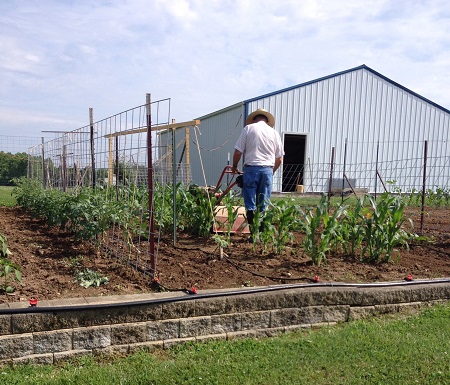
In the Short Rows--person tilling a gardenAfter a long hard day, most of us look forward to work in the short rows.
In the short rows means we are almost finished.

We have a certain amount of work to do, and the end is in sight.

How well I remember hoeing weeds out of our garden as a child. We had long hard rows to hoe – much work to complete. A few rows on the edge of the garden were shorter than most. Those were our favorites.

We usually look forward to reaching the short rows.

For many people Thursday and Friday are in the short rows of their work week. They look forward to those last two days before the weekend.

Other short rows include:

  • Authors writing the last pages of a book
  • Long distance drivers nearing the end of their journey
  • Children waiting for the last days of school

If we love what we do, we also enjoy our long rows.

Rest helps when we tire. Yet, every day becomes an adventure. We don’t believe the grass is greener on the other side. We find joy in our own garden spot of the world.

My cousin Iva loves to garden. Family and friends love when he shares his garden goodies. He sets a good example in both his work and his generosity.

Look for joy in every moment, whether in long or short rows.

“Whoever works his land will have plenty of bread, but he who follows worthless pursuits will have plenty of poverty” (Proverbs 28:19 ESV).

Thanks to Emily Akin for the suggestion and to Jewell Withers Wade for the photo.

Do you have an expression you want explained or a thought about this one? If so, please comment below.

Subscribe to receive my weekly posts by email and receive a free copy of “Words of Hope for Days that Hurt.”

If you enjoyed this post, please share it with your friends.

Out of the Woods

Out of the Woods

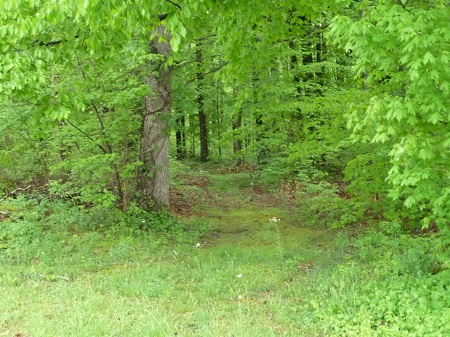
Out of the Woods--path through treesA few years ago, my husband was in the hospital, not expected to live. The next day a doctor said he was much better but not out of the woods yet. He meant my husband still had to fight for his life.

Out of the woods means safe and secure.

A person no longer faces immediate danger.

  • The worst trouble has passed.
  • Known and unknown threats are over.
  • The greatest danger is gone.
  • Circumstances are no longer critical,

Like exiting a dangerous forest, a person out of the woods feels relief.

The escape frees the person to:

  • Relax
  • Enjoy better circumstances
  • Give thanks for improvement

In addition to health issues, out of the woods applies to:

  • Finances
  • Relationships
  • Work

Whether in the woods or out, everyone chooses how to react.

Life gets hard. People get hurt. When that happens, they decide whether to:

Why not make the best of a bad situation? This life will soon pass. Let go and let God make the most of it.

My husband did make it out of the woods and left the hospital a few days later.

“Even the trees of the woods—the fir trees and cedars of Lebanon—sing out this joyous song: ‘Your power is broken; no one will bother us now; at last we have peace’” (Isaiah 14:8 TLB).

Thanks to Ann Knowles for the suggestion.

Do you have an expression you want explained? If so, please comment below.

Subscribe to receive my weekly posts by email and receive a free copy of “Words of Hope for Days that Hurt.”

If you enjoyed this post, please share it with your friends.