
Browsed by
Tag: God

Up in the Air

Up in the Air

Up in the Air--clouds cover the sun; sun rays above bare treesA friend’s car died during a recent out-of-town trip. It left her stranded on the side of the road. Her son took his car to her. The fate of her car was up in the air.

Could her car be fixed? Would she have to buy a new one? How much would either of those possibilities cost?

Up in the air means uncertain.

Something is not settled. It could change. The uncertainty may refer to such matters as:

  • Choice of school
  • Plans with friends
  • Work options
  • Food selections
  • Government decisions

Like clouds, anything up in the air floats around waiting for a decision.

 The metaphor may also refer to flying birds.

Some decisions matter little.

The choices are six of one and half a dozen of  the other. Fairly equal, either choice makes no great difference.

  • Dark chocolate or milk chocolate
  • A long walk or two short walks
  • A long book or two short books (or both)

Major decisions must be made.

Failure to decide is to decide to leave results in the hands of others. Riding the fence rarely works.

Choose well. Choose with eternal consequences in mind.

“How can men be wise? The only way to begin is by reverence for God. For growth in wisdom comes from obeying his laws. Praise his name forever” (Psalm 111:10 TLB).

Thanks to Beckham Wilson and Rita Smalley for the idea.

Do you have an expression you want explained or a thought about this one? If so, please comment below.

Subscribe to receive my weekly posts by email and receive a free copy of “Words of Hope for Days that Hurt.”

If you enjoyed this post, please share it with your friends.

Part and Parcel

Part and Parcel

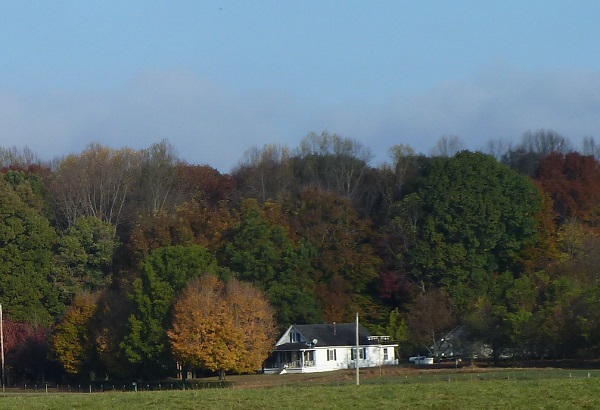
Part and Parcel: farm house surrounded by treesWhen our family sold the house where I grew up, we included all the property on that side of the road. Those few acres, in the middle of nowhere, held part and parcel of my childhood memories.

In addition to the house, we sold:

  • The lot where my grandmother used to live
  • The woods where we played
  • Dad’s garden and orchard
  • A small hay field that helped feed our cows
  • The shop and garage

We kept all the farm property across the road. When we go fishing or check the farm, we still get to see our homeplace. However, the essential part of our childhood home no longer belongs to us.

Part and parcel means an essential part of anything.

It is a basic feature such as:

  • Edits for writers.
  • On-call duty for doctors, firefighters, social workers
  • Middle of the night baby feedings for new parents

Success requires meeting those vital responsibilities.

This expression includes a legal background.

 According to The Free Dictionary, part and parcel has been used as a legal term since the fifteenth or sixteenth century. Its main use was for “clauses of a law and for parts of a landholding.” Part means “a portion.” Parcel means “something integral with a whole.” The idiom “began to be used more loosely from about 1800. Although both nouns have the same basic meaning, the redundancy lends emphasis.”

The Bible holds part and parcel of God’s will for our lives.

  • Love God.
  • Love others.
  • Repent and trust Jesus.
  • Follow Jesus’ example.

For details, I urge you to read all the Bible.

“He has told you, O man, what is good; and what does the Lord require of you but to do justice, and to love kindness, and to walk humbly with your God?” (Micah 6:8 ESV).

Thanks to Ann Maniscalco for the suggestion.

Do you have an expression you want explained or a thought about this one? If so, please comment below.

Subscribe to receive my weekly posts by email and receive a free copy of “Words of Hope for Days that Hurt.”

If you enjoyed this post, please share it with your friends.

Take Down a Peg or Two

Take Down a Peg or Two

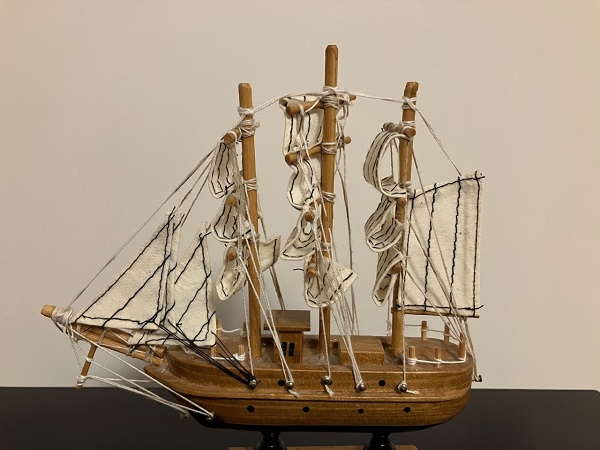
Take Down a Peg or Two--ship with sailsMany of us have personal experience related to take down a peg or two.

My childhood friends and I knew the expression well. When we became too big for our britches,  our parents put an end to our high and mighty behavior.

Their discipline took several forms:

  • The look of disapproval
  • Scolding
  • Time out
  • Loss of privileges
  • Other methods of loving but stern correction

To take down a peg or two means to deflate our pride or ego.

When we think too much of ourselves, we need a good dose of humility. No one is better than anyone else.

If we mistreat others, we may eventually get a taste of our own medicine. Our time for shame will probably come.

Wanting to do well is okay but not at the expense of others.

Hurting anyone in order to succeed spoils true success. Getting ahead never justifies:

  • Rudeness
  • Injury
  • A superior attitude

Take down a peg or two has a maritime connection.

According to The Free Dictionary, the expression “alludes to lowering a ship’s colors … by means of pegs. The higher the colors … the greater the honor.”

Refuse to become arrogant and self-centered.

Choose instead to straighten up and fly right. God, who is Love, calls us to love and help one another.

“Do not regard lightly the discipline of the Lord, nor be weary when reproved by him.
For the Lord disciplines the one he loves” (Hebrews 12:5-6 NIV).

Thanks to Tracy Crump for sharing this expression following her maritime museum tour.

Do you have an expression you want explained or a thought about this one? If so, please comment below.

Subscribe to receive my weekly posts by email and receive a free copy of “Words of Hope for Days that Hurt.”

If you enjoyed this post, please share it with your friends.

Potluck

Potluck

Potluck--table with lots of foodDo you enjoy potluck meals? If you grew up in a large extended family like I did, you understand potluck. Aunts, uncles, cousins, and friends from everywhere bring food. Lots of food. Stick to your ribs food.

Attend church potlucks, and you get a little taste of heaven on earth. Dishes that weigh down tables, plus fellowship with other believers, fill both body and soul.

Friends, co-workers, and neighbors also create great potlucks. Food and fun abound.

Potlucks may be inside, outside, or on a hillside. We once invited neighbors to a potluck picnic on top of the hill behind our house. A farm wagon served as our table. Everyone enjoyed the scenery as well as multiple plates of country cooking.

Potluck refers to a shared meal with dishes brought by those who attend.

You bring whatever dish you desire. Although unplanned, the meal usually includes plenty of everything. No one stresses, because the meal is casual and everyone helps.

Potluck (sometimes written as pot luck) means to take a chance on an uncertain outcome.

Of course, if you attend a potluck meal, you take your chances on what you get to eat. However, this also refers to other unknowns, including:

  • Shopping
  • Travel
  • Work
  • Any situation with little information but high hopes

You have one certain outcome available to you.

If you trust Jesus as Savior and Lord, you never have to guess. You never have to face unknowns alone. Plus, God has planned a banquet for you and other believers in heaven.

“Blessed is the one who will eat at the feast in the kingdom of God.” (Luke 14:15 NIV).

Thanks to Brad Leverett for the suggestion. Photo courtesy of Pexels.

Do you have an expression you want explained or a thought about this one? If so, please comment below.

Subscribe to receive my weekly posts by email and receive a free copy of “Words of Hope for Days that Hurt.”

If you enjoyed this post, please share it with your friends.

Go Haywire

Go Haywire

Go Haywire--tangled fence wire and leavesLife goes haywire from time to time. Everything goes wrong. Nothing works right.

Recently, emails of my blog posts stopped sending. I had changed nothing. They simply stopped. Plus:

  • Friends and family members suffered major health problems.
  • Several loved ones died.
  • Freezing temperatures and electricity problems left us in a cold, dark house.
  • Slick roads prevented travel.
  • To-do lists grew out of control.

My life went haywire.

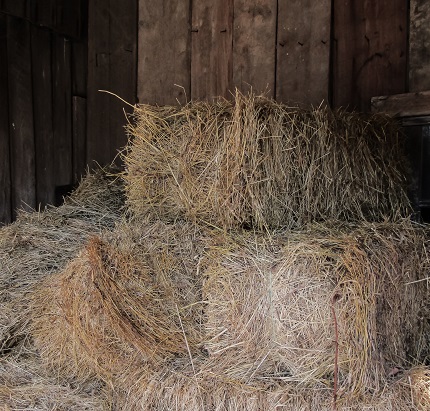
Go Haywire--stacked hayGo haywire probably relates to the wire farmers once used to bale hay.

The wire held the hay together. Farmers also occasionally made repairs with old wire. Such repairs rarely lasted. In addition, thin wire easily tangles, as seen in the fence wire above.

Go haywire has two main meanings.

The Free Dictionary explains both.

  1. “To go wrong; to malfunction; to break down.”

Like the people and possessions in my recent life, everything falls apart.

  1. To become irrational or crazy.”

When life gets crazy, acting crazy often follows. Because my surroundings felt out of control, I had a tough time staying in control.

Personal reactions do not have to depend on circumstances.

Once I changed my self-talk and thoughts, my emotions also changed. Hard times happen. That’s life. Yet, good can come from those times.

Whether circumstances remain calm or go haywire, I want to let go and let God hold my life together.

“Like a city whose walls are broken through is a person who lacks self-control” (Proverbs 25:28 NIV).

Thanks to Randy Gosser for the suggestion and to Connie Atwood Murphy for the photos.

Do you have an expression you want explained or a thought about this one? If so, please comment below.

Subscribe to receive my weekly posts by email and receive a free copy of “Words of Hope for Days that Hurt.”

If you enjoyed this post, please share it with your friends.
What’s Good for the Goose Is Good for the Gander

What’s Good for the Goose Is Good for the Gander

What's Good for the Goose Is Good for the Gander--geese in flight from waterIf my sister received a privilege as a child, I thought I had the same right. My little brain believed what’s good for the goose is good for the gander.

Since my grandmother raised geese, I knew a gander was a male goose. However, I also knew this expression applied to both males and females.

What’s good for the goose is good for the gander relates to fairness.

If my sister enjoyed a treat, I wanted one too. That included such favors as:

  • No chores
  • Late curfews
  • New clothes or books

If anything is okay for one person, it should be for another.

I wanted equal treatment, and so did my sister.

Regardless of backgrounds or circumstances, most people want to be treated with:

  • Respect
  • Dignity
  • Worth

What’s good for the goose is good for the gander keeps everyone off a high horse.

If my sister and I acted too high and mighty, we knew our goose was cooked. We ended up in trouble.

God created all people in His image.

To follow God means to treat one another with the same love, forgiveness, and justice God gives.

“Do not pervert justice; do not show partiality to the poor or favoritism to the great, but judge your neighbor fairly” (Leviticus 19:15 NIV).

Thanks to Becky Nash Rowe for the suggestion. Image by Ted Erski from Pixabay.

Do you have an expression you want explained or a thought about this one? If so, please comment below.

Subscribe to receive my weekly posts by email and receive a free copy of “Words of Hope for Days that Hurt.”

If you enjoyed this post, please share it with your friends.
Not Have a Leg to Stand On

Not Have a Leg to Stand On

Not Have a Leg to Stand On--deer with one leg missing
Deer Me – No Leg

My friend Sharon recently bought a small decorative deer that did not have a leg to stand on. Actually, it had three legs, but the fourth leg was missing.

Sharon was not sure when she could exchange the deer. Creative person that she is, she used her grandchildren’s play dough to make a new leg. She painted the leg, so it would not look like it wore a cast.

Not have a leg to stand on means we have no support for our thoughts, words, or actions.

Not Have a Leg to Stand On--Deer with play dough leg
Play Dough to the Rescue

No facts back up our position. We lack the evidence we need. This applies to:

  • Personal positions
  • Courtroom arguments
  • Scientific studies
  • Medical trials
  • Educational research
  • Political stands

With no leg to stand on, we have no possibility for success. Regardless of our efforts, we end up spinning our wheels. We waste our time.

When that happens, we need to correct the situation.

Like my friend, we alter our circumstances. We may:

  • Change our stand
  • Take a new stand

Whatever we do, we want to seek and follow the truth.

We don’t give up. Rather, we find a better way. As my friend did with her deer, we fix what’s broken.

When we don’t have a leg to stand on, remember to look to the one who created us.

Not Have a Leg to Stand On--repaired leg
Ready to Serve Again

We may be broken and disabled, but God can pick up the pieces of our brokenness and make us whole again.

“If you do not stand firm in your faith, you will not stand at all” (Isaiah 7:9 NIV).

Thanks to Sharon Berry for the suggestion and photos.

Do you have an expression you want explained or a thought about this one? If so, please comment below.

Subscribe to receive my weekly posts by email and receive a free copy of “Words of Hope for Days that Hurt.”

If you enjoyed this post, please share it with your friends.

Outside the Box

Outside the Box

Outside the Box--two wrapped giftsSometimes we find ourselves doing the same thing over and over again. We make no progress because we never change. When that happens, we need to think outside the box.

To think outside the box means to think beyond the usual limits.

We think, plan, and act:

  • In new ways
  • Outside the norm
  • In unusual directions
  • With imagination
  • Apart from tradition

We no longer box ourselves in with the same old patterns.

Routine no longer rules. We leave our fear of the unknown and move into new territory.

During Christmas, let’s also think outside the box.

Rather than focus on giving gifts in boxes or bags, let’s focus on gifts that last. We soon forget or throw away most of our wrapped presents. Yet, we remember for a lifetime such treasures as:

  • Kindness
  • Trustworthiness
  • Helping hands
  • Time together
  • Shared sorrow or joy
  • True friendship

Now is a great time to throw out the box. Let’s:

Merry Christmas!

“This is how God showed his love among us: He sent his one and only Son into the world that we might live through him” (1 John 4:9 NIV).

Thanks to Brad Leverett for the suggestion.

Do you have an expression you want explained or a thought about this one? If so, please comment below.

Subscribe to receive my weekly posts by email and receive a free copy of “Words of Hope for Days that Hurt.”

If you enjoyed this post, please share it with your friends.

On a Dime

On a Dime

On a Dime-Durango and Silverton trainOur family loves the Durango and Silverton train ride through Colorado’s San Juan Mountains. However, that train will not stop on a dime. It requires time to slow down.

On a dime has two main meanings.

Both refer to precise movement.

 On a dime often means quickly.

The Durango and Silverton train cannot stop quickly. Other vehicles can. Since a dime is the smallest coin in the United States, that implies little time to stop.

This expression also means a small space to move.

Some drivers claim their cars will turn on a dime. Of course, cars need good drivers to turn that well.

People also turn on a dime.

That can be good or bad.

We desire the ability to move quickly:

  • In emergencies.
  • When playing sports

We prefer not to:

  • Suddenly lose our tempers
  • Change jobs without warning

Sometimes, easy does it works better.

If we move too fast, particularly in tight situations, our haste makes waste. We end up in trouble.

Whether we act slowly or quickly, let’s always move under God’s leadership.

“Teach me to do your will, for you are my God; may your good Spirit lead me on level ground” (Psalm 143:10 NIV).

Thanks to Marita Smeathers Mantooth for the suggestion. Image by DavidMcConnell from Pixabay.

Do you have an expression you want explained or a thought about this one? If so, please comment below.

Subscribe to receive my weekly posts by email and receive a free copy of “Words of Hope for Days that Hurt.”

If you enjoyed this post, please share it with your friends.
Can’t Beat It with a Stick

Can’t Beat It with a Stick

Can't Beat It with a Stick-Old FaithfulOur family loves Yellowstone National Park. For a travel destination, we can’t beat it with a stick.

Consider all it offers:

  • A crystal-clear lake
  • Majestic mountains
  • Thundering waterfalls

Plus, wildlife:

  • Bison
  • Elk
  • Deer
  • Bears
  • Wolves

However, its thermal features are our favorites:

  • Mud pots
  • Geysers
  • Steam vents
  • Hot springs

That explosive power just under the earth’s surface amazes us.

Can’t beat it with a stick means nothing is better.

We can’t improve it. Definitely not fair to middling, no greater deal exists.

Sometimes, we simply say we can’t beat it. It’s excellent, as we find in:

  • The beauty and wonder of Yellowstone
  • A dependable car or truck
  • The best meal of our lives
  • A bargain at the store

More impressive than any of this is its Creator.

We stand in wonder of the beauty and bounty of our earth. Yet, imagine the One who created it.

Imagine eternity with the Creator of everything.

God promises an eternal home in heaven to everyone who follows Jesus. The apostle John describes his vision of heaven in the Bible’s book of Revelation. However, heaven’s glory remains beyond anything we can imagine.

“’What no eye has seen, what no ear has heard, and what no human mind has conceived’—the things God has prepared for those who love him—” (1 Corinthians 2:9 NIV).

Thanks to Joe and Ann Klotz for the suggestion. Do you have an expression you want explained or a thought about this one? If so, please comment below.

How the Sausage Is Made-Harriet Michael book, Glimpses of the SaviorCongratulations to Frank Cheatham, whose name was randomly selected from my mailing list to receive a free copy of Shirley Crowder and Harriet Michael’s devotional book, Glimpses of the Savior: 50 Meditations for Thanksgiving, Christmas, and the New Year.

Subscribe to receive my weekly posts by email and receive a free copy of “Words of Hope for Days that Hurt.”

If you enjoyed this post, please share it with your friends.