Browsed by
Tag: God

Set Your Face Like Flint

Set Your Face Like Flint

Set Your Face Like Flint--water lapping against rocksDo you occasionally face tasks that seem impossible? Yet, you refuse to quit? Instead, you set your face like flint and finish the job before you?

Flint is a hard, dark rock.

It was often used in earlier times to make tools and start fires. Flint also makes strong stone walls.

To set your face like flint means to be determined.

When you face difficulties, you refuse to give up. Instead, you:

  • Focus on the task before you.
  • Dedicate yourself to its completion.

The prophet Isaiah described the Messiah, Jesus, as having “set my face like flint.”

Isaiah tells of Jesus’ determination to complete the role of a suffering servant. Jesus sacrificed His life on a cross to make eternal life possible for all who accept His gift.

You can follow Jesus’ example.

Life gets hard. Many tasks are tough. However, with God’s help, you can endure. You can keep on keeping on. You can also make a positive difference in an often negative world.

“Because the Sovereign Lord helps me, I will not be disgraced. Therefore have I set my face like flint, and I know I will not be put to shame” (Isaiah 50:7 NIV).

Thanks to Linda Russell for the suggestion. Image by Wesley Rocha from Pixabay

Do you have an expression you want explained or a thought about this one? If so, please comment below.

Subscribe to receive my weekly posts by email and receive a free copy of “Words of Hope for Days that Hurt.”

If you enjoyed this post, please share it with your friends.
Grow Like a Weed

Grow Like a Weed

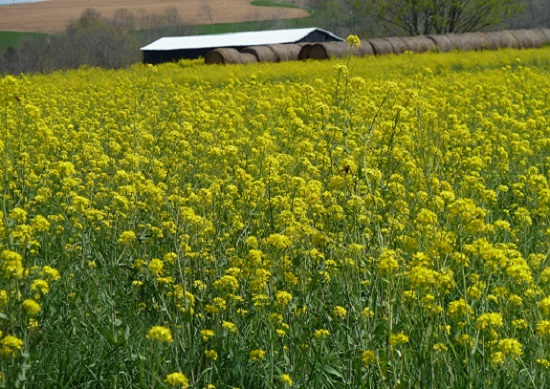
Grow Like a Weed-a field of goldenrod with hay and a barn in the backgroundMy youngest relatives grow like a weed. One day, they are knee high to a grasshopper. The next, they stand as high as my shoulder. Now, most tower over me.

It takes longer than three days for that to happen. However, they do grow fast.

To grow like a weed means to grow quickly.

If we have a garden, we have weeds. We pull the weeds. A day or two later, we have more weeds. Tall weeds. The battle never ends.

To grow like a weed also means to grow well.

We want our vegetables or flowers to grow well. When we bite into tomatoes, still warm from the vine, we almost burst with joy. Yet, to enjoy those tomatoes, we must deal with pesky weeds.

Weeds grow almost anywhere.

 In addition to gardens, we find them in:

  • Yards
  • Fields
  • Parks
  • Cracks in sidewalks

Many weeds are beautiful.

People in Kentucky try to keep dandelions out of our yards. Yet, a first-time visitor from South Korea loved our beautiful yellow flowers.

Considered a weed by many people, goldenrod is Kentucky’s state flower. It turns a bare field into an ocean of gold.

All of us were created to grow.

We may not grow as fast or as well as a weed. However, we can grow and bloom where we are planted. Let’s make the world a more beautiful place with our presence.

“We are co-workers in God’s service; you are God’s field” (1 Corinthians 3:9 NIV).

Thanks to Beckham Wilson for the suggestion.

Do you have an expression you want explained or a thought about this one? If so, please comment below.

Subscribe to receive my weekly posts by email and receive a free copy of “Words of Hope for Days that Hurt.”

If you enjoyed this post, please share it with your friends.

Bigwig

Bigwig

Bigwig-woman in costume with high wigFew of us are bigwigs. However, we probably know people who are.

A bigwig is an important person.

The person may be a:

  • King, queen, or other government official
  • President of a company
  • Famous actor or athlete

A bigwig usually has a high position, power, and money.

According to The Phrase Finder, “The fashion for wigs began with the Bourbon kings of France. Louis XIII (1601 – 1643) went prematurely bald and took to wearing a wig. By the middle of the century … wigs were virtually obligatory for all European nobility.” Their wigs became so large, this phrase grew in popularity.

Bigwig also means a person who pretends to be important.

If we try to be a bigwig, we act highfalutin. Our pride gives us a big head. Other people usually recognize the behavior as only an act.

Everyone is important to God.

We may not have a high position, money, or power, but God gives us purpose. May each of us find our purpose and do it to the best of our ability.

“Do not think of yourself more highly than you ought, but rather think of yourself with sober judgment, in accordance with the faith God has distributed to each of you” (Romans 12:3 NIV).

Thanks to Regina Graham for the suggestion. Image by Michael Gaida from Pixabay.

Do you have an expression you want explained or a thought about this one? If so, please comment below.

Subscribe to receive my weekly posts by email and receive a free copy of “Words of Hope for Days that Hurt.”

If you enjoyed this post, please share it with your friends.

Nail It

Nail It

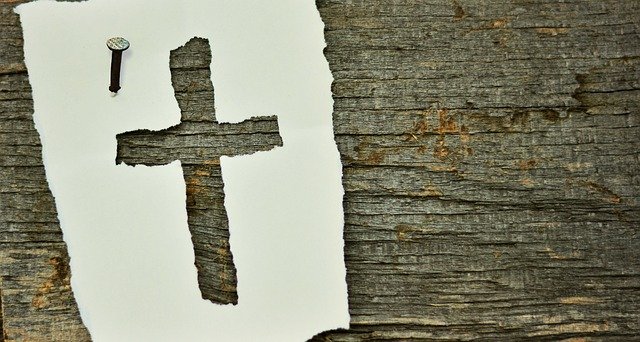
Cross in center of paper, nailed to a rough piece of woodDuring the Olympics and other sporting events, athletes want to nail it.

  • Skaters desire a perfect balance of style, strength, and difficulty.
  • Swimmers want to remain in their lanes and reach the wall first.
  • Runners pull out all the stops to cross the finish line before anyone else.

To nail it is to do a job well.

People succeed. They complete accurate work or present an almost perfect performance. They hit the nail on the head.

Jesus nailed our sins to the cross.

Although soldiers hung Him there, Jesus gave His life freely.

Jesus lived a perfect life and died the perfect sacrifice for our sins. His resurrection on the third day was the final nail of victory over sin and death.

We nail our part in God’s perfect plan when we accept Jesus’ offer of salvation.  

We cannot earn our way to heaven. However, Jesus prepared the way for us. He nailed our salvation.

At Easter and always, we celebrate and tell others of the fresh start possible through Jesus’ perfect gift.

“[God] forgave us all our sins, having canceled the charge of our legal indebtedness, which stood against us and condemned us; he has taken it away, nailing it to the cross” (Colossians 2:13-14).

Thanks to Debbie Tapscott for the suggestion. Image by congerdesign from Pixabay.

Do you have an expression you want explained or a thought about this one? If so, please comment below.

Subscribe to receive my weekly posts by email and receive a free copy of “Words of Hope for Days that Hurt.”

If you enjoyed this post, please share it with your friends.

Stop and Smell the Roses

Stop and Smell the Roses

Stop and Smell the Roses--roses and other flowers around a pool of waterMy husband and I love to travel. For years, we planned our own trips and did our own driving. We hit the trail as often as possible. I usually scheduled far more than we had time to do. However, we learned to stop and smell the roses along the way.

Our schedule was not as important as fun on the trip. We began according to plan but made changes along the way. We went off the beaten path almost every trip and are so glad we did.

To stop and smell the roses means to take time to enjoy life.

We slow down and relax. That means we:

  • Get away from our busy schedules
  • Recognize the importance of mini moments of joy.

Without breaks, stress builds.

No one can go forever. If we fail to get away, our:

  • Health suffers
  • Work becomes less productive
  • Relationships weaken

We must stop and smell the roses if we desire a good life.

Leisure time is a necessity, not a luxury. When God created the world, he set aside one day a week to rest and worship. The value of that plan remains as important now as then.

“Ask the Lord for rain in the springtime; it is the Lord who sends the thunderstorms. He gives showers of rain to all people, and plants of the field to everyone” (Zechariah 10:1 NIV).

Thanks to Karen Hart for the suggestion.

Do you have an expression you want explained or a thought about this one? If so, please comment below.

Subscribe to receive my weekly posts by email and receive a free copy of “Words of Hope for Days that Hurt.”

If you enjoyed this post, please share it with your friends.

What Will Be Will Be

What Will Be Will Be

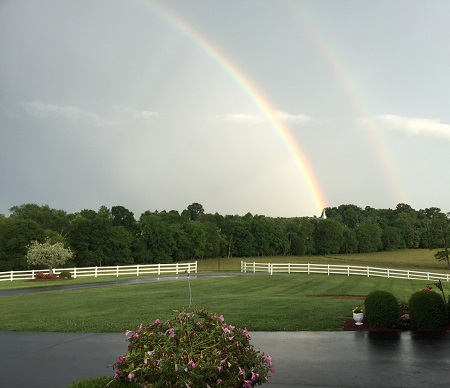
What Will Be Will Be--double rainbows over fields and white fencesWhen I was a little girl, one of my favorite songs was Doris Day’s “Que Sera, Sera” (Whatever Will Be Will Be). She sounded so happy. The music’s rhythm made me skip and swirl as I sang along.

Only later did I pay attention to the song’s meaning.

The words were not as optimistic as I originally thought.

In some ways, what will be will be sounds hopeless.

In a nutshell, it seems we have no control. We cannot change the future.

If we have no control, why do anything at all?

Yet, we do have some control.

We cannot change everything, but we can change some things.

What will be will be tells us not to worry about what we cannot control.

  • Natural disasters
  • Disease
  • Other people’s actions
  • Death

Will worry stop any of those from happening? No. If they do not happen, did worry prevent them? No.

As my friend Marian Woosley often said, Why worry when we can pray?

Control what we can. Let the rest go.

Rather than wring our hands about the future, let go and let God lead us today.

  • Prepare as much as possible for natural disasters.
  • Practice good health habits
  • Treat other people well.
  • Be ready for death, whenever it comes.

When we do what we can under God’s leadership, life may still be hard. Yet, God gives us peace and joy.

“I consider that our present sufferings are not worth comparing with the glory that will be revealed in us” (Romans 8:18 NIV).

Thanks to Laura Lee Leathers for the suggestion and to Mary Lou Rafferty for the photo..

Do you have an expression you want explained or a thought about this one? If so, please comment below.

Subscribe to receive my weekly posts by email and receive a free copy of “Words of Hope for Days that Hurt.”

If you enjoyed this post, please share it with your friends.
Right as Rain

Right as Rain

Right as Rain--raindrops on leaves and flowerLike a gentle rain on a hot, dry day, some things feel right as rain. Plants need refreshment, and so do people. After a long, dry spell of trouble, we love calm showers of peace.

Right as rain often means life is all right.

We enjoy:

  • Good or improved health
  • Everything working as it should

We feel well. Problems are solved. Work is complete.

Right as rain also means something is correct.

  • We give the right answers on a test.
  • Our work meets or exceeds requirements.

At times, right as rain means dependable.

People are as good as their word. We can take what they say to the bank. Regardless of their circumstances, rain or shine, they do what is right.

God offers a good, correct, and dependable life.

That does not mean everything always goes as we hope. It does mean everything will eventually work out.

Sooner or later, people fail. God never has and never will. We can trust God with our lives and our futures.

“Let my teaching fall like rain and my words descend like dew, like showers on new grass, like abundant rain on tender plants” (Deuteronomy 32:2 NIV).

Thanks to Regina Graham for the suggestion.

Do you have an expression you want explained or a thought about this one? If so, please comment below.

Subscribe to receive my weekly posts by email and receive a free copy of “Words of Hope for Days that Hurt.”

If you enjoyed this post, please share it with your friends.

Let Up

Let Up

Let Up--Ice covered shrubA few years ago, everyone hoped an ice storm would soon let up. The heavy ice:

  • Covered and broke limbs on shrubs and trees
  • Downed power lines
  • Made travel impossible

Sometimes we feel like we cannot get a let up from life’s storms. When it rains, it pours. Problems overwhelm us. We reach the end of our rope.

Recent tornadoes:

  • Destroyed homes and property
  • Injured and killed people going about their daily lives
  • Damaged entire communities

To let up means to slow down or stop.

This can apply to:

  • Weather
  • Speed
  • Hard times
  • Physical, mental, or emotional pressure

This expression often applies to relationships.

  • Children want parents to let up on rules.
  • Employees want bosses to let up on work.
  • Many times, we need to let up on ourselves.

Whatever our pressures, God offers relief.

Problems do not always go away. However, God offers peace, hope, and comfort in every situation.

“We are pressured in every way but not crushed; we are perplexed but not in despair” (2 Corinthians 4:8 NIV).

Thanks to Sue Davis Potts for the suggestion.

Do you have an expression you want explained or a thought about this one? If so, please comment below.

Subscribe to receive my weekly posts by email and receive a free copy of “Words of Hope for Days that Hurt.”

If you enjoyed this post, please share it with your friends.
Hands Are Tied

Hands Are Tied

Hands Are Tied--rope tied around wristsMost of us experience times we want to do something but can’t. Our hands are tied. Reasons include:

  • We are too busy.
  • Our boss does not allow it.
  • We lack necessary resources.
  • The law or other rules prevent it.

If our hands are tied, we are not free to act.

Like a prisoner, circumstances limit us. Although we want to make a change or help someone, we can’t.

Occasionally we say our hands are tied as an excuse.

We don’t want to do something. Yet, we say, “I can’t” rather than “I don’t want to.” Most people recognize such dishonesty immediately, or they learn about it later. Better to stay as good as our word and speak only the truth.

Many times, we give up too soon.

We try on our own and fall flat. If we pray, God may open new possibilities. The impossible becomes possible with God.

Make a difference when we can. Seek help when we can’t.

 Everyone can make a positive difference. Rarely are our hands tied.

With God’s help and the help of other people, we can make our world a better place.

“Let us then approach God’s throne of grace with confidence, so that we may receive mercy and find grace to help us in our time of need” Hebrews 4:16 NIV).

Thanks to Patty Cooper Emerson for the suggestion.

Do you have an expression you want explained or a thought about this one? If so, please comment below.

Subscribe to receive my weekly posts by email and receive a free copy of “Words of Hope for Days that Hurt.”

If you enjoyed this post, please share it with your friends.

Take the Cotton Out of Your Ears and Put It in Your Mouth

Take the Cotton Out of Your Ears and Put It in Your Mouth

Take the Cotton Out of Your Ears and Put It in Your Mouth--cotton balls in an earA friend’s mother-in-law used to tell family members, “Take the cotton out of your ears and put it in your mouth.” Many of us have probably heard the same or similar expressions.

Take the cotton out of your ears and put it in your mouth means to stop talking and start listening.

When we talk all the time, we fail to hear what others say. Their words go in one ear and out the other.

God gave us two ears and one mouth. That tells us something important, don’t you think? If we listen more than talk, we have fewer conflicts and greater cooperation.

We learn more when we listen.            

If we listen closely, all ears, we hear – not just noise or words, but also what the other person means.

We regret less when we listen.

If we wait to talk until we hear the other person’s point of view, we have fewer problems. We avoid putting our foot in our mouth.

The next time we want to talk too much rather than listen, let’s remember how God created us– one mouth, two ears.

“You have seen many things, but you pay no attention; your ears are open, but you do not listen” (Isaiah 42:20 NIV).

Thanks to Brad Palmer for the suggestion and to Travis Gosser for the photo.

Do you have an expression you want explained or a thought about this one? If so, please comment below.

Subscribe to receive my weekly posts by email and receive a free copy of “Words of Hope for Days that Hurt.”

If you enjoyed this post, please share it with your friends.