Browsed by
Tag: peace

Pie in the Sky

Pie in the Sky

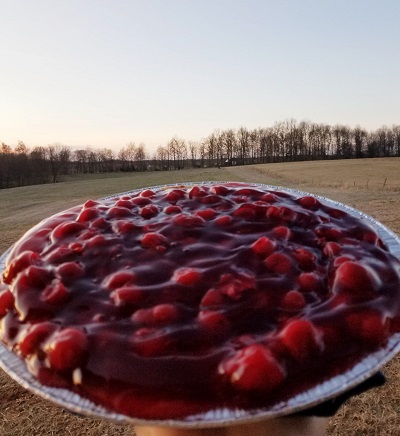
Pie in the Sky--cherry pie held up to the skyJoe Hill wrote about pie in the sky in his 1911 song, The Preacher and the Slave. His song criticized religious leaders who told people about heaven but ignored their physical needs.

Pie in the sky refers to a good future, usually after death.

However, that often means a bad life now with slim pickings. People wait and hope for better times.

Pie in the sky also means false hope, such as:

  • Plans or ideas that will never happen
  • Promises that will not be kept
  • Dreams that will never come true

Pie in the sky ideas sound good, but they seldom happen in real life. Wishes don’t make them occur.

People need more than pie in the sky.

Everyone should prepare for life after death. Yet, everyone also suffers real needs now.

Jesus showed how to balance the two.

Prepare for the future.

  • Accept Jesus as the way to heaven.
  • Live and teach as Jesus lived and taught.

Make a difference now.

  • Feed the hungry.
  • Care for the sick.
  • Give hope to the hopeless.
  • Help pick up the pieces of broken lives.

“Then the King will say to those on his right, ‘Come, you who are blessed by my Father; take your inheritance, the kingdom prepared for you since the creation of the world. For I was hungry and you gave me something to eat, I was thirsty and you gave me something to drink, I was a stranger and you invited me in, I needed clothes and you clothed me, I was sick and you looked after me, I was in prison and you came to visit me’”(Matthew 25:34-36 NIV).

Do you have an expression you want explained? If so, please comment below.

Subscribe to receive my weekly posts by email and receive a free copy of “Words of Hope for Days that Hurt.”

If you enjoyed this post, please share it with your friends.

Thanks to Brad Leverett for the suggestion and to Lauren Gordon with Gordon Goodies for the photo.

Teetotal

Teetotal

Teetotal--full moonTeetotal means total or complete.

It refers most often to a person who never drinks alcohol. We call that person a teetotaler. Our family chose a teetotal life. Too many people we love have been ruined by alcohol.  We decided better safe than sorry.

We occasionally see teetotal written T Total. Either way we spell it, we stress total.

  • No question about it
  • No doubt at all
  • Absolutely

Teetotal also means certainty.

Someone may ask, “Are you sure?” or “Is that your final answer?” To stress our certainty, we answer, “Teetotally.” We are completely certain. We definitely gave our final answer.

Teetotal also means completely full.

  • A full moon lights up the night sky.
  • Our hearts fill with sorrow.
  • We eat all we can.
  • Joy makes our cup run over.

For the teetotally best life, we ask God to fill us with His love and power.

“You have made known to me the paths of life; you will fill me with joy in your presence” (Acts 2:28 NIV).

Thanks to Betty Johnson for the suggestion.

Do you have an expression you want explained? If so, please comment below.

Subscribe to receive my weekly posts by email and receive a free copy of “Words of Hope for Days that Hurt.”

If you enjoyed this post, please share it with your friends.

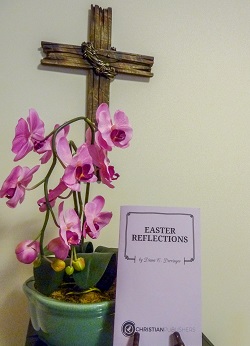
Easter Reflections play script, flower, and cross in backgroundCongratulations to Harriet Michael, whose name was randomly drawn from my blog subscribers for a free copy of “Easter Reflections.”  You can read a script preview or order the play from Christian Publishers.

At the End of the Day

At the End of the Day

At the End of the Day--sunset over treesAt the end of the day means our final conclusion.
We have considered everything. We have:

  • Discussed
  • Analyzed
  • Experimented
  • Then made our decision

At the end of the day, we choose.

  • Who will share my life?
  • What will I do?
  • Where will I live?
  • When will I do what needs to be done?
  • How will I treat others?

We make our at the end of the day decisions any time of day.

  • Morning
  • Midday
  • Evening
  • Night

The time matters little, but, at some point, we must decide. We cannot ride the fence forever.

Our at the end of the day decisions show what we value most.

Will we choose:

  • Money
  • Status
  • Power
  • Popularity

Or will we choose:

  • A relationship with God
  • Time with family
  • Making our world a better place

As the song “When It’s All Been Said and Done” reminds us, only what’s done for love lasts.

“Jesus replied: ‘“Love the Lord your God with all your heart and with all your soul and with all your mind.” This is the first and greatest commandment. And the second is like it: “Love your neighbor as yourself.” All the Law and the Prophets hang on these two commandments.’” (Matthew 22:37-40 NIV).

Thanks to Margaret Bertram for the suggestion.

Do you have an expression you want explained or a thought about this one? If so, please comment below.

Subscribe to receive my weekly posts by email and receive a free copy of “Words of Hope for Days that Hurt.”

If you enjoyed this post, please share it with your friends.

Deck the Halls

Deck the Halls

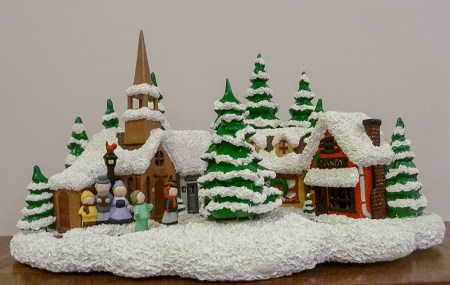
Deck the Halls, Christmas villageDeck the Halls is a traditional Christmas and New Year’s song.

As sung in this video, the original version was Deck the Hall (not Halls).

However we sing it, the message remains the same: Tis the season of joy.  Therefore, we decorate with signs of the season. We also celebrate with:

  • Music
  • Gifts
  • Church services
  • Visits with family and friends
  • Parties
  • Food
  • Santa Claus
  • Elves and reindeer
  • Helping people in need

We deck the halls, but so much more.

 Trees, lights, and other Christmas symbols decorate our:

  • Houses
  • Businesses
  • Parks
  • Churches
  • Bridges
  • Everywhere we look for weeks before and after Christmas

Why Bother?

What’s the big deal about Christmas anyway?

We get so busy decking halls, we sometimes forget the reason why. And it is a big deal.

Jesus came, God to earth, in the form of a baby.

Jesus came as our Savior, to die for our sins. His gift to all who accept Him: a personal relationship with God and a home in heaven.

We can deck the halls and more, if we wish. We can keep our decorations simple, if we wish. However we celebrate this special time of year, may we always remember why.

Merry Christmas!

“A child shall be born to a virgin! And she shall call him Immanuel (meaning, “God is with us”)” (Isaiah 7:14 TLB).

Do you have an expression you want explained or a thought about this one? If so, please comment below.

Subscribe to receive my weekly posts by email and receive a free copy of “Words of Hope for Days that Hurt.”

If you enjoyed this post, please share it with your friends.

Immediately If Not Sooner

Immediately If Not Sooner

Immediately If Not Sooner, St. Lawrence River International BridgePatience is not my greatest strength. Most of the time, I want everything done immediately, if not sooner. I want it done now, but I wish it were already done.

That seems true for many of us.

We want everything fast:

  • Food
  • Information
  • Service

We don’t like to wait.

A right smart of patience would do us all good. Instead, we tie ourselves in knots with worry. because we can’t get everything done as fast as we want.

We become content when we begin to enjoy each moment.

With an easy does it state of mind, we:

  • Learn from the past
  • Do what we can today.
  • Look forward to what the future holds.

Like crossing a bridge on a family vacation, we enjoy the ride.

Above all and at all times, pray for and follow God’s direction.

“Be joyful in hope, patient in affliction, faithful in prayer” Romans 12:12 NIV).

Thanks to Jan Abbott for the suggestion.

Do you have an expression you want explained or a thought about this one? If so, please comment below.

Subscribe to receive my weekly posts by email and receive a free copy of “Words of Hope for Days that Hurt.”

If you enjoyed this post, please share it with your friends.

His Name Is Mud

His Name Is Mud

His Name Is Mud--runner in mudMany children love to play in mud. Some animals roll in mud. However, no one wants to hear his name is mud.

Anyone whose name is mud is in trouble.

 The person’s bad situation makes him:

  • Unpopular
  • Dishonored
  • Have a bad reputation

Many believe his name is mud began with Dr. Samuel Mudd.

Dr. Mudd treated John Wilkes Booth’s broken leg after Booth killed President Abraham Lincoln. Dr. Mudd went to jail but was later pardoned. Many say he was innocent of any wrong. However, his reputation suffered.

His name is mud was a common expression before Dr. Mudd.

It often meant a person was a fool.

A person whose name is mud can come clean.

If guilty of bad behavior, he can:

  • Admit his mistakes
  • Ask forgiveness
  • Turn to God for guidance

If innocent of bad behavior, he can:

  • Live a life that shows his innocence
  • Explain what happened, if he thinks that will help
  • Show proof of his innocence
  • Watch his step to prevent future problems

“He lifted me out of the slimy pit, out of the mud and mire; he set my feet on a rock and gave me a firm place to stand” (Psalm 40:2).

Thanks to Terry Brewer for the suggestion.

Do you have an expression you want explained or a thought about this one? If so, please comment below.

Subscribe to receive my weekly posts by email and receive a free copy of “Words of Hope for Days that Hurt.”

If you enjoyed this post, please share it with your friends.

Easy Does It

Easy Does It

Easy Does It--gentle streamEasy does it tells us to move slowly and carefully.

 Like gently flowing water, we:

  • Take our time
  • Work around hard spots
  • Go with the flow

If we move too fast, we quickly learn that haste makes waste.

Sometimes easy does it relates to work.

We remain careful when we:

  • Move a heavy piece of furniture
  • Carry a special painting or piece of pottery

We don’t want to drop or break any of those.

Other times easy does it relates to our emotions.

When we feel out of control, rather than blow off steam, we:

  • Calm down
  • Relax
  • Control our temper
  • Treat everyone as we want to be treated

Ways to stay in control include:

  • Taking deep breaths
  • Lowering our shoulders, so our muscles relax
  • Closing our eyes and thinking of a favorite place
  • Praying
  • Asking if what upsets us will matter in ten years

Easy does it works well for everything and everybody.

“The fruit of the Spirit is love, joy, peace, forbearance, kindness, goodness, faithfulness, gentleness and self-control” (Galatians 5:22-23 NIV).

Thanks to Janna Babak for the suggestion.

Do you have an expression you want explained or a thought about this one? If so, please comment below.

Subscribe to receive my weekly posts by email and receive a free copy of “Words of Hope for Days that Hurt.”

If you enjoyed this post, please share it with your friends.

Up a Stump

Up a Stump

Up a Stump--stump I always thought up a stump meant the same as stumped. My friend Patty Cooper Emerson explained a difference in the two.
Stumped means confused or puzzled.

We cut a few trees in our back year. I was stumped about what to do with the stumps. Should I:

  • Dig them up
  • Burn them
  • Leave them alone

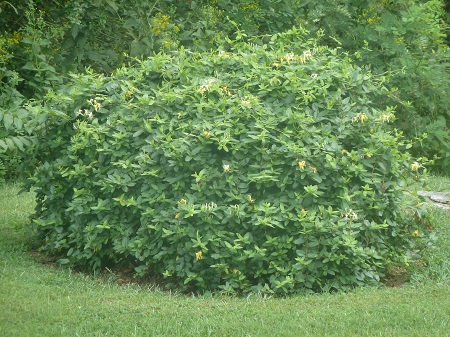
Up a Stump--honeysuckle-covered stumpWith one stump, I let nature take control. Honeysuckle grew near it. I allowed the honeysuckle to keep growing. Now, it covers the stump and blooms all summer. Problem solved.

No longer stumped, I have a pretty stump.

Up a stump means a situation too big to manage.

I cannot solve the problem. I:

  • Have no choice
  • Must live with it

Patty gave the example of a young man who arrives 30 minutes late to work every day. If he is my sister’s son, I might feel up a stump – like I can do nothing.

What makes me feel up a stump may not make you feel that way.  

  • You may be comfortable firing your sister’s son.
  • I may feel comfortable with a problem you cannot manage.

Nothing leaves God up a stump. Rather than tying myself in knots or becoming a worry wart, I can take all my problems to God. So can you.

“A life devoted to things is a dead life, a stump; a God-shaped life is a flourishing tree” (Proverbs 11:28 MSG).

If you use up a stump and stumped, do you mean the same? Please comment below.

Do you have an expression you want explained or a thought about this one? If so, please comment below.

Subscribe to receive my weekly posts by email and receive a free copy of “Words of Hope for Days that Hurt.”

If you enjoyed this post, please share it with your friends.

You Can’t Squeeze Blood from a Turnip

You Can’t Squeeze Blood from a Turnip

You Can't Squeeze Blood from a Turnip--basket of turnipsYou can’t squeeze blood from a turnip means something is extremely hard to do.
You may also hear:

  • It is like getting blood from a turnip.
  • You can’t draw blood from a turnip.
  • It is like getting blood from a stone.

All usually deal with efforts to get money or information from someone.

 The person:

  • Has what we need but will not share or help
  • Or has little or no money or information

Often a person has a bill but no way to pay it.

A few businesspeople understand. Others do not.

During my social work years, a doctor cared for a couple and their children. One day we discussed their many needs. The doctor said, “You can’t squeeze blood from a turnip.” He knew the family was poor as a church mouse. They would probably never be able to pay his bill.

However, the doctor continued to treat the family. He also gave them the same respect he gave everyone else. The family paid him $1 every month. He admired their effort to pay what they could.

You can’t squeeze blood from a turnip. You can treat everyone with respect.

 Count your blessings. Then share those blessings with others.

“Whoever oppresses the poor shows contempt for their Maker, but whoever is kind to the needy honors God” (Proverbs 14:31 NIV).

Thanks to Rhonda Wade Royster for the suggestion.

Do you have an expression you want explained or a thought about this one? If so, please comment below.

Subscribe to receive my weekly posts by email and receive a free copy of “Words of Hope for Days that Hurt.”

If you enjoyed this post, please share it with your friends.

Not My Cup of Tea

Not My Cup of Tea

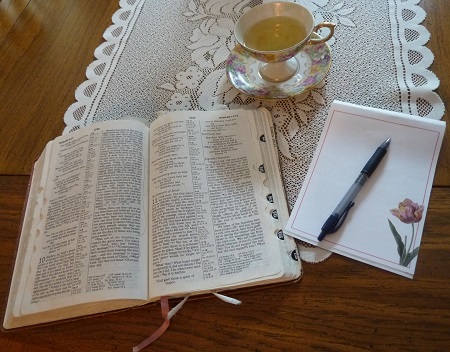
Not My Cup of Tea-tea, Bible, paper and penCoffee is not my cup of tea. I don’t like it. Water, milk, and tea are. I enjoy all three.

Not my cup of tea refers to anything I don’t like.

I don’t want or enjoy:

  • Its taste
  • How it looks
  • Spending time with it

Other items on my dislike list include:

  • Lobster
  • Video games
  • Poison ivy

Something is my cup of tea if I like it.

Items on that list include:

My likes may differ from yours.

That makes life more interesting. Don’t you agree?

Whatever is or is not your cup of tea, I pray your cup runs over with God’s blessings.

“He has made everything beautiful in its time” (Ecclesiastes 3:11 NIV).

Thanks to Carole Fite for the suggestion.

Do you have an expression you want explained or a thought about this one? If so, please comment below.

Subscribe to receive my weekly posts by email and receive a free copy of “Words of Hope for Days that Hurt.”

If you enjoyed this post, please share it with your friends.