Browsed by
Tag: relationships

Small Potatoes

Small Potatoes

Small Potatoes - freshly dug potatoes of different sizesWhen gardeners dig potatoes, they usually look for lots of large ones. Small potatoes often get thrown away.

Grocery shoppers and cooks also prefer large potatoes most of the time.

Anything small or unimportant may be described as small potatoes.

 Most people consider them of little worth. In the business world, they might include:

Unfortunately, people frequently receive the small potatoes label too.

  • Children or youth
  • Older adults
  • Poor
  • Unemployed
  • Homeless
  • Disabled
  • Anyone different

Others often treat them like they are a dime a dozen.

Yet, small potatoes offer great benefits.

Freshly dug tiny potatoes taste better than larger ones. Unpeeled and cooked with fresh green beans, those small, tender spuds delight the taste buds.

Likewise, small moments, small items, and people of all sizes and backgrounds offer much. A saltshaker on our kitchen counter reads, “Happiness is found in little things.”

Never underestimate the power of the pint-sized. They may not carry great wealth or social status. However, many offer happiness neither wealth nor social status can give.

The God of creation loves everyone — a great plan for all creation to follow.

“The King will reply, ‘Truly I tell you, whatever you did for one of the least of these brothers and sisters of mine, you did for me’” (Matthew 25:40 NIV).

Thanks to Carla Purvis for the suggestion. Photo courtesy of Unsplash.

Do you have an expression you want explained? If so, please comment below.

Subscribe to receive my weekly posts by email and receive a free copy of “Words of Hope for Days that Hurt.”

If you enjoyed this post, please share it with your friends.
Bite the Hand That Feeds You

Bite the Hand That Feeds You

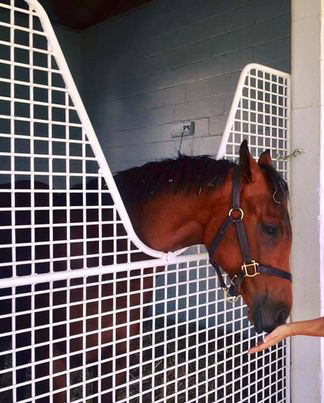
Bite the Hand That Feeds You-horse eating out of a handIt makes no sense to bite the hand that feeds you. Some animals who eat out of a person’s hand do. So do many people.

To bite the hand that feeds you means to hurt someone who helps you.

Rather than thank a kind person, you act cruel or rude.

Examples include:

  • Children who mistreat parents who provide for them.
  • Students who make fun of the person who helps them with homework.
  • Employees who gossip about their boss.
  • People who borrow money but never repay it or act ungrateful for it.

Eventually people pay for how they act.

Many receive a taste of their own medicine. Ungrateful children often have children who treat them the same way. They learn from what they see.

Results of biting the hand that feeds you may not be immediate. Usually, however, what goes around comes around.

Why not lend a helping hand?

Instead of hurting others, help them, no strings attached.  Help those who help you, but don’t stop there.

  • Aid others in need.
  • Show kindness to everyone.
  • Learn to love the unlovable. (Remember, we are all unlovable at times.)

“You make me glad by your deeds, Lord; I sing for joy at what your hands have done” (Psalm 92:4 NIV).

Thanks to Brad Leverett for the suggestion and to Jeri Stone for the photo.

Do you have an expression you want explained? If so, please comment below.

Subscribe to receive my weekly posts by email and receive a free copy of “Words of Hope for Days that Hurt.”

If you enjoyed this post, please share it with your friends.

Let Sleeping Dogs Lie

Let Sleeping Dogs Lie

Let Sleeping Dogs Lie--dog curled up in sleepLike several animals (and a few people) dogs can be dangerous when suddenly wakened. Therefore, we usually let sleeping dogs lie. We leave them alone to sleep in peace.

In daily life, we often choose to let sleeping dogs lie.

Instead of causing trouble, we avoid it. We don’t want to make a bad situation worse. If all is well and no one will benefit, why hurt anyone? We leave good enough alone.

Many words or actions only cause problems. Therefore,

Most situations are none of our business. Gossip and interference make us busybodies and do no one any good

However, at times we need to speak or act.

We must take a stand when necessary to:

  • Make a bad situation better
  • Help someone who hurts

Stay out of the doghouse. Unless actions will help, let sleeping dogs lie.

“It is to one’s honor to avoid strife, but every fool is quick to quarrel” (Proverbs 20:3 NIV).

Thanks to Brad Leverett for the suggestion. Photo courtesy of Pixabay.

Do you have an expression you want explained? If so, please comment below.

Subscribe to receive my weekly posts by email and receive a free copy of “Words of Hope for Days that Hurt.”

If you enjoyed this post, please share it with your friends.

Run Deep

Run Deep

Run Deep--tree roots on the groundRecently a cousin wrote, “Our roots run deep and are closely intertwined.” She meant our family has a long and strong history of close relationships. We may not see one another often, but our ties remain. We can depend on mutual love and support.
Anything that runs deep (or goes deep) stays strong.

 Family or friends give and receive:

  • Loyalty
  • Joy in good times
  • Sympathy and support in bad times
  • Commitment

We take our relationships seriously. We provide what others need when they need it.

If roots don’t run deep, we often fail when troubles come.

Like trees with surface roots, problems destroy our:

  • Relationships
  • Emotions
  • Sense of responsibility

When we root ourselves in the eternal, we survive the temporary.

By focusing on what matters most, we:

Therefore, let’s root ourselves in the never-failing promises of God. Then we can stand tall and stand firm through the hardest times.

“Just as you received Christ Jesus as Lord, continue to live your lives in him,  rooted and built up in him, strengthened in the faith as you were taught, and overflowing with thankfulness” (Colossians 2:6-7 NIV).

Thanks to Rhonda Wade Royster for the suggestion.

Do you have an expression you want explained? If so, please comment below.

Subscribe to receive my weekly posts by email and receive a free copy of “Words of Hope for Days that Hurt.”

If you enjoyed this post, please share it with your friends.

Cool as a Cucumber

Cool as a Cucumber

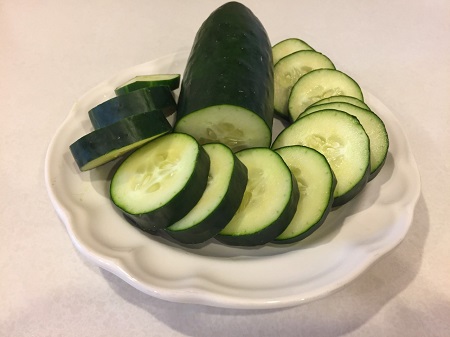
Cool as a Cucumber--sliced cucumberSome people stay cool as a cucumber.

Whether good times or bad, they remain calm.

Cucumbers are mostly water, which keeps them cool. A slice of cucumber in a glass of water provides cool refreshment on a hot summer day.

However, cool as a cucumber does not refer to a cool temperature. It means people who rarely get upset.

  • Plans don’t go their way. They make other plans.
  • People mistreat them. They still treat those people well.
  • Losses occur. They give thanks for what they had.

They live an easy-does-it life and look for the light at the end of the tunnel.

Few things get them down.

When they do get down, they soon rise again and keep going. They know that nothing in this life lasts forever. Therefore, they make the most of the moments they have.

Cool as a cucumber people spread peace.

By staying calm and peaceful, they help people around them stay calm and peaceful.

Peace that never fails can be found when anyone lets go and lets God.

“[God’s] peace will keep your thoughts and your hearts quiet and at rest as you trust in Christ Jesus” (Philippians 4:7 TLB).

Thanks to Janna Babak for the suggestion.

Do you have an expression you want explained? If so, please comment below.

Subscribe to receive my weekly posts by email and receive a free copy of “Words of Hope for Days that Hurt.”

If you enjoyed this post, please share it with your friends.

Consider the Source

Consider the Source

Consider the Source--Bonneville Salt Flats
Bonneville Salt Flats

Before we trust anyone or anything, we consider the source.

 We do not want to:

  • Eat food from a garbage can
  • Buy a car from a junk store
  • Drink water from a lake filled with salt

We usually trust what was good, safe, and trustworthy in the past.

However, if anything has not been good, safe, or trustworthy, we do not trust them now.

The same applies to people.

Have they:

  • Made many mistakes? If so, we will not ask their help.
  • Proved themselves trustworthy? If so, we usually trust them.
  • Hurt others? If so, we fear they may hurt us.

Consider the source is often a warning.

It tells us to be careful.

If we want others to trust us, we must prove worthy of their trust.

We build a reputation by every:

  • Choice we make
  • Action we take
  • Word we say
  • Attitude we show

May others always know us as a source worthy of their trust – as good as our word.

“What a wonderful God we have—he is the Father of our Lord Jesus Christ, the source of every mercy, and the one who so wonderfully comforts and strengthens us in our hardships and trials. And why does he do this? So that when others are troubled, needing our sympathy and encouragement, we can pass on to them this same help and comfort God has given us” (2 Corinthians 1:3-4 TLB).

Thanks to Becky Nash Rowe for the suggestion

Do you have an expression you want explained? If so, please comment below.

Subscribe to receive my weekly posts by email and receive a free copy of “Words of Hope for Days that Hurt.”

If you enjoyed this post, please share it with your friends.

Preaching to the Choir

Preaching to the Choir

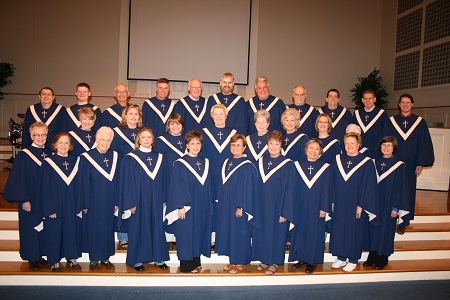
Preaching to the choir--church choir in robesPastors don’t need to convince believers to accept Jesus. That would be like preaching to the choir. Believers have already made that choice.
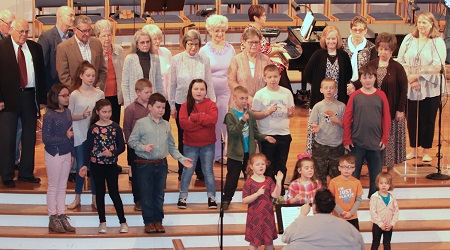
Preaching to the choir means trying to get people to accept an idea they already believe.

 Why try to convince them when they:

  • Share the same opinion
  • Support the same cause

Some people compare this to kicking an open door. The door stands open. No one needs to kick or knock on it.

  • Doctors don’t need to be told people get sick.
  • Teachers don’t need to be told children’s minds wander.
  • Judges don’t need to be told people break the law.

They already know that.

Preaching to the Choir--children and adultsTo spread a message, the messenger must go to those who:
  • Have not heard it
  • Do not believe it
  • Need to learn more about it

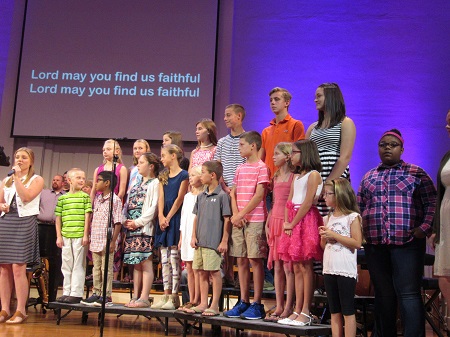
Preaching to the Choir--children's choirOf course, people enjoy sharing the same beliefs. Choir members sing and praise God with other believers. True worship makes them all ears to God’s message. It warms the cockles of their hearts.

However, they also take their message outside the church. They want to share it with people who have not heard.

“The master said to the servant, ‘Go out to the highways and hedges and compel people to come in, that my house may be filled’” (Luke 14:23 ESV).

Thanks to Darrin Jenkins for the suggestion and to Campbellsville Baptist Church and Joan Tinnell for the photos.

Do you have an expression you want explained? If so, please comment below.

Subscribe to receive my weekly posts by email and receive a free copy of “Words of Hope for Days that Hurt.”

If you enjoyed this post, please share it with your friends.

Chickens Come Home to Roost

Chickens Come Home to Roost

Chickens Come Home to Roost--chickens on a fenceChickens come home to roost.

  • Birds usually return to their nests at night.
  • The results of our past actions return to us.

Bad behavior in the past may causes problems in the present or future.

We may get away with bad choices for a while. However, we often suffer for them later. We land in hot water. That is true for what we do and what we say.

We live with the consequences of the choices we make.

 Mistakes or wrong choices hurt us and others. We reap what we sow.

  • Fail to study: fail a test.
  • Hurt other people; expect to get hurt.
  • Ignore physical needs; suffer physical pains.

Therefore, we do well to always make right choices.

Be careful what we say and do. What goes around comes around. We don’t want our words and actions coming back to haunt us.

If we follow the straight and narrow, we have no need to worry.

“Turn from evil and do good; seek peace and pursue it” (Psalm 34:14 NIV).

Thanks to Steve and LuAnne Russell for the suggestion. Photo courtesy of Pixabay.

Do you have an expression you want explained or a thought about this one? If so, please comment below.

Subscribe to receive my weekly posts by email and receive a free copy of “Words of Hope for Days that Hurt.”

If you enjoyed this post, please share it with your friends.

Take It to the Bank

Take It to the Bank

Take It to the Bank -- bank vaultIf someone pays us by check, we take it to the bank. The check promises money.

Of course, not all checks are good. In those cases, we lose the money listed on the checks.

When we say we can take it to the bank, we mean something is good.

  • We can depend on it.
  • The person who wrote the check has the money listed.
  • A person always speaks the truth. He is as good as his word.

We cannot take everything to the bank.

Like bad checks, not everyone speaks or acts in truth. When that happens, we lose trust. The person’s bad choices hurt us.

We all make bad choices. However, we can receive forgiveness.

Easter celebrates Jesus coming to earth to pay the price for our sins our bad choices.

  • Jesus’ words and actions taught us how to live.
  • He died on the cross for our sins.
  • Before and as He died, Jesus prayed for us.
  • He arose from the grave on the third day.
  • Jesus’ victory over sin and death becomes ours free and clear, if we place our faith in Him.

Friends, we can take Jesus’ promises to the bank.

“This is eternal life, that they know you, the only true God, and Jesus Christ whom you have sent” (John 17:3 ESV).

Thanks to Kristy Robinson Horine for the suggestion and to Citizens Bank for the photo opportunity.

Do you have an expression you want explained? If so, please comment below.

Subscribe to receive my weekly posts by email and receive a free copy of “Words of Hope for Days that Hurt.”

If you enjoyed this post, please share it with your friends.

To Die For

To Die For

My sister-in-law recently described a pie to die for. She told how it:

  • Looks
  • Tastes
  • Makes her feel

Anything to die for seems very important.

 People want it because it:

  • Looks wonderful
  • Makes them happy
  • Has great value

Most people will not actually die for a piece of pie (or other food).

However, they will pay a high price for it. They want it that much.

Besides food, items to die for might include:

  • Clothing
  • Jewelry
  • Cars
  • Houses
  • Trips

None of those is worth people giving their lives.

However, many people will die for what they believe.

A few who go beyond the call of duty include:

  • Veterans
  • Missionaries
  • Police officers and firefighters
  • Others who protect family and friends

God loved the world enough to send Jesus to die for it.

Jesus died so anyone who follows him can have eternal life.

“God demonstrates his own love for us in this: While we were still sinners, Christ died for us” (Romans 5:8 NIV).

 Thanks to Melissa Scott Taylor for the suggestion and to Winona Smith for the photo of one of her wonderful pies.

Do you have an expression you want explained? If so, please comment below.

Subscribe to receive my weekly posts by email and receive a free copy of “Words of Hope for Days that Hurt.”

If you enjoyed this post, please share it with your friends.