Browsed by
Tag: relationships

Make No Bones About It

Make No Bones About It

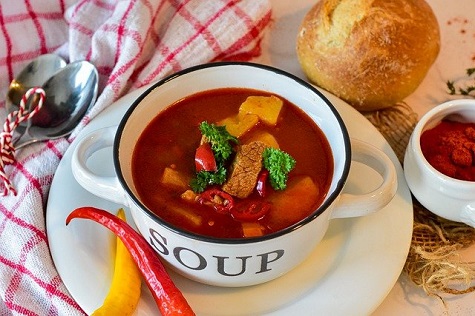
Make No Bones About It-a cup of soupWhen we serve soup, we want no bones about it. We may cook bones in our soup, but we take them out when we eat. Swallowed bones often result in a visit to the hospital.

The origin of make no bones about it is uncertain.

According to The Free Dictionary, possibilities include:

  • Boneless soup or stew
  • Dice (originally made from bones) thrown with no hesitation

Make no bones about it means to be open and honest.

We:

No one has to guess our meaning. We speak frankly.

However, we want to be honest without being mean.

The truth often hurts as much as a lie. Therefore, if a truth helps no one, let’s bite our tongue. Some words are better left unspoken.

Always speak the truth in love.

“Speaking the truth in love, we will grow to become in every respect the mature body of him who is the head, that is, Christ” (Ephesians 4:15 NIV).

Thanks to Margaret Bertram for the suggestion. Image by RitaE from Pixabay.

Do you have an expression you want explained? If so, please comment below.

Subscribe to receive my weekly posts by email and receive a free copy of “Words of Hope for Days that Hurt.”

If you enjoyed this post, please share it with your friends.
Salt in a Wound

Salt in a Wound


Salt in a Wound -container of saltYears ago, people treated many medical emergencies at home. One common remedy was to pour or rub salt in a wound. That solution often caused more pain than the original problem.

Salt in a wound hurts.

 Although salt (or saltwater) helps heal or sooth certain conditions, it causes damage to others. Even if it helps, salt on an open sore stings.

To pour or rub salt in a wound means to make a bad situation worse.

 Our words or actions hurt rather than help.

  • A friend loses a contest, and we praise the winner.
  • Our neighbor’s boss fires him, and we brag about our promotion.
  • A relative’s wife leaves him, and we talk about her handsome boyfriend.

Whether deliberate or not, we increase the person’s hardship, shame, or sadness.

Rather than rub salt in a wound, let’s serve as salt of the earth.

 When other people feel down in the dumps, let’s lift them up. We have the privilege to share their sorrow as well as their joy.

“Being happy-go-lucky around a person whose heart is heavy is as bad as stealing his jacket in cold weather or rubbing salt in his wounds” (Proverbs 25:20 TLB).

Thanks to Pat Childress Conner Stapp for the suggestion. Image courtesy of  Pixabay.

Do you have an expression you want explained? If so, please comment below.

Subscribe to receive my weekly posts by email and receive a free copy of “Words of Hope for Days that Hurt.”

If you enjoyed this post, please share it with your friends.
Stick Like Glue

Stick Like Glue

Stick Like Glue-Dashaway between young couple on porchMy dog Dashaway was my favorite pet. She would stick like glue anytime I went outside.

Dashaway and I became best buddies while I was in high school. Snow kept everyone home for weeks. My parents and sister had the flu, so all the house and farm chores became my responsibility. A cousin down the road milked the cows, but Dashaway and I did the rest.

When I became tuckered out, too tired to move, Dashaway nudged me with her nose. That reminded me to keep on keeping on. She knew once work was over, we could play in the snow.

After I began dating, Dashaway still stuck like glue. If my boyfriend (now husband), and I walked outside, Dashaway walked between us. When we sat on the front porch steps, Dashaway stood or sat in the middle. She loved us, and we loved her.

To stick like glue means to stay close to someone.

For people or animals, that means we want to be together all the time. We hate to be away from one another.

Other meanings include hard-to-remove items that attach to us, such as:

  • Sticky food
  • Ink
  • Grass stain

This expression may be literal or figurative.

The above are literal examples. Figurative examples include our:

  • Reputation
  • Nickname
  • Memories

Dashaway earned her reputation as a good dog. She actually had six names, with Dashaway as first of the six. Memories of our time together stick like glue in my mind.

“One who has unreliable friends soon comes to ruin, but there is a friend who sticks closer than a brother” (Proverbs 18:24 NIV).

Thanks to Sharon Berry for the suggestion.

Do you have an expression you want explained? If so, please comment below.

Subscribe to receive my weekly posts by email and receive a free copy of “Words of Hope for Days that Hurt.”

If you enjoyed this post, please share it with your friends.

Confession Is Good for the Soul

Confession Is Good for the Soul

Confession Is Good for the Soul- mother kneels to comfort a crying child“Tell me the truth. You will feel better if you do. Confession is good for the soul.”

How many times have children heard those or similar words? They do something wrong and get caught red-handed. The more they try to hide their wrong, the worse they feel. If they don’t tell the truth, they get in more trouble.

Of course, the same relates to adults. Trying to hide our mistakes or deliberate evil only makes a bad situation worse. We feel guilty. Our guilt makes us sick physically, emotionally, and spiritually.

Confession is good for the soul declares great truth.

When we confess, we free ourselves from:

  • Guilt
  • Shame
  • Stress

We come clean. This applies whether we commit small or large misdeeds.

Confession is good for the soul pertains to all our relationships.

  • Family
  • Friends
  • Enemies
  • Strangers

The other person may or may not forgive us. We are not responsible for their reaction. However, we are responsible for our own.

We find this truth in the Bible.

The words vary, but the truth remains the same. Its greatest application is in our relationship with God.

“If we confess our sins, he is faithful and just and will forgive us our sins and purify us from all unrighteousness” (1 John 1:9 NIV).

Thanks to Phyllis Patton for the suggestion and the photo.

Do you have an expression you want explained? If so, please comment below.

Subscribe to receive my weekly posts by email and receive a free copy of “Words of Hope for Days that Hurt.”

If you enjoyed this post, please share it with your friends.

Small Potatoes

Small Potatoes

Small Potatoes - freshly dug potatoes of different sizesWhen gardeners dig potatoes, they usually look for lots of large ones. Small potatoes often get thrown away.

Grocery shoppers and cooks also prefer large potatoes most of the time.

Anything small or unimportant may be described as small potatoes.

 Most people consider them of little worth. In the business world, they might include:

Unfortunately, people frequently receive the small potatoes label too.

  • Children or youth
  • Older adults
  • Poor
  • Unemployed
  • Homeless
  • Disabled
  • Anyone different

Others often treat them like they are a dime a dozen.

Yet, small potatoes offer great benefits.

Freshly dug tiny potatoes taste better than larger ones. Unpeeled and cooked with fresh green beans, those small, tender spuds delight the taste buds.

Likewise, small moments, small items, and people of all sizes and backgrounds offer much. A saltshaker on our kitchen counter reads, “Happiness is found in little things.”

Never underestimate the power of the pint-sized. They may not carry great wealth or social status. However, many offer happiness neither wealth nor social status can give.

The God of creation loves everyone — a great plan for all creation to follow.

“The King will reply, ‘Truly I tell you, whatever you did for one of the least of these brothers and sisters of mine, you did for me’” (Matthew 25:40 NIV).

Thanks to Carla Purvis for the suggestion. Photo courtesy of Unsplash.

Do you have an expression you want explained? If so, please comment below.

Subscribe to receive my weekly posts by email and receive a free copy of “Words of Hope for Days that Hurt.”

If you enjoyed this post, please share it with your friends.

Bite the Hand That Feeds You

Bite the Hand That Feeds You

Bite the Hand That Feeds You-horse eating out of a handIt makes no sense to bite the hand that feeds you. Some animals who eat out of a person’s hand do. So do many people.

To bite the hand that feeds you means to hurt someone who helps you.

Rather than thank a kind person, you act cruel or rude.

Examples include:

  • Children who mistreat parents who provide for them.
  • Students who make fun of the person who helps them with homework.
  • Employees who gossip about their boss.
  • People who borrow money but never repay it or act ungrateful for it.

Eventually people pay for how they act.

Many receive a taste of their own medicine. Ungrateful children often have children who treat them the same way. They learn from what they see.

Results of biting the hand that feeds you may not be immediate. Usually, however, what goes around comes around.

Why not lend a helping hand?

Instead of hurting others, help them, no strings attached.  Help those who help you, but don’t stop there.

  • Aid others in need.
  • Show kindness to everyone.
  • Learn to love the unlovable. (Remember, we are all unlovable at times.)

“You make me glad by your deeds, Lord; I sing for joy at what your hands have done” (Psalm 92:4 NIV).

Thanks to Brad Leverett for the suggestion and to Jeri Stone for the photo.

Do you have an expression you want explained? If so, please comment below.

Subscribe to receive my weekly posts by email and receive a free copy of “Words of Hope for Days that Hurt.”

If you enjoyed this post, please share it with your friends.
Let Sleeping Dogs Lie

Let Sleeping Dogs Lie

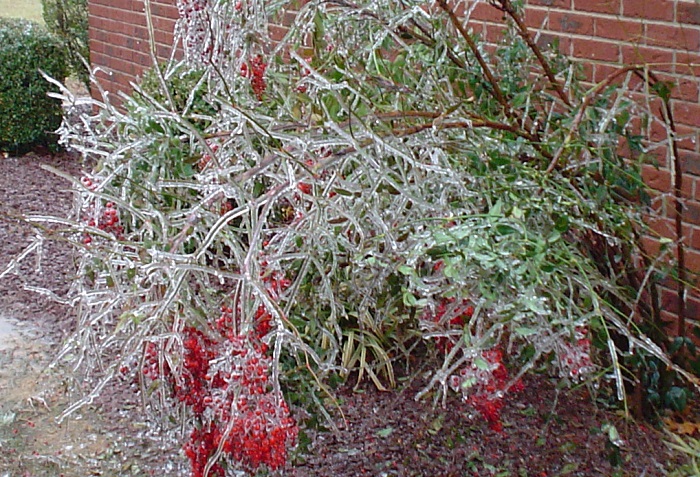
Let Sleeping Dogs Lie--dog curled up in sleepLike several animals (and a few people) dogs can be dangerous when suddenly wakened. Therefore, we usually let sleeping dogs lie. We leave them alone to sleep in peace.

In daily life, we often choose to let sleeping dogs lie.

Instead of causing trouble, we avoid it. We don’t want to make a bad situation worse. If all is well and no one will benefit, why hurt anyone? We leave good enough alone.

Many words or actions only cause problems. Therefore,

Most situations are none of our business. Gossip and interference make us busybodies and do no one any good

However, at times we need to speak or act.

We must take a stand when necessary to:

  • Make a bad situation better
  • Help someone who hurts

Stay out of the doghouse. Unless actions will help, let sleeping dogs lie.

“It is to one’s honor to avoid strife, but every fool is quick to quarrel” (Proverbs 20:3 NIV).

Thanks to Brad Leverett for the suggestion. Photo courtesy of Pixabay.

Do you have an expression you want explained? If so, please comment below.

Subscribe to receive my weekly posts by email and receive a free copy of “Words of Hope for Days that Hurt.”

If you enjoyed this post, please share it with your friends.
Run Deep

Run Deep

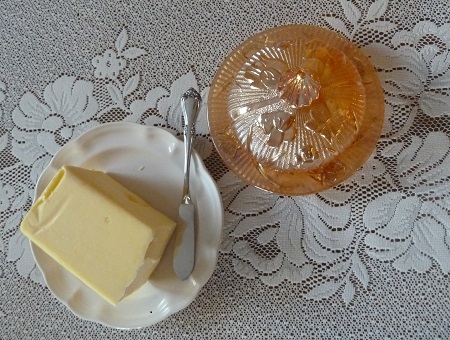
Run Deep--tree roots on the groundRecently a cousin wrote, “Our roots run deep and are closely intertwined.” She meant our family has a long and strong history of close relationships. We may not see one another often, but our ties remain. We can depend on mutual love and support.

Anything that runs deep (or goes deep) stays strong.

 Family or friends give and receive:

  • Loyalty
  • Joy in good times
  • Sympathy and support in bad times
  • Commitment

We take our relationships seriously. We provide what others need when they need it.

If roots don’t run deep, we often fail when troubles come.

Like trees with surface roots, problems destroy our:

  • Relationships
  • Emotions
  • Sense of responsibility

When we root ourselves in the eternal, we survive the temporary.

By focusing on what matters most, we:

Therefore, let’s root ourselves in the never-failing promises of God. Then we can stand tall and stand firm through the hardest times.

“Just as you received Christ Jesus as Lord, continue to live your lives in him,  rooted and built up in him, strengthened in the faith as you were taught, and overflowing with thankfulness” (Colossians 2:6-7 NIV).

Thanks to Rhonda Wade Royster for the suggestion.

Do you have an expression you want explained? If so, please comment below.

Subscribe to receive my weekly posts by email and receive a free copy of “Words of Hope for Days that Hurt.”

If you enjoyed this post, please share it with your friends.

Cool as a Cucumber

Cool as a Cucumber

Cool as a Cucumber--sliced cucumberSome people stay cool as a cucumber.

Whether good times or bad, they remain calm.

Cucumbers are mostly water, which keeps them cool. A slice of cucumber in a glass of water provides cool refreshment on a hot summer day.

However, cool as a cucumber does not refer to a cool temperature. It means people who rarely get upset.

  • Plans don’t go their way. They make other plans.
  • People mistreat them. They still treat those people well.
  • Losses occur. They give thanks for what they had.

They live an easy-does-it life and look for the light at the end of the tunnel.

Few things get them down.

When they do get down, they soon rise again and keep going. They know that nothing in this life lasts forever. Therefore, they make the most of the moments they have.

Cool as a cucumber people spread peace.

By staying calm and peaceful, they help people around them stay calm and peaceful.

Peace that never fails can be found when anyone lets go and lets God.

“[God’s] peace will keep your thoughts and your hearts quiet and at rest as you trust in Christ Jesus” (Philippians 4:7 TLB).

Thanks to Janna Babak for the suggestion.

Do you have an expression you want explained? If so, please comment below.

Subscribe to receive my weekly posts by email and receive a free copy of “Words of Hope for Days that Hurt.”

If you enjoyed this post, please share it with your friends.

Consider the Source

Consider the Source

Consider the Source--Bonneville Salt Flats
Bonneville Salt Flats

Before we trust anyone or anything, we consider the source.

 We do not want to:

  • Eat food from a garbage can
  • Buy a car from a junk store
  • Drink water from a lake filled with salt

We usually trust what was good, safe, and trustworthy in the past.

However, if anything has not been good, safe, or trustworthy, we do not trust them now.

The same applies to people.

Have they:

  • Made many mistakes? If so, we will not ask their help.
  • Proved themselves trustworthy? If so, we usually trust them.
  • Hurt others? If so, we fear they may hurt us.

Consider the source is often a warning.

It tells us to be careful.

If we want others to trust us, we must prove worthy of their trust.

We build a reputation by every:

  • Choice we make
  • Action we take
  • Word we say
  • Attitude we show

May others always know us as a source worthy of their trust – as good as our word.

“What a wonderful God we have—he is the Father of our Lord Jesus Christ, the source of every mercy, and the one who so wonderfully comforts and strengthens us in our hardships and trials. And why does he do this? So that when others are troubled, needing our sympathy and encouragement, we can pass on to them this same help and comfort God has given us” (2 Corinthians 1:3-4 TLB).

Thanks to Becky Nash Rowe for the suggestion

Do you have an expression you want explained? If so, please comment below.

Subscribe to receive my weekly posts by email and receive a free copy of “Words of Hope for Days that Hurt.”

If you enjoyed this post, please share it with your friends.