Browsed by
Tag: wisdom

Horse Sense

Horse Sense

Horse Sense-horse walking beside a fence with a red barn in the backgroundWe can be sharp as a tack but not have a bit of horse sense. Education does not give us horse sense. Neither does talent. Instead, it is what we do with the knowledge, education and talent we possess.

Horse sense is common sense.

It does not require:

  • An impressive resume
  • A sophisticated lifestyle

We use wisdom in what we say and do. Sometimes that wisdom outwits the more intelligent and better educated.

With horse sense, we make practical decisions that work well.

Those decisions apply to:

  • Relationships
  • Jobs
  • Free time

We learn when to act and when to hold our horses.

Good decisions lead to a good life. Therefore, we want to stay wise as an owl, always ready to do what is right.

“‘Learn to be wise,’ he said, ‘and develop good judgment and common sense! I cannot overemphasize this point’” (Proverbs 4:5 TLB).

Thanks to Beckham Wilson for the suggestion and to Jeri Gumm Stone for the photo.

Do you have an expression you want explained or a thought about this one? If so, please comment below.

Subscribe to receive my weekly posts by email and receive a free copy of “Words of Hope for Days that Hurt.”

If you enjoyed this post, please share it with your friends.
Chomp at the Bit

Chomp at the Bit

Chomp at the Bit-Horse with bridle and bitOur family had horses when I was a teenager. I loved to ride, but my sister preferred to keep both feet on the ground. She did not trust horses, especially when they chomped at the bit.

Like many horses, ours wanted to go immediately, and they wanted to go fast. That was especially true when they saw water or food ahead.

A cousin convinced my sister to ride with him one afternoon. The closer they came to the end of their trip, the faster the horse ran. When they went under an apple tree branch, our cousin lowered his head. Gail did not see the branch, and it knocked her to the ground. That was the end of her horseback riding.

To chomp at the bit refers to a horse biting its bit (mouthpiece).

According to The Phrase Finder, the original phrase was champ at the bit. Both chomp and champ refer to biting or chewing. Excited horses chomp at the bit before a race begins. They have a hard time waiting.

People also chomp at the bit.

We may not have a piece of metal in our mouths. However, we definitely get impatient. Few of us enjoy delay. We want everything immediately, if not sooner.

  • Babies want to be fed.
  • Children want to play.
  • Teenagers want to drive.
  • Adults want good jobs.
  • Almost everyone wants love and acceptance.

We want what we want when we want it.

Like bits guide horses, wisdom guides people.

Yet, we need to find trustworthy sources for truth. Let’s never chomp at the bit until we know we are:

  • Following the right source.
  • Going the right direction

Until then, let’s hold our horses.

“Do not be like the horse or the mule, which have no understanding but must be controlled by bit and bridle or they will not come to you” (Psalm 32:9 NIV).

Thanks to Tracy Crump for the suggestion. Image by Ainslie Gilles-Patel from Pixabay.

Do you have an expression you want explained? If so, please comment below.

Subscribe to receive my weekly posts by email and receive a free copy of “Words of Hope for Days that Hurt.”

If you enjoyed this post, please share it with your friends.
Your Guess Is as Good as Mine

Your Guess Is as Good as Mine

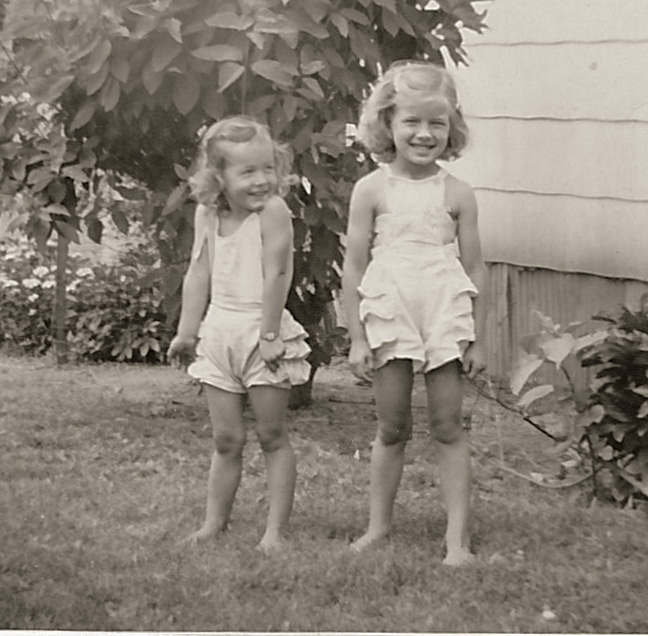
Your Guess Is as Good as Mine-two small girls shrugging with hands upSomeone asks a question. We don’t know the answer. What do we do? We may say, “You’re guess is as good as mine.”

 Your guess is as good as mine means we have no idea.

We don’t know any more than the person who asked the question. Neither of us can figure out what to do.

When we don’t know answers, we find someone who does.

We look for people wise as an owl. They may not know everything, but they know more than we do. Such wisdom often comes from older people, but not always. Occasionally it comes out of the mouths of babes.

No one but God knows all things.

We cannot possibly learn everything in our short lives. We do the best we can. However, we still make guesses in many situations.

God never guesses. God knows.

The one and only Creator of all things is:

  • All powerful
  • Always present
  • All knowing

Trust God for answers that never fail.

“The foolishness of God is wiser than human wisdom, and the weakness of God is stronger than human strength” (1 Corinthians 1:25 NIV).

Thanks to Laurel Blevins for the suggestion and to Rita Smalley for the photo.

Do you have an expression you want explained? If so, please comment below.

Subscribe to receive my weekly posts by email and receive a free copy of “Words of Hope for Days that Hurt.”

If you enjoyed this post, please share it with your friends.

You Made Your Bed, You Must Lie in It

You Made Your Bed, You Must Lie in It

You Made Your Bed--bed in The Elms (R. I.)You made your bed, you must lie in it has nothing to do with making a bed. The expression focuses on behavior.

You have to live with the results of what you do.

  • Good choices bring good results.
  • Bad choices bring bad results.

If you cause problems, expect problems in your life. If you share joy, expect joy in return.

 Of course, exceptions to the rule occur. However, you usually experience the natural or logical effects of your actions. You did it, so you must live with it.

Several expressions have the same meaning.

Whether you talk about beds, gardens, music, or chickens, the message remains the same. For the best life, make the best choices.

“When you see trouble coming, don’t be stupid and walk right into it— be smart and hide” (Proverbs 22:3 CEV).

Thanks to Bonnie Alley for the suggestion.

Do you have an expression you want explained or a thought about this one? If so, please comment below.

Subscribe to receive my weekly posts by email and receive a free copy of “Words of Hope for Days that Hurt.”

If you enjoyed this post, please share it with your friends.

End of the Road

End of the Road

End of the Road--setting sun at end of a roadWhile on a trip, many of us look forward to the end of the road.

Once we hit the trail, we can hardly wait to get where we are going. We want to spend most of our time there.

If we ride a bus or train, we might talk about the end of the line. The road or line stops, so the bus or train cannot go farther.

The end of the road means the conclusion or final step.

This expression may refer to the end of a:

  • Trip
  • Process
  • Activity

Often the end of the road refers to death, the end of life’s journey.

We kick the bucket. We are graveyard dead.

On Memorial Day, we remember and honor those who died in service for our country.

Many of us look forward to the end of life’s journey.

We enjoy life. However, we know when we reach the end of life’s road, we step into our eternal home in heaven.

On a trip, people may follow the sun for physical direction. To receive a home in heaven, we follow the Son for spiritual direction. Jesus, God’s Son, offers life and purpose both now and at the end of the road.

“Whoever believes in the Son has eternal life, but whoever rejects the Son will not see life” (John 3:36 NIV).

Thanks to Janis Atwood for the photo

Do you have an expression you want explained or a thought about this one? If so, please comment below.

Subscribe to receive my weekly posts by email and receive a free copy of “Words of Hope for Days that Hurt.”

If you enjoyed this post, please share it with your friends.
Cool as a Cucumber

Cool as a Cucumber

Cool as a Cucumber--sliced cucumberSome people stay cool as a cucumber.

Whether good times or bad, they remain calm.

Cucumbers are mostly water, which keeps them cool. A slice of cucumber in a glass of water provides cool refreshment on a hot summer day.

However, cool as a cucumber does not refer to a cool temperature. It means people who rarely get upset.

  • Plans don’t go their way. They make other plans.
  • People mistreat them. They still treat those people well.
  • Losses occur. They give thanks for what they had.

They live an easy-does-it life and look for the light at the end of the tunnel.

Few things get them down.

When they do get down, they soon rise again and keep going. They know that nothing in this life lasts forever. Therefore, they make the most of the moments they have.

Cool as a cucumber people spread peace.

By staying calm and peaceful, they help people around them stay calm and peaceful.

Peace that never fails can be found when anyone lets go and lets God.

“[God’s] peace will keep your thoughts and your hearts quiet and at rest as you trust in Christ Jesus” (Philippians 4:7 TLB).

Thanks to Janna Babak for the suggestion.

Do you have an expression you want explained? If so, please comment below.

Subscribe to receive my weekly posts by email and receive a free copy of “Words of Hope for Days that Hurt.”

If you enjoyed this post, please share it with your friends.
Ox in the Ditch

Ox in the Ditch

Ox in the Ditch--cow in water behind treesMy friend Phyllis recently had an ox in the ditch. She and her husband dressed for church. Then they noticed a cow having trouble birthing its calf. Their cow needed help. Putting first things first, they helped their animals. They arrived at church late but with an attitude of gratitude for a healthy cow and calf.

An ox in the ditch is not usually an ox.

Examples of an ox in the ditch include:

  • Sick people who need a doctor
  • Crime victims who need the police
  • Buildings on fire that need firefighters

An ox in a ditch means an emergency.

 The need demands:

  • Immediate action
  • Total attention

A great need replaces a good plan.

The Bible says Jesus healed a sick person on the Sabbath. Work was forbidden on days of worship. However, Jesus asked if people would not pull an ox from a ditch (or well) on the Sabbath. Another time Jesus said, “The Sabbath was made for man, not man for the Sabbath” (Mark 2:27 NIV).

God expects people to rest and worship one day a week. However, God also expects believers to put feet to their prayers – to meet needs when they arise.

“Then [Jesus] asked them, “If one of you has a child or an ox that falls into a well on the Sabbath day, will you not immediately pull it out?” (Luke 14:5 NIV).

Thanks to Phyllis Patton for the suggestion and Bart Woodrum for the photo.

Do you have an expression you want explained? If so, please comment below.

Subscribe to receive my weekly posts by email and receive a free copy of “Words of Hope for Days that Hurt.”

If you enjoyed this post, please share it with your friends.
Consider the Source

Consider the Source

Consider the Source--Bonneville Salt Flats
Bonneville Salt Flats

Before we trust anyone or anything, we consider the source.

 We do not want to:

  • Eat food from a garbage can
  • Buy a car from a junk store
  • Drink water from a lake filled with salt

We usually trust what was good, safe, and trustworthy in the past.

However, if anything has not been good, safe, or trustworthy, we do not trust them now.

The same applies to people.

Have they:

  • Made many mistakes? If so, we will not ask their help.
  • Proved themselves trustworthy? If so, we usually trust them.
  • Hurt others? If so, we fear they may hurt us.

Consider the source is often a warning.

It tells us to be careful.

If we want others to trust us, we must prove worthy of their trust.

We build a reputation by every:

  • Choice we make
  • Action we take
  • Word we say
  • Attitude we show

May others always know us as a source worthy of their trust – as good as our word.

“What a wonderful God we have—he is the Father of our Lord Jesus Christ, the source of every mercy, and the one who so wonderfully comforts and strengthens us in our hardships and trials. And why does he do this? So that when others are troubled, needing our sympathy and encouragement, we can pass on to them this same help and comfort God has given us” (2 Corinthians 1:3-4 TLB).

Thanks to Becky Nash Rowe for the suggestion

Do you have an expression you want explained? If so, please comment below.

Subscribe to receive my weekly posts by email and receive a free copy of “Words of Hope for Days that Hurt.”

If you enjoyed this post, please share it with your friends.

Preaching to the Choir

Preaching to the Choir

Preaching to the choir--church choir in robesPastors don’t need to convince believers to accept Jesus. That would be like preaching to the choir. Believers have already made that choice.

Preaching to the choir means trying to get people to accept an idea they already believe.

 Why try to convince them when they:

  • Share the same opinion
  • Support the same cause

Some people compare this to kicking an open door. The door stands open. No one needs to kick or knock on it.

  • Doctors don’t need to be told people get sick.
  • Teachers don’t need to be told children’s minds wander.
  • Judges don’t need to be told people break the law.

They already know that.

Preaching to the Choir--children and adultsTo spread a message, the messenger must go to those who:

  • Have not heard it
  • Do not believe it
  • Need to learn more about it

Preaching to the Choir--children's choirOf course, people enjoy sharing the same beliefs. Choir members sing and praise God with other believers. True worship makes them all ears to God’s message. It warms the cockles of their hearts.

However, they also take their message outside the church. They want to share it with people who have not heard.

“The master said to the servant, ‘Go out to the highways and hedges and compel people to come in, that my house may be filled’” (Luke 14:23 ESV).

Thanks to Darrin Jenkins for the suggestion and to Campbellsville Baptist Church and Joan Tinnell for the photos.

Do you have an expression you want explained? If so, please comment below.

Subscribe to receive my weekly posts by email and receive a free copy of “Words of Hope for Days that Hurt.”

If you enjoyed this post, please share it with your friends.

Chickens Come Home to Roost

Chickens Come Home to Roost

Chickens Come Home to Roost--chickens on a fenceChickens come home to roost.

  • Birds usually return to their nests at night.
  • The results of our past actions return to us.

Bad behavior in the past may causes problems in the present or future.

We may get away with bad choices for a while. However, we often suffer for them later. We land in hot water. That is true for what we do and what we say.

We live with the consequences of the choices we make.

 Mistakes or wrong choices hurt us and others. We reap what we sow.

  • Fail to study: fail a test.
  • Hurt other people; expect to get hurt.
  • Ignore physical needs; suffer physical pains.

Therefore, we do well to always make right choices.

Be careful what we say and do. What goes around comes around. We don’t want our words and actions coming back to haunt us.

If we follow the straight and narrow, we have no need to worry.

“Turn from evil and do good; seek peace and pursue it” (Psalm 34:14 NIV).

Thanks to Steve and LuAnne Russell for the suggestion. Photo courtesy of Pixabay.

Do you have an expression you want explained or a thought about this one? If so, please comment below.

Subscribe to receive my weekly posts by email and receive a free copy of “Words of Hope for Days that Hurt.”

If you enjoyed this post, please share it with your friends.