Browsed by
Category: Relationships

Two Peas in a Pod

Two Peas in a Pod

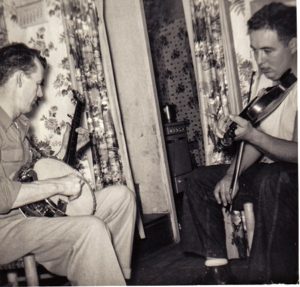
Two Peas in a Pod--two men playing banjo and fiddleMy dad and Uncle Millard differed in many ways. However, they were like two peas in a pod in their love for music.

Dad and Uncle Millard did not want to play music professionally. Instead, they played for the joy of playing. They often gathered with other musicians in our kitchen on Friday or Saturday nights for a time of “picking and grinning.”

Two peas in a pod means two items or people are as much alike as two peas in the same pod.

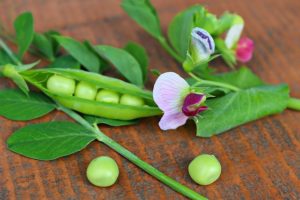
Two Peas in a Pod--peas in and out of a pod with flowersIn addition to shared interests, like Dad and Uncle Millard, two peas in a pod may:

  • Look alike (identical twins, who are the spitting image of one another)
  • Have similar beliefs (people who attend the same church)
  • Act the same (shy people)
  • Share all the above

The similarities of two peas in a pod may change with time.

Several people grow more alike. Others become quite different.

People have no choice with some similarities.

They cannot choose:

  • Birth family
  • Health at birth
  • Many life circumstances

However, they can choose:

  • Friends
  • Education
  • Activities
  • Health care

Those who make poor choices must face the music. Others wisely follow in the footsteps of those who lead them well.

“The righteous choose their friends carefully, but the way of the wicked leads them astray” (Proverbs 12:26 NIV).

Thanks to Joyce Cordell for the suggestion. Second photo courtesy of Pixabay.

Do you have an expression you want explained? If so, please comment below.

Subscribe to receive my weekly posts by email and receive a free copy of “Words of Hope for Days that Hurt.”

If you enjoyed this post, please share it with your friends.

Keep Your Eyes Peeled

Keep Your Eyes Peeled

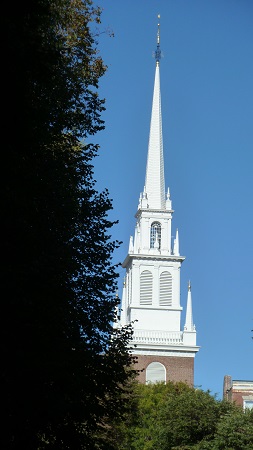
Keep Your Eyes Peeled--Old North Church steepleOn April 18, 1775, many people in Boston kept their eyes peeled on the steeple of the Old North Church. There, two signal lanterns warned of British troops approaching by sea. This American history event became well known in Henry Wadsworth Longfellow’s poem, Paul Revere’s Ride.

The literal meaning of keep your eyes peeled sounds painful. However, the idiom suggests we watch closely to prevent pain or problems.

Similar expressions include:

  • Keep your eyes skinned.
  • Keep your eyes open.

If you keep your eyes peeled, you try not to blink too often or too long.

You want to stay alert to everything around you. Your eyelids are the eye’s skin or peel. When you blink, you chance missing what you want to see.

With your eyes peeled, you watch carefully for someone or something.

You might watch for:

  • A check in the mail
  • Bargains at a favorite store
  • An acceptance letter from your favorite school

You do not want to miss it.

You might also watch for the beauty around you:

  • Birds and animals
  • Mountains, lakes, or fields
  • Clouds, sunrises, and sunsets

Your focus – where you keep your eyes peeled – guides your life’s direction.

Stay wise as an owl. Choose your focus carefully.

Few things last forever. Not:

  • Money
  • Possessions
  • Status

Find eternal value in a relationship with the one who created you, eyes and all.

“I keep my eyes always on the Lord. With him at my right hand, I will not be shaken” (Psalm 16:8 NIV).

Thanks to Marilyn from Oklahoma for the suggestion.

Do you have an expression you want explained? If so, please comment below.

Subscribe to receive my weekly posts by email and receive a free copy of “Words of Hope for Days that Hurt.”

If you enjoyed this post, please share it with your friends.

Rat Race

Rat Race

As much as I hate rats, I feel sorry for them. The poor things never escape their rat race for survival. Not only do they compete against one another for food, people try to kill them.

A rat race means constant competition.

People compete for:

  • Money
  • Power
  • Success
  • Social status

They struggle against one another for the best position. Although they may not kill one another, they do often damage the work or reputation of competitors.

In addition, constant stress destroys people’s health. Intense pressure leaves little time to relax. Instead, they end up running on fumes.

Many people decide to escape their rat race.

Rat Race--city traffic jamThey choose a slower, more relaxed lifestyle.
When I think of a rat race, I usually imagine big cities. I love to visit New York City, San Francisco, and Chicago. However, I never want to live there. I hate traffic jams and daily crowds.

Instead, give me country life with wide open spaces. My little garden spot of the world suits me fine. I prefer the middle of nowhere to crowded city streets.

Of course, people in the country live with stress too. A too-busy schedule happens everywhere.

All people need moments to relax.

A slower pace gives time to

  • Enjoy the moment
  • Experience all of life
  • Recognize the importance of relationships
  • Give of oneself for a greater good

Work hard, but live well.

“Always strive to do what is good for each other and for everyone else” (1 Thessalonians 5:15 NIV).

Thanks to Shelia Price for the suggestion. Photo by Rebekah Blocker on Unsplash.

Do you have an expression you want explained? If so, please comment below.

Subscribe to receive my weekly posts by email and receive a free copy of “Words of Hope for Days that Hurt.”

If you enjoyed this post, please share it with your friends.

Too Many Irons in the Fire

Too Many Irons in the Fire

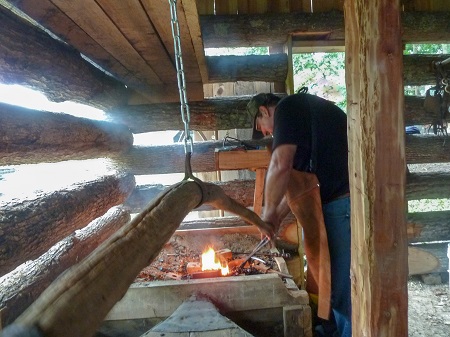
Too Many Irons in the Fire--Anthony SalyersAnthony Salyers demonstrates the work of an old-time blacksmith shop during Greg Lawhorn’s Molasses Day a few years ago. Anthony knows not to put too many irons in the fire. If he does, he will probably ruin part of his work.
Many of us have not learned that lesson. We fail to limit ourselves. Instead, we stay busy as bees with too many activities at one time.

Too many irons in the fire means we try to do more than we can handle.

A blacksmith must limit the number of irons in the fire when making horseshoes or other items. We must also limit what we do, if we want to do anything well.

Although we know better, we still try to do too much.

We overload ourselves with:

  • Work commitments
  • Family responsibilities
  • Community events

Often vacations get overloaded as well. We cram as much as we can into the short time we have. As a result, we return to work exhausted.

With too many irons in the fire, something will eventually fail.

  • Our work becomes less than the best.
  • We get sick.
  • Our families struggle.
  • No one’s needs get met.

Rather than overdo, why not do what we can do well?

Focus on the most important. If we have time and energy, we can add more. If we see we cannot do it all, let someone help.

“You’re going to wear yourself out—and if you do, what will happen to the people?” (Exodus 18:18 TLB).

Thanks to Emily Akin for the suggestion.

Do you have an expression you want explained? If so, please comment below.

Subscribe to receive my weekly posts by email and receive a free copy of “Words of Hope for Days that Hurt.”

If you enjoyed this post, please share it with your friends.

Piping Hot

Piping Hot

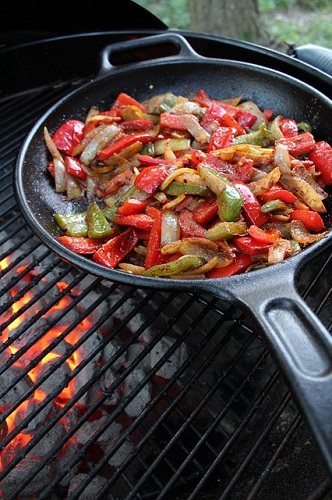
I love the piping hot sound of chicken fajitas fresh off the grill. Like high-pitched musical pipes, steam sizzles and rises from the skillet, music to my ears. I want to eat immediately, if not sooner.

Piping Hot--fajitas on a grillAnything piping hot is very hot.

Other piping hot favorites include:

  • Taco soup
  • Chicken casserole
  • Roast beef with potatoes, onions, and carrots
  • Grilled fish

Yum! As a friend used to say, “Those are good groceries.” They stick to the ribs.

I put any leftover food in the refrigerator, so it will not spoil. Too long at room temperature could cause food poisoning.

Spiritual appetites also need to remain piping hot.

Pass It On, a favorite song from my youth, declares that one small spark gets a fire going. It encourages singers and listeners to share God’s love with the people around them.

Each day, I choose whether to spread the fire of God’s love. So do you, dear friend. Warm is not good enough. God offers and expects the best. May that message spread like wildfire.

 I know your deeds, that you are neither cold nor hot. I wish you were either one or the other!  So, because you are lukewarm—neither hot nor cold—I am about to spit you out of my mouth” (Revelation 3:15-16 NIV).

What is your favorite piping hot food? Please comment below.

Thanks to Kristy Robinson Horine for the suggestion. Photo courtesy of Pixabay.

Subscribe to receive my weekly posts by email and receive a free copy of “Words of Hope for Days that Hurt.”

If you enjoyed this post, please share it with your friends.

Swing for the Fences

Swing for the Fences

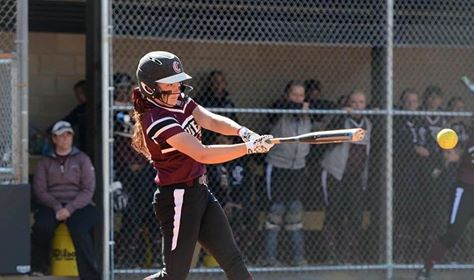
Swing for the Fences--softball playing hitting a ballI always wanted to hit a ball over the fence when I played softball. I never did. No matter how hard I would swing for the fences, I could not do it.

A few of my teammates hit balls over the fence with no problem. I could run fast, but I could not hit hard. However, I never stopped trying.

To swing for the fences means to swing as hard as possible.

  • Ballplayers hope for a home run.
  • Businesses aim for great success.
  • Individuals focus on one main goal

To swing for the fences involves great risk.

  • Ball players risk missing the ball and striking out.
  • Businesses risk losing everything.
  • Individuals chance serious loss.

The win is not always worth the risk.

A careful swing that hits the ball beats a hard swing that misses. Likewise, taking time to make the best decision beats a get-rich-quick scheme that fails. Too many people go out on a limb with no easy way back.

Never risk relationships.

Swinging for the fences is not worth losing:

  • Marriage
  • Children
  • Friends
  • Reputation

Weigh the costs. Swing for the fences when it will hurt no one. Swing softly to keep relationships from getting off base.

“It is fine to be zealous, provided the purpose is good” (Galatians 4:18 NIV).

Thanks to Larry Alston for the suggestion and to Richard Robards for the photo.

Subscribe to receive my weekly posts by email and receive a free copy of “Words of Hope for Days that Hurt.”

Do you have an expression you want explained? If so, please comment below.

If you enjoyed this post, please share it with your friends.

No Ifs, Ands, or Buts

No Ifs, Ands, or Buts

No Ifs, Ands, or Buts in a red circle with X over it“If you miss more than three classes, you fail. No ifs, ands, or buts about it.” Few students want to hear those words. Definitely not if they just missed a third class.

“If you come home past curfew, you are grounded for a month. No ifs, ands, or buts.” Teenagers don’t like to hear that, especially if they just came home an hour past curfew.

No ifs, ands, or buts means no excuses.

 People who say this want no:

  • Arguments
  • Compromises
  • Explanations
  • Protests

They expect others to do as instructed.

  • Parents expect children to obey.
  • Bosses expect workers to finish on time.
  • Teachers expect students to complete assignments.

No ifs, ands, or buts also means certainty.

No doubt about it, the expected event will happen, rain or shine.

  • Children promise parents they will obey.
  • Workers assure bosses they will finish their work before the deadline.
  • Students tell teachers they will complete their assignments before the next class.

Whether they finish early or work down to the wire, they will do it.

Everything works better when everyone meets their obligations.

A friend said she has often heard, “If ‘ifs’ and ‘buts’ were candy and nuts, we would all have a Merry Christmas.” She explained that people often say “if” or “but” instead of having faith all will work out exactly as it should.

  • If anything needs to be done, do it.
  • If anything needs to be said, say it.

No ifs, ands, or buts.

“Jesus replied, ‘Anyone who loves me will obey my teaching’” (John 14:23).

Do you have an expression you want explained? If so, please comment below.

Subscribe to receive my weekly posts by email and receive a free copy of “Words of Hope for Days that Hurt.”

If you enjoyed this post, please share it with your friends.

Thanks to Jeri Stone for the suggestion.

Worth One’s Salt

Worth One’s Salt

Worth One's Salt--saltshaker over a dish of saltMy friend Martha said her father described a few of her boyfriends as not worth the salt that went in their bread. He meant they were not worth much.

To be worth one’s salt means a person does a job well.

According to The Phrase Finder, “To be ‘worth one’s salt’ is to be worth one’s pay. Our word salary derives from the Latin salarium, (sal is the Latin word for salt).”

A person worth one’s salt earns respect because of good work. He or she gives a good day’s work for a good day’s pay rather than give a lick and a promise.

Salt adds flavor to food.

If not overdone, salt makes many foods taste better.

Salt also preserves food.

It helps prevent spoiling.

Like salt, people can add flavor to and help preserve the world.

Anyone makes the world a better place to live when he or she.

  • Does the best work possible
  • Takes care of God’s creation
  • Helps and respects others
  • Shares God’s love

“Salt is good, but if it loses its saltiness, how can you make it salty again? Have salt among yourselves, and be at peace with each other” (Mark 9:50 NIV).

Thanks to Martha Patton for the suggestion.

Do you have an expression you want explained? If so, please comment below.

Subscribe to receive my weekly posts by email and receive a free copy of “Words of Hope for Days that Hurt.”

If you enjoyed this post, please share it with your friends.

The End of Your Rope

The End of Your Rope

The End of Your Rope--climber hanging from a rope“When you reach the end of your rope, tie a knot in it and hang on.” –Franklin D. Roosevelt.

Many can identify with the former president. Hard times hit, and you hurt. You wonder:

  • How will I survive?
  • Who can help?
  • Why did this happen?

When you reach the end of your rope, you feel out of options.

Like a person hanging from a cliff with no more rope, you feel desperate. You have no:

  • Strength
  • Hope
  • Patience
  • Desire to continue

You are ready to give up. You want to throw in the towel.

Problems may be as simple as no time to do all you need to do. However, problems may also be life threatening.

Whatever the problem, hold on.

Tie a knot and hang on for dear life. Help may be on the way. Many people want to help, if you let them know your need. Once you receive what you need, pay it forward by helping someone else.

When you get to the end of your rope, remember two words: “But God.”

You may not know the answer, but God does.

  • Troubles may not stop, but God walks with you through them.
  • Uncertainty may remain, but God gives you peace in the midst of it.
  • Life may look hopeless, but God offers hope for this life and the life to come.

When trials around you cause stress within you, look up.

“But you, God, see the trouble of the afflicted; you consider their grief and take it in hand” (Psalm 10:14 NIV).

Thanks to Ann Knowles for the suggestion. Photo courtesy of Pixabay.

Do you have an expression you want explained? If so, please comment below.

Subscribe to receive my weekly posts by email and receive a free copy of “Words of Hope for Days that Hurt.”

If you enjoyed this post, please share it with your friends.

Cute as a Button

Cute as a Button

Cute as a Button--bowl of buttons“Isn’t she the cutest thing? Why, she’s as cute as a button.”

I have heard that expression since I was knee high to a grasshopper. People said it to describe:

  • Babies
  • Children and youth of all ages
  • Puppies, kittens, or other animals

Cute as a button usually refers to a small person, animal, or object.

Of course, not all buttons are cute. Neither are all buttons small. However, most are both.

Cute as a Button 2--Granny with dogAs a child, I spent hours playing with my Granny Childress’s buttons. Since she sewed for others, she always had boxes of buttons.

  • Cute buttons
  • Shiny buttons
  • Tiny buttons
  • Huge buttons
  • Buttons of every size and shape

Cute as a button refers either to how we act or how we look.

Granny enjoyed my playing with her buttons. They kept me still and quiet while she sewed. For Granny, still and quiet made me cute as a button. When I wore one of her dresses, she said I looked cute as a button.

Actions and appearance don’t always match.

I did not always act cute when I wore one of those cute dresses. When that happened, Granny told me, “Pretty is as pretty does.” She reminded me that how I act is much more important than how I look.

“Even small children are known by their actions” (Proverbs 20:11 NIV).

Thanks to Janna Babak for the suggestion.

Do you have an expression you want explained? If so, please comment below.

Subscribe to receive my weekly posts by email and receive a free copy of “Words of Hope for Days that Hurt.”

If you enjoyed this post, please share it with your friends.